
News & Events
Latest News From the Senior and Lower Schools
Lower School News
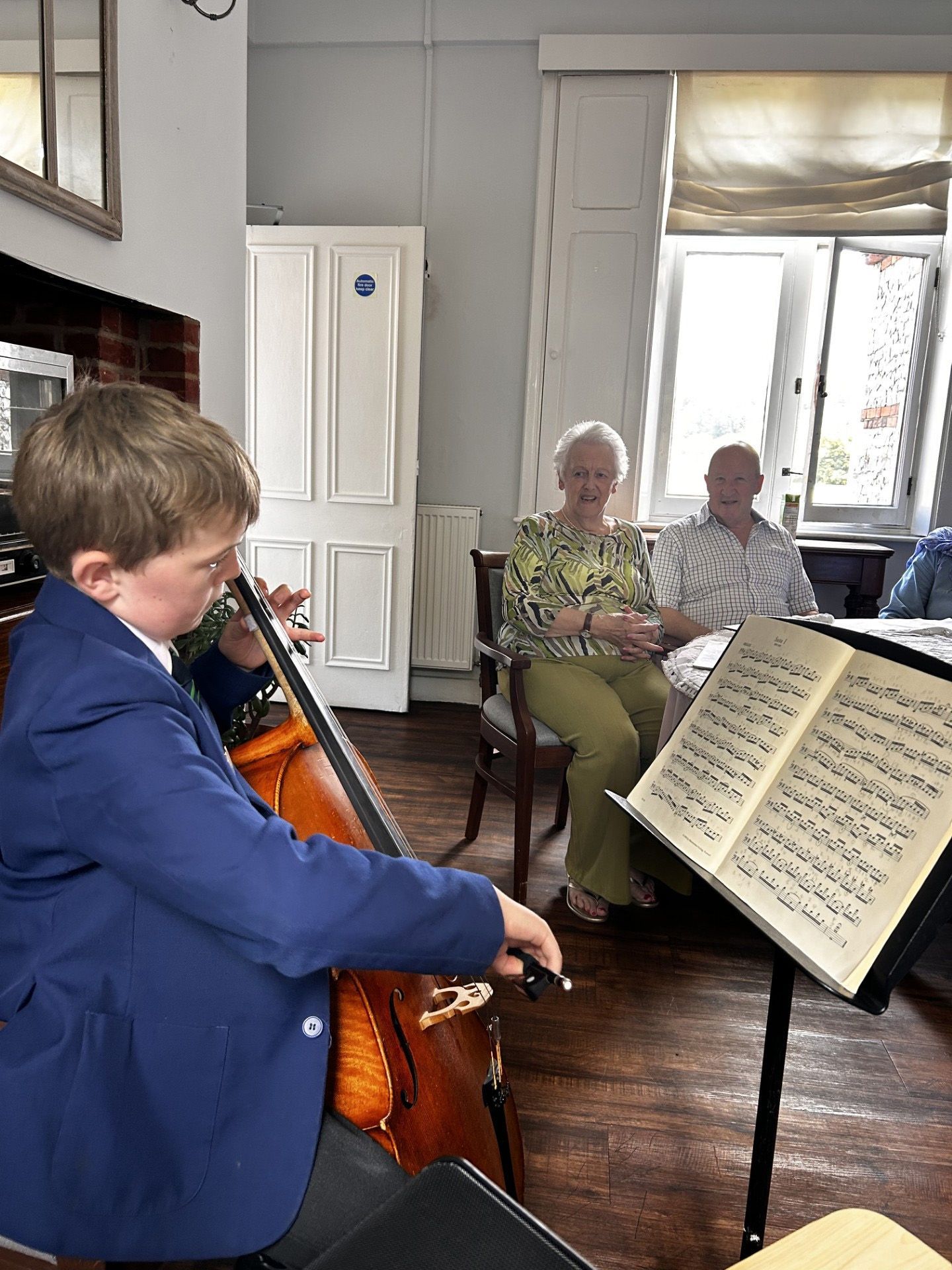
Bringing musical joy to others, Lower School Captain Max W treated the residents of Abbeyfield House to a special impromptu musical performance. Max, a chorister at Norwich Cathedral, delighted his intimate audience with a beautiful performance of Bach’s Prelude No. 1 in G Major on the Cello, followed by a heartfelt vocal rendition of John Rutter’s All Things Bright and Beautiful. His music captivated the residents, who thoroughly enjoyed this special opportunity to experience live music up close. Following his performance, Max spent time chatting with residents, sharing his ambitions for the future and enjoying their company. It was a lovely reminder of the power of music to bring people together, brighten someone’s day and create meaningful connections across generations. Well done, Max! We are incredibly proud of the way you are using your musical talents to bring happiness and joy to others.
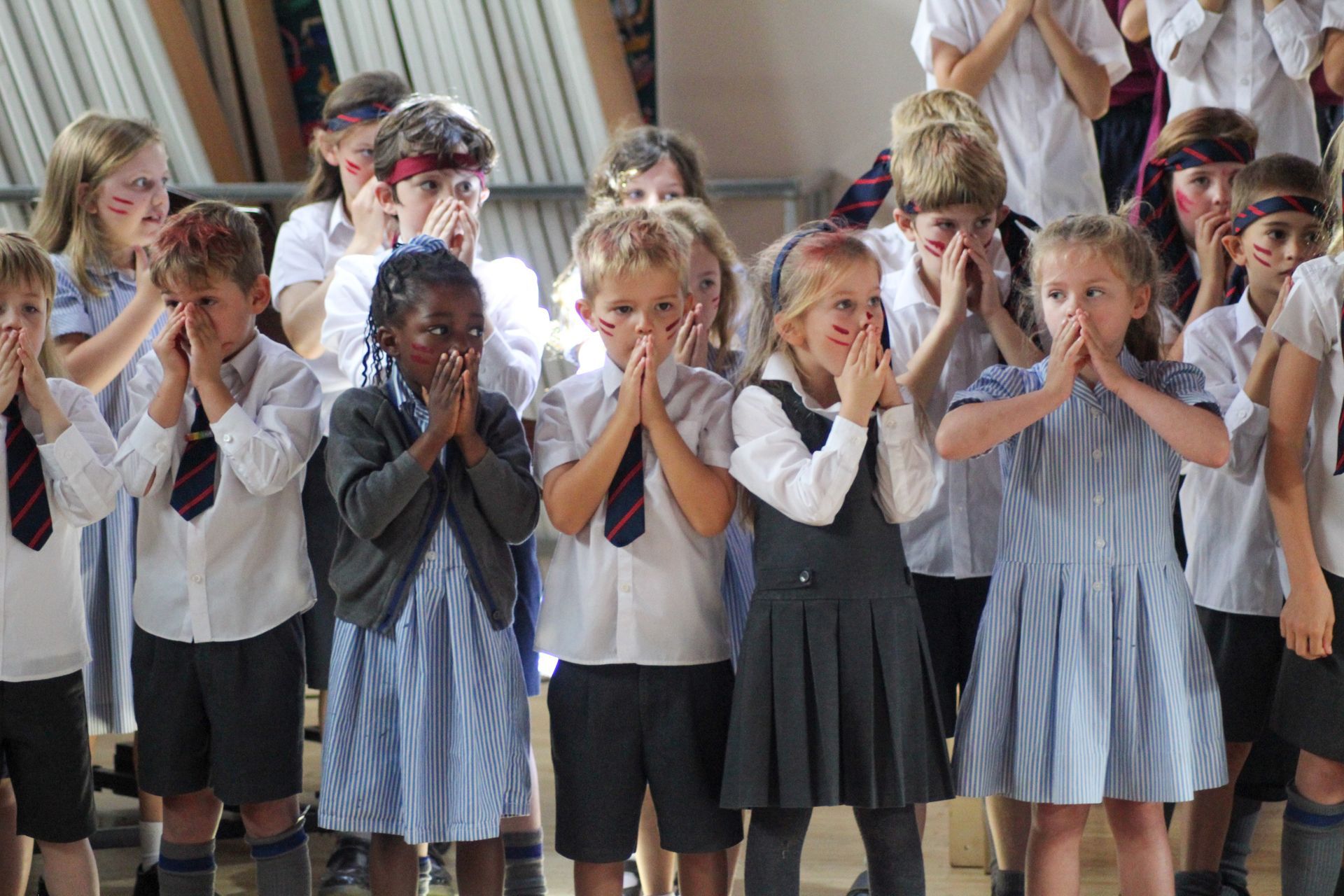
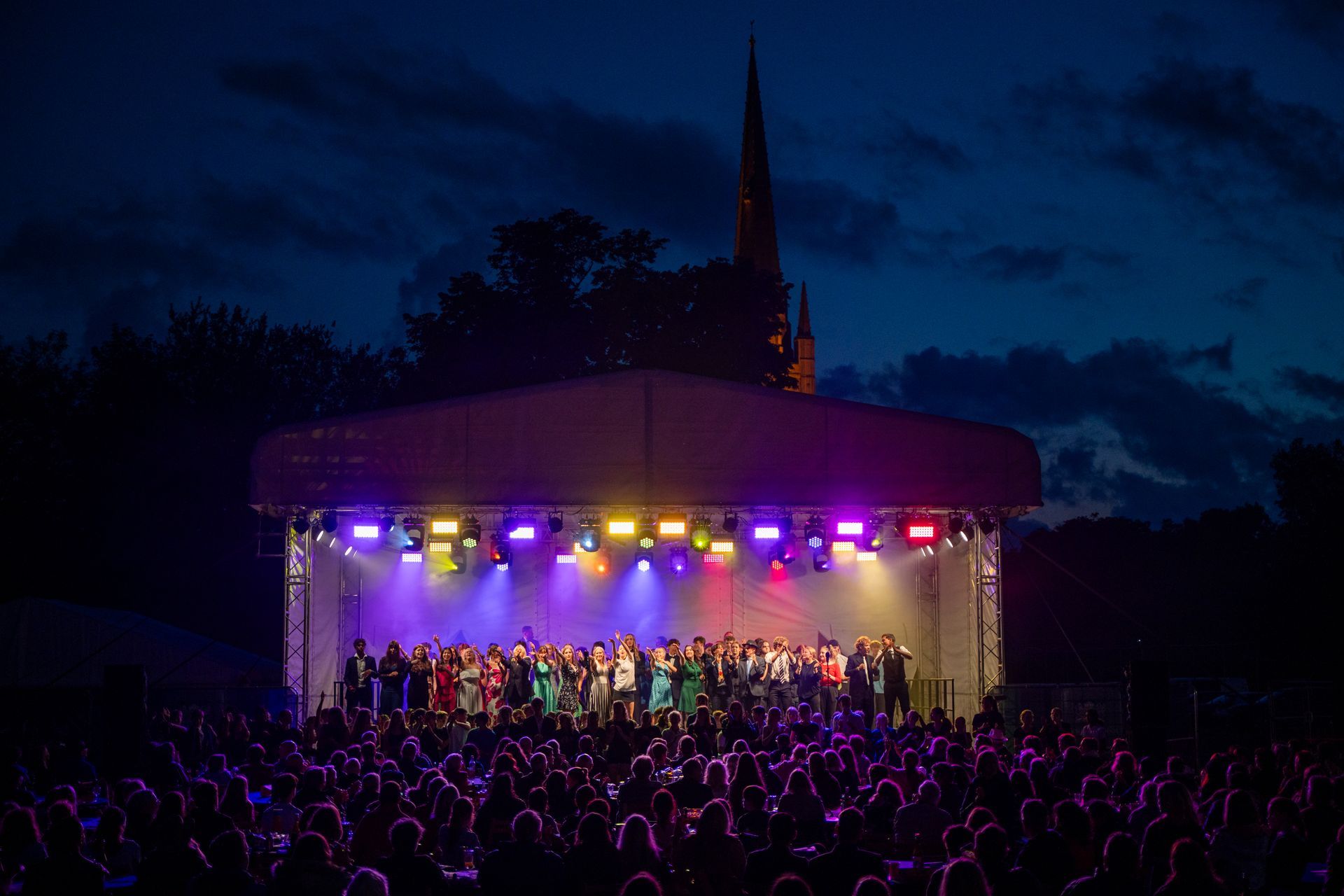
Big hair, air guitars and legendary rock anthems took centre stage at Norwich Lower School’s House Music Festival, as Heigham, Conisford and Magdalen battled it out in an unforgettable celebration of music , teamwork and rock ’n’ roll! This year’s theme was ROCK ANTHEMS , and the brief was simple: turn it up to 11 and ROCK OUT! Heigham kicked things off in style with Bon Jovi’s classic Livin’ on a Prayer. Full of energy and attitude, their performance got the festival off to a flying start, with plenty of power, passion and a chorus that had everyone ready to sing along! Next up, Magdalen took to the stage, air guitars at the ready, for the arena-rock favourite Don’t Stop Believin’. With a fantastic sense of occasion, they embraced every moment, bringing big vocals, infectious enthusiasm and plenty of stadium-sized spirit to this iconic anthem. Finally, Conisford unleashed their inner Guns N’ Roses with the epic Sweet Child O’ Mine. Bandanas, rock-star confidence and spectacular fireworks helped create a show-stopping finale, proving that Lower School knows how to put on a proper rock concert! Following the performances, our judge Posy Walton delivered her verdict, praising the house s for their confident singing, excellent commitment, charismatic stage presence, engaging performances, accurate intonation and the wonderful atmosphere created by each team. The standard was fantastic, and every house brought its own personality and flair to the stage. Then came the moment everyone had been waiting for… the results! And the winners of the Norwich Lower School House Music Festival are… CONISFORD! 🏆 Huge congratulations to Conisford, and an enormous well done to everyone from Heigham, Magdalen and Conisford. The enthusiasm, teamwork and music al confidence on display made for a truly brilliant morning. Director of Music Lower School, Mr Vine, said: “An amazing morning watching our brilliant young performers turn into rock legends! They came, they rocked… goodnight, Norwich! Fabulous work from everyone, and a huge thank you to all the staff for their hard work in making it happen.” Congratulations to all our young rock stars || you absolutely rocked the house !
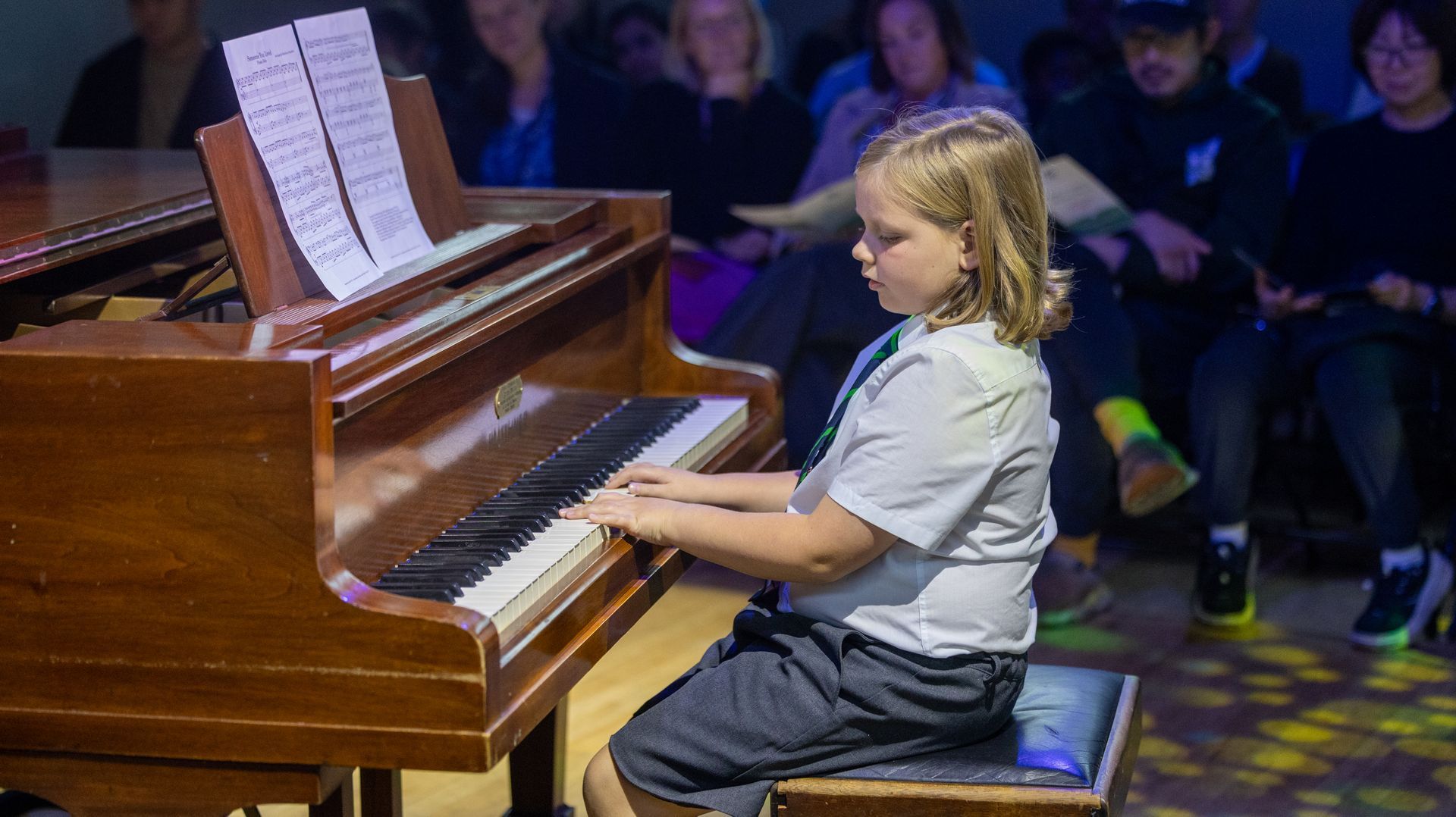
What a fantastic evening of music-making! Our Lower 2 and Upper 2 Informal Concert was brilliantly well attended, with a wonderful audience response that made the occasion feel extra special. There was a real buzz in the room as pupils took to the stage to share their musical talents, showcasing a terrific variety of instruments, styles and songs. The piano was certainly kept busy, with performances ranging from the gentle, expressive sounds of Evening Melody by R Esmail to the playful character of The Cantankerous Camel by P Wedgewood and Mummies by P Blackwell. There were some wonderfully imaginative moments, too, with Minnie Mouse Hits the Town , Rufus and The Shakers bringing plenty of personality to the programme. From the elegance of Handel’s Fireworks Minuet to the jazzy rhythms of Ain’t Misbehavin’ and a rendition of Someone You Loved , our pianists demonstrated growing confidence, musical understanding and a real sense of enjoyment. The violin added another dimension to the concert with The Legend of Ashitaka by J Hisaishi, while our vocalists treated us to an exciting mix of songs. Powerful performances of This Is Me and Part of Your World sat alongside the much-loved Where Is Love from Oliver. There was plenty of contemporary sparkle, too, with Sunroof , Lush Life and This Is What It Sounds Like from K-Pop Demon Hunters. A special mention must also go to the duet performances, which showcased the fun of making music together and the importance of listening and working as a team. There were plenty of smiles along the way, from a piano rendition of Happy Birthday to the relaxed, sunny feel of Park Daze . Each performance brought something different, and it was lovely to see pupils developing the confidence to stand up in front of an audience and share something they had worked hard to prepare. Informal concerts are such an important part of musical life at Lower School. They give pupils the chance to celebrate their progress, learn from performing in front of others and, most importantly, enjoy making music. The enthusiastic applause and warm response from our audience showed just how much these performances were appreciated. A huge well done to everyone who took part. With such a happy atmosphere, an exciting range of music and so much musical confidence on display, it was a concert to remember!
Senior School News
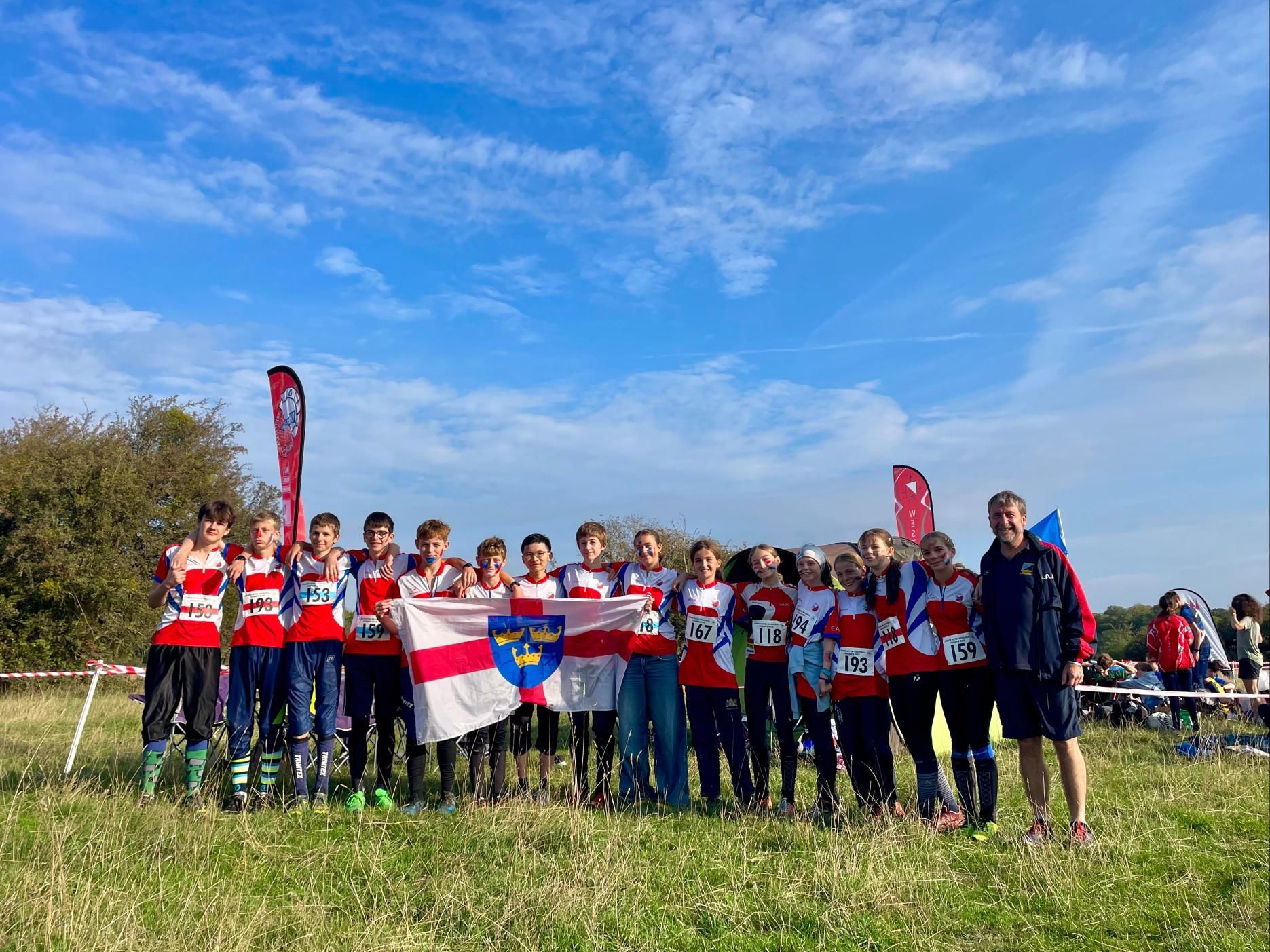
Oscar PW, and Marcus R, competed as part of the East Anglia team at the British Orienteering Junior East Anglia came 7th overall, a fantastic achievement! Here is what Oscar and Marcus said about the event; "This was my first time competing for East Anglia, and I was running up an age category against runners two years older than me. I found the location for the first day quite challenging as there was very little to navigate by in places, which threw me off on some of the controls. I placed in the upper middle of the pack, which was a good result, although I felt I could have done better on another day. The venue for the relays on the second day felt easier to me, and I found the course less challenging. The runner before me in my team had put us in about 18th place, and I think I made a small improvement, taking us to 17th, and our final runner took us to 16th. Across the whole event, EAJS came 7th out of all the teams there, which was a great result considering we were one of the teams with the fewest runners." - Oscar "On the whole it was a very successful weekend for myself and east Anglia. with my individual performance I broke expectations as I was running up an age class, managing to earn an impressive 12th place. As east Anglia were the hosts, we had a good number of runners and a large number of relay teams. I ran the first leg for my team finishing 3 minutes behind the leader meaning we were right at the front of the race after my leg. Overall east Anglia once again performed better than predicted finishing 7th as a team, a very impressive weekend." - Marcus
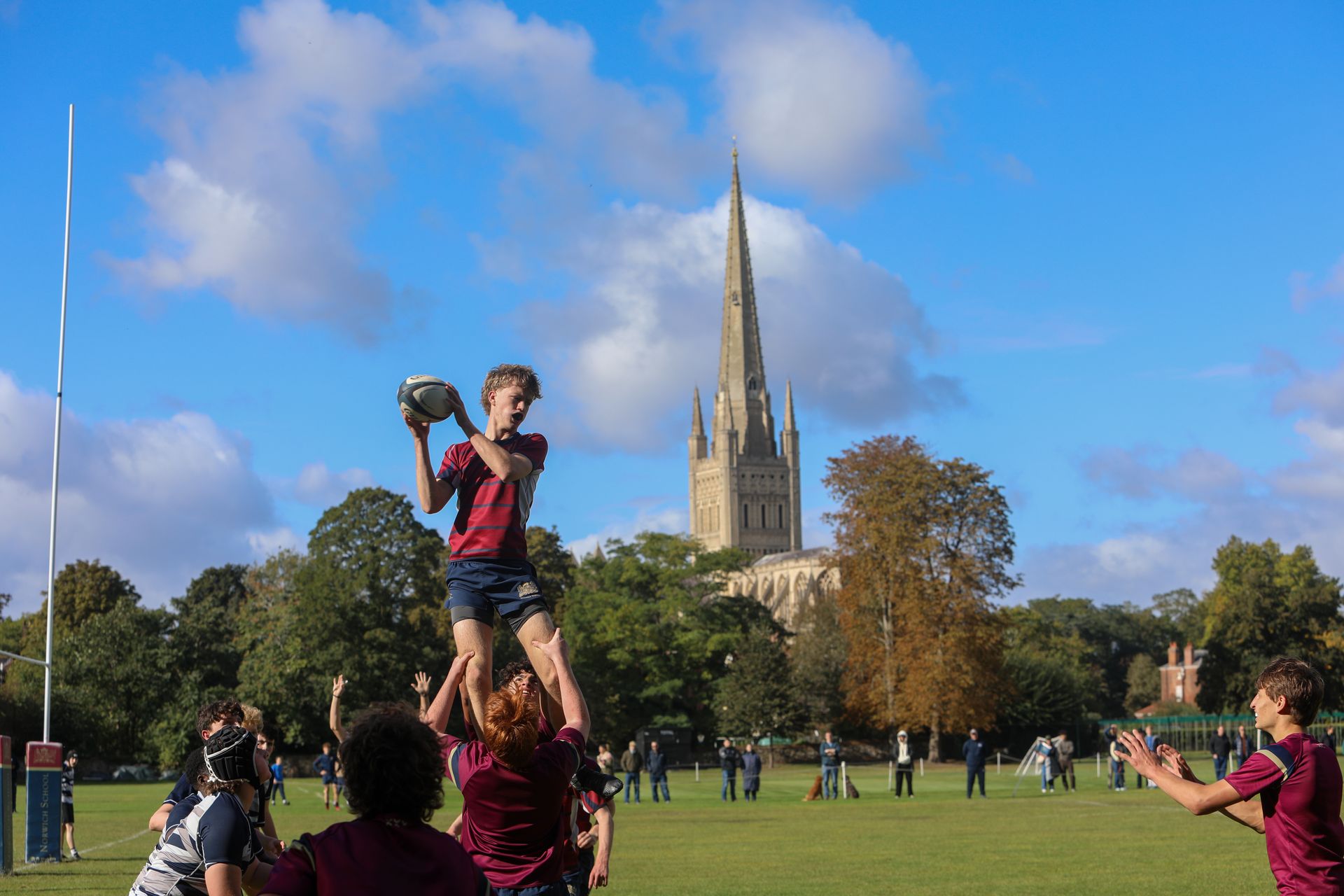
Senior Rugby The Senior Rugby programme got the term off to a strong start with an intensive pre-season, including a three-day training camp at Oakham School and a specialist coaching session with guest coach Harry Simmons, Head Coach of Leicester Tigers U18s, ahead of the annual Norwich School U18 Pre-Season Festival. The festival provided a valuable challenge for the U18 squad, who produced two closely contested performances against St Joseph’s College, Ipswich and Bedford School before finishing with an impressive victory against Duke of York’s Royal Military School. The term began with a pre-season fixture against The Leys School at Shelford Rugby Club, with both U18 and U16 matches taking place. The U18s secured a 38–24 victory, while the U16s narrowly lost 19–15. The first official block fixture saw Norwich take on Framlingham College, with both the 1st XV and 2nd XV recording convincing victories. The 1st XV won 36–10, with Sam Parretti delivering a standout performance. A particular highlight was Ned Francis finishing brilliantly in the corner after a dominant scrum and excellent handling through the backline created the space for him to score. The subsequent fixtures against St Joseph’s College, Ipswich, The Campion School, Essex, in the National Cup Round 1, and Felsted School proved challenging for the 1st XV. However, the team responded positively with a hard-fought 24–15 victory against Wymondham College. Lucas Ashton made a significant impact from the bench, bringing strong carries and defensive intensity. The 2nd XV also enjoyed an excellent afternoon against Wymondham College, securing a convincing 41–10 win, with George Davidson producing an industrious performance throughout. Inters Rugby The U15s began the term with a draw against Framlingham College before facing challenging fixtures against St Joseph’s College, Ipswich and Felsted School. They responded impressively in the National Vase Round 1, recording a dominant 45–5 victory over Wymondham College. Tom McCall, playing up from the U14s, was named Man of the Match following an outstanding performance. The U14s have made an excellent start to the term, securing three victories against Framlingham College, St Joseph’s College, Ipswich and Felsted School. The standout result came against Felsted, with Norwich recording a convincing 41–7 win. Sam Trickey and Tristan Knight shared Man of the Match honours, with Tristan scoring an impressive four tries. The U14s now look forward to the Bedford School Rugby Festival on 17 October, where they will test themselves against some of the strongest school rugby programmes across East Anglia and Southern England. Juniors Rugby The U13s opened the term with a challenging fixture against Gresham’s School before responding with an excellent 30–20 victory over St Joseph’s College. Tom McCardle and Teddy Pinder were among the standout performers. The squad then competed in a triangular fixture against Finborough School and Woodbridge School, securing a win against Woodbridge but narrowly missing out against Finborough. The U13s will now host the Norwich School U13 Mini Rugby Festival on Wednesday 14 October, welcoming Beeston Hall, Wymondham College, Town Close and Langley School for an exciting afternoon of rugby. The U12A squad also made a fantastic start to the term, opening with a convincing 45–5 victory against Gresham’s School. They followed this up with two further wins against Finborough School and Woodbridge School in a triangular fixture. Arthur Blyth and Jesse Morrell were among those producing particularly strong performances. The U12B squad have also enjoyed a successful start, winning both of their touch rugby fixtures against Gresham’s School and Finborough School. Overall, it has been an encouraging first half of term across all age groups, with strong performances, valuable learning experiences and plenty of positive signs for the weeks ahead. We look forward to building on this progress after half-term.
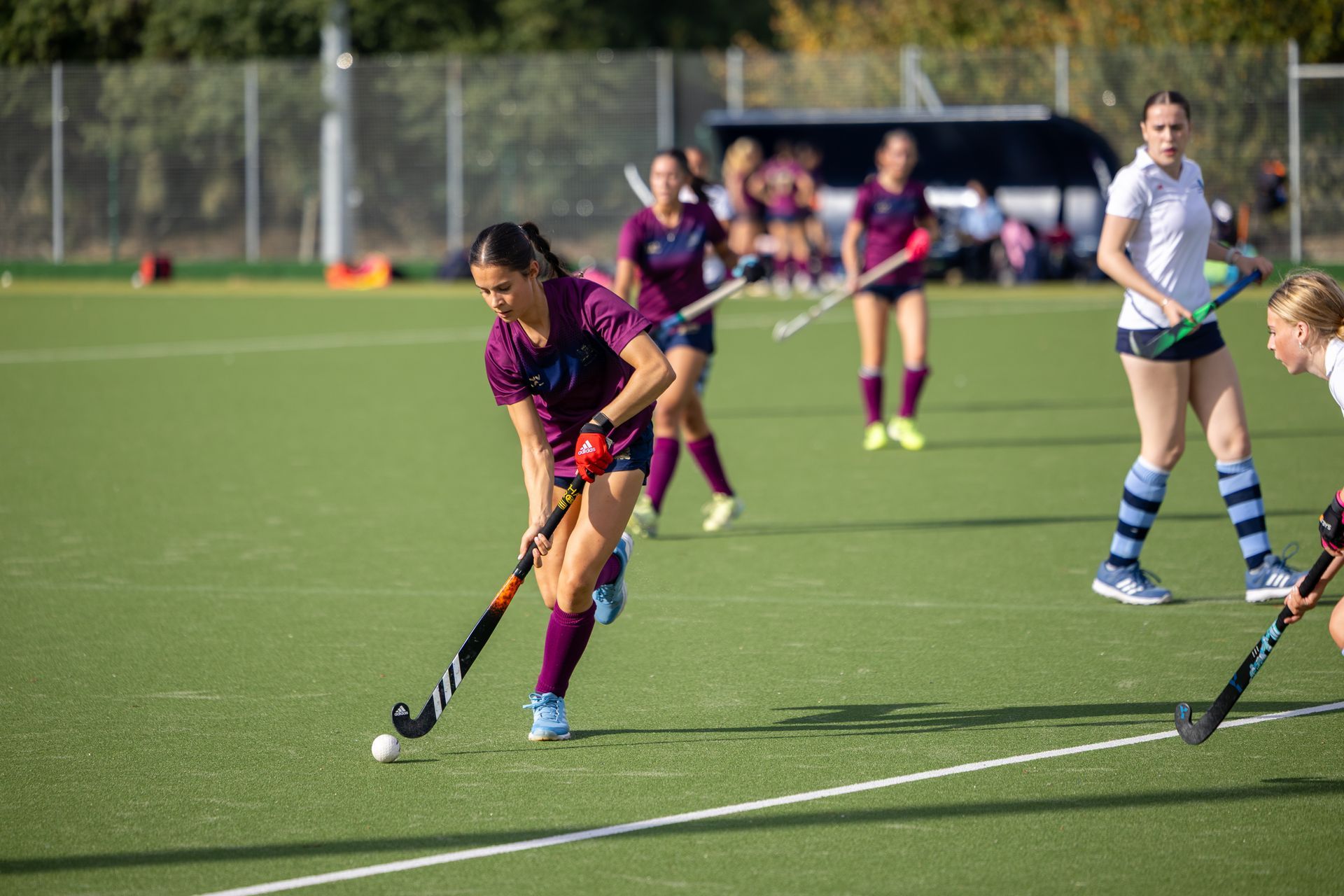
It has been an exciting and action-packed start to the Michaelmas Term for Girls’ Hockey at Norwich School. With a packed fixture programme, cup competitions and plenty of opportunities for development, the girls have embraced the first half of term with enthusiasm, determination and a fantastic attitude. From impressive victories to hard-fought contests against strong opposition, there has been much to celebrate across all age groups. Senior Hockey The 1XI have made a strong start to the season, delivering some impressive performances against quality opposition. A convincing 6–1 victory over UEA provided an excellent opening, followed by a commanding 5–1 win against Kimbolton in the first round of the Trophy Cup. The squad carried this momentum into Round 2, producing an outstanding team performance to defeat Wymondham College 11–0. The result reflected the girls' attacking quality, cohesion and growing confidence, with some excellent passages of hockey throughout. A challenging encounter against a talented Ipswich U18 side also proved a valuable experience, testing the squad's resilience and providing important opportunities for tactical development. The girls responded with determination and a strong work ethic, taking plenty of positives from the fixture. With a third-round Trophy Cup clash against The Perse approaching, the 1st XI will be eager to maintain their momentum and continue their cup campaign. The 2XI have been equally impressive, reaching the half-term break with an unbeaten record. A thrilling 3–2 victory over Ipswich was a particular highlight, with the girls demonstrating composure and determination in a closely contested, end-to-end encounter. Further convincing victories over Culford (4–1) and Felsted (6–0) have underlined the squad's excellent start to the season. The 3XI have also enjoyed success, securing a well-deserved victory over Culford. It was another encouraging performance, reflecting the squad's hard work and continued development throughout the opening weeks of the season. Across all three senior teams, it has been particularly encouraging to see the girls developing their tactical understanding, confidence and teamwork, while consistently demonstrating a strong commitment to representing the school. Inters Hockey Our U14 and U15 squads have enjoyed a busy and competitive first half of term, producing some excellent results while continuing to develop their skills and understanding of the game. The U15As opened their campaign with an impressive 3–0 victory over Langley, while the U15Bs delivered a superb 7–0 win against the same opposition. The teams have also been involved in some closely fought encounters, including a 2–2 draw for the U15As against Culford and a 2–2 draw for the U15Bs against Wymondham College. Both the U14As and U15As secured victories against Ipswich, further demonstrating the progress being made across the age groups. More recently, the U15 squads hosted Culford and Felsted in a triangular fixture afternoon, enjoying a particularly successful outing with victories in both matches. A standout result came from the U15Bs, who secured an excellent 3–0 win over Culford, highlighting their growing confidence and ability to perform as a team. Meanwhile, the U14 squads travelled to Felsted for their triangular fixtures, with both teams recording a draw and a narrow defeat. Despite the closely contested results, the afternoon provided valuable match experience, with the girls showing resilience, determination and an increasingly strong understanding of their roles on the pitch. It has been especially rewarding to see the U14s adapting to the demands of 11-a-side hockey, developing their positional awareness, decision-making and confidence with each fixture. The progress across both age groups has been encouraging, and there is plenty to build upon as the season continues. Junior Hockey Our Junior squads have made an enthusiastic start to the season, with a strong emphasis on developing fundamental skills, building confidence and gaining valuable competitive experience. The U12As have enjoyed some excellent results, recording victories over Gresham's and Wymondham College, while the U13As have also impressed with wins against Wymondham College and Witham Hall. These performances reflect the girls' growing confidence and their ability to transfer the skills developed in training into competitive situations. A recent block of fixtures against Woodbridge, hosted at Harleston, provided another excellent afternoon of hockey. With plenty of closely contested, end-to-end matches, the girls were challenged to make quick decisions, work together effectively and apply the principles covered in training, particularly their PCA work. At Junior level, our priority remains creating a positive and enjoyable environment in which every player feels confident to develop, challenge themselves and embrace new opportunities. It has been wonderful to see the enthusiasm and energy the girls bring to both training and matches, alongside the progress they are making individually and collectively. Hockey outside of School Alongside our extensive school hockey programme, it has been fantastic to see a number of girls continuing to pursue their hockey ambitions beyond school. We are fortunate to have players involved in county and East Talent Academy pathways, as well as those competing at National League level for their respective clubs. These opportunities are a reflection of the girls' dedication, commitment and passion for the sport. We are proud to support players at every stage of their hockey journey, from those discovering the game for the first time to those aspiring to compete at the highest levels. Our aim remains to provide an inclusive, ambitious and enjoyable hockey environment in which every pupil has the opportunity to develop, succeed and foster a lifelong love of the game. Looking ahead to next half term With another busy half term ahead, there is plenty to look forward to across the Girls’ Hockey programme. The 1st XI will be hoping to extend their Trophy Cup run with their upcoming third-round fixture against The Perse, while our Junior, Intermediate and Senior squads have an exciting programme of fixtures ahead. The second half of term will see competitive fixture blocks against Norwich High School, Framlingham College, The Perse, Kimbolton and Haileybury School, providing further opportunities for the girls to challenge themselves, gain valuable match experience and continue their development against a variety of opposition. Reflecting on the first half of term, what has stood out most is the enthusiasm, commitment and team spirit demonstrated by the girls throughout the programme. Whether celebrating a convincing victory, competing in a tightly contested fixture or learning from a challenging match, the girls have approached each opportunity with a positive attitude and a willingness to improve. A huge congratulations to everyone involved for their efforts and achievements so far. Thank you also to our dedicated coaching staff, parents and supporters, whose continued encouragement and commitment play such an important role in the success of the programme.
Blog
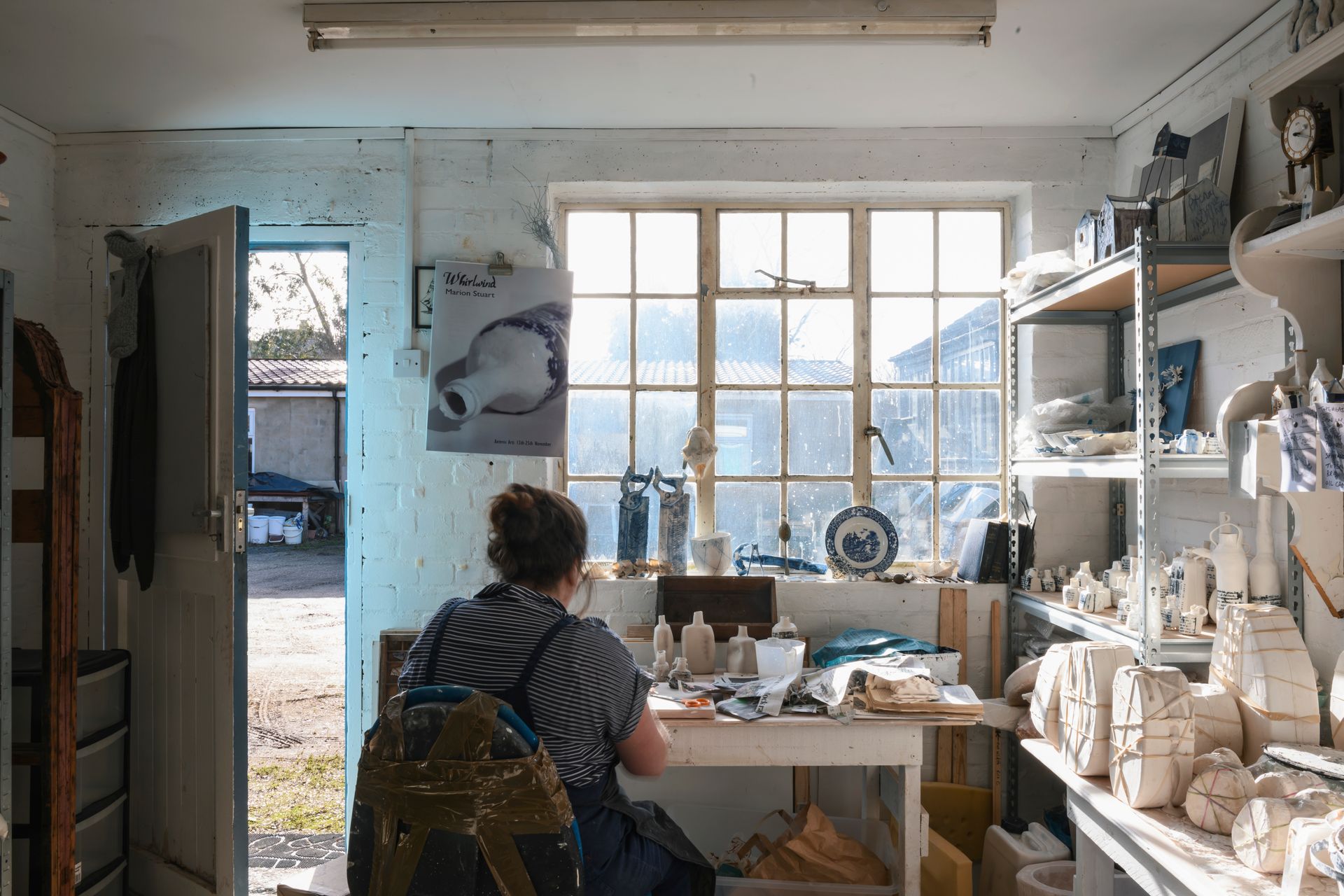
The Crypt Gallery, Norwich, presents Unspoken , a joint exhibition by artists Sophie Eade and Marion Stuart , bringing together new paintings and ceramics shaped by their shared interest in text, transcription, and the quiet charge of language. Working from a thematic starting point of writing , both artists explore how words shift when they move across materials — from page to clay, from conversation to surface, from the spoken to the withheld. Their works carry fragments of text that are often difficult to read, partially obscured or embedded within layers of slip, glaze, paint, and mark‑making. Meaning sits in plain sight, but not always immediately accessible. The viewer is invited to look closely, to navigate the tension between what is said and what is left unsaid. The ceramics in Unspoken hold words pressed, carved, or transcribed into stoneware and wild clays. Some phrases emerge clearly; others dissolve into surface. The paintings echo this approach, using text, gesture, repetition, and erasure to test how language behaves with canvas and colour. Together, the works form a conversation about communication — its failures, its hesitations, and its quiet insistence. Eade and Stuart both work at StudioDo a ceramics space in Norwich , where their studio practice is shaped by discussion, shared problem‑solving, and a mutual interest in how materials carry thought. This exhibition reflects that ongoing dialogue: two distinct practices meeting at the point where text becomes form. Unspoken invites audiences to consider how language is held, altered, and sometimes lost — and how meaning can remain even when words slip out of reach. Exhibition Dates: 24 November - 29 November, 10:00 - 16:00 Private View: 27 November, 17:30 - 20:00
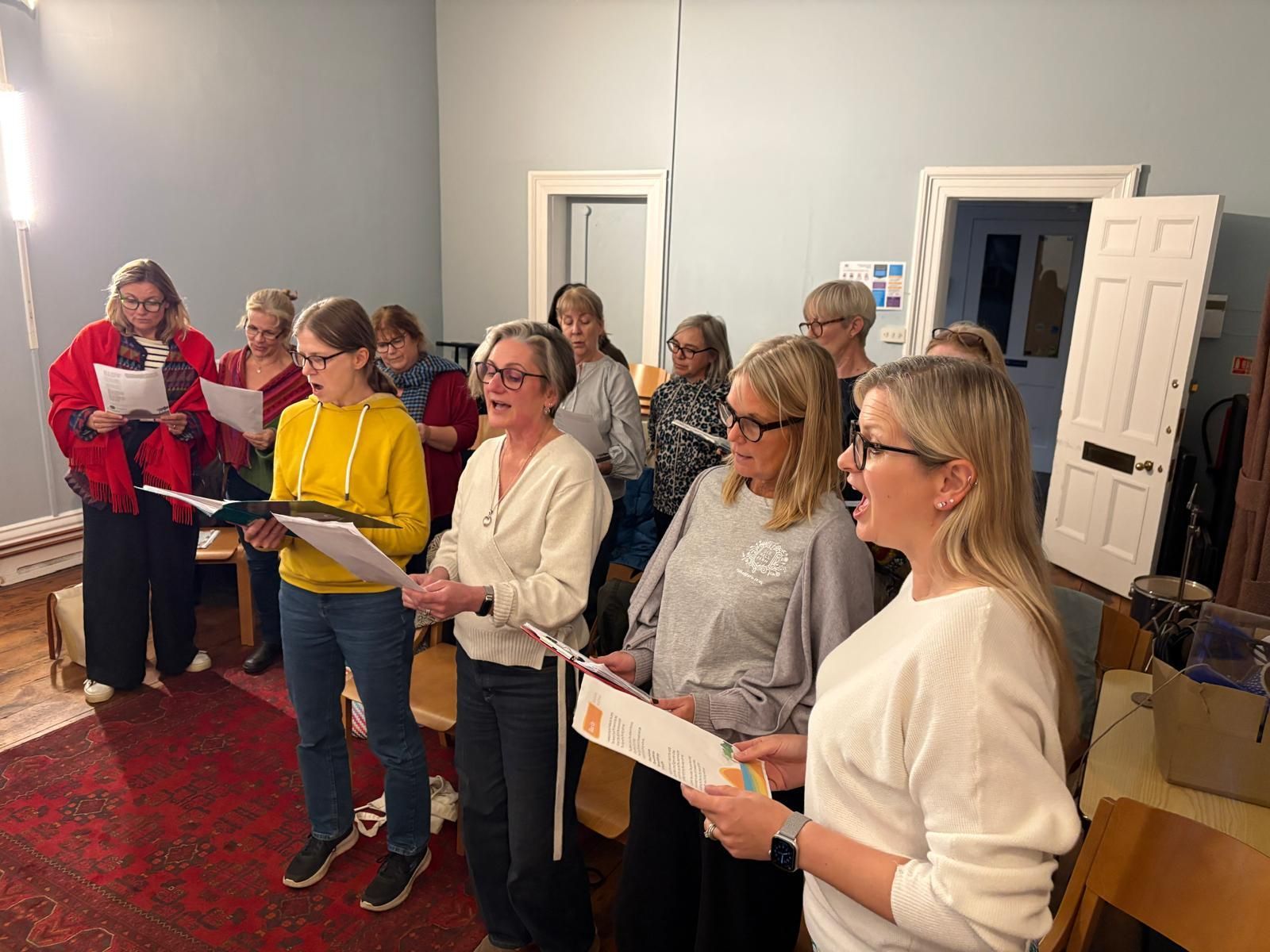
If you love singing and are free on Monday evenings during term time, the Many More Voices choir would love to hear from you. No auditions – no experience or music-reading skills necessary. Join our choir and celebrate Christmas in song Our inclusive and welcoming community choir has strong links with Norwich School – many members have children who are current or former pupils – and we share a simple love of melody, friendship and fun. This term we’re focusing on Christmas, featuring a syncopated mashup of the traditional favourites O Come, O Come Emmanuel and Carol of the Bells, as well as the lilting A Cradle in Bethlehem and a plethora of seasonal singalongs which we’ll enjoy with residents of the Great Hospital on 13 December. From pop to folk and more Under the supportive guidance of conductor and pianist Diana Cripps, from September to July we rehearse and perform a varied repertoire spanning gospel, traditional songs, pop and folk. Everything is taught by ear, although sheet music is available for reference. And don’t let nerves put you off – the more we sing, the more confident we become. Experience the benefits of singing The positive benefits of joining a choir are well documented, from an endorphin rush to a sense of community and achievement. Whatever the day brings we always feel better at the end of a rehearsal or concert. Singing makes us happy, and singing with a lovely bunch of people makes us even happier. We rehearse on Monday evenings in the Norwich School music room or chapel from 18:30 - 20:00. You can check out our website for more information.

2026 is National Year of Reading and we are going all in here at Norwich School! We know reading expands worlds, sharpens minds, and fuels creativity, so let's get inspired! Every month we are focusing on a different genre and hearing from a member of staff about what they like to read, why, when and where! For October, we are looking at Poetry. Let's find out more about why Mr Douglas-Field loves poetry... Tell us a little bit about the genre; what common themes or elements do you particularly enjoy? Being a reader of poetry doesn’t tie me to a theme or element, and I enjoy this variety. For example, over the summer I read Christopher Logue’s War Music, a retelling of Homer’s Iliad and Jean Sprackland’s Goyle, Chert and Mire – a vivid experience of nature and the countryside of Devon and Somerset. What was the book that introduced you to Poetry? Was there a particular book or author that made you fall in love with this genre? When I was a child, my great aunt bought me an anthology of poetry called I Like this Poem and I enjoyed reading many of these poems aloud, poems like Lewis Carroll’s ‘The Jabberwocky’ and ‘The Highwayman’ by Alfred Noyes. I read novels and non-fiction, but an interest in poetry lasted through my childhood and beyond. Has your taste in this genre changed over time? Yes! I love attending readings and open mic nights and listening to living poets performing their work. I also enjoy reading chapbooks and pamphlets published by tiny poetry presses. It’s fun to buy something handmade. Would you recommend this genre to someone who doesn’t usually read it? Why? The novel isn’t old. Robinson Crusoe is often considered to be the first major English novel – and it wasn’t published until 1719! People have been writing poetry for thousands of years. Why turn our backs on the bulk of humanity’s literary output? What do you enjoy most about reading, whether Poetry or anything else? I enjoy the possibilities promised by the next book I will read. I don’t know what it will be – or what I will be thinking and feeling about it. When and where is your favourite time and place to read?/ Do you have a favourite reading spot or routine for diving into books? I’m not precious about times and places. Which fictional character would you most like to have a cup of tea with? I don’t know what character I’d enjoy a cuppa with, but I wouldn’t mind spending the afternoon at Bread Source nattering with the poet John Donne. Do you tend to reread favourites from this genre or always look for something new? Both. I constantly revisit some poets, but I read new collections too. When was the last time a book from this genre really surprised you? Adventures in Form (2012) knocked my elbow off the table with its words sprayed on sheep to create random haik-ewes (get it?) Do you prefer classic or modern books within this genre, and why? Which is better? The foundations, or the roof? Knowing a few classics gives the reader some landmarks. With a few of these, the landscape makes sense. Has you taste in books changed over the years? I like to think I am more adventurous and open-minded now. Why do you think reading is important? Because it’s active. Reading a book is an invitation to think and to feel. Netflix and videogames are fun, but they hit different spots. Cambridge University’s Barbara Sahakian published a paper about the benefits of reading in 2023. She writes that ‘we found significant evidence that reading is linked to important developmental factors in children, improving their cognition, mental health, and brain structure, which are cornerstones for future learning and well-being.’ I find it odd when, towards the end of their GCSE courses, partisan non-readers ask how to get 8s and 9s. You need to lay your foundations early by reading regularly and broadly. Which book surprised you by how much you enjoyed it? A friend gifted me The Morville Hours (2008), Katherine Swift’s book about gardening. I resented the gift and started reading it only out of a sense of duty but, by the end of the first page, I knew that I was going to love it. It’s an exquisite reflection on the passing of time – and on death and renewal. Has a book ever changed the way you think about something? Most books do this to me. What role does reading play in your life right now? It’s a part of who I am. Click here for the reading list!
Meet the Team
Click on the images to read individual biographies.