Languages Ambassadors - Belek Reflects on a Memorable Week at the Goethe-Institut London
September 29, 2026
My experience with languages ~ Belek M
Reflecting on a memorable week at the Goethe-Institut London
Over the last decade, the study of modern languages to a higher level has dwindled notably in the UK, perhaps due to global affairs’ increasing dependence on the English language and – of course – the ever-growing capabilities of AI. Tragically, German appears to be the subject which has suffered the worst from declining interest. In the UK, A Level entry numbers for German have slid to just 2,294 in 2026, a decrease of 40% in the last ten years (data by FFT Education Datalab). But there is still absolute worth in learning foreign languages, and appreciating the cultures underpinning them.
The mission of the Goethe Institute (or Goethe-Institut in German) is to promote the teaching of German worldwide, be it at school, for work, or even for independent learners. Their dedication to this cause is clear: based in Munich, they operate 154 branches across no less than 100 countries, all of which provide classrooms, events spaces and a German book/film library.
Acting as Germany’s official ‘cultural embassy’, the roles of the Institut include liaising with local educational bodies to produce innovative learning materials and administering the Goethe-Zertifikat – an official qualification for non-native learners of the German language, similar to the IELTS for English learners. They also aim to portray a modern view of German culture through the provision of books, newspapers, magazines and films, as well as offering funding for aspiring artists and running summer camps in Germanophone countries.
In spring 2026, I was lucky enough to visit the UK branch in South Kensington, London, where I spent a week gaining valuable work experience alongside five others. The idea of applying for the programme had been put forward by the Norwich School German department as a great way of immersing myself in the language for the first time. Admittedly, I’d been feeling a little apprehensive in the weeks leading up to my visit, especially as it meant missing a week of school with my GCSE exams fast approaching.
However, the environment inside the building, based on the beautiful Exhibition Road, was much friendlier and less corporate than I’d anticipated. The first feature you notice upon stepping into the quirky interior is the eclectic combination of colours, quite literally chosen at random (a small display by the registration desk explained the reason for this), on the walls surrounding the vast stairway. Immediately, this created a lasting impression of warmth and cordiality which only strengthened over the week.
Our week of work experience could not have been more varied. On Monday, after our swift tour of the five-storey workplace, we were soon assigned our first group project: researching different German festivals and their unique traditions in preparation for a presentation the following day. One particularly memorable discovery I made was of the Österrad (Easter wheel), a 1.7m oak wheel which is stuffed with rye straw and branches before being set alight and rolled down a hill in the town of Lügde.
On Tuesday, we were presented with the challenge of hosting a cohort of Year 8 children from a secondary school in London. As temporary ‘young ambassadors’ of the Goethe-Institut, we interns took a leading role in supervising these young German students as they embarked on a treasure hunt around the state-of-the-art library. We also gave the presentation we’d been putting together the day before. I remember being taken aback by the attentiveness of our visiting pupils, punctuated by their energetic responses when we posed them questions about their experiences with the German language.
Wednesday and Thursday came with a wonderful range of activities as we attended a full staff meeting (featuring other employees working from home across the country), trialled the online Gimagine Award programme for DofE students and even got an exclusive look-in at the branch’s accountancy department. We were all struck by the contrast between the traditional invoices and transactions, printed on paper and archived in hundreds of box files, and the swiftness of the modern software used nowadays. Perhaps my favourite activity was filming a short promotional video for the Goethe-Institut London Instagram page.
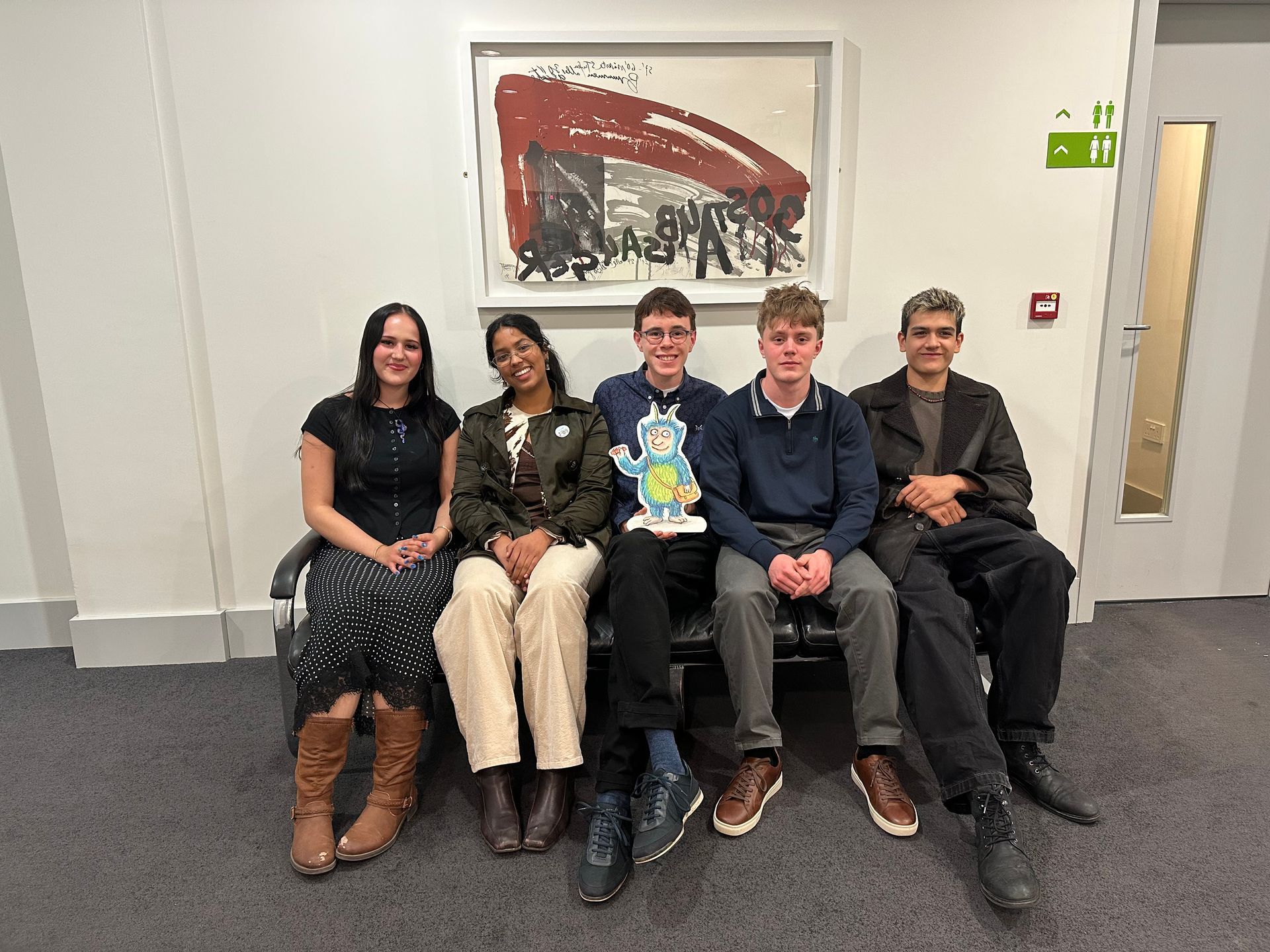
Despite our remarkable range in backgrounds, age and experiences, I couldn’t have asked for a friendlier group of fellow interns to spend my week with. We had rather generous working hours (10am to 4pm!) and were able to bond over lunches in the Prince’s Gardens. Accommodation was also arranged very kindly by the Institut – those who didn’t live in London were welcome to stay in the Gästezimmer (guest rooms) on the building’s top floor. Frankly, the morning ‘commute’ could not have been any easier!
I’d like to express my thanks to the school for identifying the Goethe-Institut as an invaluable opportunity for me to deepen my passion and awareness for foreign languages, and to the academic scholarship fund team for covering travel and other expenses. I’m also very grateful to everyone at the Institut who took the time to organise our visit. We, as visitors, felt immensely welcomed there.