From the World Cup to the Creation Story: A Friday Morning Assembly from Dr Richardson
June 12, 2026
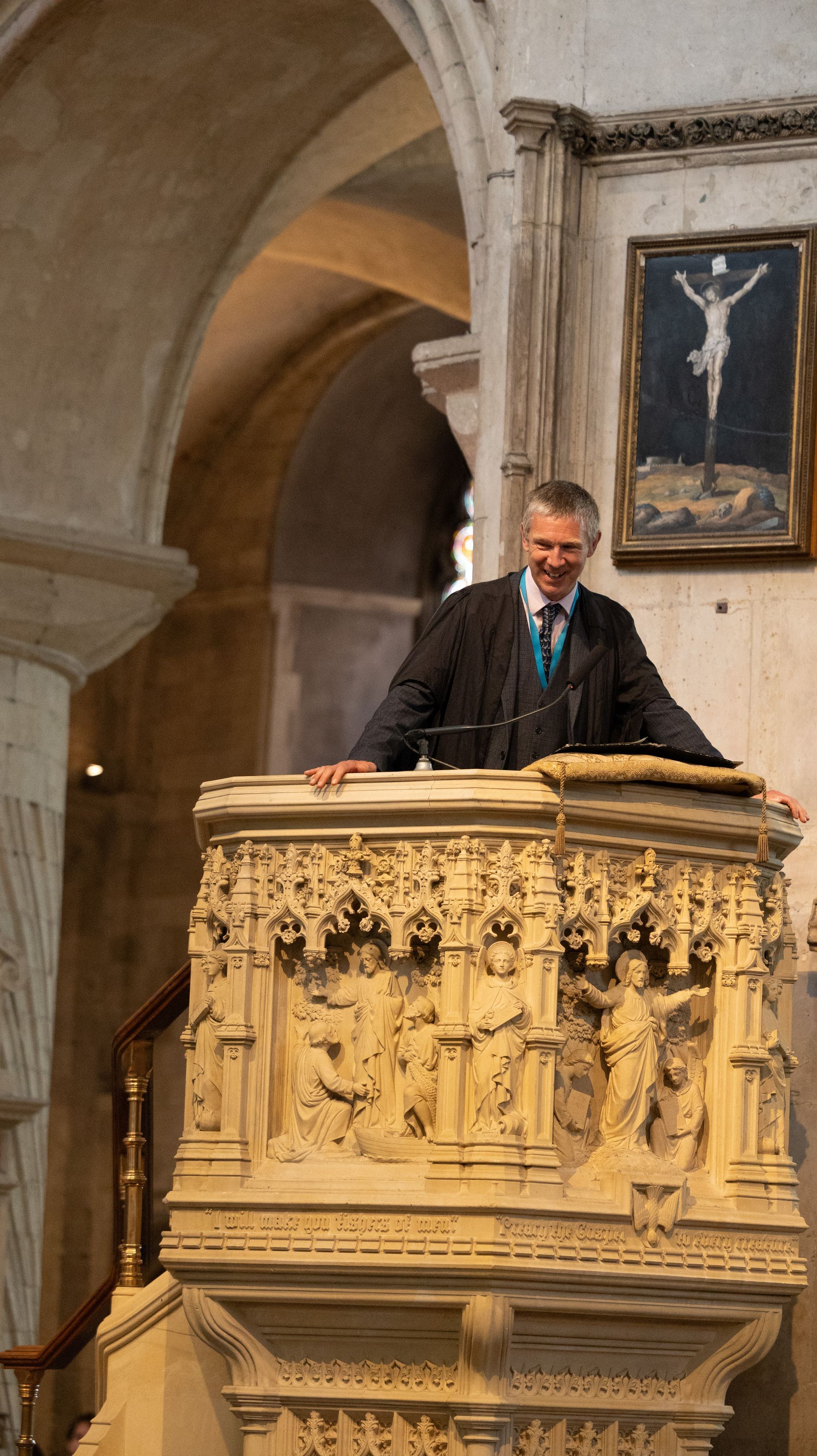
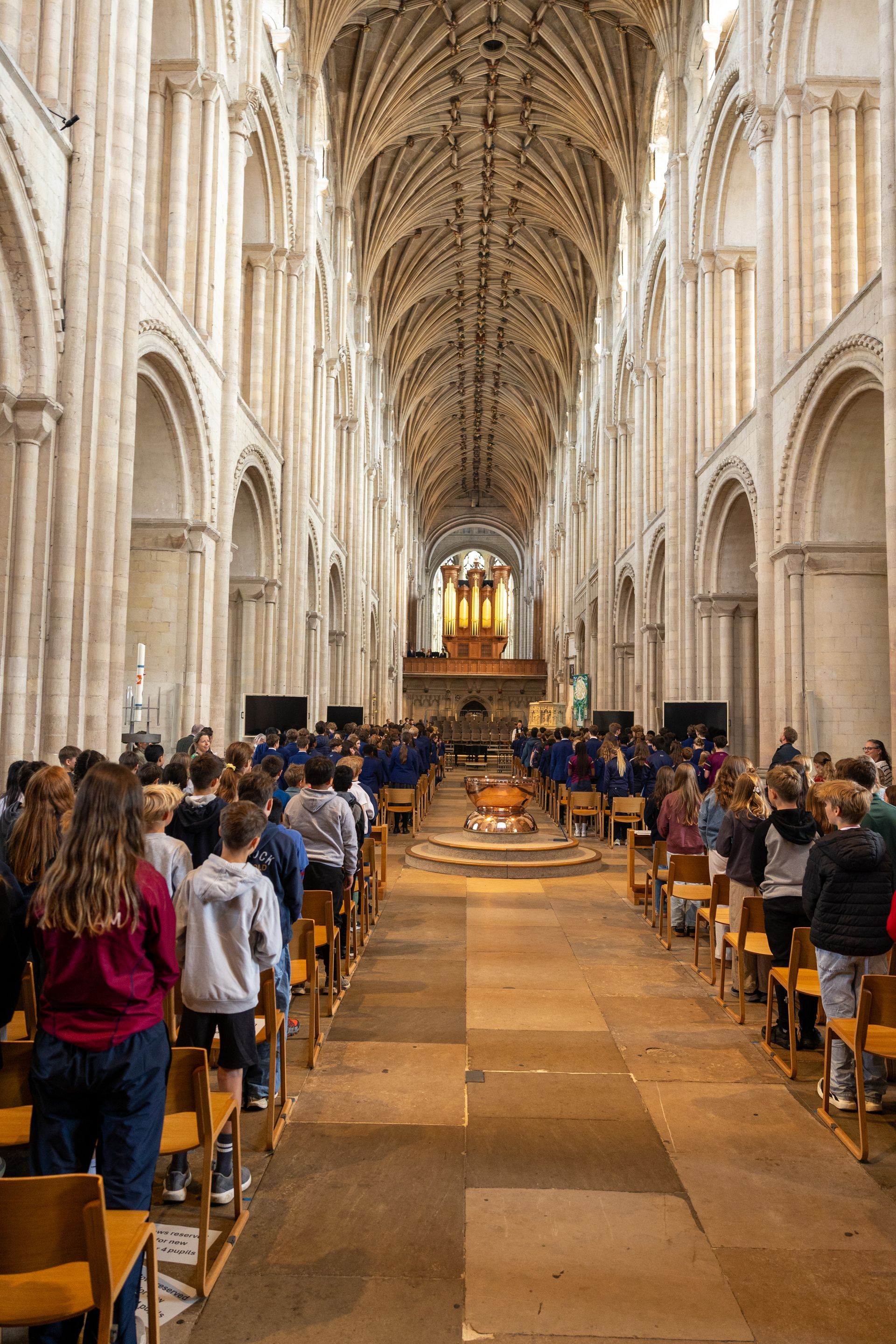
Good morning everyone. Do please sit down. And a very warm welcome to all of the new L4 pupils joining us this morning for their first cathedral assembly.
So, the world cup started last night. Could I have a quick show of hands.
Who watched the first match - Mexico v South Africa?
A better test of world cup fever is - Who watched the second match? South Korea v Czech Republic at 3AM?
There are always some hardy souls who commit to watching every match. With more matches, and 3AM as one of the regular kick-off times, that will be a bigger challenge then ever before.
I wouldn’t say I’m a big football fan. But I do always look forward to the big sporting events of the summer.
Be it a world cup, Olympics, Wimbledon, Tour de France, or just the simple pleasure of lying in the garden listening to Test Match Special.
One tradition associated with the world cup and the Olympics is the last minute scramble to get the stadiums built.
I never heard much about it this year. I think they are using existing stadia. But whether it was the Olympics in London or the world cup in Brazil, there are often stories in the news speculating that they won’t be ready in time. You could be forgiven for wondering why they don’t just start the whole process earlier. It turns out that FIFA did try that back in the 70s.
In 1973, the 1986 world cup was awarded to Columbia, giving them 13 years to get ready for it.
But, by 1983, it was apparent that even 13 years wasn’t long enough to get everything built, so the tournament was moved to Mexico, who had hosted in 1970 and so already had stadiums in place.
I say 13 years wasn’t long enough, but there is another school of thought that says it was too long.
Can you imagine working to a deadline 13 years in the future?
Many of you weren’t even born 13 years ago.
A deadline in the far distance is like not having a deadline at all.
‘Take as long as you need to build your stadiums, Columbia. Make them perfect. There is no rush’ That is the message they were given.
I put it to you this morning that deadlines are important and necessary. And while it may often seem that we could have done a better job if only we had a bit more time, that is often simply not the case.
I was sent down this line of thinking by listening to a book review on the radio last week. The book is called ‘Inside the Box’, and the author proposes that, far from hindering creativity and innovation, deadlines and other constraints have been a necessary part of inventions and creative thinking since the start of time. These might be natural constraints of weather and seasons, or man-made restrictions like coursework deadlines.
One story in the book is that of Dmitri Mendeleev, creator of the periodic table of the elements. Most of you will be familiar with the slightly odd structure of the periodic table, with different numbers of elements in various columns.
Legend has it that this structure came to Mendeleev in a dream, and he sprung from his bed to scribble it down on a scrap of paper before he forgot it.
The truth is that this dream happened the night before the deadline his publisher had given him. Is this a coincidence, or an example of cause and effect.
One way that deadlines could be considered bad is that you might genuinely be left with insufficient time to make something perfect. But ask yourself this, is it better to do something well in the time available, or aim for perfection and never get it done at all.
Most people don’t have the luxury of being able to devote their whole life to one single project. Most of us are always spinning several plates, and only have a finite amount of time to devote to each.
Each of you will have faced this recently when preparing for your exams. Much as you wanted to practice more Maths, you had to devote some time to English or History, and you might have had cricket matches or music lessons to fit in as well.
You might say that the ultimate building project was the creation of the world.
Now, I am aware that modern science suggests that the world was not created on quite the timescale that is recounted in the Bible, but I’ve asked Kort to read us the final stages of the biblical creation story as I think there is a useful lesson in it for us all.
We pick up the story at the start of the 6th day, by which time God has already created night and day, sea and sky, land, plants and animals.
So God created mankind in his own image,
in the image of God he created them;
male and female he created them.
28 God blessed them and said to them, “Be fruitful and increase in number; fill the earth and subdue it. Rule over the fish in the sea and the birds in the sky and over every living creature that moves on the ground.”
29 Then God said, “I give you every seed-bearing plant on the face of the whole earth and every tree that has fruit with seed in it. They will be yours for food. 30 And to all the beasts of the earth and all the birds in the sky and all the creatures that move along the ground—everything that has the breath of life in it—I give every green plant for food.” And it was so.
31 God saw all that he had made, and it was very good. And there was evening, and there was morning—the sixth day.
Thus the heavens and the earth were completed in all their vast array.
2 By the seventh day God had finished the work he had been doing; so on the seventh day he rested from all his work. 3 Then God blessed the seventh day and made it holy, because on it he rested from all the work of creating that he had done.
Thank you Kort.
What I really want you to notice in that story are 2 things. Firstly, God seems to have been working to quite a tight timetable, seemingly self-imposed. After all, who was going to hold him to account if he finished the job late? Secondly, when he saw all that he had made, it was very good.
Now, we all know from our report cards at Norwich School that very good is very good, but it is not perfect, or even Outstanding. You might have thought that God would not rest until he had made his world perfect.
But of course we know we don’t live in a perfect world. We do live in beautiful world containing dolphins, penguins and elephants, mountains, oceans and cathedrals. But it does also contain wasps, rain, and exams, and sadly much worse things than those. Even though God had a rest day at his disposal, he still stuck to the timetable and left the world as it was at the end of day 6.
It was, after all, very good.
I think there is a lesson here for all of us. When given something to do, whether it is a piece of homework, an art project, or performing in a concert, we should acknowledge at the outset that our goal is to make it as good as we can in the time available, rather than always aiming for absolute perfection.
And we should also acknowledge that it is simply human nature that we will work more diligently towards that goal if the deadline is close. I’m sure your teachers may have encouraged you to start revising ages before the exams, to spread it out and take the pressure off.
This is good advice, but I also know that those same teachers will struggle to follow their own advice when it comes to writing your reports. Deadlines can be scary, and sometimes they can feel restrictive. But they do help us to get stuff done that otherwise may well never get done.
I finish with a quote from the legendary jazz musician Duke Ellington. When asked by his producer how much longer he needed to finish his next song, Ellington replied:
“I don’t need time, I need a deadline”.