Celebrating a Record-Breaking Year for GCSE Results

August 20, 2026

It was a joy to see the school come to life once again as our 2026 GCSE cohort arrived to collect their results and it was a record breaking year, so there was much to celebrate. Congratulations to each and every pupil - your dedication, resilience and commitment are reflected in an outstanding set of results.


There were also some remarkable individual performances, with many pupils achieving exceptional outcomes. We caught up with some of them to learn more about their successes and hear about what they are looking forward to as they embark on their exciting next steps.


Art

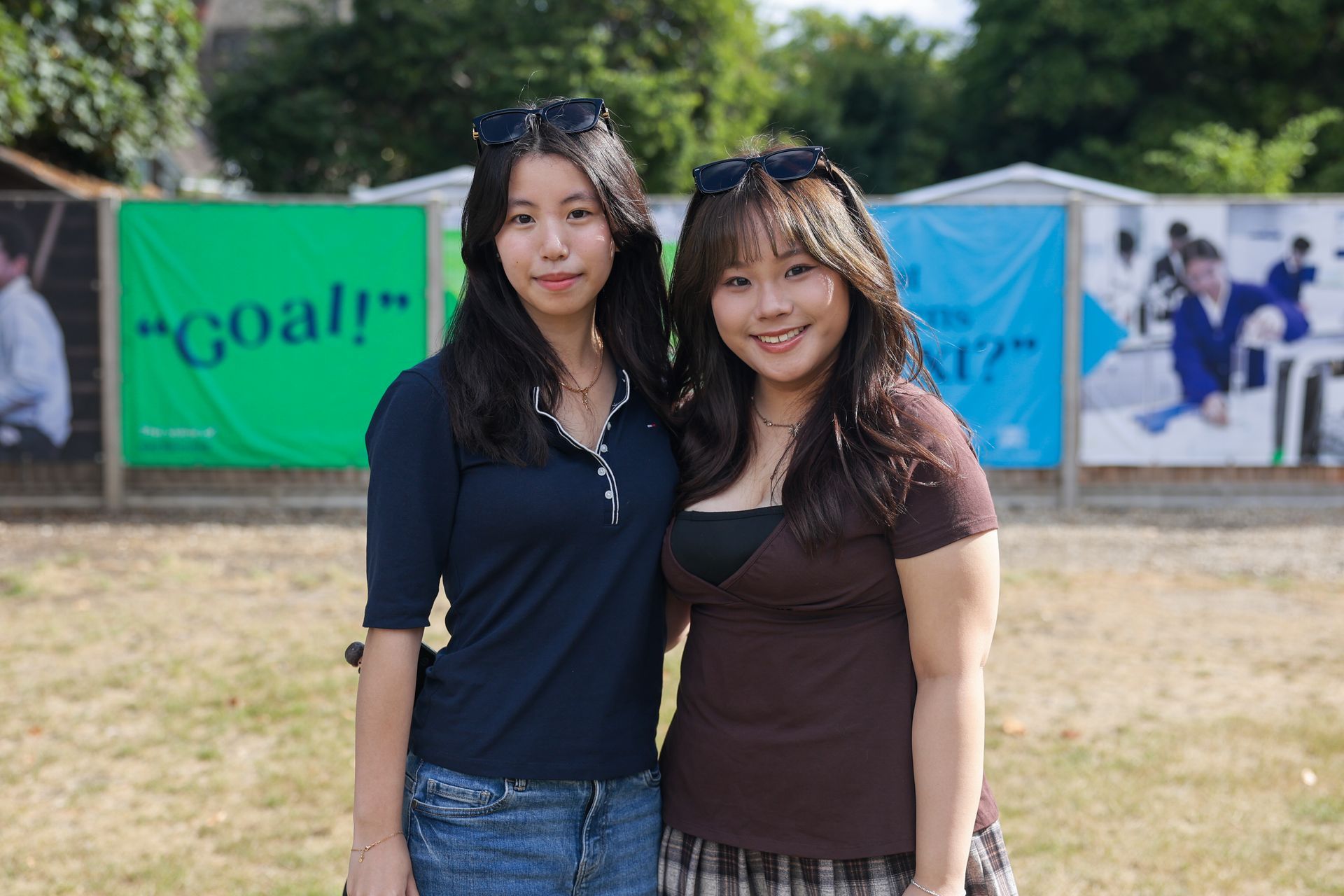
Here at Norwich School we are enormously proud of our Cater Building, which boasts three floors of cutting edge art and design equipment, across multiple art and design studios and workshops. These pupils demonstrate their love of creative art and look forward to spending more time in Carter exploring their creativity in Sixth Form.


Name

Isla


How many GCSEs did you take?

10


What were your results?

9 x grade 9 and 1 x grade 8


What was your favourite subject and why?

History – I loved my class and the lessons were so much fun!


What will you go on to study in Sixth Form?

History, 2D Art, Psychology and Politics.


Is there any particular reason or inspiration for choosing these A Levels?

I really enjoyed History and 2D Art at GCSE, so wanted to continue studying these subjects.


What are you most looking forward to about going into Sixth Form?

The freedom and more independence.


What are your co-curricular activities?

I love hockey and I am looking forward to joining the Debating Team in Sixth Form.


What do you love most about being a pupil at Norwich School?

The community.


Name

Lily


How many GCSEs did you take?

8


What were your results?

2 x grade 8, 1 x grade 7, 1 x grade 6, 2 x grade 5 and 2 x grade 4


What was your favourite subject and why?

History because I found it really interesting and also because we had a really nice class and the teacher was really good.


What will you go on to study in Sixth Form?

History, Business and 2D Art


Is there any particular reason or inspiration for choosing these A Levels?

I enjoy the subjects – I love the creatives.


What are you most looking forward to about going into Sixth Form?

Being with all my friends.


What are your co-curricular activities?

Scouts.


What do you love most about being a pupil at Norwich School?

The teachers are really lovely and there is generally just a great atmosphere around school.


Name

Beatrice


How many GCSEs did you take?

8


What were your results?

2 x grade 9, 3 x grade 7, 2 x grade 4 and 1 x grade 3. Plus I did the Skills for Employment elective.


What was your favourite subject and why?

2D Art, plus I loved Drama practicals but didn’t like the written work at all. I guess I must have liked Geography as well as I got a 9!


What will you go on to study in Sixth Form?

I have an Arts Scholarship, so I am going to do 2D Art, 3D Art and Geography.


Is there any particular reason or inspiration for choosing these A Levels?

I really like arts. I'm dyslexic and I find that for me creatives take my mind off other areas I struggle with; it’s definitely great for me to really get to focus on something I enjoy. Plus, I think Mr Passam is an amazing teacher.


What are you most looking forward to about going into Sixth Form?

The Sixth Form spaces and the Sixth Form uniform. Plus doing subjects I love and taking the next step on the journey into being an adult.


What are your co-curricular activities?

I am leader of the Christian Union which I will continue doing next year and I am also a police cadet outside school . Next year I want to do Charities Committee, Close Creatives Collective and Toastmasters.


What do you love most about being a pupil at Norwich School?

The Arts and everything about Carter. Plus I love the Norwich School community, especially Miss Boyt who has been my Tutor. Not to mention all the lovely friends!


Studies and Sport

Throughout Fifth Form pupils are encouraged to balance their academic studies while making the most of the wide range of co-curricular opportunities on offer. From music and drama to societies, volunteering and leadership roles, pupils are every aspect of school life. This year, sport was a very popular pastime for some…


Name

Rose


How many GCSEs did you take?

8


What were your results?

3 x grade 7, 2 x grade 8, 1 x grade 6 and 3/3 in Science.


What was your favourite subject and why?

PE because I was able to participate in multiple sports, including cricket, netball and athletics.


What will you go on to study in Sixth Form?

Politics, Business, PRE and Psychology.


Is there any particular reason or inspiration for choosing these A Levels?

I think Psychology sounds really interesting and something I might want to do in the future, and Politics is such a popular topic, especially at the moment.


What are you most looking forward to about going into Sixth Form?

The freedom to have more time to myself and being able to choose the subjects I am studying.


What are your co-curricular activities?

Netball, cricket, hockey – basically loads of sport!


What do you love most about being a pupil at Norwich School?

The atmosphere and the people – everyone is so welcoming.


Name

Hanna


How many GCSEs did you take?

8


What were your results?

7 x grade 9 and 1 x grade 8.


What was your favourite subject and why?

Definitely History, which is already really interesting but Mr Curtis was such a good teacher and helped me enjoy it more. I also surprised myself by liking Chemistry but Mrs Pywell is a brilliant teacher, and when you have a good teacher it helps.


What will you go on to study in Sixth Form?

History, Economics and Politics. I will start doing a fourth as well, just to see what it is like, but I am undecided about what subject.


Is there any particular reason or inspiration for choosing these A Levels?

I love History, I want to learn more about Politics and I like the teachers in Economics; I went to an economics taster lesson and Mr White was captivating.


What are you most looking forward to about going into Sixth Form?

The uniform – I cannot wait to wear trousers! Plus the OMR – I’m going to have an iced coffee every day!


What are your co-curricular activities?

I did a lot of netball inside and outside school last year, so I will continue to do that in Sixth Form. Plus I want to join Clio Society, Toastmasters, the Debating Team and Charities Committee.


What do you love most about being a pupil at Norwich School?

The community and having a lovely group of friends. I also think it’s important to mention that the teachers are lovely, and when you have good and supportive teachers it inspires you to do better in your subject.


Name

Rufus


How many GCSE’s did you take?

10


What were your results?

9 x grade 9 and 1 x grade 8


What was your favourite subject and why?

I really enjoy Maths, because I like problem solving.


What will you go on to study in Sixth Form?

Maths, Further Maths, Physics and Chemistry.


Is there any particular reason or inspiration for choosing these A Levels?

I like the subjects and they will help me to potentially study Engineering, which is a field that interests for the future.


What are you most looking forward to about going into Sixth Form?

Being able to study what interest me and focus on subjects I really want to pursue. Plus having more free time at school.


What are your co-curricular activities?

I play lots of sport and will carry on doing that, plus try and take up new sports if I can.


What do you love most about being a pupil at Norwich School?

The range of opportunities in school. Plus, the teachers are really knowledgeable and helpful.
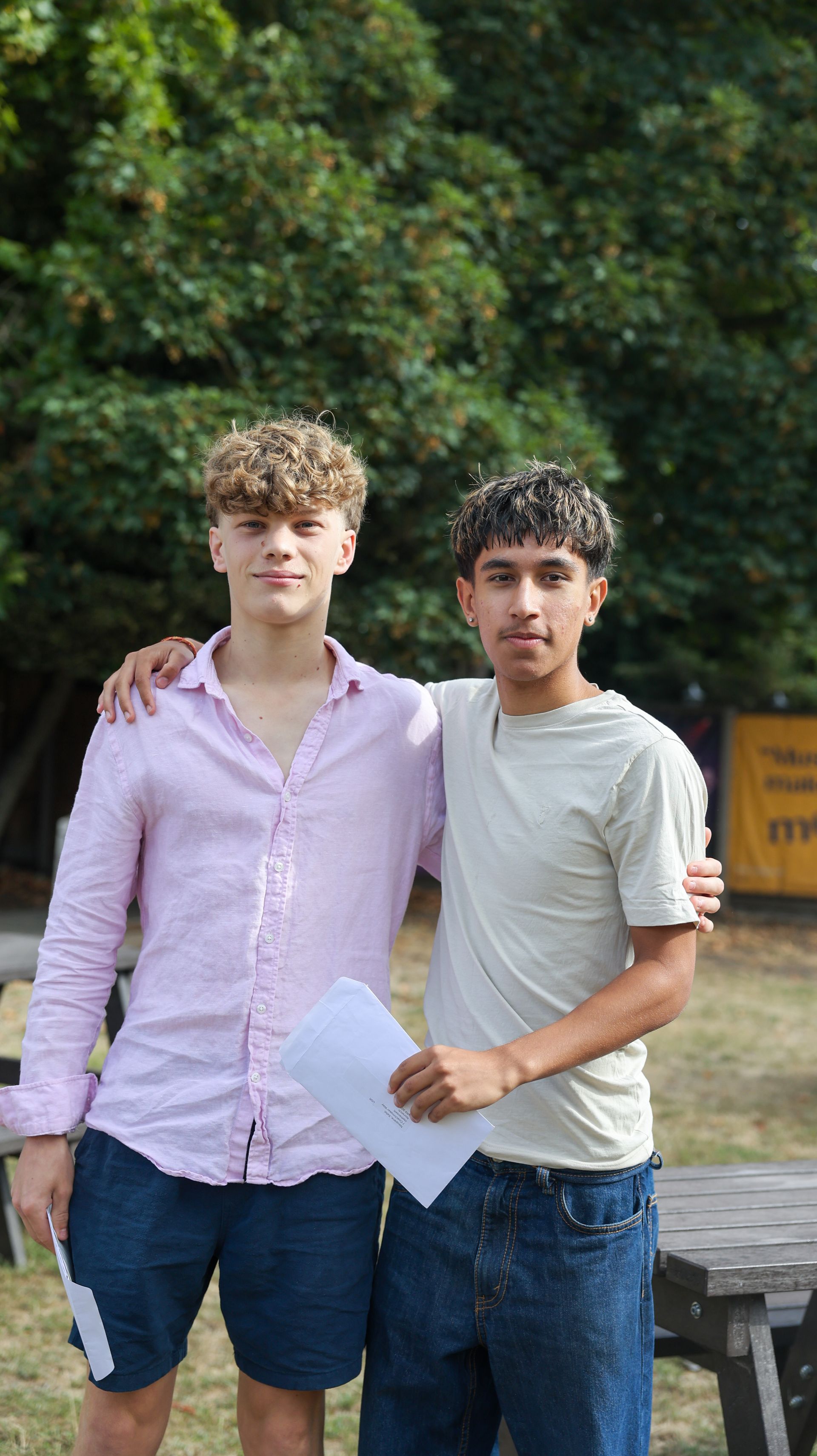

STEM

As always, STEM subjects are a popular choice in Sixth Form and following an outstanding set of STEM results in this year’s A Level cohort, with many exciting onward routes for STEM students, it is more popular than ever.


Name

Nathan.


How many GCSE’s did you take?

9


What were your results?

6 x grade 9, 2 x grade 8 and 1 x grade 7


What was your favourite subject and why?

I can’t choose a favourite as I feel doing GCSEs gave me the opportunity to learn about such different things. This year – science has really clicked for me. I love the experiments and learning in a practical way.


What will you go on to study in Sixth Form?

Chemistry, Biology, Maths and Further Maths.


Is there any particular reason or inspiration for choosing these A Levels?

With GCSEs you get to learn where your passions lie and over the course of Fifth Form, I realised I couldn’t wait to get to science lessons. As well as the learning the teachers were lovely and great at their jobs.


What are your co-curricular activities?

Throughout Fifth Form I volunteered for Beavers and I also took up rowing.


What do you love most about being a pupil at Norwich School?

It is home away from home – you build so many friendships that will last a lifetime. I don’t think there can be another school where the community is as good as here.


Name

Charlie


How many GCSE’s did you take?

8


What were your results?

8 x grade 9 – I only joined Norwich School this year so I did them in a year.


What was your favourite subject and why?

Maths.


What will you go on to study in Sixth Form?

Maths, Further Maths, Biology, Chemistry and Chinese.


Is there any particular reason or inspiration for choosing these A Levels?

I want to be a cardiologist or an obstetrician. I was lucky enough to be able to watch a heart bypass operation in Hong Kong and that inspired me.


What are you most looking forward to about going into Sixth Form?

More opportunities for volunteering and to doing more music – I would love to join the G Force choir.


What are your co-curricular activities?

The year studying for my GCSEs didn’t really give me time for co-curricular activities, but I am looking forward to making the most of these in Sixth Form. As well as Music, I would like to organise some Chinese activities.


What do you love most about being a pupil at Norwich School?

The fact it is so diverse.
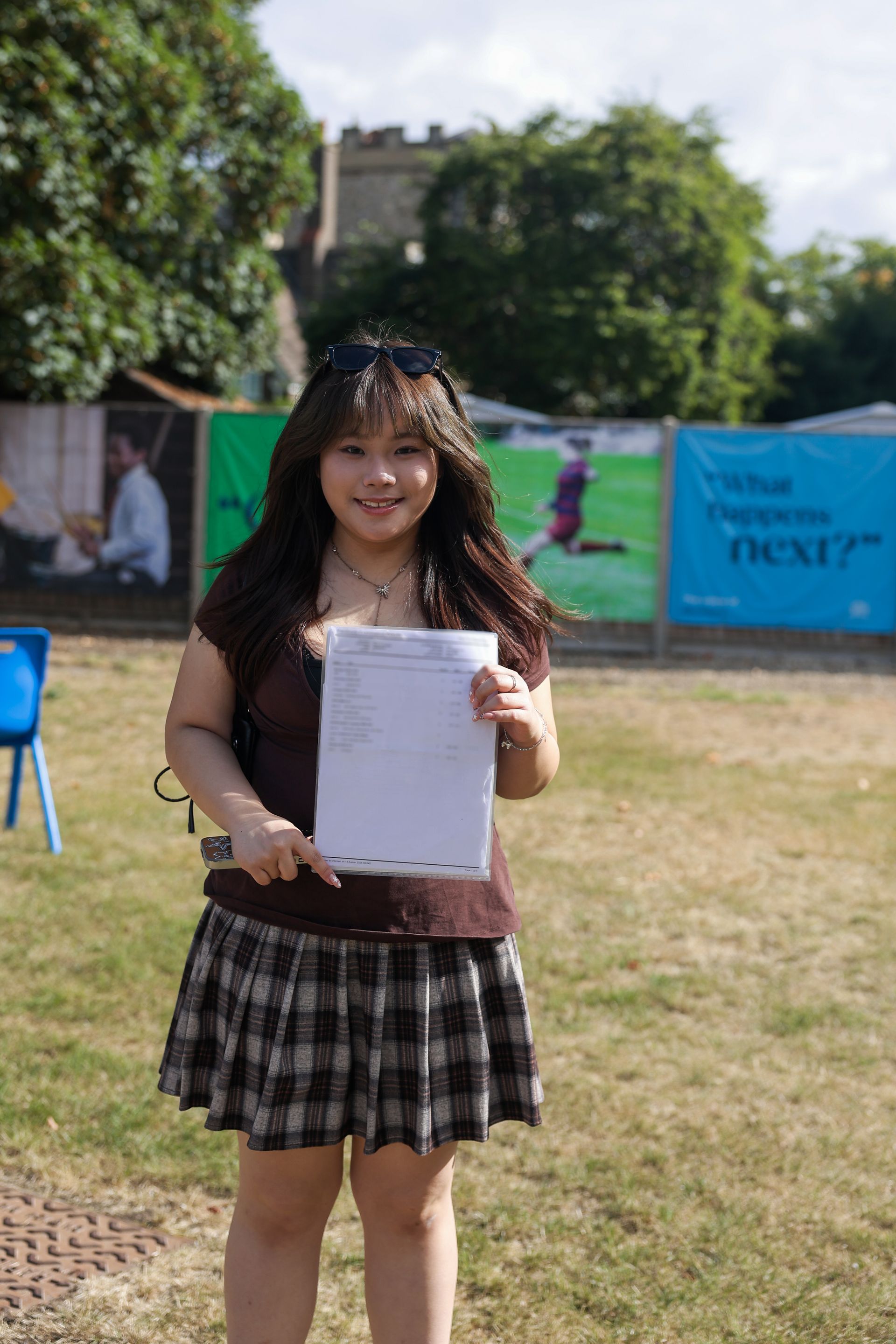


Name

Alena


How many GCSE’s did you take?

11


What were your results?

9 x grade 9 and 2 x grade 8


What was your favourite subject and why?

Biology because I want to do Veterinary Medicine and French because it was just so much fun. However, I will be honest and say I liked them all!


What will you go on to study in Sixth Form?

Biology, Chemistry Maths and Music.


Is there any particular reason or inspiration for choosing these A Levels?

Easy - I want to be a vet and I like Music!


What are you most looking forward to about going into Sixth Form?

Free periods and more independence.


What are your co-curricular activities?

I play the oboe, so I have really enjoyed the musical opportunities and look forward to doing more in Sixth Form.


What do you love most about being a pupil at Norwich School?

My friends.


Social Sciences

When pupils reach Sixth Form a number of additional subjects open up to them for A Level studies, and this gives them the opportunity to study something entirely new. Including Business, Politics and Psychology, these pupils are looking forward to something completely different in class next year…


Name

Safal


How many GCSE’s did you take?

9


What were your results?

8 x grade 9 and 1 x grade 8.


What was your favourite subject and why?

I particularly enjoyed History as I find it interesting to lean about events of the past and how they shape society today.


What will you go on to study in Sixth Form?

History, Economics and Politics.


Is there any particular reason or inspiration for choosing these A Levels?

I am really interested in these subjects and I hope that they will help me, as I hope to study Law in the future.


What are you most looking forward to about going into Sixth Form?

The freedom of being able to do more stuff outside studies and focus on what I want to do in the future.


What are your co-curricular activities?

I like sport, especially football. In Sixth Form I am looking forward to doing clubs around the subjects that interest me like Clio Society and Mock Law Trials. Plus I hope to join Charities Committee.


What do you love most about being a pupil at Norwich School?

There is a good support network in whatever you want to do. I also like being in the city.


Name

George


How many GCSEs did you take?

8


What were your results?

3 x grade 7 and 5 x grade 6


What was your favourite subject and why?

3D Art. The support the staff give you is amazing; they literally give you the freedom to be creative and let your imagination take over.


What will you go on to study in Sixth Form?

Geography, Politics and Business.


Is there any particular reason or inspiration for choosing these A Levels?

Geography was fun at GCSE so I am keen to continue with that and the other two are new subjects so it will be good to try something new; I am very interested in Politics although I don’t want a career in it.


What are you most looking forward to about going into Sixth Form?

Being able to study and focus on subjects you have chosen; it feels like you are in control of what you want to learn.


What are your co-curricular activities?

I am big on sports both in school such as cricket and hockey, and out of school I love golf.


What do you love most about being a pupil at Norwich School?

I think as pupils we are given freedom of responsibility which enables us to learn better as we are encouraged to explore our subjects. Plus the open and inclusive atmosphere across the whole school.


Name

Cartier


How many GCSE’s did you take?

10


What was your favourite subject and why?

The Arts – I love drawing and I love the teachers! Mr Ollivier helped me so much through the process and I got one mark away from 200, so I got a very high 9 in Fine Art!


What will you go on to study in Sixth Form?

Classics, History, Psychology and Economics.


Is there any particular reason or inspiration for choosing these A Levels?

I really love learning about the past so History and Classics are ideal.


What are you most looking forward to about going into Sixth Form?

Learning new subjects – three of my options are new to me and I feel it will be fun to learn about new things. And knowing Norwich School I know the teachers will be helpful and make it interesting.


What are your co-curricular activities?

I joined Model United Nations Society which has really helped me; at first I couldn’t speak publicly but being a member of MUN has helped build my confidence and grow as a person, especially as I would like to do Law in the future.


What do you love most about being a pupil at Norwich School?

I love waking up and coming into school and I love my friends.

Performing Arts

As well as Sport, Performing Arts is a very popular co-curricular option for many pupils, whether that’s Dance, Drama or Music. The opportunities to perform are endless at every level and these pupils demonstrate that it is entirely possible to balance participation with academic studies…


Name

Rory


How many GCSEs did you take?

10


What was your favourite subject and why?

Definitely Classics – I have always loved that period of history.


What will you go on to study in Sixth Form?

Theatre Studies, Classics and Latin.


Is there any particular reason or inspiration for choosing these A Levels?

They are three subjects I really enjoy and I might go on to do Classics at University, with theatre on the side. My dream is performing and this route is very much inspired by Eddie Redymane and Tom Hiddleston!


What are you most looking forward to about going into Sixth Form?

Widened opportunities and new spaces to explore. I’m really looking forward to all the extra opportunities that comes with Sixth Form.


What are your co-curricular activities?

Dance and theatre have been a big part of my life, but I also love music, especially singing in Close Shaves.


What do you love most about being a pupil at Norwich School?

The atmosphere and location; assemblies in the Cathedral are amazing and the setting in the Close is stunning.


Name

Min Ting


How many GCSE’s did you take?

11


What were your results?

7 x grade 9 and 3 x grade 8


What was your favourite subject and why?

Hard to say but if I had to choose I would say Music and the sciences.


What will you go on to study in Sixth Form?

Physics, Chemistry, Biology and Maths.


Is there any particular reason or inspiration for choosing these A Levels?

My family are in the medical field and they have inspired me to want to be a doctor.


What are you most looking forward to about going into Sixth Form?

More music opportunities and meeting new friends. Plus doing the subjects I love, of course.


What are your co-curricular activities?

Music. I play the piano and violin and have performed in various concerts. I hope that in Sixth Form I will also experience different ensembles.


What do you love most about being a pupil at Norwich School?

My friends and the welcoming atmosphere every day.
By Sonja Mitchell September 10, 2026
Sophie Todd (09-19) launches Norfolk and Waveney Mind's campaign, 'Hope lives here'
By Eleanor Lewis September 9, 2026
I'm wearing my Make America Great Again hats today and you will be forming an opinion of what that represents. Costume is very powerful, and a MAGA hat is almost like a flag. I don't know, I must try to be balanced, and there might be Donald Trump fans in your family. In social situations, I signal my hostility to MAGA with a frown. Can I recommend that to you? When you are part of a conversation that you know is unkind, don't be a bystander. Very often a frown is a powerful and effective response that sends a very clear signal without provoking a bigger argument. It’s called frown power. Maybe we should put the ‘Great’ back into Britain. That’s a gentle joke on the people who say that sort of thing, since it indicates that they don't know what Great Britain means. Excuse me a moment while I explain. There is a large group of about 150 inhabited islands off the coast of northwestern Europe. Collectively they are called the British Isles. There are two big ones: the one on the left(west) is called Ireland. The one on the right is called Great Britain, because it is the biggest of the British Isles. This morning you are resident in a country called the United Kingdom of Great Britain and Northern Ireland. Great Britain isn't going to stop being Great anytime soon. My assembly today aims to encourage you to imagine an even better Britain: not by looking back into an imagined past, but to inspire you to work towards a future version that's even better than the present, or the past. Today I have a dreadful story to tell you about a disaster in Wales that took place almost exactly 60 years ago. Just because quite a lot of things are bad now, it doesn’t mean that everything is getting worse, or that things used to better. Things that are normal today: health and safety, counselling, accountability, litigation, compensation – were almost completely absent 60 years ago. I’m 56, so while 60 years ago sounds like ancient history if you are 12, it isn’t all that long ago in reality. On that dreadful day in October 1966, it had been raining hard for weeks. The 240 pupils of the Aberfan Junior School wound their way through the back lanes of miners’ terrace houses on their way to morning assembly. You probably know that coal mining built industrial Britain. But by 1966, the coal industry had been in long decline and several pits had shut. The mining workforce had fallen from its peak, but pit jobs kept Aberfan going. The National Coal Board had control of UK mining and wielded great power. It had a firm grip on government, and it was held in what now seems uncomfortable reverence. The working man knew his place; authority knew best. Numerous complaints had been made to the Coal Board about the dangers of one of the seven gigantic spoil tips that loomed high above the village. Every mining community had its tips of waste material dug from the mines. The entire south Wales valleys landscape was jagged with them. The one above Aberfan had slipped three years previously when an ominous crater appeared at the top. A bulge had formed at the foot of the tip as a stream that was unable to drain away liquefied the tip into thick, black quicksand. The Coal Board brushed the complaints aside. Everyone knew that if they made a fuss, the mine would be closed. If the disaster had come 20 minutes earlier, the junior school below the tip would have been empty. In the classrooms lights began to flicker and sway before there was an ominous roar. A glistening black avalanche consumed everything in its path and then ruptured a water main, engorging it further and increasing the speed of its descent towards the school. A survivor said later, “one minute we were young innocent children of eight years of age … and then at twenty past nine we were totally different people and would never be the same again.” I have decided to leave most of the witness testimony out of this assembly. One of the first police officers on the scene recalls being rigid with shock. "A huge bank of water was coming directly towards us," she said. "It was like a tsunami, it was terrifying”. The crisis whistle sounded in the colliery and miners, their headlamps still lit, ran to the school where women were clawing at the slurry trying in vain to reach the children. News reports described the site resembling an earthquake or the aftermath of a high explosive bomb. I can’t tell you what the parents went through, but one rescuer recalled: “It goes to show how primitive it all seems; I wrote up a notice and pinned it to the chapel door informing parents that death certificates will be issued at the local fish and chip shop”. The waiting took 15 days to identify 144 bodies. The handful of surviving children did not really have a formal education for many years. Time and again, testimonies from the past describe the same thing – no one talked about what happened. This was an age of a stiff upper lip, embodied by the tough, macho miners themselves. Psychological help was stigmatised and viewed with suspicion. A local GP described the village as consumed with guilt, psychological problems, alcoholism and nervous breakdowns. All of that went untreated. What followed was a saga of cruelty and indignity. Donations to the Aberfan Disaster Fund poured in from all over the world but the money was taken away and the bereaved were initially refused help to pay for their children’s gravestones. The Coal Board initially offered £50 of compensation for each dead child before raising it to the "generous offer" of £500. A more substantial sum, it was advised, would have destroyed the working-class recipients not used to large amounts of money. The NCB chairman insisted to reporters that it was “impossible to know that there was a spring in the heart of this tip” although everyone else seemed to know and Ordnance Survey maps proved it. The tribunal that followed concluded the disaster was “a terrifying tale of bungling ineptitude by many men charged with tasks for which they were totally unfitted, of failure to heed clear warnings, and of a total lack of direction from above”. No one lost their jobs, was demoted or fined. This is obviously a horrible story. I’m telling you because you need to know, and it’s an antidote to thinking that Britain was such a brilliant place in the past. I could have chosen any number of examples. The 70s, 80s and 90s featured behaviour and events that I can scarcely believe are true from today’s perspective. And of course, the main reason I’m telling you is because you represent the Britain of the future. We won’t move forwards by nostalgic memories of some phoney past. As future leaders and people who will serve our communities, it’s your job to present an attractive vision of a better society that we can all work towards. Our speaker at prizegiving, Chanel Contos, was an inspiring example of a youthful changemaker. And the obvious first step is for you to be the change you want to see in the world.
By Eleanor Lewis September 9, 2026
On Friday 4 September, we were honoured to welcome Chanel Contos as guest speaker for Prizegiving 2026. Chanel is an Australian activist and Founder of Teach Us Consent, she was also the recipient of the Australian Human Rights Commission Young People’s Medal in 2021, and in 2023 she was named NSW Young Woman of the Year for her persistent efforts towards eradicating rape culture. Chanel has worked with Norwich School twice in the past, it was an honour to have her back in Cathedral Close. You can read her address below; It's an absolute honour to be here with you all tonight and to have been asked to present your prizes. I’ve visited Norwich a few times now and this school has a special place in my heart as every time I have come I’ve had conversations with students who inspire me and leave me in awe of their ability to discuss complicated topics of the world around them with such grace. When I was 15, my peers and I were taught what consent was for the first time. To this day, I found it the most valuable single lesson I ever received at school. We had a collective realisation as a year group, that almost every one one of us had either been, or had a close friend who had been sexually assaulted. The reason that my consent education talk was so mind-blowing, was because these behaviours that constitute indecent assault, sexual assault, and rape were so incredibly pervasive, that we didn’t even recognise them as an anomaly. After the talk, my friends and I went to see our head of senior school to give feedback. We had never ventured into a teacher’s office at lunchtime to tell them our thoughts on the curriculum, so that’s indicative of how passionate we were. We told her that the talk was incredible, but we had been taught it too late. With all good intentions, she explained that it’s hard enough to get a talk about consent approved by Year 10 parents, when most of the students are 16. We leave disheartened and move on quickly, but we keep having conversations amongst ourselves well into adulthood about these topics. I like to think of this as the beginning of my journey advocating for consent education. My school had the ability to deliver this education to us because we were a private school and had the flexibility to work outside of the school curriculum, but I wanted it to be taught earlier, and I wanted everyone to have access to this incredibly important information. Fast forward 8 years, and in 2021 and admittedly during a moment of extreme anger, I started Teach Us Consent by posting an instagram story asking people to submit testimonies of their own sexual assaults, naming the school they went to, the school their perpetrator went to and their graduating years. I requested that people avoid using any identifying information as I had no intention of singling out individuals. It was not simply about the fact that this happened – it was about that it happened to most of us. This was pivotal to Teach Us Consent’s founding ethos: be ruthless with systems, but kind to the people in them. This way of activism has worked for me as I can always be true to myself and speak truth to power, but never scapegoat or isolate individuals in the mission towards eradiating sexual violence, where we all have a role to play. I collected and published over 6700 testimonies, and 50,000 people signed my petition for consent education to be taught in schools. After a year of campaigning, I presented at a meeting with all Ministers of Education around the country, and they unanimously agreed to mandate consent education in all Australian schools every year, from Kindergarten, until year 10. Now, Teach Us Consent is a government-funded charity with 12 full time employees, and we’ve contributed to multiple policy and law changes in Australia. This was something I am super proud of, but tonight we are here to celebrate your achievements. You've all worked hard. You've excelled academically, creatively, athletically, musically, or through the contribution you've made to your school community. You should be incredibly proud of that, and it’s a privilege to be here with you tonight to celebrate and congratulate you. I have no doubt you’ll all go on to have many other recognitions and achievements in your life, but your biggest achievements may never appear on a transcript or manifest as a prize. Some of the most important things you’ll ever do may be noticing that something everyone else accepts as normal isn’t actually right. Your proudest moments should come from how you conduct yourself amongst friends, family or when no one is watching. Consistency to your morals and passions may not be celebrated in a big moment like today, but it’ll be noticed by those around you every day, and in yourself always. I want to leave you with a final reflection about your age. It may feel like being young is a disadvantage when you’re trying to make change or achieve things, because many people act like it is, but it’s actually a superpower and you mustn’t let others dismiss your experience of the world. Young people are often closest to the experiences that decision makers are trying to shape. You're living through the culture that adults are discussing on the news. You're using the technology that older people are trying to regulate and you're experiencing the education systems we're designing. I'm very often the youngest person in the room - in meetings with politicians, at conferences, events and convenings. I think our blissful ignorance about how system and structures are ‘meant’ to work can be exactly what helps us disrupt them. And, ultimately, you're the ones who are going to live out the policies and decisions that people in those rooms are making today. I'm now 28, and that means I’m too old to be the youngest person in the room. I don’t even use snapchat anymore. We need young people asking questions that older people might not think to ask. We need young people saying, "Actually, that's not how it feels for us, this is." So to the prize winners here tonight: you don't need to wait until you have the qualifications, the job title, the experience or the permission. I was 22 and posted an Instagram story from my bedroom that resulted in the biggest education policy change Australia has ever had. I am confident the biggest things and most important things you will ever do haven't happened yet, but maybe the ideas for them have come from your time at Norwich, or the problems you’ve identified have come from being a young person, and realising that the ‘adults’ aren’t paying close enough attention to your needs, or aware of solutions. Congratulations to every prize winner tonight, and to your parents, teachers and everyone who has helped you get here. Education is supposed to be a human right, but unfortunately it is still a privilage, so please do all you can with the opportunites your parents and teachers have given you. You should be extremely proud of yourselves, I am definitely proud of you. And I hope that, in the years ahead, you give yourselves permission not only to succeed in the world as it is, but to change the parts of it that you think need changing.
By Eleanor Lewis September 3, 2026
Welcome to the Cathedral or welcome back to the Cathedral. Whether this is your first school service or not, it is great to have the whole senior school community together in this extraordinary building – how lucky we are to gather here. I very much enjoyed meeting our new pupils at the various induction events yesterday and am grateful to all in the community who helped to make these events successful. As you would expect, we talked about the importance of settling in and feeling that you belong. As I now widen this welcome to the rest of the senior school, I echo the same message and observe that part of settling is identifying and aiming for targets during the coming year. Whether it be connected to academic work, sport, music, performing arts, community service, outdoor education or a particular club or society, there will be numerous things you want to achieve this year. I wonder what has shaped this ambition. Because whether you are a new or returning pupil, there will be context for each of you. The start of a new school year is a glorious opportunity, a blank page on which to create the next part of your life journey. However, it cannot be the first page, even for our new L4. We are shaped by long-term factors such as home life, but we are also shaped by more immediate factors such as holiday reading, recent trips and things we have seen. Some of what I want to say today came from a summer visit to an exhibition at the Sainsbury Centre, part of the UEA, more of which later. So a key question becomes, “Where have you come from and where are you going?” And while there will be many answers to the first part of this question as the new year starts, I am afraid that there is no opt-out to the second part; you have no choice but to engage. This is not because of school but because of the world around us. It is changing fast and it is coming at you; it is not waiting for you to emerge from school to stroll into your chosen career. You have to be using us to build up your skills and interests so that you are ready for the world beyond school.  An obvious example is AI. There is no doubt that AI will be important in your period of active work during and after school, but what is increasingly clear is that the power-brokers will be those who know how to harness its power within a moral, historical and cultural framework; put another way, learning how to ask the right questions and make appropriate use of the answers. A related area is around information and knowledge: It is true that the modern world has a lot of information available at the press of the button, but the most successful users of this facility will be those who have read broadly and deeply enough to have their own hinterland of knowledge, a curated facility for imagination and experience of an open-minded approach to make exciting connections with new information. To expand on this theme of world readiness, the development of genuine interests, the creation of areas of expertise and the practising of interpersonal skills are emerging as being at least as important as paper qualifications. Results are often needed to get in the door, to get the in-person interview, but the clincher in getting the role, the internship or the work experience is the warm personality you show, the adaptability to changing circumstances that you can evidence, the creativity to solve a problem, the collaborative spirit to involve others in a shared endeavour. Norvicensians can take on this challenge with great confidence: the strength of our community is authentic and sincere, so you can practise everything on the above list while you are with us. However, to do so, you need to involve yourself; hence the invitation earlier to think about what your targets are for the year. It means that events like the Clubs and Societies Fair next Tuesday are very important for everyone here, whether you are new or not. That will give you the chance to get involved in various opportunities so that you can be developing your personal portfolio and practising the skills you will need both during and after your Norwich School careers. And there is an important motivator for getting stuck into the breadth of opportunity available in Cathedral Close other than utility for later life. It is fun! The Sainsbury Centre exhibition to which I referred earlier is called Play Power. Its introduction states the following: “Showcasing a variety of manifestations of play, both past and present, ranging from board games, games of chance, physical activity, creativity, video games and make believe, as well as ritual gambling and divination, the exhibition highlights the enduring role of play in shaping human societies”. I commend the exhibition to you and also encourage you to find opportunities to play. As the exhibition shows, play has been part of different societies throughout history because play gives us the chance to learn about ourselves and others in a safe space. Play is not just having a break from the serious stuff; it may just be creating the extra, magic ingredient to shape your life in the future. To conclude, much of what I have said so far has been about individual development: building up critical judgment and improving your reading portfolio as part of your intellectual development; taking opportunities to learn and be creative through play in our clubs and societies programme. Yet many of the 21st century skills I referenced earlier were relational: collaboration, adaptability, teamwork. And this is where perhaps the biggest jewel in the Norwich School crown can be found: the community itself. Because we care about each other, because both peer and teacher-pupil relationships are so strong, you can commit fully to getting involved with the confidence that any such efforts will be welcomed and supported. Here, you will be able, indeed expected, to practise being kind, showing humility and working with others. All these behaviours build up the gentle self-confidence and desire to be a force for good that are the hallmarks of our best Norvicensians. I encourage you not to take the quality of our community for granted but to make the most of it. In my experience, it is not normal for educational settings to be so thoughtful, positive and supportive; it is a culture that needs to be nurtured, practised and celebrated. With all that I have said today, there is a significant overlap with today’s bible reading: “never be lacking in zeal…Live in harmony with one another…Do not be conceited…Be careful to do what is right in the eyes of everyone…”. In the light of our outstanding public examination results, where so many of our new L6 and departing U6 performed right at the top of expectations, I finish with a call-to-arms about the importance of a positive attitude. It is a quote from the industrialist, Henry Ford: “Whether you think you can or you think you can’t, you’re right”. Have a great first day of term; I look forward to observing you “thinking that you can” around school!
By Sonja Mitchell September 2, 2026
This October, Sketch for Survival returns to Norwich , to celebrate its 10th anniversary with a special exhibition at the Crypt Gallery under the Norwich School Chapel.
By Eleanor Lewis August 20, 2026
We are thrilled to announce record-breaking GCSE results for 2026. Overall percentages are as follows: 37% at grade 9 - best performance ever, including Covid years 59% at grades 9-8 (A*) – best performance outside Covid years 76% at grades 9-7 (A*-A) – best performance since Covid 87% at grades 9-6 (A*-B) 97%: overall pass-rate (grades 9-4) Outstanding individual performances included: 1 candidate with 11 x 9 or better; 6 candidates with 10 x 9 or better; 16 candidates with 9 x 9 or better; 24 candidates with 8 x 9 or better; 32 candidates with 7 x 9 or better; 38 candidates with 6 x 9 or better. Overall, of the 1163 grades received, 431 were at grade 9, 681 at 9-8 and 884 at 9-7. Steffan Griffiths, Head, commented, “This is the first cohort to benefit from the school’s decision to offer greater optionality regarding number and choice of subjects at GCSE. We are all delighted that our Year 11 have taken advantage of the change to such brilliant effect. “Taken collectively, they are the best GCSE results in the school’s history and I offer heartfelt congratulations to the pupils on their generation. They are in a wonderful position now to make the most of our outstanding Sixth Form provision and we look forward to welcoming them back in September.” Assistant Head (Fifth Form), Andrew Curtis, said, “I offer sincere congratulations to our Upper 5 pupils on their record-breaking results. Well-supported both at home and at school, they have excelled academically while also making the most of co-curricular opportunities in sport, drama, music and the wider community. We look forward to supporting them as they make the exciting transition to benefit from the development available both inside and outside the classroom in our Sixth Form.”
By Sonja Mitchell August 19, 2026
FONS is proud to support partnerships with the local community
By Sonja Mitchell August 19, 2026
Friends of Norwich School were delighted to support this event for the second year running
By Sonja Mitchell August 19, 2026
FONS has funded materials for L6 pupils to design a mural in the UKS Cafe
By Sonja Mitchell August 19, 2026
Ben tells us what inspired him to write his new book which is out now.
More Posts