An Assembly of Reflection from Mrs Hill

July 3, 2026

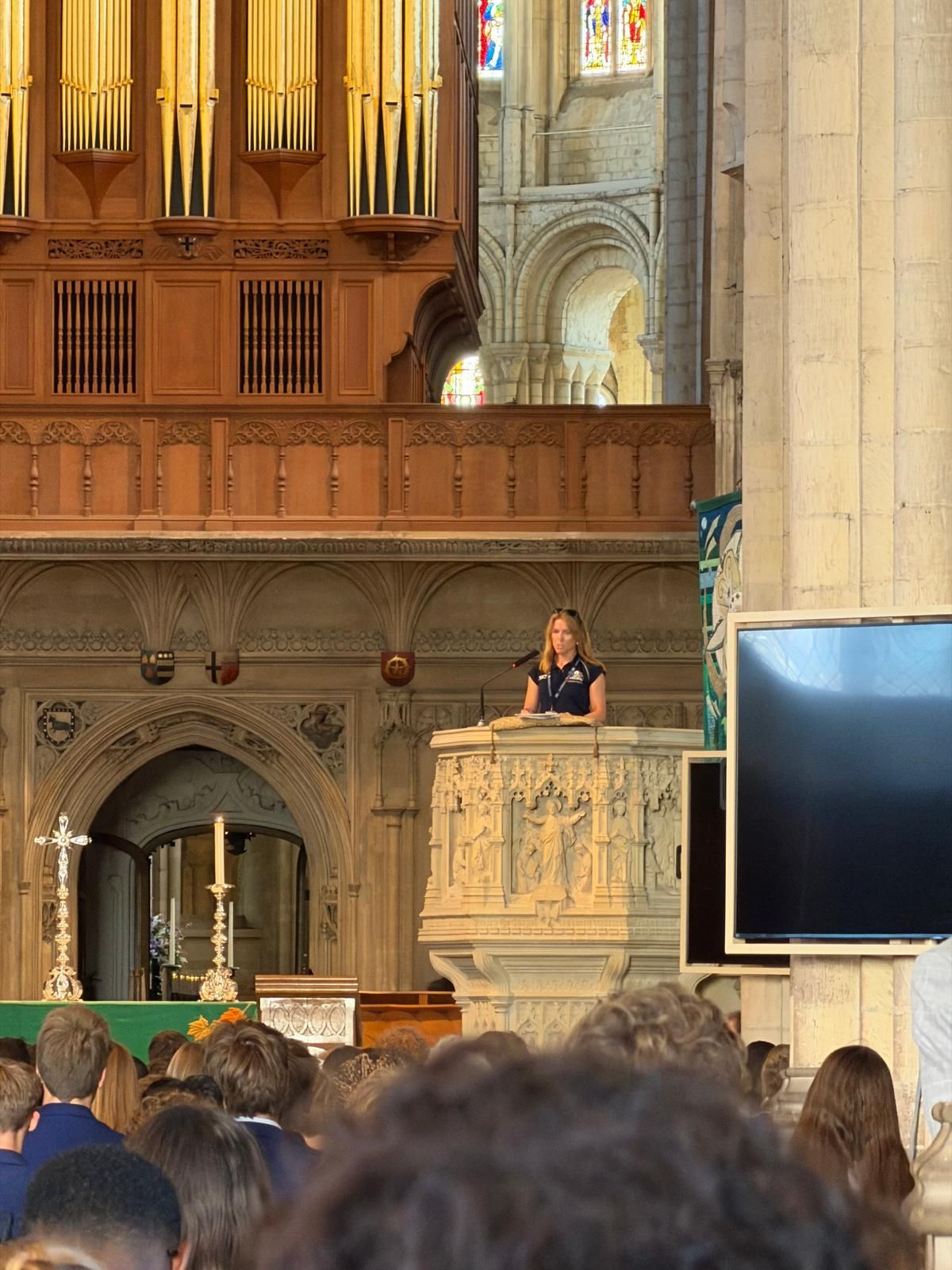
Good morning. The first part of today’s assembly will look back at our favourite moments and favourite assemblies at Norwich School. 


When I first joined Norwich School in 2003, long before any of you were born—I was a Brooke U6 tutor, and we met as a whole school in the cathedral for assembly every morning, not just Mondays, Wednesdays and Fridays. A few years later, Wednesdays became reserved for section and house assemblies, and eventually the pattern changed again to the three cathedral assemblies we have today. 


Some years ago, a colleague researched how pupils felt about cathedral assemblies. Unsurprisingly, the sense of excitement lasted through the second year of school but faded over time, only returning in the final months of U6. I think I now understand that feeling well. In truth, I have never taken for granted the privilege of gathering as a school in such an extraordinary and inspiring place. We are very fortunate. 


I still remember my very first assembly here, during my interview when a Sixth Form pupil spoke about mobile phones—back when they played a far smaller role in daily life. Over the years, I have taken part in many assemblies, though most were in the more intimate setting of the Presbytery or the Chapel during my time as Head of Fourth Form (2012–2018), long before Mr Rowlandson, Mrs Wood, and now Mrs Wyndham took on the role. 


I even recorded an assembly from home during the Covid lockdowns, when we continued to meet and sing together on Teams. Mine focused on running—of course—and on the first woman to attempt the Boston Marathon, who entered using only her initials. I remember it clearly because the weather was unusually warm, and I filmed in front of the wisteria in my garden, which had never looked more beautiful. 


So you may be asking why the trip down memory lane? 

Standing here today feels a little surreal. After 23 years at this school, this place has become more than where I work — it has become part of who I am. I’ve taught hundreds of pupils, worked with incredible colleagues, and watched this community grow, change, and flourish. And today, I feel incredibly grateful. 


It is not just our morning assembles that set us apart here in the Cathedral Close - there are also the traditions — the ones that give a school its heartbeat. 

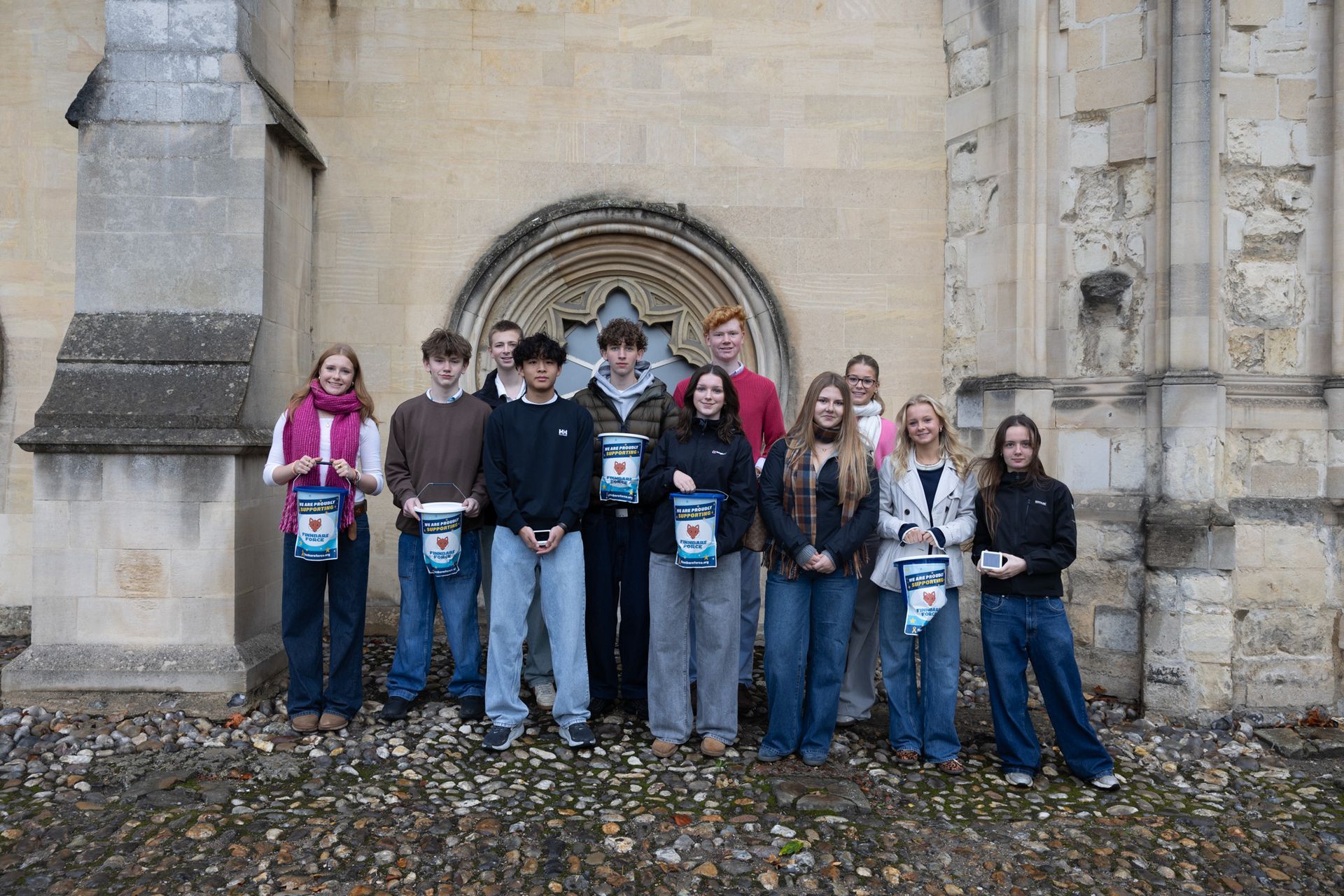
The last few days have been pretty special for me and Norwich School pupils alike – as last Friday we held our Norwich School Fashion Show –pupil-led by this year’s amazing charities committee – this is always an incredible evening and this year did not disappoint. Then on Sunday we were a part of the 6th Discover your Ability Day with charity Able2B – over 500 people attended and took part with more than 60 pupils from Norwich School – partnering with pupils from other schools including many Special Schools. This day is like no other in the year, only coming a close second to the Special Schools Assembly where the L6 Community Service group perform a nativity play to many Norfolk children - I honestly don’t think I will ever forget Daisy Sexton entertaining the audience in the donkey costume! 

Thank you Oscar for modelling it here today in Daisy’s place as she is already setting up for Gala rehearsals at the Lower Close this morning. 


Another of the highlights of my year has always been the Cup Run. Not just because I love running, though that certainly helps, but because it’s one of the rare moments when the entire school heads up to Mousehold and becomes part of something bigger than themselves. Watching pupils and staff spread out across the course, cheering each other on, competing, laughing, supporting — it captures the spirit of this community in a way few events can. 


To help me with this assembly, I asked a few of my colleagues and L4 pupils to share some of their favourite memories of Norwich School too: 

Ironically, Mr Weeks’  1st memory is of his interview with me, as at that time, when he started at Norwich School, I was in charge of New Staff and Teaching Trainees– one of my favourite roles! He also says his favourite assembly was the Christmas Carol service with the full choir, organ and brass. I confess I too love the Carol service – but mainly for the spinning star on the organ when the word ‘light’ is sung. It always made me smile. 


I also asked Mr Cann the same Q and he said this: The Assembly that jumps out in my memory was the Remembrance Day service seven or eight years ago where Richard Allain positioned trumpet players all over the cathedral to play the last post in parts. It was one of the most moving experiences I recall in cathedral and exemplified the power music has on our experiences and how a creative approach can breathe new life into the familiar.   


Over to the pupils: 


Holly:  

My favourite part of Norwich School is the morning assemblies as it’s a really nice time to just take a breather and prepare myself for the coming day. It is also really nice to all be in the same place as my friends so then after cathedral, I can head to my next lesson with my friends.  


My favourite memory on my first week of school is when I was supposed to be going to Palace for my maths lesson and instead I went to horse fair then I had to ask someone where palace was but I accidentally asked a member of the public I then managed to find someone who was part of the school and they directed me.  


Sav: 

My favourite memory from lower 4 is all of the dance shows I did, from participating in the junior + senior dance festivals, to doing the choreography competition back in December; my favourite assembly is either the one celebrating the Chinese new year or where we sung the twelve days of Christmas as a school!   


Oscar: I have really enjoyed all assemblies run by prefects at Christmas, and singing in cathedral.  


Evie: One of my favourite moments at Norwich school was the Eaton Vale in L4. The whole trip was so amazing a fun!  


Thank you L4 for sharing my last assembly with me today .... 


....and to all the pupils here today:  you are the reason this job has mattered so much to me. 

You’ve challenged me, surprised me, inspired me and always reminded me why teaching is worth it. 


If I leave you with one message, it’s this: 

Be curious. Be kind. And don’t underestimate what you’re capable of. 

You don’t have to be the loudest, the fastest, or the best at everything. You just have to keep moving forward, one step at a time. 


To my colleagues: thank you. 

Thank you for the support, the laughter, the shared frustrations, the last‑minute photocopy rescues, the wisdom, the teamwork, and the friendship. Schools don’t run on timetables or policies — they run on people. And this school is lucky to have some of the very best. 


There’s no escaping that this school has changed over the years — new buildings, new faces, new challenges — but its heart has stayed the same. It is a place where pupils are seen, supported, and encouraged to grow. 

I am very proud to have been part of that story. 


And although I’m leaving, a piece of me will always stay here — in the classrooms I’ve taught in, the pupils I’ve worked with, and the memories we created together –and even physically on one of the blue chairs in Blake with the names of me and my three daughters (all now proud ONs) in scripted on it and also by a prize that will be awarded for the first time at Prizegiving this year – the Hill Prize for mathematics! Hopefully some of you will remember me in years to come when you sit on this seat, and if you are fortunate enough to be awarded the Hill Prize then perhaps take a moment to remember how passionate and enthusiastic I was as a teacher. 


As I step into a new chapter, I do so with gratitude for the one I’ve lived here. 

Thank you for more than 23 years of purpose, joy, challenge, and connection. Thank you for trusting me, supporting me, and allowing me to be part of your lives. 

And remember: once a part of this school, always a part of this school. 


Thank you for listening and have a great day... 
By Eleanor Lewis • September 23, 2026
2026 is National Year of Reading and we are going all in here at Norwich School! We know reading expands worlds, sharpens minds, and fuels creativity, so let's get inspired! Every month we are focusing on a different genre and hearing from a member of staff about what they like to read, why, when and where! For the start of a new school year, we’re talking to Mrs Hewitt about her favourite genre. Let's find out more about why Mrs Hewitt loves the great American novel... . Tell us a little bit about the genre; what common themes or elements do you particularly enjoy? I’m not completely sure this is an accepted genre, but I have always been drawn to American novels from the 20th century. Characters in these novels live harder lives than me. Life is not generally kind to them and they are not always kind to others nor make the ‘right’ choices. You can explore human frailty and resilience in the face of poverty, social disapproval or upbringing without ever leaving your cosy armchair. What was the book that introduced you to American novels? Was there a particular book or author that made you fall in love with this genre? Children’s books were nowhere near as varied and diverse when I was young. I grew up reading Noel Streatfield, Enid Blyton and Louisa May Alcott and other books written when my grandparents were young and if they weren’t written ‘in the olden days’, they were set ‘in the olden days’. Studying A-level English, French and German literature meant that I had many weighty tomes to plough through in my late teens, so discovering The Outsiders by S.E. Hinton and The Catcher in the Rye by J.D. Salinger in the school library opened my eyes to the idea that a book’s hero could be my age with a teen’s outlook. They put me in the shoes of people who were far bolder, more unconventional and exciting than me. Has your taste in this genre changed over time? Yes. I am less inclined to accept misogyny in books now. You could argue that Charles Bukowski intentionally set out to make his nihilistic alter ego Henry Chinaski to be unpleasant and repellent, but if I were to reread, I would rather choose The Best of Everything by Rona Jaffe, which is a great insight into life for young women in the early 50s dealing with such attitudes. Would you recommend this genre to someone who doesn’t usually read it? Why? I’m happy to tell people about books I’ve enjoyed, but rarely recommend any, as enjoyment of a book is so personal. I’ve recommended some of these to my son, but he won’t be told and flat-out refusal is just annoying. So, all I can say is that millions of people have loved them, but you may not. What do you enjoy most about reading, whether an American novel or anything else? I read to experience lives I will never live and to get to know people I will never meet. When and where is your favourite time and place to read? On public transport, as there are no other tasks or distractions to take me away from my book. I can fully disconnect from what is around me. A three-hour train journey? Divine. Yes please. Tell us a little bit about the genre; what common themes or elements do you particularly enjoy? I like the fact that I never know if the ending will be happy. The genre is typically described as ‘gritty’. These books focus on people who are on the edges of society, whether by choice or by circumstance, in a time of powerful, narrow-minded social judgement. I saw New York through the eyes of James Baldwin’s gay, black jazz musician Rufus in Another Country ; I enjoyed pool-hall hustles in Hard Rain Falling by Don Carpenter, a 24-hour dance competition in They Shoot Horse Don’t They? (Horace McCoy) and came face-to-face with the grim reality of war for young soldiers in Norman Mailer’s debut novel The Naked and the Dead. If you could step into the world of any book, which would it be and why? Well, I certainly wouldn’t step into In Cold Blood by Truman Capote and I’m not sure if I would survive On The Road in the way that Kerouac did, although I’d certainly enjoy travelling across America. Perhaps I would do this with Joan Didion instead in The White Album , or with John Steinbeck and his dog in his caravan while he wrote Travels with Charley and I could tell him how much I love East of Eden . Click here to see the monthly reading list!
By Eleanor Lewis • September 23, 2026
Deep in the summer holiday, my dishwasher broke down. It started beeping maniacally, relentlessly and making a deep, unhealthy gurgling sound. We are dependent on technology in so many aspects of our lives, it is frustrating when that dependency is abruptly cut off. An August of suds and rubber gloves was an unwelcome prospect. I have little skill to fix mechanical things. Very little. Faced with this problem, I thought I’d turn to someone - or some thing - in my household that might help: my own intelligence fell short so I thought I’d see if Artificial Intelligence could assist me in my predicament. Could one machine fix the other? I fed the symptoms of my dishwasher’s distress into the Large Language Model, Google Gemini. ‘What should I do?’ I asked it, pathetically. It quickly diagnosed the problem: water was trapped in an inaccessible part of the machine. Now, I do own an assortment of under-used screwdrivers; with a flash of inspiration, I suggested that I could unscrew some prominent screws at the bottom of the dishwasher. ‘No!’. Gemini advised me. Sensibly, it told me to not do that under any circumstances or I would break the thing forever. Screwdriver hanging limply in my hand, my exchange with Gemini continued… You will know Artificial Intelligence is the subject of much debate. Some claim, optimistically, that it will revolutionise human life for the better, solving difficult problems and removing drudgery. On the other hand, some claim unrestrained AI development could lead to the extinction of humanity. That would, at least, solve the dishwashing problem. For those of us in schools, the emergence of generative AI poses a challenge to the purpose of education; it can now do many of the tasks that have, until now, been the preserve of humans. Put simply: AI can – efficiently – find any information, read and summarise a text, write fluent and polished prose, offer instantaneous translation, complete every part of a mathematical or scientific problem, and generate music or art in any genre. Is it, therefore, still important to learn to do these things for ourselves. Before Easter, I asked senior year groups for their views on AI. I am grateful to the 400 in U5 and above who responded with eloquence, supported by their experiences. Whilst many noted positives - that AI can bring efficiencies – it was notable that the majority expressed concern, frustration or even anger about the impact that AI may continue to have. Some cited environmental concerns, or problems of biased, deepfake or hallucinated information. Many noted that AI can compromise academic integrity and enable cheating. A majority expressed concern that dependence on AI may result in people losing the ability to think critically or independently. This view is increasingly supported by hard evidence. A study by MIT in the USA last year indicated that dependence on AI for essay writing resulted in students having a much shallower understanding of the subject, weakening their critical thinking and formation of long-term memory. A recent Chinese study of 27,000 students found the exam performance of those who used AI for their regular work was worse than those who did not. Many of you said you are confused about what is permitted and that the school has not given sufficient guidance. That’s a fair point. The answer is not simple, but I can set out some broad principles. Firstly, in the age of AI, the cultivation of your intelligence and creativity remains an intrinsic good. Intellectual and creative effort has value. Even if AI can do a task, we should be interested in developing our own learning for its own sake; to encounter astonishing new things that change us as human beings. To let you into a secret: when I set a history essay to a class, it isn’t because I actually need 25 copies of that essay. It is because the process of producing the essay develops your learning. Efficiency in production is not the goal of education. Learning requires your brain to work hard and you can’t bypass that difficulty or offload it onto someone or something else. It would be analogous to repeatedly drive a car for 26 miles in the expectation that you will be fit and prepared to run a marathon. Secondly, if AI is used, it should be to support learning, not undermine it. There are AI tools that can be powerful in helping to develop thinking and your teachers may introduce these to you. But their use should not circumvent intellectual effort that is a necessary part of learning. Thirdly, we recognise the growing importance of AI literacy; as the technology becomes embedded into our lives, it is essential that we understand its capabilities and limitations, as well as ethical questions that are raised in a world where AI may become ubiquitous. Mr Fisher has done pioneering work on this with his Fifth Form Elective course and I look forward to working with Lawrence Doe on his red gown project to develop how we do this further. Finally, AI must not diminish our humanity or our relationships in this community. The ‘real’ matters and it was clear in your feedback that many of you are repelled by AI-generated material that is synthetic or impersonal. In particular, you felt strongly that if you put time, effort and love into something, that you want it recognised and considered by a teacher, not assessed by a machine. As with all technology, AI should remain a tool in service to our needs. Dependency on technology for intellectual tasks – tasks much greater or more complex than washing dishes - runs the risk that we become incapable. So, what was the resolution of my dialogue with Google Gemini? It concluded – firmly - that I should step away from the dishwasher, lay down my screwdriver, and call out a mechanic; a real person with the knowledge and skills – the human intelligence - required. When he arrived, he sorted the problem within 15 minutes. I could return – sheepishly - to my dependency on the machine.
By Eleanor Lewis • September 22, 2026
The final of RELEASE 2026 , Guildhall Young Artists’ (GYA) composition competition, was held on Saturday 12 September at Guildhall School’s Milton Court Concert Hall. The event was hosted by Jeffery Wilson, founder and Creative Director of RELEASE, and actor and Guildhall alumna, Sophia Roberts, and featured premiere performances of twelve new compositions. The finalists were chosen by an adjudicating panel consisting of saxophonist and owner of Saxtet Publications, Tom Bruton, Deputy Head of Electronic and Produced Music and Lead Professor of Film Music at Guildhall School Barbara De Biasi, composer, orchestrator, and arranger Matthew Sheeran, and Sub-director of Studies and Teaching Associate at St John's College, Tim Watts. Upper 5 pupil, Isaac S, won the ‘Release the Song’ category with his setting of two Shakespeare songs. Hear them here on YouTube. He will receive mentoring from ‘Audio Network’ professionals and attend an orchestral session at Abbey Road as well as a live masterclass with Paul Ressel and a cash prize. Isaac was also awarded second place with his string quartet Burnt Norton. Isaac commented: "The joy of the whole thing is that it's such an eclectic competition, there's been a really wonderful breadth of entries and it offers opportunities to young composers in all genres, forms and all media. There are so many opportunities across a whole breadth of disciplines out there and it represents many of them. It's wonderful to have more recognition wanting to go into composition professionally later in life."
September 22, 2026
The start of the Academic Year is a very busy time as we return to school life following the summer break. One of the highlights of the start of term is the Clubs and Societies Fair. It is an event full of enthusiasm, hub bub and excitement. This year was no exception as we held the Fair on Tuesday 8 September in our Upper King Street building. The Fair is an opportunity for pupils, new and returning, to go around stalls representing our various Clubs and Societies and find out more about their aims and activities. Over six locations 30 clubs and societies created table top displays showcasing their club or society. It is always pleasing to see pupils leading the stands and talking to other pupils about the activity that they enjoy and are representing. There is no better advocate for that particular activity. Our Games Department were on hand to talk about the vast array of activities that pupils can join. The Music Department had a rolling backdrop of images from concerts and recitals. It was wonderful to hear during the course of the Fair one of our Fourth Form pupils who took to the piano for an impromptu gifted performance. Two of our activities, KS3 Textile Club and Community Knitting Club covered a table in the items that they have made, all colourful and many of the pieces had been designed by pupils. Ms Scott, along with some of our Sixth Form pupils, showcased our EDI societies. Warhammer and The Fellowship: Dungeons and Dragons had a display of their games. Our Cubing Club was represented, and it was wonderous to watch a group of pupils completing their cubes which such dexterity and enthusiasm. In the Café, our DJ Club provided the musical accompaniment keeping us all entertained. This year it was wonderful to welcome back Writers’ Bloc. This has proved a very popular activity and we look forward to reading the creative works from the group, there maybe a budding Dame Julia Donaldson within our midst. Following the Clubs and Societies Fair, pupils are invited to formally register for the activities via SOCS. We have 120 Co-Curricular activities taking place before school, during break and lunchtimes and also after school. With healthy membership at the majority of the activities with some over subscribed. Our Clubs and Societies are now up and running. Our SOCS platform holds all the up to date information regarding the Co-Curricular Clubs and Societies. Those pupils who have registered for lunchtime clubs often need early lunchcards. This year during the various early lunchtime collection sessions, queues of pupils collected early lunchcards. For some pupils, part of the fun is collecting a card for each day of the week. We hope all pupils enjoy joining in these activities which provide opportunities to develop new interests, skills and form new friendships.
By Sonja Mitchell • September 21, 2026
This amazing feat saw Ian travel over 2,200 miles, with 141 solo days at sea!
By Eleanor Lewis • September 21, 2026
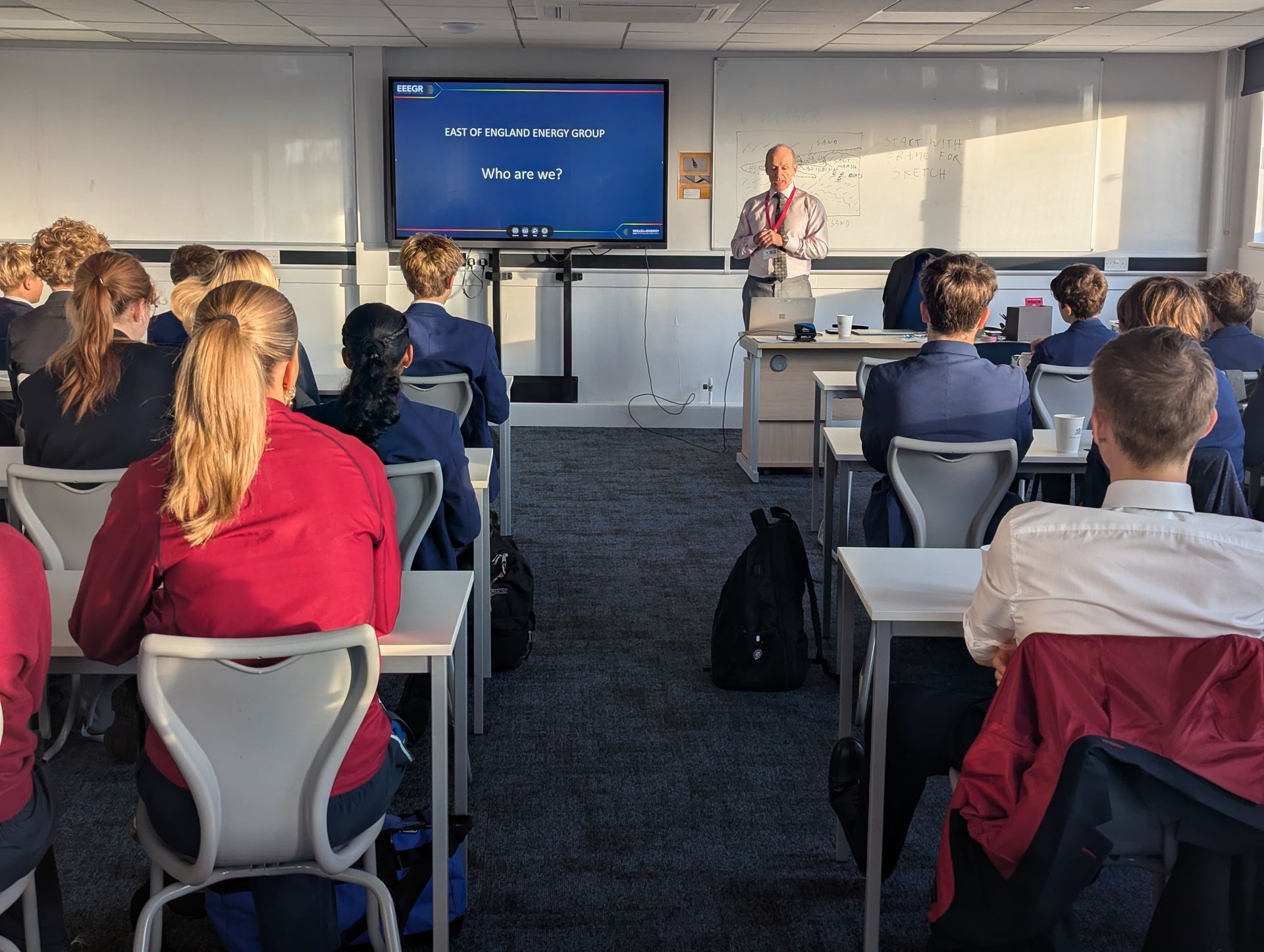
We were fortunate to welcome Dr Sean Ward from Sheringham Medical Practice this morning for an informal "Meet the Doctor" event. Dr Ward is also Clinical Director for Sheringham, Holt and Fakenham Medical Practices and a teaching fellow Norwich Medical School and has vast experience with both patients and medical students. He was able to pose questions and suggest responses which certainly stimulated the brain first thing on a Monday morning! Sean offered his time after receiving a number of enquiries from pupils who are interested in pursuing a medical career and deciding it would be easier to speak to everyone at the same time. The hour-long meeting was relaxed and full of interesting conversation, questions and food for thought, including the building of three new hospitals in East Anglia, all with private rooms instead of traditional wards - all to prevent the spread of infection, and incredible use of robotics in surgery, allowing surgeons to perform intricate operations from another country. The message from Sean was very clear; medicine and healthcare are never "just one career". Whether research based, or in a practical role, whether working for the NHS or even as a medic for the armed forces, there is endless opportunity to learn and develop. Training or university is just the beginning!
By Eleanor Lewis • September 20, 2026
On Sunday 20 September, the School Greenpower Racing team competed at the Lotus test track at Hethel against more than 20 other schools from across the country. They came 5 th and 9 th in the two Heats - the best performance ever, with the 9 th placing particularly impressive as they started from the pit lane. Ms Ling would like to congratulate the drivers : JJ L, Rowan K, Alejandro O, Gabriel C and Arthur L. She would also like to thank Alex P for his invaluable support on the day. Thanks so much to the pupils for taking some fantastic photos!
By Sonja Mitchell • September 18, 2026
As part of the national Heritage Open Day scheme, Norwich School was delighted to open its Air Raid Shelter, Crypt and school Chapel to visitors this month.
By Eleanor Lewis • September 17, 2026
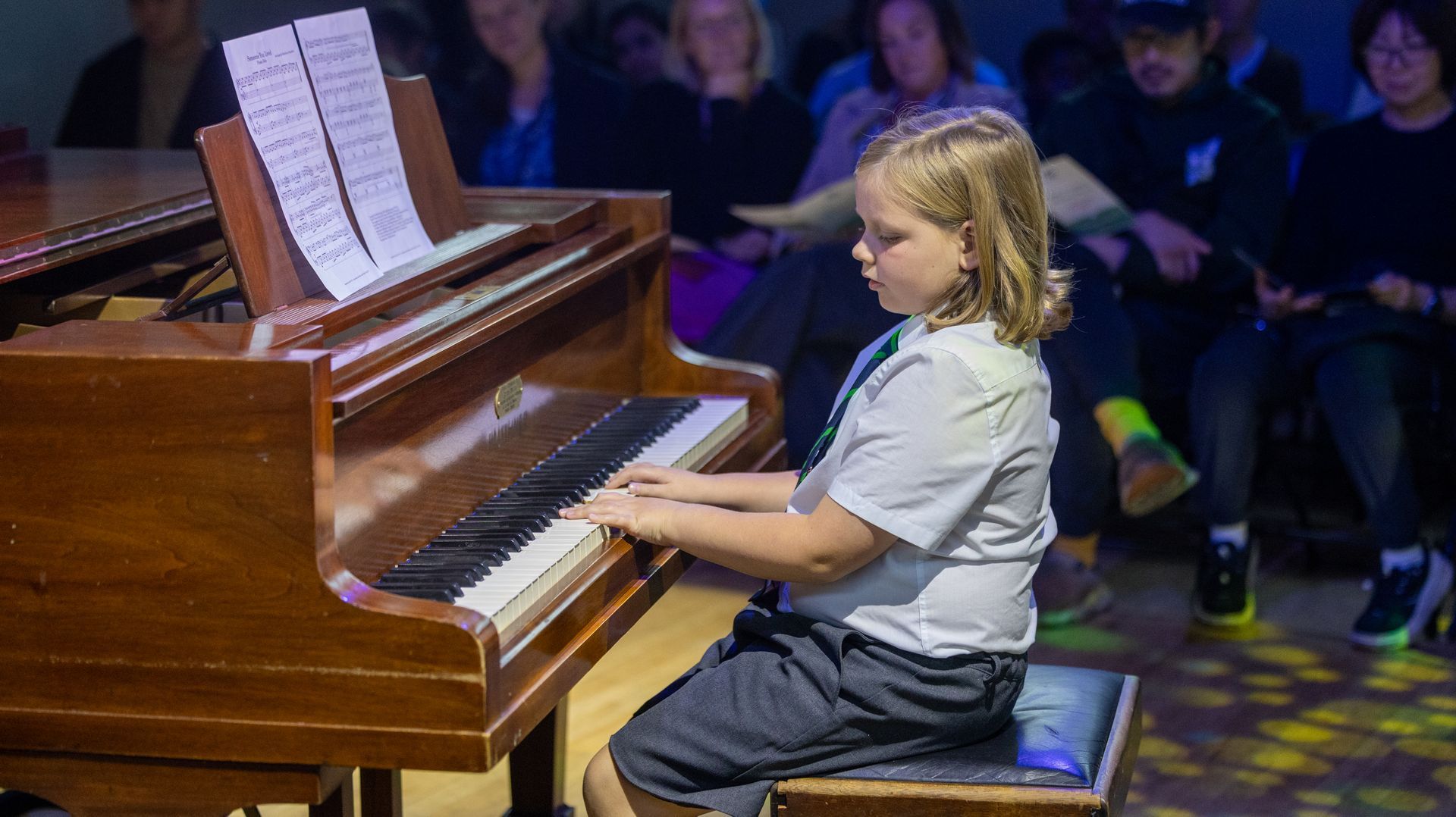
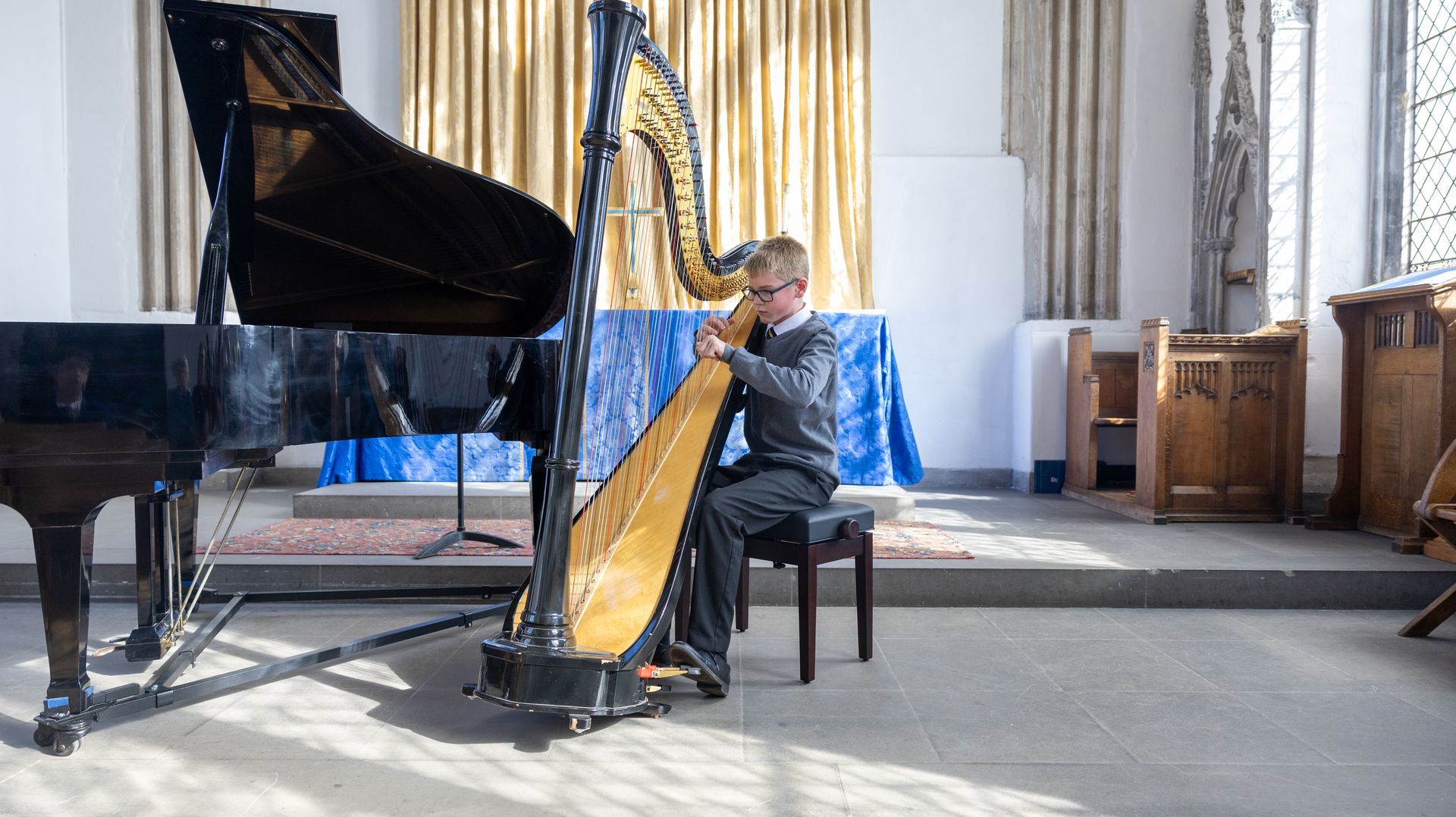
The new Michaelmas Term got off to a fantastic musical start with our first Informal Concert, featuring a wonderful selection of performances from pupils in Upper 3. The concert showcased an impressive range of instruments and musical styles, with performances on piano, cello, guitar and French hunting horn, alongside some confident vocal performances. The programme took the audience on a real musical journey — from the instantly recognisable fun of Wallace and Gromit and The Muppets Theme, to the beautiful The Swan by Saint-Saëns and the atmospheric Sunrise by William Carroll. There was plenty of variety too, with a traditional take on Old McDonald , the lively Sparkling Splashes and Smooth Water , Burgmüller’s charming Petite Réunion and the much-loved Cavatina . The vocal performances brought their own energy and character, including songs by Stephen Sondheim and Bruno Mars. It was particularly lovely to see pupils sharing their music so confidently at the very beginning of a new school year. Informal Concerts provide a relaxed and supportive opportunity for young musicians to perform to an audience, build confidence and celebrate the progress they are making with their instruments and voices. Director of Music for the Lower School Mr Vine said 'a huge well done to everyone who performed. What a brilliant way to begin another term of music-making!' The next Informal Concert will be on Thursday 24 September featuring pupils from Lower 3.
By Eleanor Lewis • September 15, 2026
It has been a fantastic summer of cricket, with several strong performances across the Norfolk County age group programme and some notable achievements involving members of the Norwich school community. Our 1st XI captain represented the Norfolk Lions against Suffolk 2nd XI while Lucas B, Max C, Charlie M, Vihaan R, Jaivir A, William J, Freddie P, and Josh B all represented the Norfolk boys age-group squads with success. In the girl’s programme, Isobel S continued her run-scoring form with two more centuries while Charlotte P, Lucy H, Orla B, Georgina D, Rosie B and Bella L alongside On’s India Fox and Niamh Rushton enjoyed excellent season for representing Norfolk. Bella B was selected for an England schools U17 squad that competed in the National school’s competition against Ireland and Scotland where they were crowned eventual winners of the Ebony Rainford-Brent T20 trophy, a fantastic achievement. Our cricket staff also enjoyed an outstanding summer with Mr Alfie Cooper, current Swardeston CC captain, earned his Norfolk County Cricket cap and finished as the leading Minor counties run scorer in the three-day format, that included two centuries. Meanwhile, Mr Richard Sims, our 1st XI Girl’s coach, represented England over-40’s in their Triple Crown competition against Wales, Scotland and Ireland. We wish Mr Sims every success as he travels to Guyana in late October to represent England over-40’s in the World Cup. It has been a memorable summer for the Norwich school cricket programme, and certainly one to celebrate.
More Posts