The Magic Soup Stone

June 13, 2025

On Friday 13 June, Rev Child addressed pupils on the importance of community.


All the believers were one in heart and mind. No one claimed that any of their possessions was their own, but they shared everything they had. With great power the apostles continued to testify to the resurrection of the Lord Jesus. And God’s grace was so powerfully at work in them all that there were no needy persons among them. For from time to time those who owned land or houses sold them, brought the money from the sales and put it at the apostles’ feet, and it was distributed to anyone who had need. Joseph, a Levite from Cyprus, whom the apostles called Barnabas (which means “son of encouragement”), sold a field he owned and brought the money and put it at the apostles’ feet. (Acts 4:32-37)


Last Sunday was Pentecost, which is sometimes called “the birthday of the Church”. That reading we’ve just heard is about the earliest Christian community learning how to support each other by sharing what they had. Keep that theme in mind as I tell you an old folk tale called ‘The Story of the Magic Soup Stone’.


There was once a traveller who arrived in a village, tired and hungry. He approached a house and knocked on the door. When a woman answered, he explained that he had been walking all day and asked if he could have some food. The woman apologised. “This is a very poor village. No-one has very much money or very much food. I’m sorry we can’t help you.”

The traveller was undeterred. “If you’ll allow me,” he said, “I happen to be carrying a magic soup stone. Just put some water on to boil, and I’ll be able to make soup.” With that, he rummaged in his bag and pulled out an ordinary looking stone. The woman wondered if the man was a little mad, but all the same she lit a fire under a large pot filled with water. As it began to boil, the traveller dropped the stone in the pot. After a few minutes, he took a spoon and tasted the soup.

“Mmm, that’s delicious,” he said. “That’s excellent soup. It just needs… a little bit of potato in it.”

By this point a small crowd from the village had heard about the traveller and his magic soup stone, and were watching from the doorway. One of them cried, “I’ve got a couple of potatoes!” He dashed back home, returned with the potatoes, and dropped them in the pot. The traveller tasted the soup again.

“Mmm, that’s great. It could just do with some vegetables as well.”

“I’ve got some carrots!” said one villager. “And I’ve got some cabbage!” shouted another. They fetched the vegetables and threw them in the pot.

“This is really coming together,” said the traveller as he tasted the soup. “The magic soup stone is definitely working. We just need some herbs and some bits of bread.”

Sure enough, there were some villagers who had those things at home, and in fact there were some other villagers who thought of more things they had that could go in the soup.

That evening a large group from the village shared an excellent meal of soup together with the traveller, their best meal for a long time. At the end of the meal the traveller thanked them for their company and rose to leave. The woman whose house it was stopped him. “Don’t forget your magic soup stone,” she said. The traveller smiled and replied that he would leave the stone with the villagers so they could use it whenever they needed it.


My first thought on that tale is that you have admire the traveller for his ability to bring the village together. The real magic in the story, of course, is what can happen when people gather. The villagers sharing their food is not even enforced – it’s generous and spontaneous. Notice the similarity with the Bible reading we heard:

All the believers were one in heart and mind. No one claimed that any of their possessions was their own, but they shared everything they had.


Some people have critiqued this part of the book of Acts as an endorsement of communism and a complete prohibition of ownership and property. I think that’s missing the point. I think Acts chapter 4 is much more about the magic that can happen when communities gather and develop instincts for sharing and living together.


I have one or two old friends who have a real talent for bringing people together. It’s taken me years to recognise their talent, because it’s easy to miss. They aren’t always the loudest person at the party. Instead they are the person who organised the party. They are the person who first suggested meeting up; the person who sorted out a time and a date; the person who arranged the food; and so on.


Do value this quality if you see it in other people; maybe even grow this talent yourself. Acts chapter 4 and the story of the soup stone show that it is a valuable quality, a community-building quality, we could even say a godly quality.
By Sonja Mitchell August 19, 2026
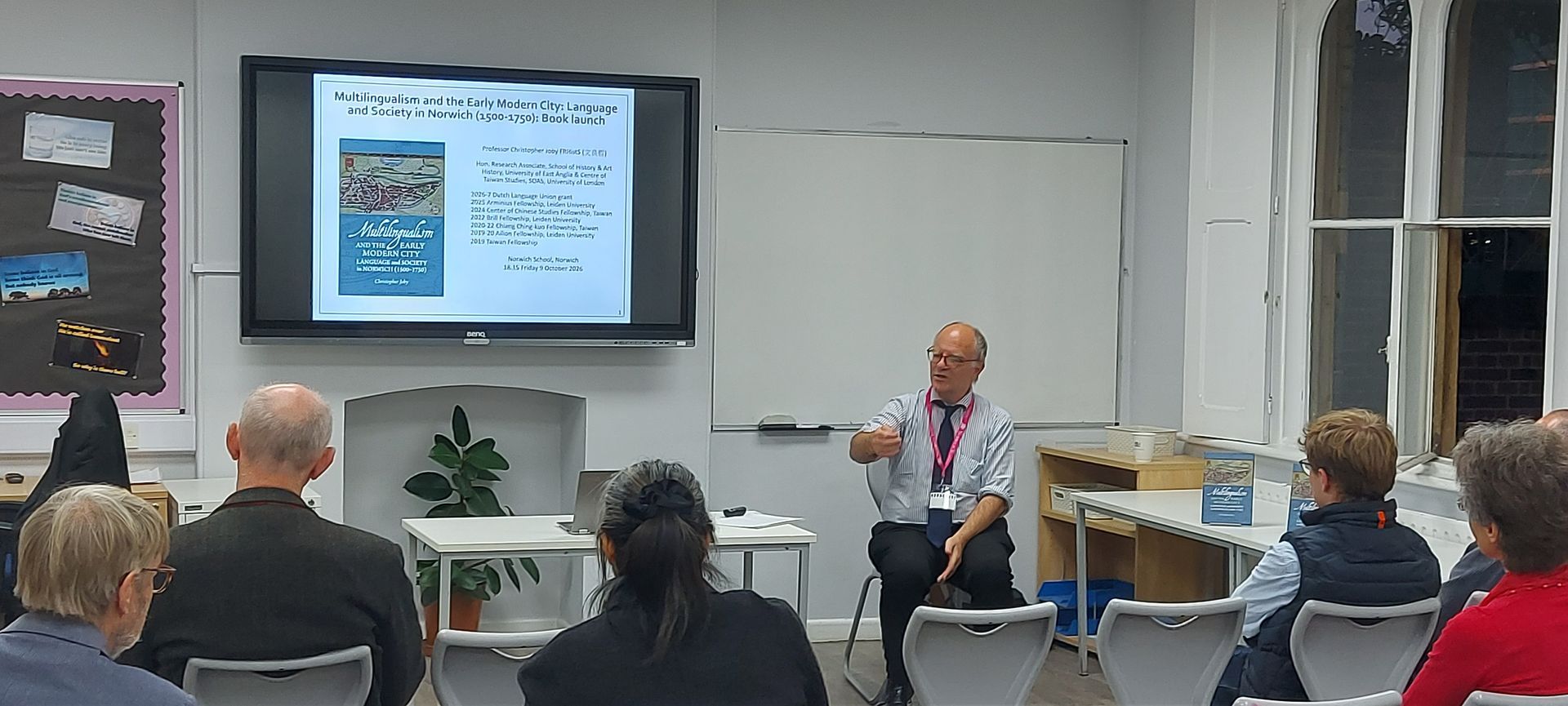
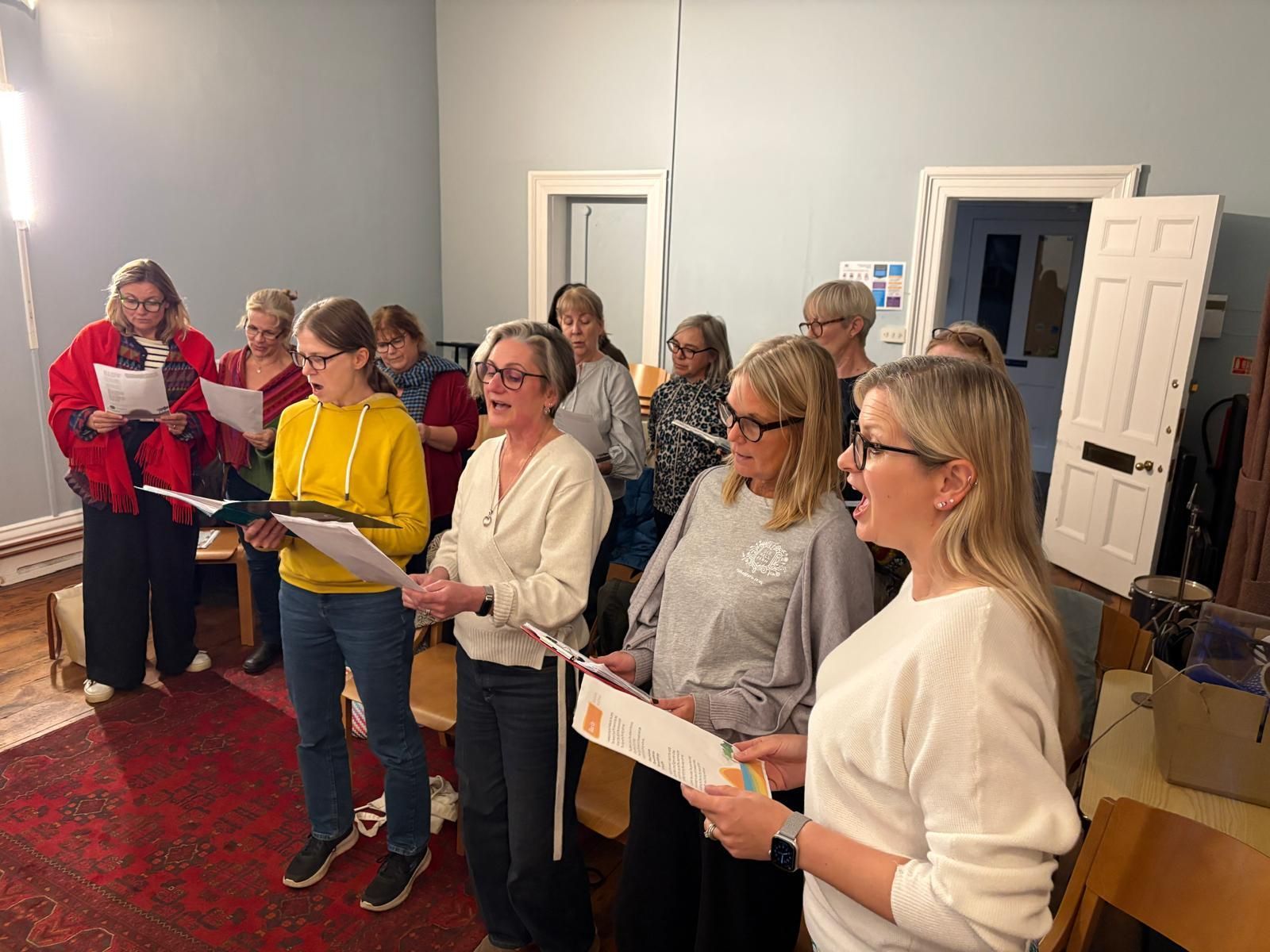
FONS is proud to support partnerships with the local community
By Sonja Mitchell August 19, 2026
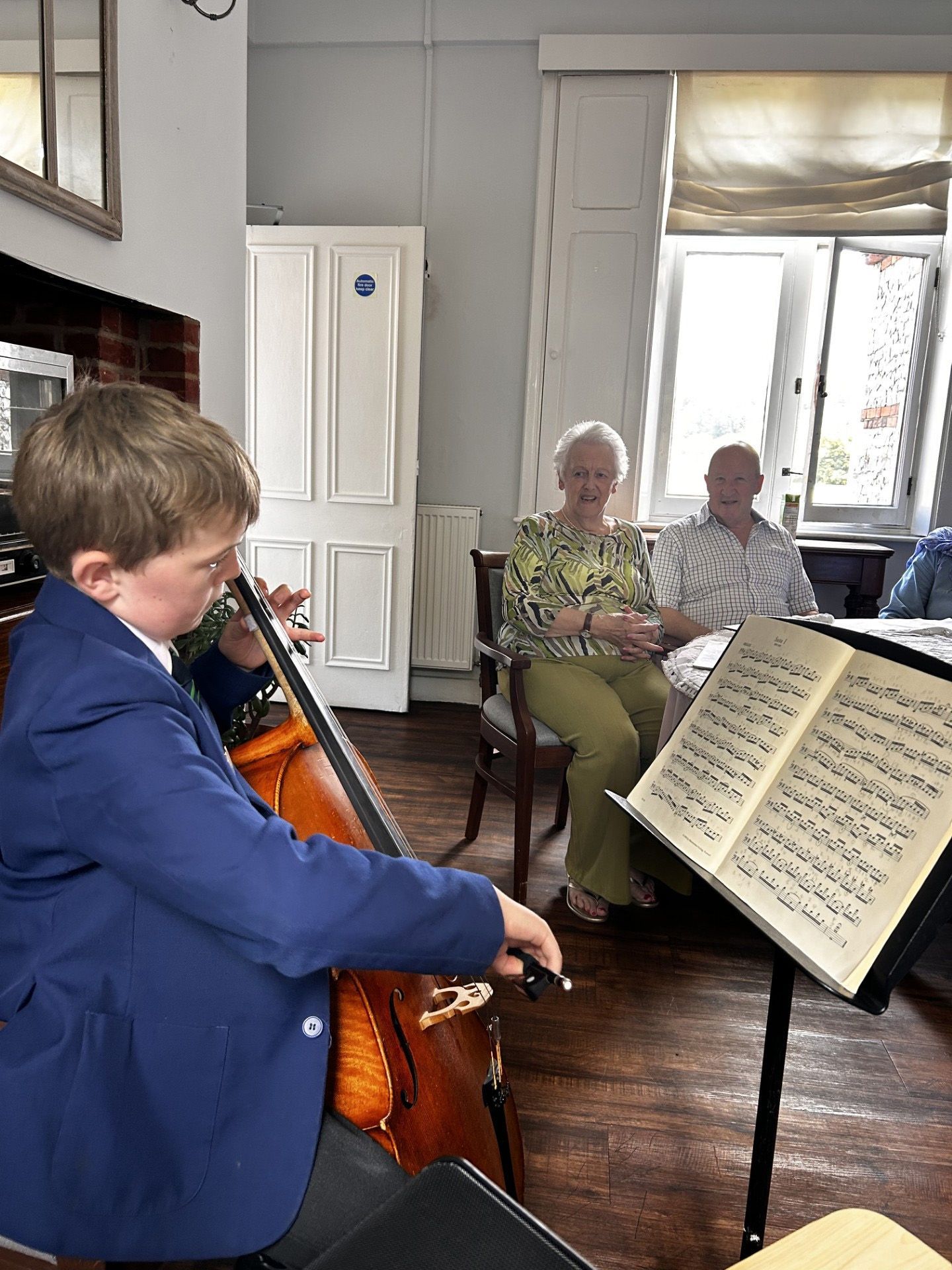
Friends of Norwich School were delighted to support this event for the second year running
By Sonja Mitchell August 19, 2026
FONS has funded materials for L6 pupils to design a mural in the UKS Cafe
By Sonja Mitchell August 19, 2026
Ben tells us what inspired him to write his new book which is out now.
By Eleanor Lewis August 19, 2026
Norwich School is thrilled to have achieved the best A Level results in the county: 24% A*; 53% A*-A; 80% A*-B; 92% A*-C. If we focus on STEM subjects, the results are even better, with 31% at A* and 65% at A*-A. Maths, Biology, Physics, Chemistry and Computer Science form an important part of our 6th Form offer, with just under 200 of our 500 U6 grades in these subjects. The raw numbers are 62 A* and 66 A grades which have led to a huge number of exciting onward STEM routes. Overall, over 75% (123 pupils) have got to their first choice onward route, with over 90% (over 150 pupils) to first or second choice. The STEM outcomes are even more eye-catching: 87% of STEM places accepted were at Russell Group universities; 5 out 5 STEM Oxbridge candidates successfully made their offers (with a total of 17 A* out of 18 grades!) 7 out of 8 (88%) of medics got into their first choice university (national average of 33%); 2 out of 2 (100%) of vets got their first choice; 11 out of 11 engineers (100%) were accepted onto Engineering courses (university or apprenticeship); 6 out 6 Computer Science applicants (100%) were accepted onto Computer Science courses; If you are interested in STEM for Sixth Form, join the best and study at Norwich School: outstanding STEM facilities; expert teachers and strong laboratory ratios; personalised provision and onward route guidance; unrivalled STEM enrichment opportunities, including: clubs and societies (MedSoc, Maths Club, F24 car, Chess Club); Olympiad preparation; independent project; community service. To hear about some of our STEM Successes from this year's cohort click here. Interested in studying STEM at Norwich School? Book a tour today - places available from September 2026! Contact admissions@norwich-school.org.uk.
By Eleanor Lewis August 19, 2026
At Norwich School, STEM learning extends far beyond the classroom. Through outstanding facilities in Horsefair House and inspiring teaching, pupils develop the confidence to investigate, experiment and excel. There is no question that this was reflected in this year’s A Level results. So, we caught up with just a few of our scientists to find out what’s next for them.
By Eleanor Lewis August 13, 2026
A Level results day is always an emotional occasion, and this year was no different. For the Class of 2026, it marked the culmination of two years of dedication, perseverance and hard work and there was much to celebrate. From pupils who have been with us from Lower 1 to those who have joined us for Sixth Form, it is inspiring to hear their reflections of their time in Cathedral Close and learn about their planned next steps. We caught up with just a few of this year’s leavers to find out more about their individual journey.
By Eleanor Lewis August 13, 2026
The school is pleased to announce strong A Level results. The cohort of Upper 6 candidates have achieved the following: 24% of grades at A*; 53% of grades at A*-A; 80% at A*-B; 92% at A*-C; 98% at A*-E. Outstanding individual performances included: 2 candidates with 4 A*; 12 candidates with 3A* or more; 52 candidates with 3A or more. The Head, Steffan Griffiths, said, “I am delighted for the Class of 2026; they have been a wonderful year-group, setting high standards in our community across all areas of our provision, including sport, music, drama, dance and service. As is evident in these strong results, impressive academic progress has matched their extensive co-curricular activity, onward individual routes are equally exciting and we look forward to staying in touch so that we can hear of their future successes”. Richard Sims, Head of Sixth Form, commented, “This cohort of young people have been good friends to each other and exemplary role models to younger pupils. I am pleased that they have now finished their time in Cathedral Close with pleasing academic results, too. Throughout their studies, they have enjoyed support from families at home and teachers in school; on the pupils’ behalf, I pass on my gratitude to them. I close by offering sincere good wishes for our leavers’ next steps”. NB: specific grade percentages will be published when the subject paper review process has been completed.
By Eleanor Lewis August 3, 2026
Now you've finished Year 13, what are you planning to do next?  I am planning to do a gap year where I have applied to get involved with Uppingham school for a creative student placement. I have also applied for work experience with Christie’s. For now I am volunteering with local galleries as well as Leicester Museum and Gallery for training, helping run workshops, volunteering and selling artwork at markets as well as open calls. The degree I plan on doing is Fine art with Art History at Leeds University or at Manchester Metropolitan. Now you've been through the process of applying for UCAS, what did you find most helpful? Was there a particular session or piece of advice which stood out for you? The advice I got from my teachers there was very useful as the themes and ideas explored within lessons helped to push me into the right direction for contextual knowledge for my personal statement. The interview preparation I found most useful (especially how we had 2 practice ones) as they allowed me to reflect on aspects I could improve, making me feel better prepared in what I should say within them. What advice would you give someone in Year 12 who is thinking of applying to university next year? Definitely attend summer school as it gives you the knowledge and preparation needed for applications and interviews for uni. If you are unable to, there is plenty information online as well. If you are applying to creative courses I would suggest getting involved within your local arts community like we did with the Sainsbury’s centre within the course as you will gain experience as well as relationships with artists and people who are passionate about their practice. Opportunities within the future for collaboration may be possible through this too and is always useful for exhibitions in your later career. Get involved with the courtauld gallery (they offer EPQ and A-Level qualifications) as well as the Association for Art History as they offer vital information via workshops for careers within the creative sector. Is there anything else you'd like to share with us about your experience of the Summer School and/or applying for university? An amazing opportunity where I gained information about the history of the art surrounding the area as well as studies currently underway at the Sainsbury’s Centre. The experience made things for me seem more possible as summer school s within my city are not available. I loved learning about the themes explored within the lessons and still use the information noted today for essays. Everyone was very helpful and open to sharing their experiences as well as advice. Thank you!
By Eleanor Lewis July 28, 2026
Gray Rose is a Norwich-based artist with a focus mainly on the celebration of florals and the world around us. 'Blessed Bloom' is a rich amalgamation of religion and flora. Each piece in this collection reflects the compositional principles within Renaissance devotional art. Florals now occupy the positions once held by figures in the original pieces. Petals take on gestures, stems hold posture, and bloom becomes body. Humanity traced through the language of flowers. These works explore transformation as a shared condition: to grow, to change, to wither, to return. An unbroken cycle of growth, decay and spiritual renewal. In Christian art, the body has long functioned as a vessel for suffering, transcendence, and devotion. By removing the body, the sacred is not lost but displaced - embedded instead in the rhythms of the natural world. Where the human body is finite, the natural world persists through continual transformation - temporal, yet unending. An unbroken cycle of growth, decay and spiritual renewal. 
More Posts