THE HEAD'S END OF YEAR ADDRESS

July 10, 2024

As the 2023/2024 academic year comes to a close the Head addressed pupils and parents of the Upper Sixth on the importance of our community as we gather for the last time until September.


"It is a great pleasure to add my welcome to the parents of the U6th who join us for the service which ends the 2023/24 academic year. You are seeing what the pupils and staff have the good fortune to do regularly in this amazing building. There is a danger that we take it for granted (Something like “Well, of course we have our assemblies in one of the finest medieval buildings in northern Europe; it’s not that special, is it?” – an unhelpful view in so many ways).

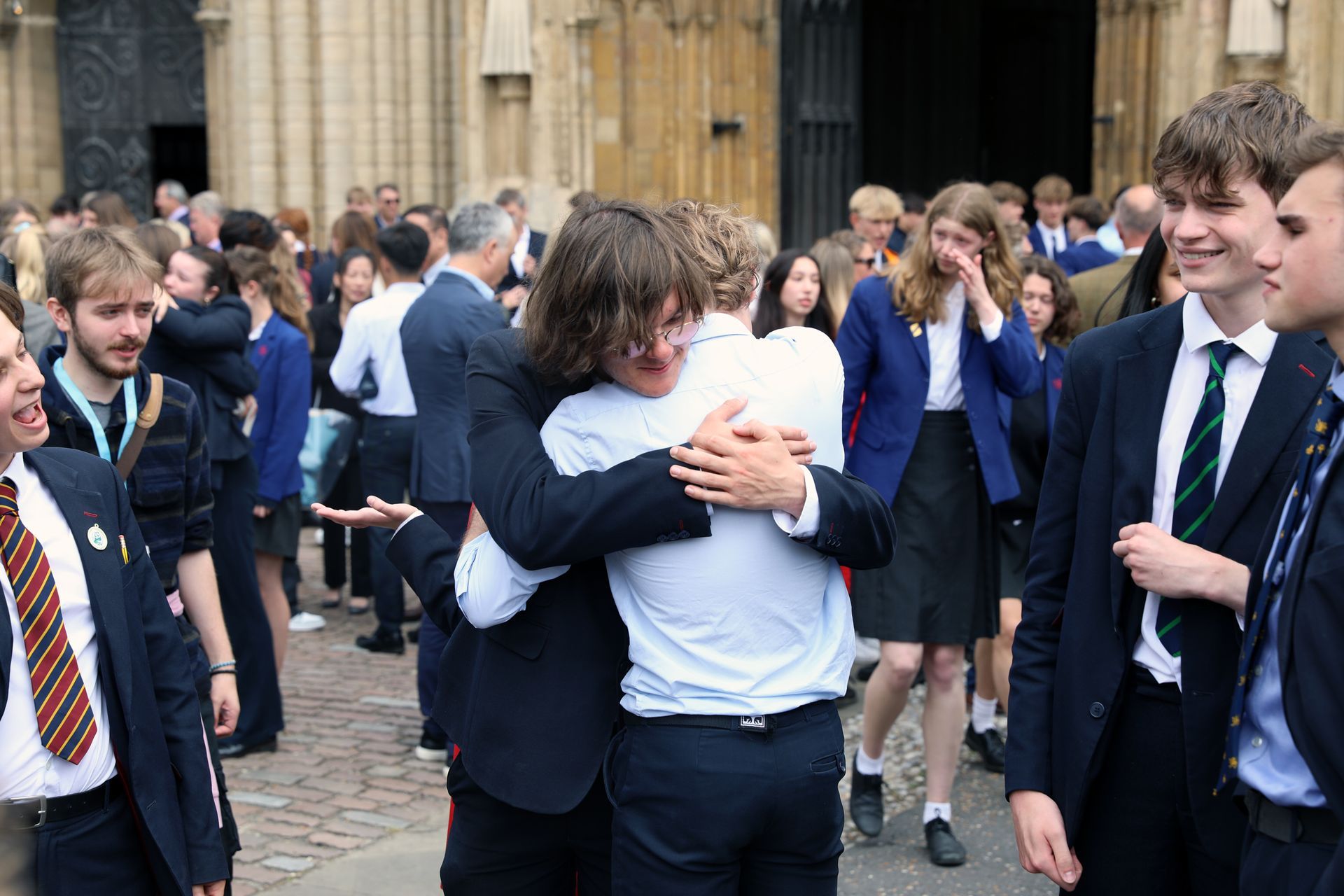
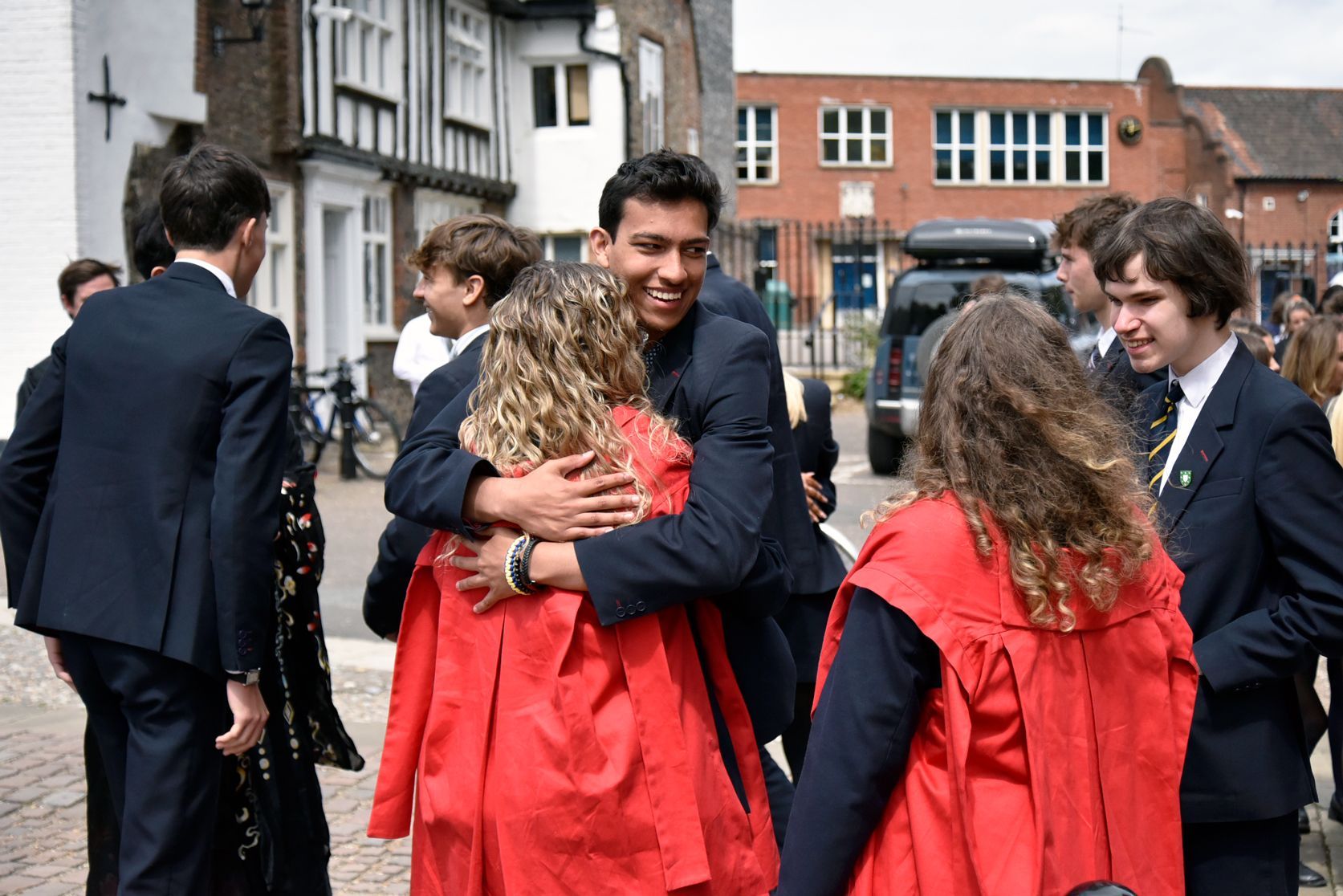
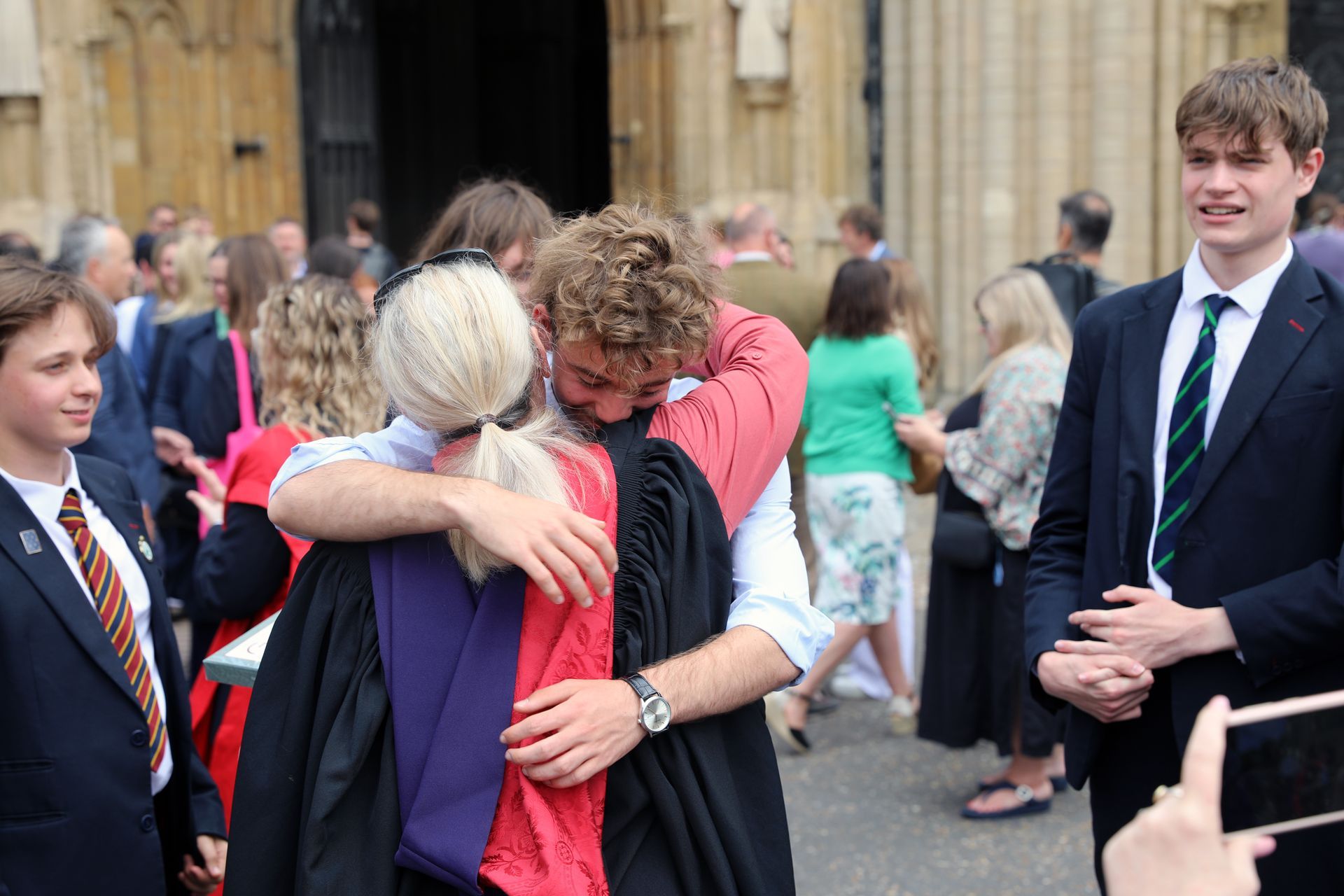
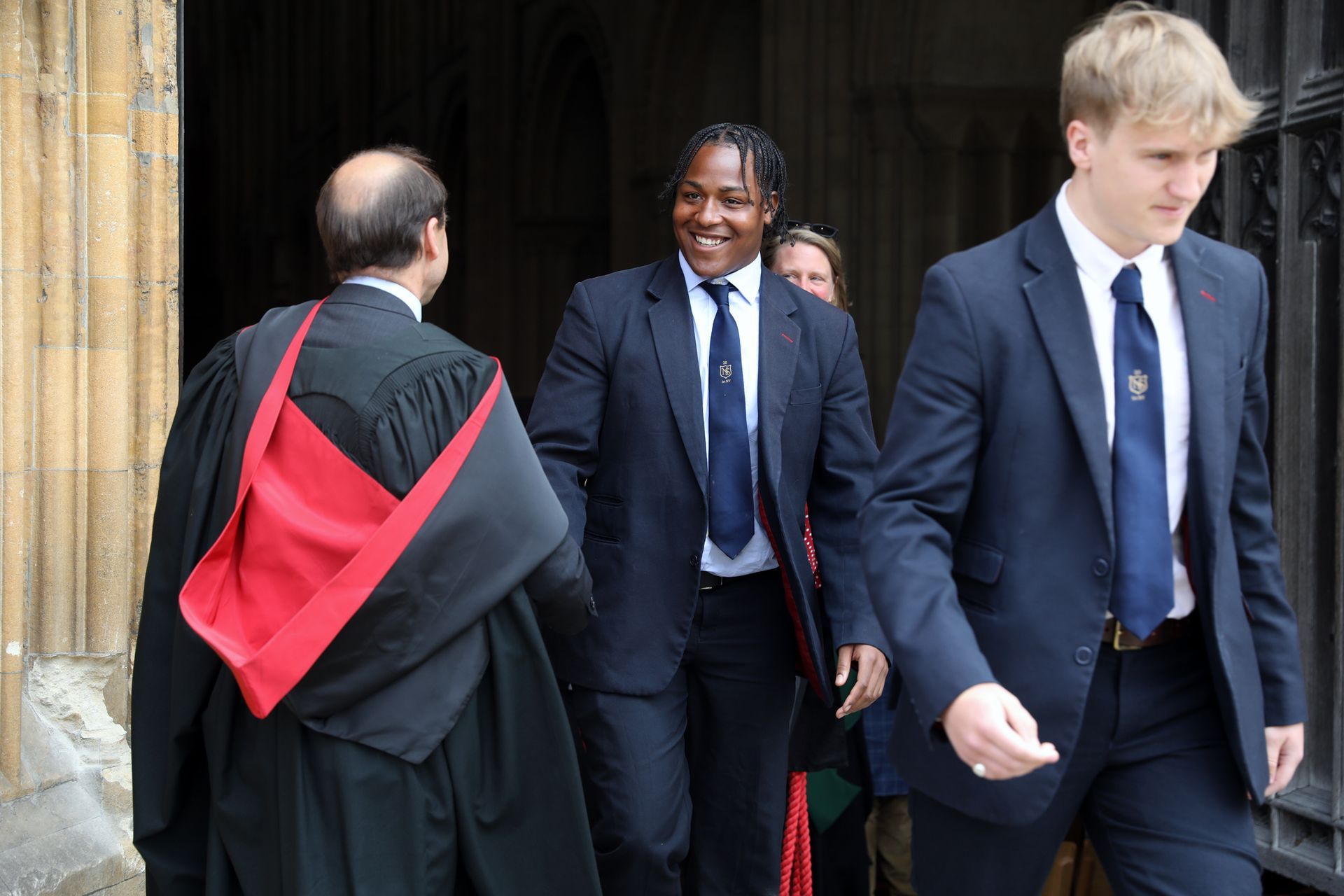
My experience is that our leavers come to appreciate the Cathedral more as they get closer to leaving it, but there is no doubt that sharing this service with visitors helps to remind us what a privilege it is for our school to be located here in the Close amongst these magnificent medieval structures. The conclusion of our service, where the leaving U6 process with their Heads of House through the magnificent West Doors, symbolises this key transition point of moving from school into the wider world, but before that let us enjoy recording our time together appropriately.

I am also pleased to have the U6 parents with us today because you are normally in such a good mood that your threshold for laughter is pleasingly low. It is good to have a few more allies in the room; a Cathedral of nearly 1000 teenagers at 8.40 in the morning can be a tough crowd.


I have been thinking a good deal about the importance of gathering in the life of a community. All UK adult citizens have obviously gathered metaphorically in recent days to make a collective decision in our General Election, but don’t worry, this is certainly not the time to start reflecting on that process. In safer territory, those who watched the Glastonbury coverage on television last weekend or have been to a more local festival such as Latitude will have felt the drawing together of a shared experience. This might be a heresy to some, but I confess to not being a huge Coldplay fan. However, even I would concede that over 100,000 people sharing Fix You at the climax of their set was something to behold.


Another major current gathering is the Euros and the amazingly colourful crowds we have seen in support of their country. Of course, England has its perennial love-hate relationship with our national team played out in front of televisions in homes, pubs and clubs throughout the country during a major football tournament. How very English to boo our team for topping our group and getting to the quarter-finals in the wrong way! Add in Wimbledon, the start of the cricket test series and a wet summer; it really starts to look like a full house in UK moaning bingo.

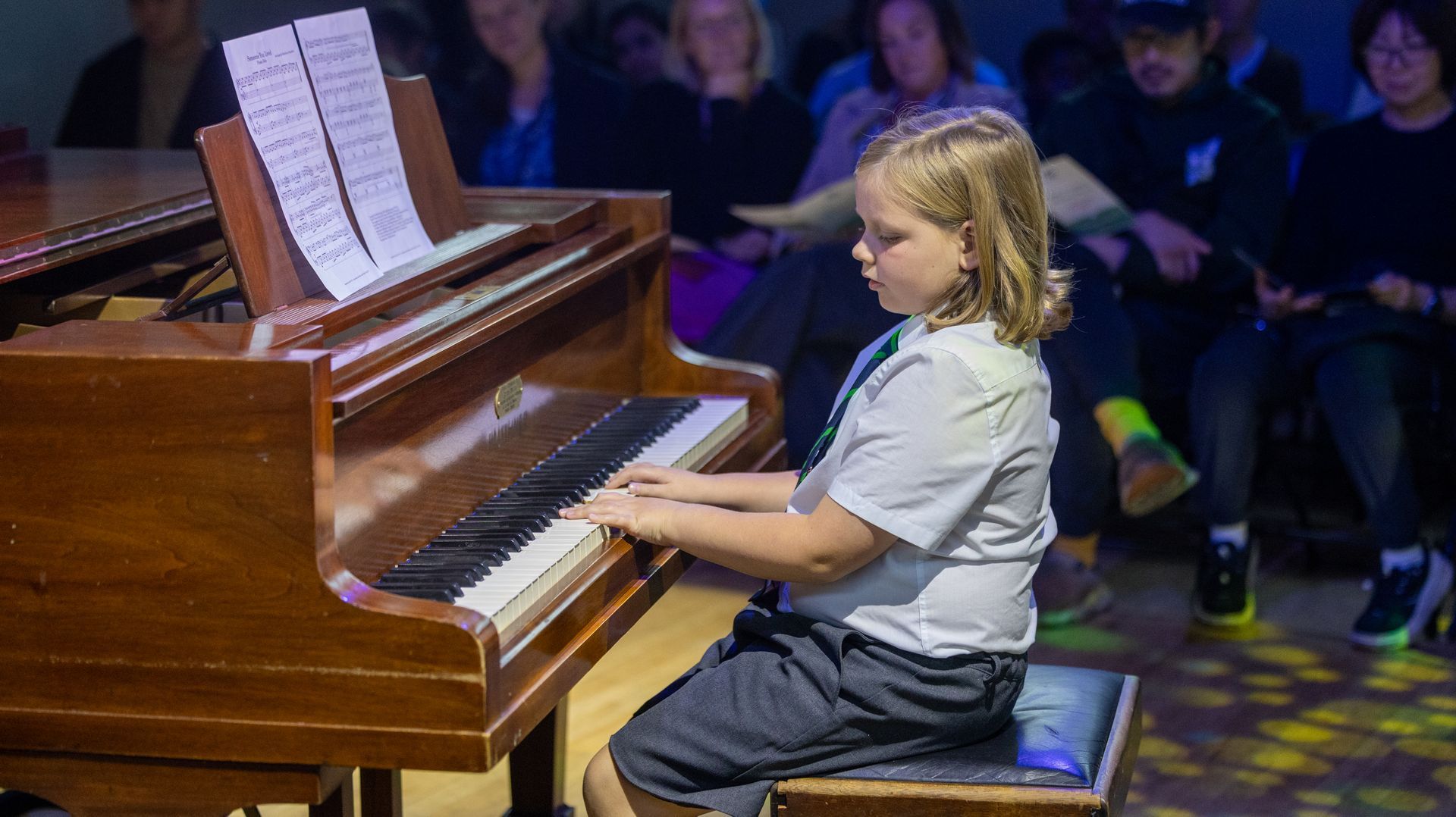
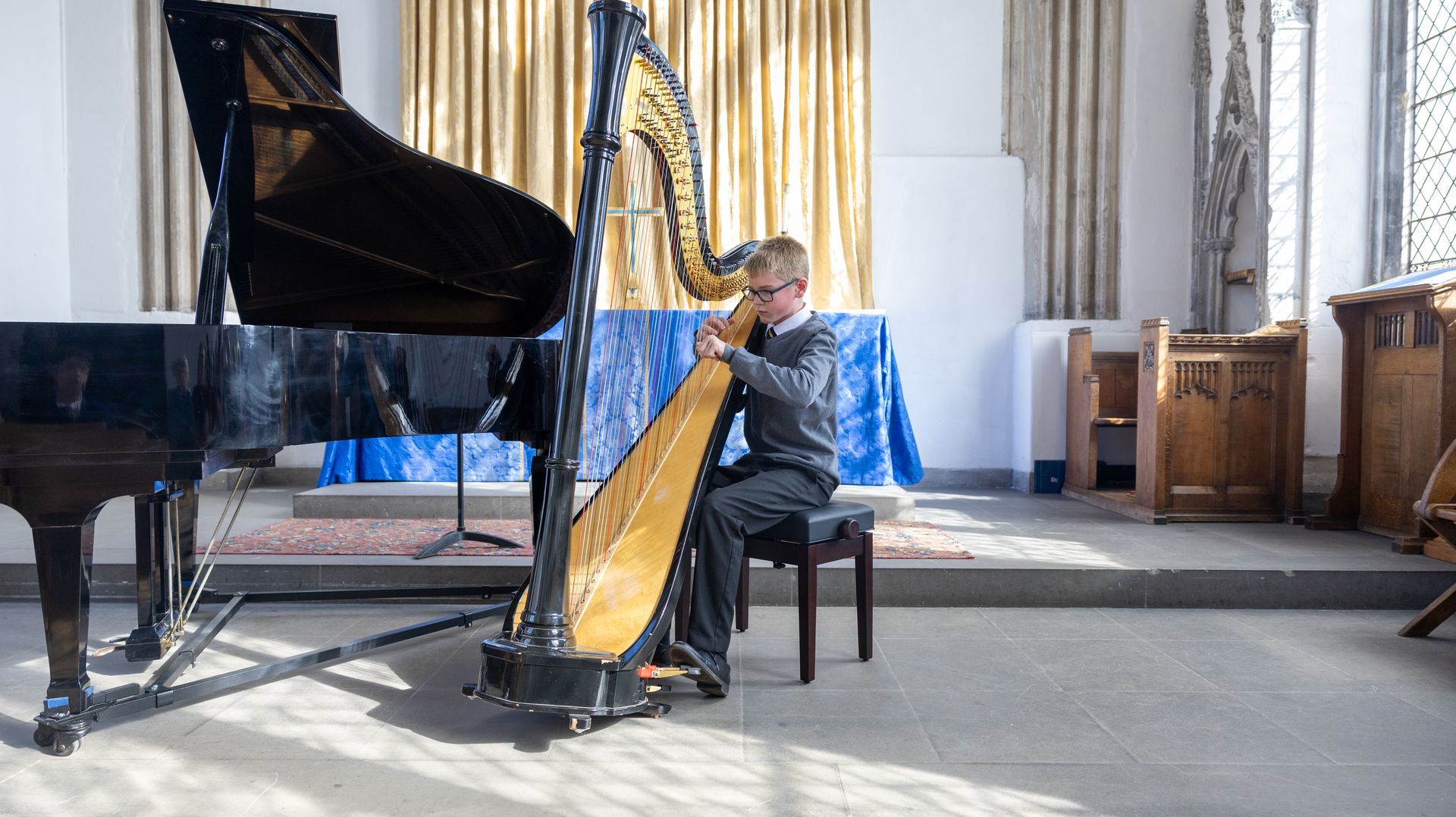
Partly, my interest in gathering events comes from closer to home: we have just finished our annual Gather Festival, an explosion of creative activity where you can watch our pupils singing, acting, dancing, creating Art, reading, fashion modelling, playing instruments of all kinds and in all genres. It has just been a joy to see our pupils’ rich educational experience as they have entertained us in recent weeks, building skills and confidence along the way. And I know comparable processes have been undergone in the highly successful cricket and rowing achievements away from school, as well as many other trips and activities that take place in a busy Summer Term.

One of the quotes on the seats at the front in the Blake Studio carries the Auden quote, “How beautiful it is, that eye-on-the-object look” to capture the moment when someone is totally absorbed in an activity they have fully committed to. I feel like I have seen a lot of eyes on a lot of objects recently, not least in the spectacular Gala Night on Wednesday that many of you were part of or witnessed. Phrases such as “You had to be there” or Sky Sports’ “It’s only live once” speak to this special moment of being together to have a unique shared experience at a particular time.

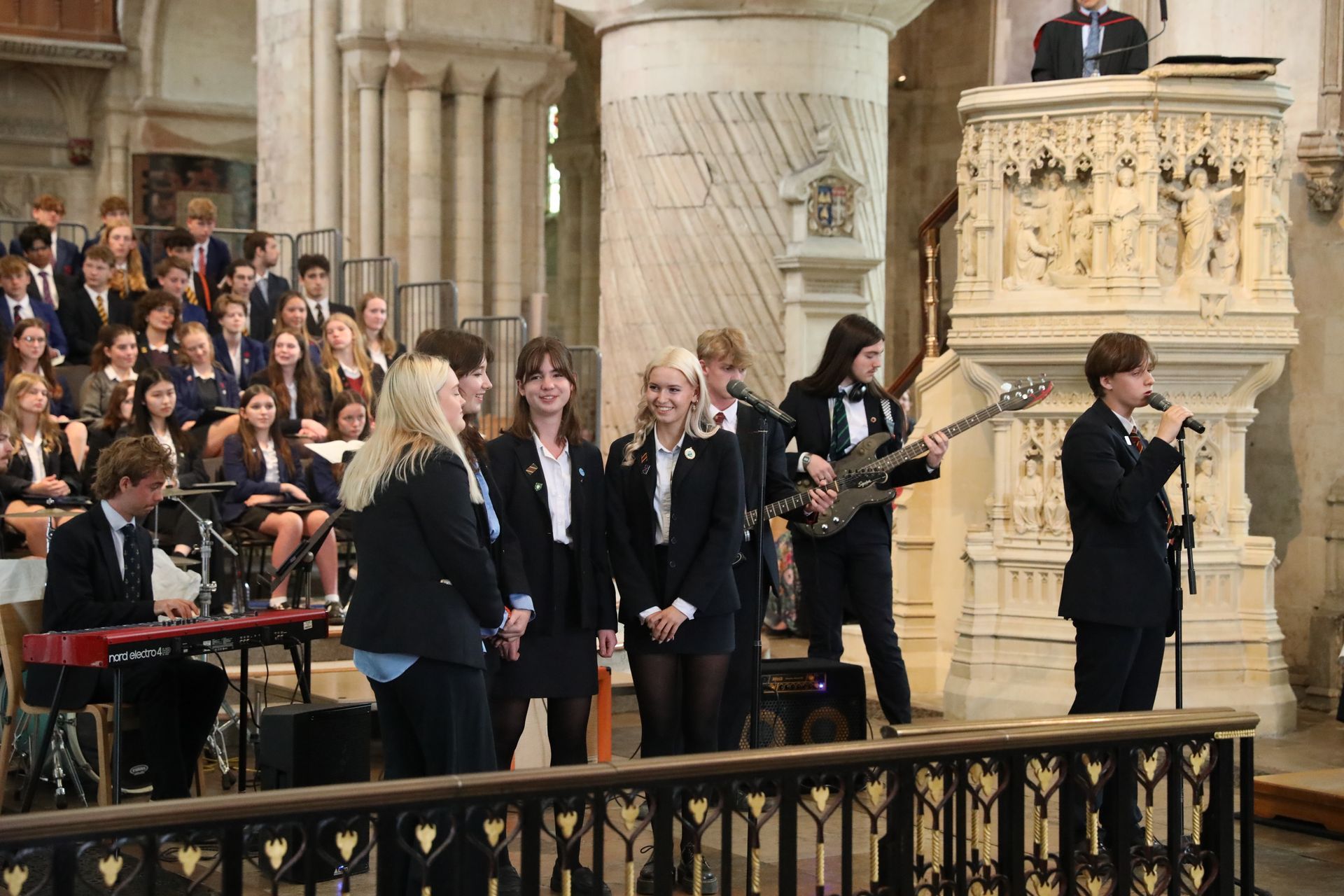
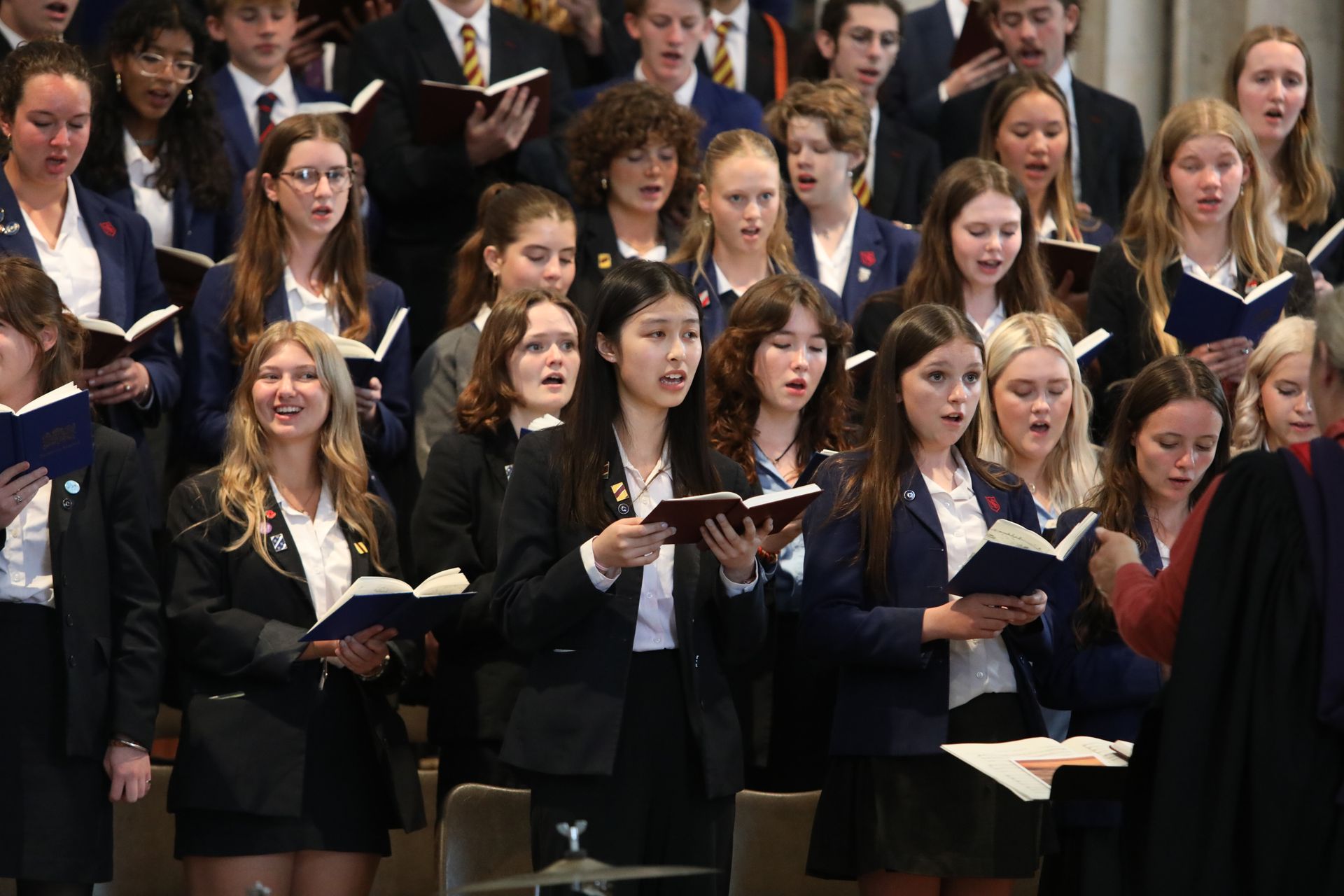
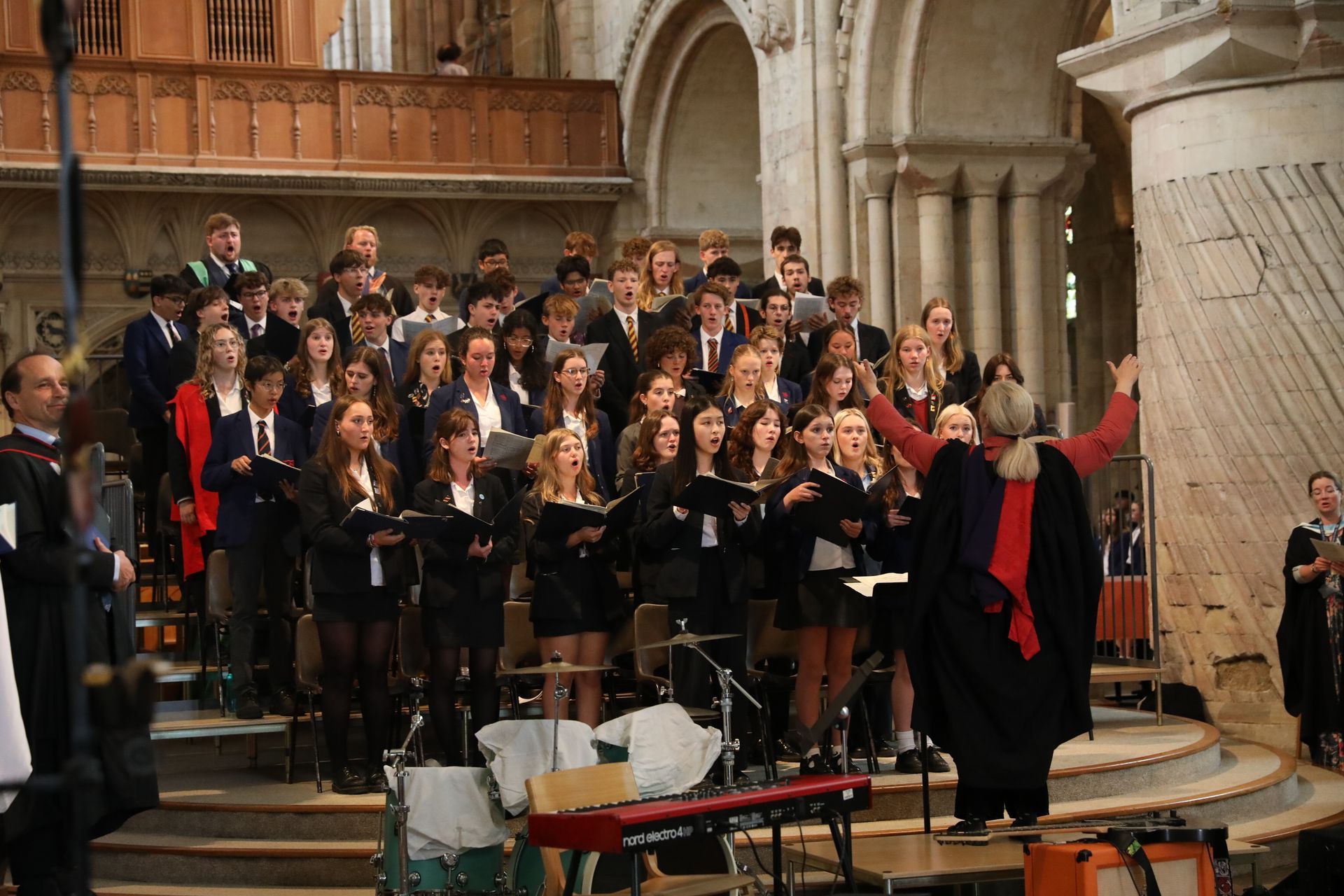
In many ways, this whole service is one such gathering, particularly for those in U6 and their families. We have listened to some beautiful music and sung ourselves, with still the promise of Jerusalem to come. However, in that spirit of creating something memorable that we can share together we are going to have a live performance and, if you want, you can join in. I should like to introduce our U6 band, Placeholder, singing a cover song from the successful Bandfest last week…Thank you all.


This gathering and sharing and recording together is obviously positive. However, I think it is particularly important at this time that we do feel connected. As well as being a good sing-a-long, American Pie has relevant resonances in terms of theme as it records the composer, Don Maclean’s, discomfort in response to cultural uncertainty during the second half of the 20th century. There is, of course, significant challenge and pain in our world: the threat of climate change; the horror of war in different parts of the world; economic challenges closer to home; for some, the deregulation of holiday time or the daunting nature of post-school life.


In all this turbulence, it is our connections that help to anchor us; connections to family, friends, places, traditions, values. Human beings are social creatures and simply feeling part of something bigger helps us to face the world around us. And this is a day that encourages us to remind ourselves of those connections. For all of us, reflecting on how this year at Norwich School has gone is inevitable at its end and I very much hope that you feel you have made progress, thereby deepening connections with friends, activities, subjects and all that Norwich School stands for.

Yet today, our focus is very much on our U6 cohort and this is a service to allow you to reflect on the connections with your families who have supported you through your time here; with each other as you think about the highs and lows of your school careers together; and with us, your school, in this place. One of the rugby players in his Leavers Book entry noted with pride the following, “I have played 156 games for the school in 11 years. Up the Noz”! Good effort indeed, particularly keeping the record to know the number. Whatever the length of time you have been at the school and whatever your particular interests, I hope you can reflect now on links you have established which have informed the amazing young people I see in front of me and links which will sustain you in the future.


It is certainly what makes me optimistic about facing the future. I said that I would not be talking about politics today and I undertake to keep that promise now. However, I am confident that Norwich School is in a healthy position and will react with agility and good sense to whatever operating conditions emerge in the future. Indeed, we are showing ourselves through this very service and the strong emotions engendered that we are a vibrant, resilient community; let us not forget that this U6 were in M5 when Covid struck and look how well they have turned out. Our connection with this amazing leaving cohort changes after today but the links will certainly not be broken. We wish you all well and hope that you will come back from time to time to tell us how you are getting on."
  • Slide title

    Write your caption here
    Button
  • Slide title

    Write your caption here
    Button
  • Slide title

    Write your caption here
    Button
  • Slide title

    Write your caption here
    Button
  • Slide title

    Write your caption here
    Button
  • Slide title

    Write your caption here
    Button
  • Slide title

    Write your caption here
    Button
  • Slide title

    Write your caption here
    Button
By Sonja Mitchell April 13, 2026
Thanks to the Friends of Norwich School, our BSL offering has grown with even more pupils involved and closer relationships with the Deaf community.
By Eleanor Lewis April 13, 2026
"Music has always had the power to bring people together, to comfort, and to inspire action. This project is Dave’s way of doing exactly that — using his extraordinary talent to create something positive, meaningful, and potentially life-saving." Accomplished musician, Dave Land, has completed a new project of a brass performance of ‘O MAGNUM MYSTERIUM’ - Morten Lauridsen, in aid of Prostate Cancer UK, a cause very close to him. Having taught Trumpet and Cornet at Norwich School for over twenty years, this performance was filmed in Norwich School's atmospheric Barborelli Room. Prostate cancer is one of the most common cancers affecting men with more than 64,000 men being diagnosed with prostate cancer every year. Early detection can make a huge difference, PSA (Prostate Specific Antigen) test is quick, straightforward. With this poignant piece and sharing his story, Dave Land hopes to encourage more men to have that conversation with their doctor and consider getting tested, it could potentially save lives. Acclaimed British musician and composer Jools Holland commented, "I'd like to congratulate and support Dave in the excellent job he's doing to promote awareness of prostate cancer and to encourage men to get checked with a simple test." Dave Land is a dedicated teacher and valued member of our community, having previously performed two brass videos in the chapel. 'Pupils and Staff of Norwich School perform Charpentier's Prelude to the Te Deum' which you can watch by clicking here. This video has had a staggering 226 thousand views – a first for Norwich school video views! Ladies in Lavender by Nigel Hess arranged & directed by David Land, Norwich School Brass Ensemble plus guests, pupils from local Norfolk schools . You can watch this by clicking here. Dave Land commented, "I am incredibly proud of our Norwich school brass students for these two outstanding video performances!" Dave's mission has received a lot of traction from the BBC in both writing and broadcast. With the more people he reaches, the more people who may be encouraged to get tested.  You can watch Dave Land's powerful performance below;
By Sonja Mitchell April 7, 2026
Thank you to Friends of Norwich School for funding £1,000 towards new costumes.
By Eleanor Lewis April 2, 2026
I’ve volunteered for over 10 years now, from the PTA at Ava’s Primary and Prep schools, to Disability Swim Coaching, to Chair of Governors at a local school; with the Care & Inclusion Team at work and now with The Norwich School as a parent volunteer supporting sixth formers doing their own community service with Norfolk Special Olympics, a charity focused on bringing sport to adults with intellectual disabilities. I also volunteered as a Sixth Former, way back when, and maybe that’s where the bug came from, remerging in later life. There’s something life affirming about volunteering that’s hard to describe, but the adage that volunteering gives you more than you ever put in is true. It ticks all the boxes on the Wellness Form: It’s proven to be good for mental health, it’s a powerful way to hone new skills and support career development, it provides social connection and it absolutely adjusts your perception of life and gratitude. It just makes you feel better! So, when Norwich School put out a call for parents to support their Community Service program by volunteering alongside students, it was a natural and easy step for me to offer to help. Getting to choose a service that fits your timetable, lifestyle and interests was a bonus. So many different opportunities from creative and media (definitely not me!), to English Support for refugees (that would have meant working alongside my own Mother – so no!) to event committees and a multitude of sporting options. Something for everyone, a time for everyone, and for me an easy choice to make, continuing work I’d done years before with Teenagers with disabilities. And so, every Friday lunchtime, during a “meeting” booked out in my work diary (with the full support of my manager of course!), I spend an hour at UEA Sportspark helping the inclusion team from UEA and Special Olympics, alongside three sixth formers, bring sport to around 35 Adults with varying levels of disability. Some are wheelchair bound, some non-verbal, some with mild intellectual disabilities, many with Down Syndrome. What they all have in common is a shared joy in physical activity at whatever level suits them. They are fiercely competitive, many compete, always keen to do that little bit more, full of joy, full of conversation and sometimes as cheeky and difficult as teenagers. I leave lighter in the shoulders and happier in the heart every single week. Aswell as the joy of volunteering myself, I also have the privilege of watching sixth formers learn, embrace the same joy, realise how fortunate they are and develop skills they mostly won’t have had before. It’s not always easy, there are challenges, especially working with adults to navigate, but what great lessons to learn in a safe place, and what great skills to take forward in life. Three girls who started slightly quietly and not quite sure of themselves, are now helping to run sessions themselves, know every attendee by name, are inspiring other young women in the group and look like they’ve been doing this for years. One of those girls is my daughter. How lucky I am to spend an hour a week with her, not talking about UCAS, or homework, or sports coaching or how much sleep she got or didn’t. Just an hour a week enjoying bringing joy to others, together without having to talk about anything. Watching her learn new skills, and navigate new challenges, and above all, seeing her finally get it. Why I volunteer, why I give up time, because it gives me back more… tenfold. And of course, I hope that bug, the one that lay dormant in me for 20 years, is well and truly instilled in Norwich School’s young people, because they, like me, might not realise yet just how much they are already learning, and how much they might get in the future from doing something for others. Skills, friendship, joy, gratitude and opportunities they didn’t see coming. It’s often surprising the people you meet and the connections you make through this kind of ‘work’. Amazing, interesting people with all sorts of connections that might just open a new door or a new passion, both for the sixth formers and for us as adults.  So, if you have an hour a week free, if your company supports volunteering in the community, if you’re looking to develop new skills or make new connections, I cannot recommend supporting the Community Service program at Norwich School highly enough, there really is something for everyone to get involved in. Lighter shoulders, happier hearts and helping our own children grow and develop skills for life... it doesn’t get much better than that for an hour a week!
By Eleanor Lewis April 1, 2026
This week we are spotlighting STEMM at Norwich School and caught up with some inspiring ON’s who discussed where studying a STEMM subject at the school has taken them in their careers! Wian Stipp – (11-18) Wian attended Norwich School between 2011-2018 and studied both Maths and Further Maths during his A-Levels. Did you study Maths, Further Maths or both? I studied both! What did you go on to do when you left Norwich School? Where? I pursued a BSc in Mathematics and Economics at the London School of Economics. During my time there, I learned how to program and became involved with AI start-ups – initially with Lanterne, based in London, and subsequently with Evidium, based in San Francisco. Where in the world are you based? I’m currently based in San Francisco, USA. Where has your career taken you so far? I joined Evidium in 2020 as a Founding Engineer, just as the company was getting of the ground. The following year, we raised see funding in San Francisco. At Evidium, I focus on research and engineering, building machine learner systems for healthcare applications. Where do you want your career to go? I aim to continue developing machine learning systems that push forward innovation in health care and contribute significantly to improving patient outcomes. Why should pupils study Maths beyond GCSE? Maths builds the ability to think clearly and reason rigorously – skills that are valuable no matter what path you pursue. If you’re curious about fields like AI and machine learning, Maths simply is the foundation. How has Maths been beneficial to you outside of Norwich School? Maths continues to be central to my daily work, Maths has shaped how I think, solve problems, and engage with the world, and it remains the foundation of everything I build in my career. Jennifer Williamson – (09-16) Jennifer is an incredibly inspiring woman in the world of STEMM; having attended Norwich School between 2009 and 2016, she kicked started her engineering career studying both Maths and Further Maths. Did you study Maths, Further Maths or both? Both! What did you go on to do when you left Norwich School? Where? I did a 4-year Integrated masters in Aeronautical Engineering at Imperial College London! In my third year I did an internship at Sainsbury’s writing their 30 year “path to zero carbon” plan. Where in the world are you based? I’m currently working in London, I spent a couple of years working in Edinburgh, and before that I was in Australia! I carried out my final year university project on exchange in Melbourne, creating a model to estimate the emissions of different journeys, to compare public and private transport in the suburbs. Where has your career taken you so far? I’ve been working as a Building Sustainability Engineer for four years. I work with architects to improve the design of buildings by carrying out dynamic simulations which look at things such as if occupants will overheat, based on how many windows there are, any external shading, how much natural ventilation there is and more. I really enjoy it, and I love having a genuine impact on the design of buildings that are going up in my city. Where do you want your career to go? I had a catch up with my boss recently, and he’s keen for my future career to involve going into architectural firms to give workshops on how to really achieve sustainable buildings, which sounds amazing to me. There are a lot of methodologies at the moment for designing sustainable buildings, but a lot of them are just “tick box” exercises, whereas good design changes from building to building. Why should pupils study a STEMM beyond GCSE, such as Maths? I think if you might want to study something like Engineering at University, A-Level Maths is really important and would probably be a requirement, so if that’s on the cards then it’s good to keep that door open. It doesn’t necessarily mean you’ll be doing maths for the rest of your life - my job doesn’t involve much Maths now. A lot of my Engineering degree was basically just maths in different contexts, and I wouldn’t have been able to get my job without the degree. How has Maths been beneficial to you outside of Norwich School? The main thing is being able to do a job I enjoy now. Another bonus was that some of the content we did at university in first year I’d already learnt in Further Maths, which was really helpful when everything else was new and difficult. My job doesn’t involve a lot of Maths now, but I do still pull out trigonometry quite often for calculating shading angles. Steven Gopaul - (07-15) Steven attended Norwich School from 2007-2015, and studied four STEMM subjects at A Level. Now working at the Norfolk and Norwich Hospital, his career in medicine is nothing short of inspirational. What subjects did you study at A-Level? Maths, Chemistry, Biology (All A2) and Physics (AS). What did you go on to do when you left Norwich School? Where? I studied Medicine, rather unconventionally in Europe, in Prague, Czech Republic. Where in the world are you based? I am currently based in Norwich and work at the Norfolk and Norwich Hospital. Where has your career taken you so far? After finishing school in 2015, I went to medical school and graduated in 2021. I completed 2 years of general medical training in the East of England which is known as foundation training in 2023, with a good experience in both medical and surgical specialities. I took a year out of clinical medicine after foundation training to teach at UEA - Norwich Medical school. I taught all years of medical students in various clinical subjects, procedural skills as well as in laboratory-based sessions of Anatomy (which was my favourite subject). Alongside my teaching duties, I examined final year exams and contributed to creating questions for written exams and clinical stations for use in OSCE exams. Since 2024, I have been working as a trainee surgeon and am due to finish my 2 years Core Surgical Training in August 2026 before moving onto higher specialty training in General Surgery. Throughout my medical training thus far, I have attended and presented at conferences both nationally and internationally, and undertaken post-graduate courses and exams. I have passed my initial surgical exams (the final exams will be closer to becoming a consultant) and am a member of the Royal College of Surgeons of England and Fellow of the Higher Education Academy after completing my post-graduate certificate in clinical education. Where do you want your career to go? I am training to be a General Surgeon with the aim of becoming a Consultant Colorectal Surgeon in the NHS. Why should pupils study a science beyond GCSE? Studying a science beyond GCSE gives you much more than knowledge — it teaches you how to think. A-level sciences push you to analyse information, solve problems, and understand why things happen, rather than just memorising facts. You learn to deal with complex ideas and interpret evidence. Another benefit of studying science, is that it creates a structure for learning new information which many other subjects unfortunately don’t provide. Science also isn't always straightforward — it stretches you. However, working through complex problems develops many of life’s important traits such as resilience and a logical way of thinking that once again can be applied to anything in life. How has Science been beneficial to you outside of Norwich School? Studying science beyond school was more than a gateway into medicine for me; it fundamentally shaped how I approach learning and clinical practice. Advanced study in biology and chemistry meant that when I reached medical school, I wasn’t encountering concepts in isolation. Subjects like physiology, pathology and pharmacology felt like logical extensions of principles I already understood. Beyond this, it has provided me with many rich experiences of collaboration where I’ve got to work with many different medical and scientific professionals which has helped me develop new skills and allowed me to travel, which I thoroughly enjoy! Lastly, studying sciences at school developed intellectual discipline and professional curiosity. It trained me to analyse evidence critically and the habit of questioning is central to good medical practice. It drives lifelong learning, which is essential in my profession where knowledge evolves rapidly. Tom Lefever - (91-97) Tom studied both Maths and Physics during his time at Norwich School. He now works in Civil Engineering and continues to travel across the world, mastering his expertise. What subjects did you study at A-Level? Maths, Physics and French. What did you go on to do when you left Norwich School? Where? A degree in Civil Engineering at the University of Nottingham. Where in the world are you based? Norwich! Where has your career taken you so far? All over the UK, designing buildings for many countries including Montenegro and all over Northern Africa. Where do you want your career to go? Continue to build my expertise in historic buildings such as Cathedrals and Castles. Why should pupils study a science beyond GCSE? It helps you understand the world better and build a strong, broad base to pursue your chosen career. How has Science been beneficial to you outside of Norwich School? It is fundamental to my work in assessing how buildings behave and knowing what materials to choose when designing them. It has helped me personally with my health, nutrition, and even DIY of my house and fixing my car! Richard Wade-Martins - (83-91) Richard studied three STEMM subjects at A-Level whilst at Norwich School and now works at the University of Oxford, leading ground-breaking research into Parkinson's and Alzheimer's disease. What subjects did you study at A-Level? Biology, Chemistry and Maths. What did you go on to do when you left Norwich School? Where? I went to study Natural Sciences at the University of Cambridge in 1992, specialising in Genetics in the final year. From there I went to the University of Oxford to do a DPhil (the Oxford PhD) in human molecular genetics. Where in the world are you based? I am at the University of Oxford in the Kavli Institute of Nanoscience Discovery and the Department of Physiology, Anatomy and Genetics. Where has your career taken you so far? After my DPhil I went to work for three years at Massachusetts General Hospital and Harvard Medical School in Boston, Massachusetts. It was a fantastic opportunity to live abroad for a few years and get an international perspective on science and life. I then came back to the UK in 2003 starting my own research group at Oxford and have built up my own research program. Where do you want your career to go? I'm moving towards drug discovery. I work on understanding the cellular and molecular mechanisms of Parkinson’s and Alzheimer’s disease: why do some people get them and how can we prevent or treat the conditions? As the population ages with more people are retired than at school, this will become increasingly common and a major healthcare challenge. My academic lab at the University now works closely with industry and biotech partners to develop translation of new therapies from lab findings to novel treatments for patients. Why should pupils study a science beyond GCSE? Studying science allows you to understand how the world works, whatever you chose to work on. In my area it allows us to dissect the role of genetics and biology in age-related neurodegeneration. We need to use science to understand molecular mechanisms to develop new therapies. How has Science been beneficial to you outside of Norwich School? I read about the discovery of DNA, the molecule which carries our genetic information, when I was at Norwich School aged 14, and from that moment on I wanted to study genetics. I have been lucky enough to follow that through working in three of the best Universities in the world. It has been a fantastic choice of career and if I went back to being aged 14 now I would do exactly the same again.
By Sonja Mitchell April 1, 2026
With thanks to the Friends of Norwich School for funding this dedicated space, which is proving very popular with pupils.
By Sonja Mitchell March 31, 2026
Toby will be at Norwich School with the Royal Geographical Society to talk about his filming adventures from around the world.
By Eleanor Lewis March 31, 2026
2026 is National Year of Reading and we are going all in here at Norwich School! We know reading expands worlds, sharpens minds, and fuels creativity, so let's get inspired! Every month we are focusing on a different genre and hearing from a member of staff about what they like to read, why, when and where! This March it’s Classics and let’s find out why our Librarian, Deborah Goodwin, loves the classics... Tell us a little bit about the genre; what common themes or elements do you particularly enjoy? The definition of a classic can feel a bit slippery sometimes, but most people would agree on a few things. It needs to be well written, and it needs to have stood the test of time — enjoyed by and relevant to multiple generations, not just a bestseller. They tend to deal with universal themes like love, loss, or just what it means to be human, which is why you can pick up something written hundreds of years ago and still completely relate to it. The term "Modern classic" usually means post-World War II, but even then, a book needs to have proven itself over time before it earns the label. Personally, I'm drawn to epic stories — ones that follow a character over years, watching their life unfold. I love getting engrossed in someone else’s life. What was the book that introduced you to the classics? Was there a particular book or author that made you fall in love with this genre? As a teenager I read things like The Catcher in the Rye , The Great Gatsby , Animal Farm , and The Diary of Anne Frank . There wasn't as much Young Adult fiction around back then, so I'd raid my parents' bookshelves or borrow from the library. The Catcher in the Rye is probably the one that made me fall in love with reading — I've gone back to lots of times since my teens, which is saying something as I'm not usually a re-reader. Has your taste in this genre changed over time? Definitely. I've read a fair bit of war literature — Birdsong , Slaughterhouse-Five , War and Peace , and after that, all the balls and courtships in the classic drawing-room fiction started feeling a bit frivolous in comparison. I still appreciate them, but these days I'm more drawn to big, sweeping epics like Les Misérables , Anna Karenina , or Middlesex by Jeffrey Eugenides. I’m happiest with something that spans generations or continents. Would you recommend this genre to someone who doesn’t usually read it? Why? Absolutely — but I'd choose carefully depending on the person! Fantasy fans might love T he Hitchhiker's Guide to the Galaxy , teens into dystopian fiction would probably enjoy Lord of the Flies , and mystery lovers are almost always won over by Agatha Christie. The language can feel like a barrier at first, especially if you're used to modern fiction, so starting with something accessible really helps shake off the idea that classics are somehow hard work. What do you enjoy most about reading, whether classics or anything else? Honestly? Switching off. Leaving real life behind for a bit and slowing down to the pace of a book. I've experienced so many different lives through reading, put myself in the shoes of people I'd never otherwise have encountered, and I think that's genuinely changed how I see the world. When and where is your favourite time and place to read?/ Do you have a favourite reading spot or routine for diving into books? I'll read anywhere I can grab a few minutes — waiting rooms, trains, park benches, cafés. But if I'm being honest, nothing beats being at home in front of the fire with a book, a cup of tea and a slice of cake. Very unglamorous, but there it is! Which fictional character would you most like to have a cup of tea with? That’s a difficult one! Someone who would make me laugh, I think. Probably Charles Pooter from The Diary of a Nobody ; he’s pompous and accident-prone but he tries hard and means well. I think I’d enjoy his company. The book was published in 1892 and it's still funny. I'd love to have a cup of tea with him and let him tell me all about his latest home improvement disaster. Why do you think reading is important? I think reading builds empathy in a way that's hard to replicate. We're absolutely surrounded by information these days, but there's a big difference between knowing something and truly engaging with it. A book pulls you in completely, whether the world is real or imagined, and somehow makes other people's experiences feel personal in a way that a TikTok never quite can. Click here to see the monthly Reading List!
By Eleanor Lewis March 31, 2026
On Thursday 26 March, the U18 Boys played in the 1 st round of the national Tennis competition, The Glanville Cup, vs Wymondham College. Two very evenly matched teams saw some very close fought games with two of the singles games going to additional tie-break sets, leaving the score after the singles rounds tied on 4 points to each school. Our number one pair Harry Philpott and Charlie George Snelling played some exception tennis and managed to win their games 6-4, 6-4. Our second pair won their first set comfortably but then Wymondham College fought back and took their game to a tie-break set; Charlie Hutchinson and Veron Hung persevered as the light and temperature dropped and won the game to see Norwich School win 8-4 overall and through to the next round. Well done boys!
By Eleanor Lewis March 27, 2026
On Thursday 27 March, we were delighted to welcome 58 pupils and their 5 teachers from Collège Sainte‑Marie in Meaux, France. After spending a week exploring Norfolk, the group arrived at Norwich School, where our pupils were eager to meet them and proudly show them around. Our penpal exchange with Collège Sainte‑Marie has been running for a couple of years now, with Lower 4 pupils regularly writing and receiving letters in French. This visit was particularly special: the French group were Year 8 pupils, and many had the chance to meet their penpals from last year face‑to‑face for the very first time — a real highlight for everyone involved. The afternoon began with the NS U6 French group leading guided tours around the school, giving our visitors a warm and friendly introduction to life at Norwich School. This was followed by a lively treasure hunt in mixed teams of French pupils and NS Upper 4 pupils, all competing for an Easter prize. With clues written in both French and English, teamwork was essential — and it was wonderful to see pupils switching languages, helping one another, and having fun along the way. It was a joyful afternoon filled with laughter, curiosity, and excellent company. We very much hope to welcome pupils from Meaux again in the years to come — and perhaps one day, we’ll have the chance to visit them on their home turf too.
More Posts