Spotlight on STEMM: Q&A With Our ONs

April 1, 2026

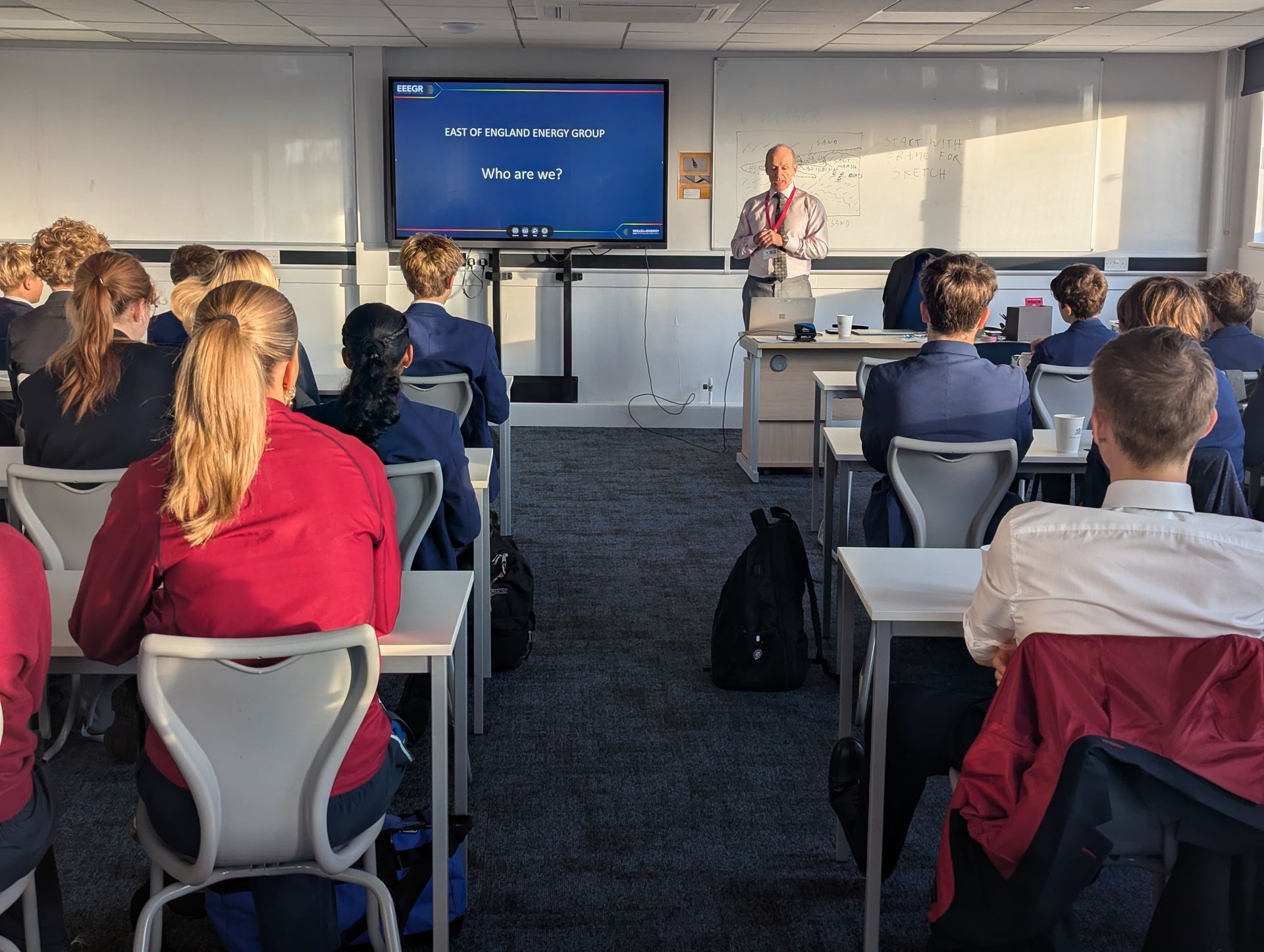
This week we are spotlighting STEMM at Norwich School and caught up with some inspiring ON’s who discussed where studying a STEMM subject at the school has taken them in their careers!


Wian Stipp – (11-18)


Wian attended Norwich School between 2011-2018 and studied both Maths and Further Maths during his A-Levels. 


Did you study Maths, Further Maths or both?

I studied both!

What did you go on to do when you left Norwich School? Where?

I pursued a BSc in Mathematics and Economics at the London School of Economics. During my time there, I learned how to program and became involved with AI start-ups – initially with Lanterne, based in London, and subsequently with Evidium, based in San Francisco.

Where in the world are you based?

I’m currently based in San Francisco, USA.

Where has your career taken you so far?

I joined Evidium in 2020 as a Founding Engineer, just as the company was getting of the ground. The following year, we raised see funding in San Francisco. At Evidium, I focus on research and engineering, building machine learner systems for healthcare applications.

Where do you want your career to go?

I aim to continue developing machine learning systems that push forward innovation in health care and contribute significantly to improving patient outcomes.

Why should pupils study Maths beyond GCSE?

Maths builds the ability to think clearly and reason rigorously – skills that are valuable no matter what path you pursue. If you’re curious about fields like AI and machine learning, Maths simply is the foundation.

How has Maths been beneficial to you outside of Norwich School?

Maths continues to be central to my daily work, Maths has shaped how I think, solve problems, and engage with the world, and it remains the foundation of everything I build in my career.


Jennifer Williamson – (09-16)


Jennifer is an incredibly inspiring woman in the world of STEMM; having attended Norwich School between 2009 and 2016, she kicked started her engineering career studying both Maths and Further Maths.


Did you study Maths, Further Maths or both?

Both!

What did you go on to do when you left Norwich School? Where?

I did a 4-year Integrated masters in Aeronautical Engineering at Imperial College London! In my third year I did an internship at Sainsbury’s writing their 30 year “path to zero carbon” plan.

Where in the world are you based?

I’m currently working in London, I spent a couple of years working in Edinburgh, and before that I was in Australia! I carried out my final year university project on exchange in Melbourne, creating a model to estimate the emissions of different journeys, to compare public and private transport in the suburbs.

Where has your career taken you so far?

I’ve been working as a Building Sustainability Engineer for four years. I work with architects to improve the design of buildings by carrying out dynamic simulations which look at things such as if occupants will overheat, based on how many windows there are, any external shading, how much natural ventilation there is and more. I really enjoy it, and I love having a genuine impact on the design of buildings that are going up in my city.

Where do you want your career to go?

I had a catch up with my boss recently, and he’s keen for my future career to involve going into architectural firms to give workshops on how to really achieve sustainable buildings, which sounds amazing to me. There are a lot of methodologies at the moment for designing sustainable buildings, but a lot of them are just “tick box” exercises, whereas good design changes from building to building.

Why should pupils study a STEMM beyond GCSE, such as Maths?

I think if you might want to study something like Engineering at University, A-Level Maths is really important and would probably be a requirement, so if that’s on the cards then it’s good to keep that door open. It doesn’t necessarily mean you’ll be doing maths for the rest of your life - my job doesn’t involve much Maths now. A lot of my Engineering degree was basically just maths in different contexts, and I wouldn’t have been able to get my job without the degree.

How has Maths been beneficial to you outside of Norwich School?

The main thing is being able to do a job I enjoy now. Another bonus was that some of the content we did at university in first year I’d already learnt in Further Maths, which was really helpful when everything else was new and difficult. My job doesn’t involve a lot of Maths now, but I do still pull out trigonometry quite often for calculating shading angles.


Steven Gopaul - (07-15)


Steven attended Norwich School from 2007-2015, and studied four STEMM subjects at A Level. Now working at the Norfolk and Norwich Hospital, his career in medicine is nothing short of inspirational.


What subjects did you study at A-Level? 

Maths, Chemistry, Biology (All A2) and Physics (AS).

What did you go on to do when you left Norwich School? Where? 

I studied Medicine, rather unconventionally in Europe, in Prague, Czech Republic. 

Where in the world are you based? 

I am currently based in Norwich and work at the Norfolk and Norwich Hospital.

Where has your career taken you so far? 

After finishing school in 2015, I went to medical school and graduated in 2021. I completed 2 years of general medical training in the East of England which is known as foundation training in 2023, with a good experience in both medical and surgical specialities. I took a year out of clinical medicine after foundation training to teach at UEA - Norwich Medical school. I taught all years of medical students in various clinical subjects, procedural skills as well as in laboratory-based sessions of Anatomy (which was my favourite subject). Alongside my teaching duties, I examined final year exams and contributed to creating questions for written exams and clinical stations for use in OSCE exams. Since 2024, I have been working as a trainee surgeon and am due to finish my 2 years Core Surgical Training in August 2026 before moving onto higher specialty training in General Surgery. Throughout my medical training thus far, I have attended and presented at conferences both nationally and internationally, and undertaken post-graduate courses and exams. I have passed my initial surgical exams (the final exams will be closer to becoming a consultant) and am a member of the Royal College of Surgeons of England and Fellow of the Higher Education Academy after completing my post-graduate certificate in clinical education. 

Where do you want your career to go? 

I am training to be a General Surgeon with the aim of becoming a Consultant Colorectal Surgeon in the NHS. 

Why should pupils study a science beyond GCSE?

Studying a science beyond GCSE gives you much more than knowledge — it teaches you how to think. A-level sciences push you to analyse information, solve problems, and understand why things happen, rather than just memorising facts. You learn to deal with complex ideas and interpret evidence. Another benefit of studying science, is that it creates a structure for learning new information which many other subjects unfortunately don’t provide. Science also isn't always straightforward — it stretches you. However, working through complex problems develops many of life’s important traits such as resilience and a logical way of thinking that once again can be applied to anything in life.

How has Science been beneficial to you outside of Norwich School?

Studying science beyond school was more than a gateway into medicine for me; it fundamentally shaped how I approach learning and clinical practice. Advanced study in biology and chemistry meant that when I reached medical school, I wasn’t encountering concepts in isolation. Subjects like physiology, pathology and pharmacology felt like logical extensions of principles I already understood. Beyond this, it has provided me with many rich experiences of collaboration where I’ve got to work with many different medical and scientific professionals which has helped me develop new skills and allowed me to travel, which I thoroughly enjoy! Lastly, studying sciences at school developed intellectual discipline and professional curiosity. It trained me to analyse evidence critically and the habit of questioning is central to good medical practice. It drives lifelong learning, which is essential in my profession where knowledge evolves rapidly.


Tom Lefever - (91-97)


Tom studied both Maths and Physics during his time at Norwich School. He now works in Civil Engineering and continues to travel across the world, mastering his expertise.


What subjects did you study at A-Level?

Maths, Physics and French.

What did you go on to do when you left Norwich School? Where?  

A degree in Civil Engineering at the University of Nottingham.

Where in the world are you based?

Norwich!

Where has your career taken you so far?

All over the UK, designing buildings for many countries including Montenegro and all over Northern Africa.

Where do you want your career to go?

Continue to build my expertise in historic buildings such as Cathedrals and Castles.

Why should pupils study a science beyond GCSE?

It helps you understand the world better and build a strong, broad base to pursue your chosen career.

How has Science been beneficial to you outside of Norwich School?

It is fundamental to my work in assessing how buildings behave and knowing what materials to choose when designing them. It has helped me personally with my health, nutrition, and even DIY of my house and fixing my car!


Richard Wade-Martins - (83-91)


Richard studied three STEMM subjects at A-Level whilst at Norwich School and now works at the University of Oxford, leading ground-breaking research into Parkinson's and Alzheimer's disease.


What subjects did you study at A-Level?

Biology, Chemistry and Maths.

What did you go on to do when you left Norwich School? Where?

I went to study Natural Sciences at the University of Cambridge in 1992, specialising in Genetics in the final year. From there I went to the University of Oxford to do a DPhil (the Oxford PhD) in human molecular genetics.

Where in the world are you based?

I am at the University of Oxford in the Kavli Institute of Nanoscience Discovery and the Department of Physiology, Anatomy and Genetics.

Where has your career taken you so far?

After my DPhil I went to work for three years at Massachusetts General Hospital and Harvard Medical School in Boston, Massachusetts. It was a fantastic opportunity to live abroad for a few years and get an international perspective on science and life. I then came back to the UK in 2003 starting my own research group at Oxford and have built up my own research program.

Where do you want your career to go?

I'm moving towards drug discovery. I work on understanding the cellular and molecular mechanisms of Parkinson’s and Alzheimer’s disease: why do some people get them and how can we prevent or treat the conditions? As the population ages with more people are retired than at school, this will become increasingly common and a major healthcare challenge. My academic lab at the University now works closely with industry and biotech partners to develop translation of new therapies from lab findings to novel treatments for patients.

Why should pupils study a science beyond GCSE?

Studying science allows you to understand how the world works, whatever you chose to work on. In my area it allows us to dissect the role of genetics and biology in age-related neurodegeneration. We need to use science to understand molecular mechanisms to develop new therapies. 

How has Science been beneficial to you outside of Norwich School?

I read about the discovery of DNA, the molecule which carries our genetic information, when I was at Norwich School aged 14, and from that moment on I wanted to study genetics. I have been lucky enough to follow that through working in three of the best Universities in the world. It has been a fantastic choice of career and if I went back to being aged 14 now I would do exactly the same again.
By Eleanor Lewis May 11, 2026
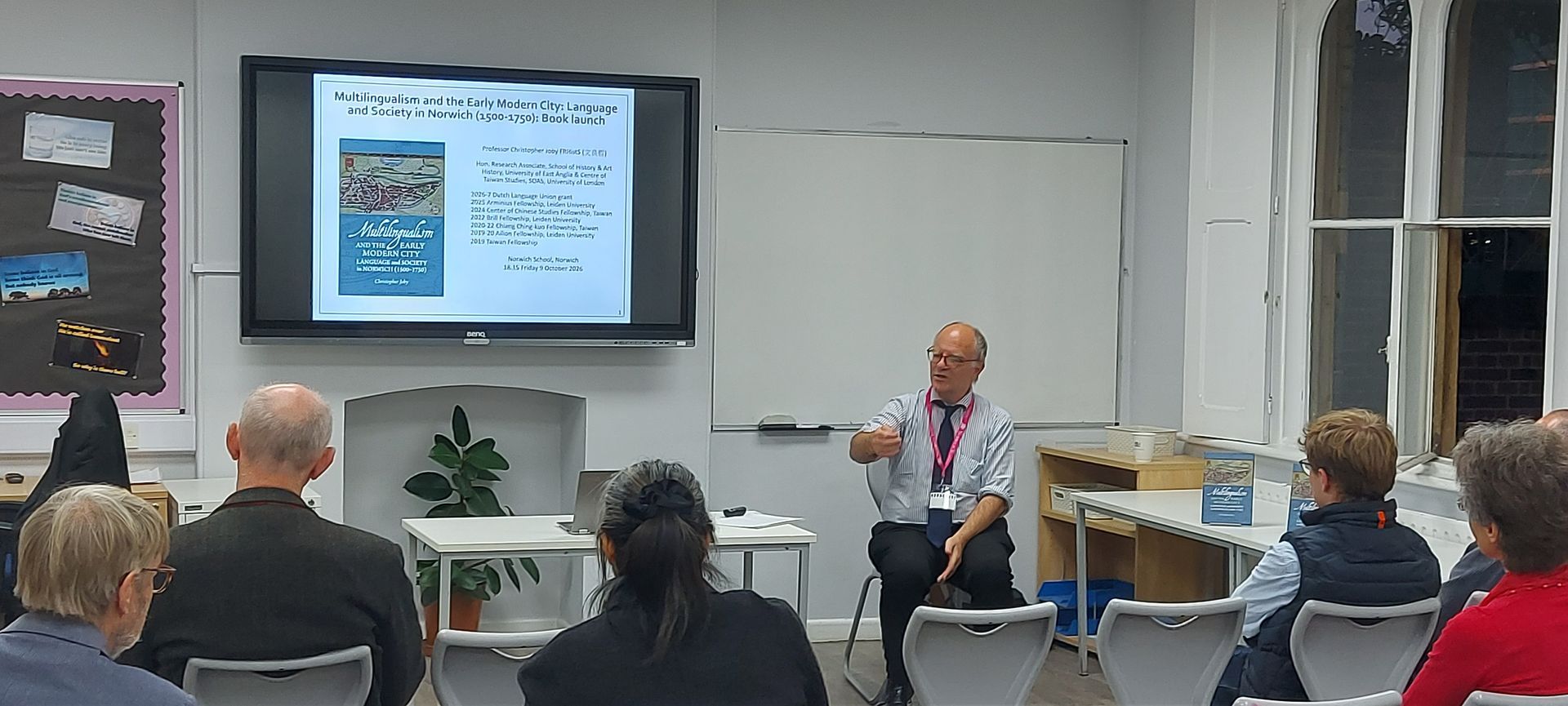
Richard Wentworth has played a leading role in New British Sculpture since the end of the 1970s. His work, encircling the notion of objects and their use as part of our day-to-day experiences, has altered the traditional definition of sculpture as well as photography. By transforming and manipulating industrial and/or found objects into works of art, Wentworth subverts their original function and extends our understanding of them by breaking the conventional system of classification. The sculptural arrangements play with the notion of ready-made and juxtaposition of objects that bear no relation to each other. Whereas in photography, as in the ongoing series Making Do and Getting By, Wentworth documents the everyday, paying attention to objects, occasional and involuntary geometries as well as uncanny situations that often go unnoticed. Richard Wentworth lives and works in London. He was awarded an OBE in 2011.  No prior booking required. Tickets available at the door. ncas members £7, non-members £10, students FREE. The Blake Studio is fully accessible. There is also free car parking directly outside.
By Eleanor Lewis May 9, 2026
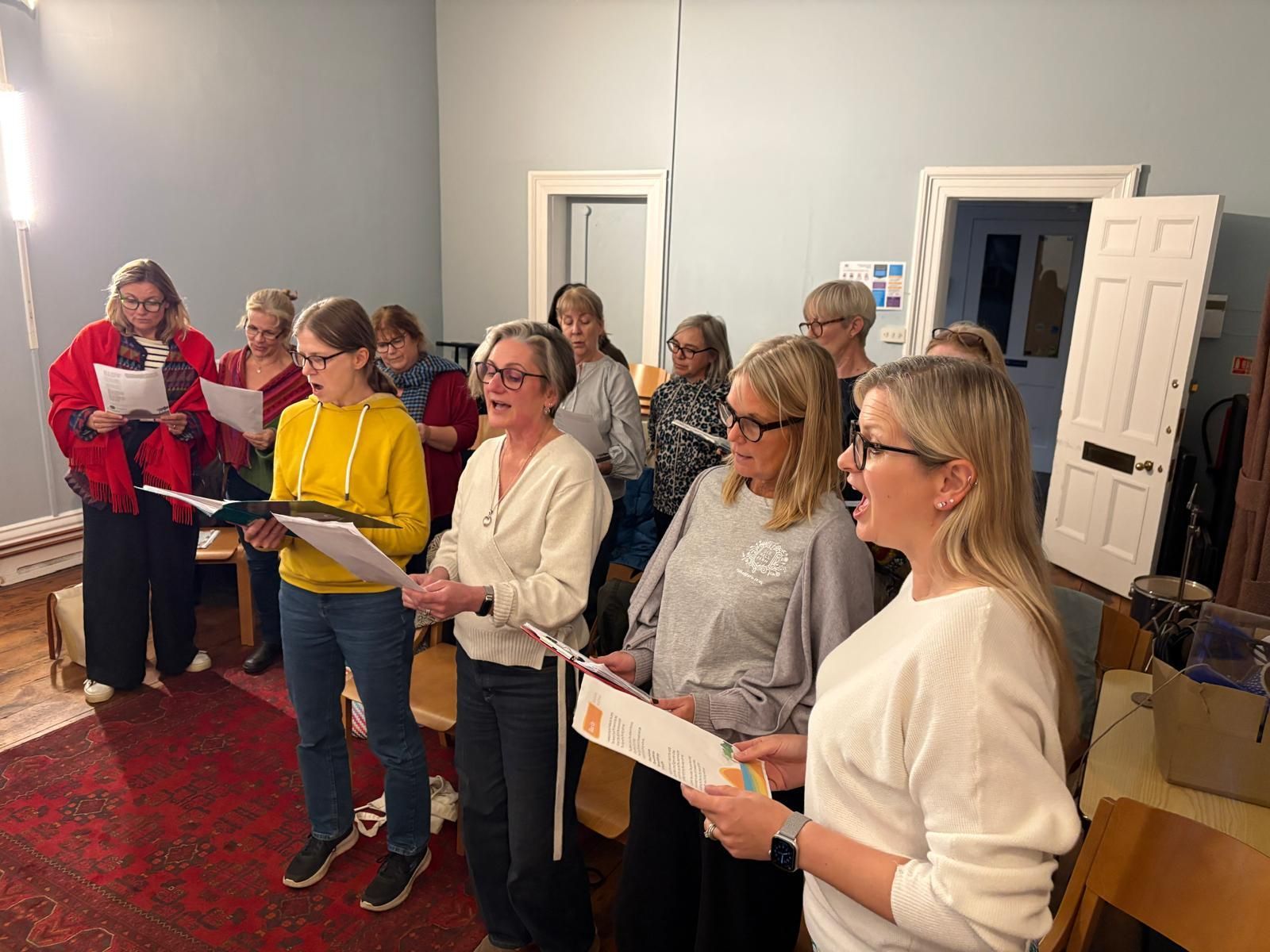
It was a great honour to be asked by the Kings Lynn Festival Chorus to sing as the young voices of World-famous composer Sir Karl Jenkins’ piece Cantata Memoria in his presence. He is one of the most famous living composers in the UK and one of his pieces, The Armed Man , was recently voted as the most popular piece of classical music in the Classic FM Hall of Fame. On Saturday 9 May 2026, members of the Norwich School Junior choir and the Norwich Lower School Chamber Choir set off for St. Nicholas church Kings Lynn. When we arrived, we started rehearsing Cantata Memoria with the lovely conductor: Ben Horden, the professional Orchestra and the Kings Lynn Festival Chorus. Many of the junior and lower school chamber choir had never sung with an orchestra before, making this an incredible new experience for all of them. Before the concert, we had free time to sit outside the beautiful church and eat dinner in preparation for the long concert. The concert was in two parts, although we did not sing in the first half it was very exciting to hear some of Sir Karl Jenkins other works, such as his Te Deum and his Mass For Peace . In the second half we sang the Cantata Memoria – a piece composed to commemorate the Aberfan Disaster of 1966, where 144 people (mostly children) died when a coal spoil tip engulfed the small Welsh mining village. The Cantata was both beautiful and intense telling the story. In between movements we could look at the audience, some of which were in tears from the sheer beauty and sadness of the piece. The orchestra was spectacular and so were the soloists, Khrystyna Makar (soprano) and Paul Carey Jones (baritone/bass). Their captivating performances added to the incredible atmosphere of the concert. At the end of the concert, we all got to gather to take a photo with Sir Karl who was very impressed by the performance, congratulating us on our contribution. Overall, it was an amazing experience for all of us who went to sing.
By Sonja Mitchell May 8, 2026
The Fourth Form Garden Continues to be a Wonderful Space for Pupils
By Eleanor Lewis May 7, 2026
With the Upper 6 soon to start their study leave, we are going to announce a final selection of university offers and offers for apprenticeships that they have received.  We wish the Upper 6 pupils all the best as they sit their A level examinations and hope that the 20 pupils still awaiting outcomes of one or more of their applications receive good news on these soon. The school’s Apply Plus Programme is run by Mr Pearce. It supports pupils applying to academic courses that require admissions tests and/or interviews. Pupils with Apply Plus offers not previously announced: Lily Mei ML - Foundation Year in Arts, Humanities and Social Sciences at the University of Cambridge This makes the total number of Norwich School offers from Oxford and Cambridge this cycle 11. Daniel AM – Economics at UCL Thomas H – Computing at Imperial College Anish K– Economics at the University of Warwick Humanities/Social Sciences/Languages: Isabel B – Spanish at the University of St. Andrews Edward Bl – History with a Year Abroad at UCL Joel F (ON) – Politics, Philosophy and Economics (PPE) at LSE (London School of Economics) Hannah H - Culture, Media & Creative Industries at King’s College London Darcy W – International Management (including Year Abroad) at the University of Warwick Sciences: Bea F – Environment and Sustainability at the University of Surrey Cynthia L – Neuroscience at UCL Victor P – Engineering Business Management at the University of Warwick Halvard Y - Data Science at LSE Creatives: Will C – Acting (BA) at East 15 Ernie H– Music Production at Northbrook College Lana K – Music Performance – Drums at the Academy of Contemporary Music Isla V– Contemporary Dance (BA) at Trinity Laban Toby W – Architecture with professional placement at the University of Bath Overseas: Gabriel C – offers from both Hong Kong University (HKU) and Hong Kong University of Science and Technology (HKUST) Gilia C and Mari L – offers from Hong Kong University of Science and Technology (HKUST) Apprenticeships: Louise H – Accountancy apprenticeship with Berry & Warren (Norwich) George S– Engineering apprenticeship with the National Grid (Eakring, Nottinghamshire)
By Eleanor Lewis May 7, 2026
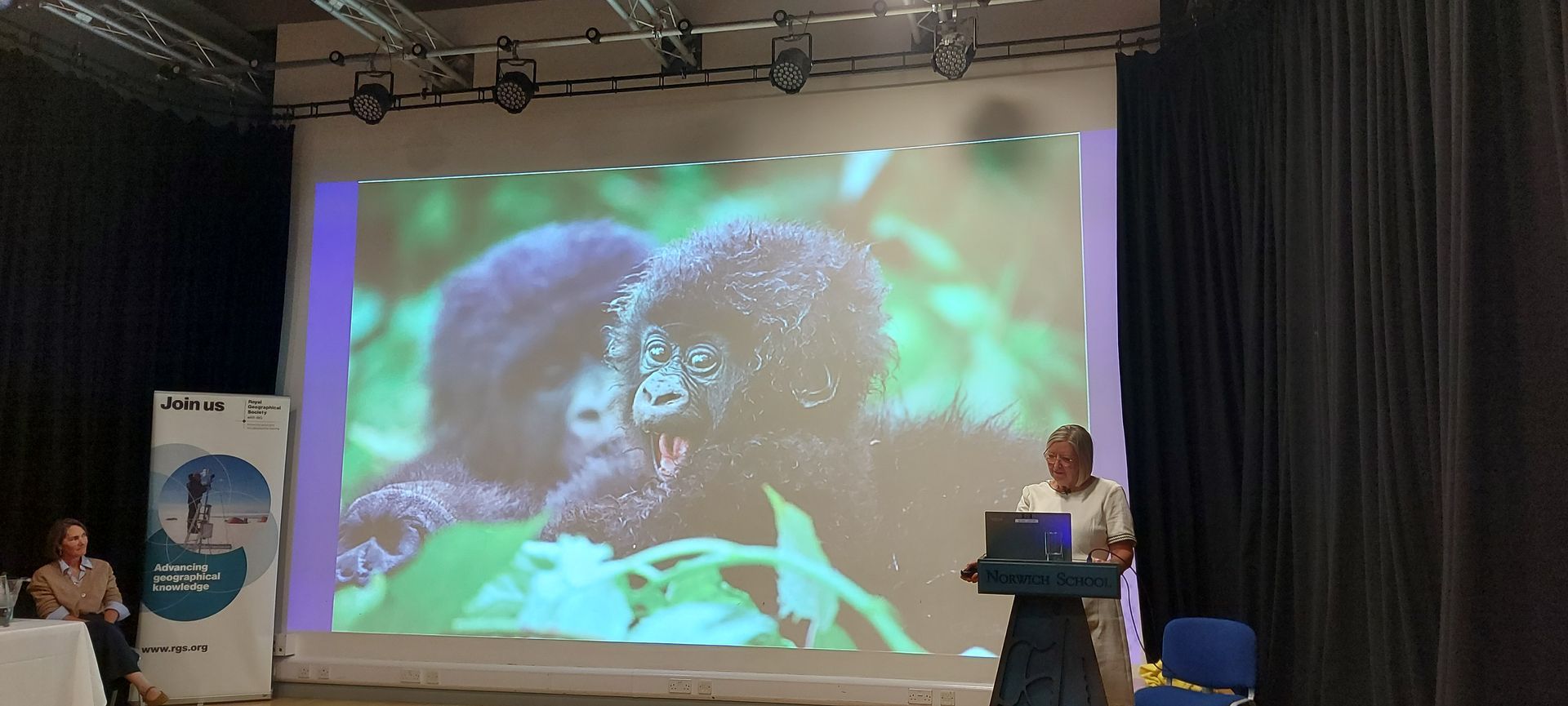
On 07 May 2026, it was with great pleasure that the school welcomed back on site the illustrious Royal Geographical Society (RGS) for the latest in their series of public lectures on site. A capacity audience in the Blake Studio of pupils, staff, parents, alumni, Fellows of the RGS and those with an interest in the natural world heard from charismatic adventurer and Old Norvicensian Toby Hough. His talk was a real treat, and it was a pleasure welcoming him back to his alma mater. Toby is an accomplished and award-winning wildlife filmmaker. His credits include work seen on Countryfile, The One Show, Springwatch programmes, filming for the RSPB, and numerous BBC wildlife documentaries and travel programmes. His career has included working with TV legends including Ray Mears, Julia Bradbury and Chris Packham, and, although Norfolk based these days, he has travelled extensively thought his long career. Many witty and humorous anecdotes ensued, highlighting a fascinating and unpredictable career, often one of great personal discomfort and sacrifice in pursuit of those thrilling ‘killer images’ we see on wildlife programmes. Toby was generous in explaining the complexities of his craft and backed this up with some appealing slides plus a table of wildlife treasures picked up from his global travels. These included a fossilised megalodon tooth, vulture feathers, a walrus tusk, inter alia. An interesting Q&A followed, including some pertinent questions from our younger audience members, carried on over refreshments afterwards. These RGS talks offer intellectual rigour and great entertainment for both the academic and the lay-person alike and are always well worth attending. The RGS autumn programme is being worked out, and we look forward to hosting them here later this year.
By Eleanor Lewis May 6, 2026
On Saturday 9 May, Norwich School choir members will be performing at St Nicholas Chapel with Music in the Burnhams. This concert is a celebration of Sir Karl Jenkins - one of the most performed choral composers in the world. He has composed music for The King, Bryn Terfel, Dame Evelyn Glennie and London Symphony Orchestra. His Mass 'The Armed Man' has topped Classic FM's Hall of Fame again this year and his albums have sold in the millions. He is signed to Decca Records and in 2024 Decca bestowed upon him the unprecedented distinction of a Lifetime deal, the first time the label has made such a commitment to any artist. He was awarded a Knighthood for services to music in the Queen's birthday honours. The concert will feature lots of his most famous works including the Cantata Memoria which Norwich Lower School Chamber Choir and Norwich School Junior Choir are involved with. We are the only school that have been asked to do this which is a huge honour. Sir Karl Jenkins himself will be in the audience for this very special concert featuring members of the Kings Lynn Festival Chorus and the British Philharmonic Symphony Orchestra. The opportunity to perform his work is a great privilege given his standing within the classical genre and to have him at the concert in person is a huge deal. Click here to book now!
By Eleanor Lewis May 1, 2026
The annual History Dinner took place on Friday 1 May, with this year’s theme being ‘revolutions’ from the past. The evening transported over 50 A Level Historians on a journey through time, consuming revolutionary food, listening to revolutionary music, all whilst wearing revolutionary costumes. The catering team did a fantastic job in recreating dishes from times when human beings were foragers, with our very own chefs foraging for the wild garlic and mushroom used in the canapés. The starter and main took guests on an Early Modern adventure, first westwards to try the ceviche of South America, before a superb Hariyali curry from India. We finished off with a modern classic, an upside-down pineapple sponge, in direct reference to the theme of the evening. La Marseillaise & the Hamilton soundtrack featured heavily throughout the event. The pupils’ costumes were an eclectic mix. Chimney sweepers and industrialists ate side-by-side with Soviet revolutionaries and Castro. The wide time span was complete when local heroine Boudicca appeared, as well as tech-revolutionary Bill Gates. The History Dinner continues to grow and is a great way to bring the past to life, as well as giving us a chance to say goodbye to our departing Upper 6 as they go on Study Leave. This was also Dr Farr’s final History Dinner before retirement. A revolutionary in his own right, Dr Farr has taught over 1,000 pupils A-Level History during his long and industrious career. He will be sorely missed and we can’t thank him enough for all he has done at Norwich School, and the History Department in particular.
By Eleanor Lewis April 30, 2026
2026 is National Year of Reading and we are going all in here at Norwich School! We know reading expands worlds, sharpens minds, and fuels creativity, so let's get inspired! Every month we are focusing on a different genre and hearing from a member of staff about what they like to read, why, when and where! Next up we have Crime Fiction for April and a huge fan of this genre, Gillian Wright, Lower School Teacher, is going to tell us a bit about why she loves Crime Fiction so much! Tell us a little bit about the genre; what common themes or elements do you particularly enjoy? I enjoy delving into stories that revolve around secret missions, missing persons, or even a mysterious killer. The suspense, unexpected twists, and deductive reasoning keep me eagerly turning pages until the inevitable surprise ending. These books are often packed with action and clever plotlines that keep readers guessing right up to the final chapter. The most thought-provoking stories are those rooted in real-life situations that readers can relate to, such as The London Eye Mystery by Siobhan Dowd. I also enjoy books that take me out of my comfort zone and offer different perspectives on the world, for example T he Hunger Games by Suzanne Collins. What was the book that introduced you to crime fiction? Was there a particular book or author that made you fall in love with this genre? The book that first sparked my interest in reading was James and the Giant Peach by Roald Dahl. Although it is not a classic crime novel, it is certainly an exciting and mysterious adventure. Aunt Sponge and Aunt Spiker clearly display some questionable—if not criminal—behaviour. I suppose my first real exposure to crime fiction came through The Famous Five adventures by Enid Blyton. I loved seeing how a group of children worked together to solve mysteries without any adult help. From that point on, I have always been drawn to stories filled with adventure, mystery, and unexpected twists. I also enjoy a touch of dark humour, which is why I thoroughly enjoyed A Series of Unfortunate Events by Lemony Snicket. The books are grim, funny, and strangely addictive. Has your taste in this genre changed over time? No, my taste for crime novels has not changed. Although I do enjoy a good historical novel, I will always return to mysteries and crime as they provide intrigue, twists and those quiet ‘aha’ moments. Most recently, I have enjoyed The Thursday Murder Club mysteries by Richard Osman. Would you recommend this genre to someone who doesn’t usually read it? Why? There is something timeless about a good mystery. It isn’t just about solving crimes or catching the villain; it’s about asking questions, noticing subtle details, and thinking more deeply. In a world dominated by quick scrolling and short attention spans, mystery novels remind us that it’s okay to slow down, immerse ourselves in a story, and truly pay attention. What do you enjoy most about reading, whether crime fiction or anything else? Reading is essential to me; it allows me to step away from the busyness of everyday life and escape into magical and mysterious worlds, while also enabling me to explore new perspectives. Books have the power to evoke a wide range of emotions, from joy and excitement to sadness and tension. I love immersing myself in a new story—being drawn along with the characters, seeing the world through their eyes, and allowing the words to take me on a journey. When and where is your favourite time and place to read?/ Do you have a favourite reading spot or routine for diving into books? I read every night before I go to sleep, as it helps me wind down after a busy day and fully relax. On sunny days, I especially enjoy reading outdoors, whether that’s in the garden or by the pool while on holiday. Which fictional character would you most like to have a cup of tea with? I would love to share a cup of tea with Willy Wonka, as he would likely provide an unusual combination of flavours—perhaps even with a side order of chocolate. Do you tend to reread favourites from this genre or always look for something new? I don’t usually re-read books, although I have returned to Roald Dahl’s stories time and again—mainly to allow my children to experience the joy of his imaginative and magical tales. When was the last time a book from this genre really surprised you? The essence of a good crime or mystery novel is its ability to surprise the reader, and they never fail to leave me guessing. I have never yet managed to work out the final twist of a truly good crime novel. Do you prefer classic or modern books within this genre, and why? I enjoy both. A classic tale by Agatha Christie or a mystery involving Sherlock Holmes is always enjoyable. However, more recent authors, particularly for children, have created some new classics, such as the Alex Rider series by Anthony Horowitz or Murder Most Unladylike by Robin Stevens. Has your taste in books changed over the years? I used to enjoy reading the classics including books by Thomas Hardy and EM Forster. Nowadays, I prefer a lighter read intermingled with more challenging stories. I am always up for a good book recommendation. Why do you think reading is important? Reading for enjoyment can spark the imagination, provide an escape, and inspire creativity. It offers a way to discover new worlds, meet new characters, and learn about the past. Above all, it is an easy, enjoyable, and relaxing way to spend time. If you could step into the world of any book, which would it be and why? If I could step into the world of any book, it would probably be Harry Potter . The incredible creatures, magical adventures, friendships and rivalries, along with the mysteries waiting to be solved, all combine to make these stories so captivating. I would love to try my hand at a few magic spells myself. Having visited the Warner Bros. Studio where Harry Potter was filmed, it was amazing to see the sets and costumes used by the characters. It truly brought the stories to life and felt like a real privilege Click here to see the monthly Reading List!
By Eleanor Lewis April 30, 2026
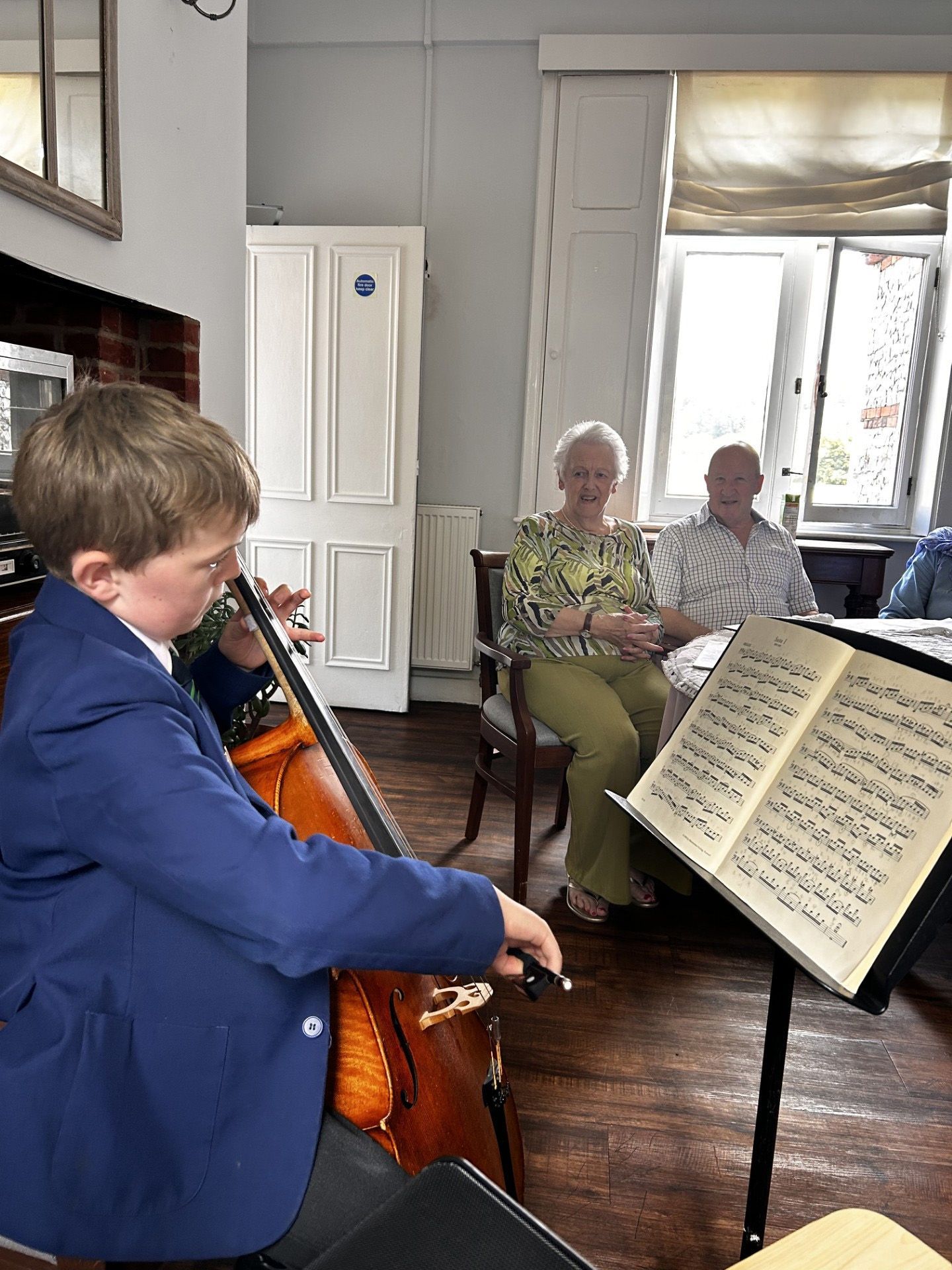
On Thursday 30 April, the Upper 3 Informal Concert in the Lower School Hall felt really special, as we celebrated the pupils’ final Informal Concert together. There was a lovely sense of reflection, confidence and quiet pride throughout the evening. The programme included a great mix of styles and instruments, giving each performer a chance to shine in their own way. The concert opened with a poised and elegant performance of Bourrée on the cello by GF Handel, setting the tone beautifully. Things then picked up with a lively and energetic drum performance of Uptown Funk , which brought great rhythm and a real sense of fun. The mood softened again with a thoughtful and expressive violin performance of Hallelujah , played with sensitivity and a clear sense of line. On guitar, Arctic Monkeys Do I Wanna Know? was performed with a cool confident style, really capturing the feel of the original. The violin returned with Serenade by Schubert, played with warmth and a lovely tone. The piano piece Spanish Guitar added a playful, rhythmic contrast, showing both agility and character, before a bold trumpet performance of He’s a Pirate brought a burst of cinematic excitement. The concert ended with two memorable performances: a moving vocal rendition of I Dreamed a Dream , full of expression and control, followed by Für Elise on piano, where the contrasts and dynamics were handled with care and confidence. Overall, the evening was not just about performance, but about how far these pupils have come in their musical development. Each contribution felt personal and meaningful, coming together to create a memorable final concert. It marked the end of an important chapter but also showed that they are more than ready for what comes next. Head of Music Mr Vine summed it up perfectly: “I am very proud of the commitment and professionalism of our young performers. It has been a pleasure to watch you grow as musicians and you have done so much to enrich the Lower School with your playing. Thank you all!”
By Eleanor Lewis April 30, 2026
The 2026 Norfolk Primary Maths Challenges, hosted by Norwich School, were brilliant days all round, bringing together some of the strongest young mathematicians from across the county for a fun and friendly competition. There were three rounds to tackle—Tangrams, Arithmetic, and lateral thinking—so plenty of variety to keep everyone on their toes. From quick calculations to tricky puzzles and creative challenges, pupils really got stuck in. It was especially impressive seeing such talented mathematicians working so well in their pairs, sharing ideas and supporting each other throughout. The atmosphere throughout both competitions was fantastic. There was loads of creative thinking on show, and just as importantly, plenty of smiles. Alongside the competition, many pupils had the chance to meet others from different schools, make new friends, and enjoy putting their maths skills to the test in a relaxed and encouraging environment. A huge congratulations to everyone who took part—you should be really proud of yourselves. And of course, well done to our winners: Year 5 Primary Maths Challenge Winners: 1st: White Woman Lane Junior School 2nd: Norwich Lower School 3rd: St Nicholas Priory Primary School Year 6 Primary Maths Challenge Winners: 1st: Norwich Lower School 2nd: Cringleford CE VA Primary School 3rd: White Woman Lane Junior School Well done again to everyone involved—it was a great day and we’re already looking forward to next year!
More Posts