Onward Routes for Upper Sixth - Law Case Studies

March 25, 2025

Here at Norwich School we are delighted to celebrate the talented diversity of our Upper Sixth cohort as UCAS (the Universities and Colleges Admissions Service) offers continue to roll in.


Law is a popular university course for Norwich School pupils to apply to and career for them to consider. Pupils were able to speak to solicitors and barristers working in a range of fields at the school’s Careers and Networking Evening earlier this week and the Model Arctic Council Event we hosted last weekend honed the public speaking and debating skills of the sixth formers involved.


This blog post asks three pupils about the application process that led to the offers they have received to date and the courses they are hoping to start in the autumn.

Reuben Francis


Tell us about the university offers that you've received so far i.e. what course(s) at which universities.


I’ve been offered LLB Law at the University of Cambridge, the University of Bristol, and Durham University, and I am still waiting on my other two choices.


On top of the usual UCAS application form, what else have you had to do as part of the admissions process to be considered for these highly competitive courses?


I had to take an interview and the LNAT admissions test.


How did Norwich School help you during the university application process?


The school provided active support with the personal statement, be that through my tutors, Mr Pearce or Mrs Warren. Mr. Pearce organised a session to prepare for the LNAT assessment, an Invitation to Law session with an Oxford Law professor, and a mock interview. They also helped me access other resources, like the library ordering in prep books I wanted and various societies, including the Law society, which were invaluable. Finally, the Critical Thinking sessions that were put on by Dr Speca were incredibly useful for both my admissions test and the interview.


Which other activities in sixth form helped strengthen your application?


I participated in several super-curricular activities, including mock law trials and the Law Society. I also gave a few lectures at the Jurisprudence Society that I started. My Independent Project was really long and involved the historical legal treatment of the first nations peoples and its impact on their current socio-economic position in Australia. I visited the Old Bailey and Royal Courts of Justice separately from school and with the school Mock Law Trial team. I also took part in essay competitions surrounding law and completed a few online introductory law courses (Cambridge’s Future Learn program is really good). I think the most important thing I did was to read as much as I could about the subject. I read a lot of books last year that were related to my subject, as well as a number of less academic, but still really useful and interesting, books.


Outside of law-related activities, what have you been involved in at Norwich School during sixth form?


I was involved in the following societies: Jazz Band, Chapel Choir, Close Shaves, Colloquium (where I gave a few talks), Herculites and the Wellington Society. I went to talks that interested me at Clio and Erpingham Societies and was involved in school rowing (but that tailed off towards the midpoint of Lower 6).


Which offer do you think you will pick as your CF (conditional firm) and what most excites you about that course?


I will definitely be picking Cambridge as my conditional firm; the thing that excites me the most about this course is the supervision system, as well as the opportunity to be engaged with the country’s top legal academics. 
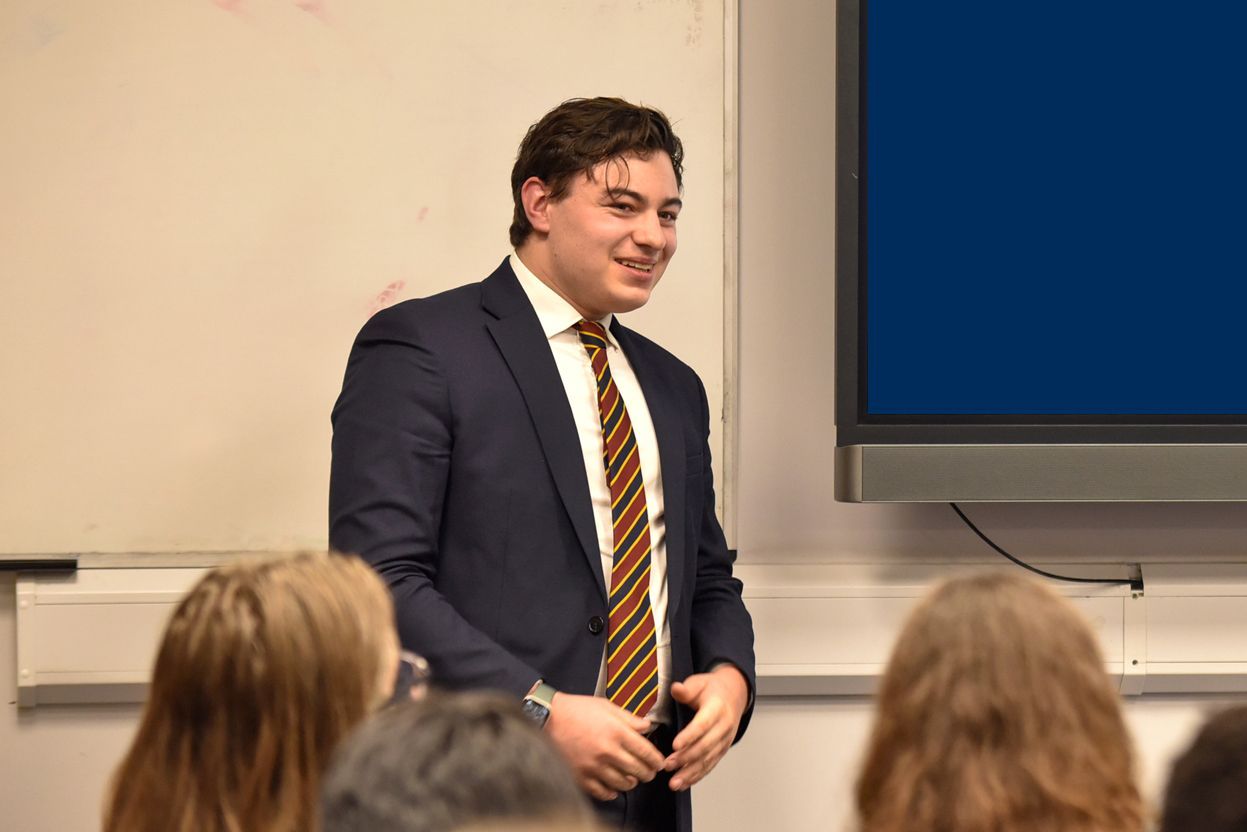

Barnaby Karlson-Evans


Tell us about the university offers that you've received so far i.e. what course(s) at which universities.


I have now received all of my offers, among those, Nottingham, York, Warwick and Durham for Law LLB (3 Years).


On top of the usual UCAS application form, what else have you had to do as part of the admissions process to be considered for these highly competitive courses?


Ultimately, as an applicant, you want to prove why you are passionate about law. Certainly, when it comes to this field, work experience is desirable by universities. Although it’s not a requirement, it helps one’s application to stand out, which is beneficial as these courses become more competitive year on year. Universities understand that legal experience isn’t by any means easy to get, and if you find yourself in that position, don’t be disheartened; you can still attend talks, webinars, online courses or even sit in a courtroom as a member of the public. These alternatives don’t require you to contact someone in the legal field, are much easier to obtain and have just the same value.


How did Norwich School help you during the university application process?


Mrs Warren and Mr Pearce were invaluable when it came to the application process. Explaining admissions assessments, checking over applications, proofreading and suggesting revisions to a personal statement are all examples of what the school helps with. They are both very knowledgeable and are always happy to help address any concerns. This all helps to take the pressure off during a workload-intensive time of study and thus, make the process a lot less stressful.


Which other activities in sixth form helped strengthen your application?


The Independent Schools’ Mock Law Trial is one of the activities that strengthened my application. Getting hands-on experience, in a courtroom, acting as counsel (among other roles) is an invaluable skill which not only looks fantastic on your personal statement but also helps in other walks of life too, such as public speaking. Last year, the school progressed onto the national round, competing at the Old Bailey in London. This was a brilliant experience and if you’re interested in law, but not sure if it’s right for you, this can be a good taster of the subject and help you make up your mind. Debating Society was also an activity I used to do. It presents many opportunities to compete across the country, and also develops one’s critical thinking skills, which is beneficial when taking the LNAT, a law aptitude test, required by some universities.
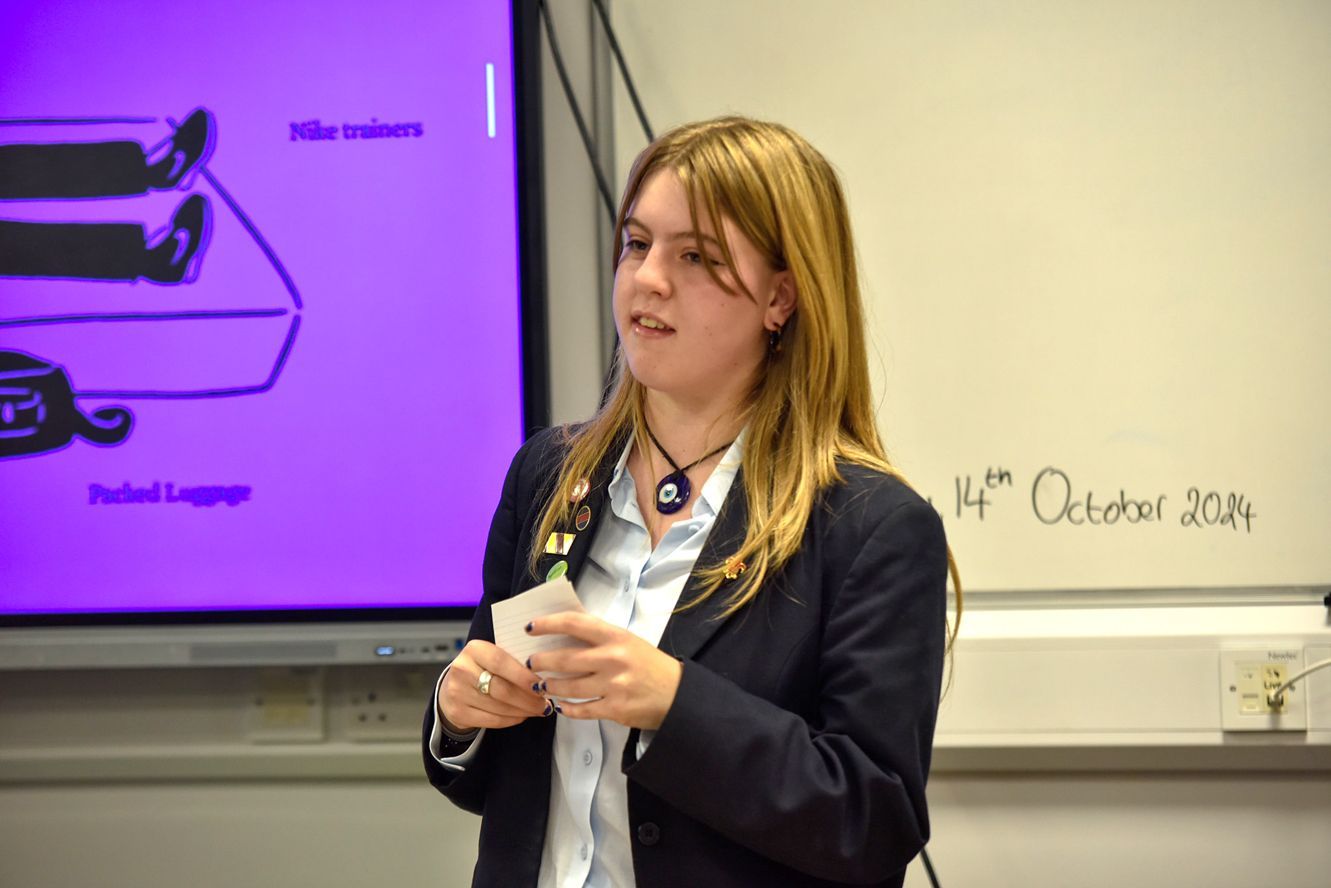
Alethea Tweddle


Tell us about the university offers that you've received so far i.e. what course(s) at which universities.


I have had offers from Sheffield and Glasgow for common law and then human rights law from York. I’m still waiting on Bristol and LSE.


On top of the usual UCAS application form, what else have you had to do as part of the admissions process to be considered for these highly competitive courses?


The LNAT is probably the biggest addition besides the UCAS application as it helps the top universities to establish the best candidates. However, it is not used for all universities and some excellent places don’t require it, so I suggest applying for a range of places with and without LNAT as it reassures you that you have places to go to if it doesn’t go well.


How did Norwich School help you during the university application process?


The Apply Plus scheme was really helpful in guiding me where I wanted to go and how to strengthen my extra-curriculars in order to assure that my personal statement stood out. As well as this Mr Pearce arranged a meeting with a Professor Mirfield from Oxford who established the basic building blocks of a law degree which cemented my choice.


Which other activities in sixth form helped strengthen your application?


My main strengthening activity was definitely the Law Society and the Mock Law Trial in June last summer as it gave me a clear insight into how being a barrister in the UK works. In addition to this exploring the famous historical buildings of our judicial history inspired me to make my final decision. As well as this though, I followed it up by arranging meeting with barristers in some chambers in London who gave me an honest insight into the career I want.


Outside of law-related activities, what have you been involved in at Norwich School during sixth form?


My main co-curricular activity is FemSoc, as I have taken a leading role in the Upper Sixth. I really enjoy this club and it’s a wonderful community of strong women and empowering young girls and boys to talk about the hard issues gives me great pride and fulfilment.


Which offer do you think you will pick as your CF (conditional firm) and what most excites you about that course?


Bristol (if I get it!!) but if not probably Sheffield.
By Eleanor Lewis June 12, 2026
On Thursday 11 June, Lower 3 immersed themselves in their India Case Study with a vibrant, fun-filled hands‑on celebration of culture. Throughout the afternoon, they explored Bollywood dance, experimented with colourful Indian art, and learned about traditional clothing and adornments. The finale to their afternoon was a joyful performance wearing saris, bindis, ghungroo bells and other cultural accessories, bringing their Geography learning to life with energy and creativity.
By Eleanor Lewis June 12, 2026
Over 600 artworks by Norfolk primary schoolchildren go on display at the Crypt Gallery, Norwich School from 15th – 20th June 2026.
By Eleanor Lewis June 12, 2026
Good morning everyone. Do please sit down. And a very warm welcome to all of the new L4 pupils joining us this morning for their first cathedral assembly. So, the world cup started last night. Could I have a quick show of hands. Who watched the first match - Mexico v South Africa? A better test of world cup fever is - Who watched the second match? South Korea v Czech Republic at 3AM? There are always some hardy souls who commit to watching every match. With more matches, and 3AM as one of the regular kick-off times, that will be a bigger challenge then ever before. I wouldn’t say I’m a big football fan. But I do always look forward to the big sporting events of the summer. Be it a world cup, Olympics, Wimbledon, Tour de France, or just the simple pleasure of lying in the garden listening to Test Match Special. One tradition associated with the world cup and the Olympics is the last minute scramble to get the stadiums built. I never heard much about it this year. I think they are using existing stadia. But whether it was the Olympics in London or the world cup in Brazil, there are often stories in the news speculating that they won’t be ready in time. You could be forgiven for wondering why they don’t just start the whole process earlier. It turns out that FIFA did try that back in the 70s. In 1973, the 1986 world cup was awarded to Columbia, giving them 13 years to get ready for it. But, by 1983, it was apparent that even 13 years wasn’t long enough to get everything built, so the tournament was moved to Mexico, who had hosted in 1970 and so already had stadiums in place. I say 13 years wasn’t long enough, but there is another school of thought that says it was too long. Can you imagine working to a deadline 13 years in the future? Many of you weren’t even born 13 years ago. A deadline in the far distance is like not having a deadline at all. ‘Take as long as you need to build your stadiums, Columbia. Make them perfect. There is no rush’ That is the message they were given. I put it to you this morning that deadlines are important and necessary. And while it may often seem that we could have done a better job if only we had a bit more time, that is often simply not the case. I was sent down this line of thinking by listening to a book review on the radio last week. The book is called ‘Inside the Box’, and the author proposes that, far from hindering creativity and innovation, deadlines and other constraints have been a necessary part of inventions and creative thinking since the start of time. These might be natural constraints of weather and seasons, or man-made restrictions like coursework deadlines. One story in the book is that of Dmitri Mendeleev, creator of the periodic table of the elements. Most of you will be familiar with the slightly odd structure of the periodic table, with different numbers of elements in various columns. Legend has it that this structure came to Mendeleev in a dream, and he sprung from his bed to scribble it down on a scrap of paper before he forgot it. The truth is that this dream happened the night before the deadline his publisher had given him. Is this a coincidence, or an example of cause and effect. One way that deadlines could be considered bad is that you might genuinely be left with insufficient time to make something perfect. But ask yourself this, is it better to do something well in the time available, or aim for perfection and never get it done at all. Most people don’t have the luxury of being able to devote their whole life to one single project. Most of us are always spinning several plates, and only have a finite amount of time to devote to each. Each of you will have faced this recently when preparing for your exams. Much as you wanted to practice more Maths, you had to devote some time to English or History, and you might have had cricket matches or music lessons to fit in as well. You might say that the ultimate building project was the creation of the world. Now, I am aware that modern science suggests that the world was not created on quite the timescale that is recounted in the Bible, but I’ve asked Kort to read us the final stages of the biblical creation story as I think there is a useful lesson in it for us all. We pick up the story at the start of the 6th day, by which time God has already created night and day, sea and sky, land, plants and animals. So God created mankind in his own image, in the image of God he created them; male and female he created them. 28 God blessed them and said to them, “Be fruitful and increase in number; fill the earth and subdue it. Rule over the fish in the sea and the birds in the sky and over every living creature that moves on the ground.” 29 Then God said, “I give you every seed-bearing plant on the face of the whole earth and every tree that has fruit with seed in it. They will be yours for food. 30 And to all the beasts of the earth and all the birds in the sky and all the creatures that move along the ground—everything that has the breath of life in it—I give every green plant for food.” And it was so. 31 God saw all that he had made, and it was very good. And there was evening, and there was morning—the sixth day. Thus the heavens and the earth were completed in all their vast array. 2 By the seventh day God had finished the work he had been doing; so on the seventh day he rested from all his work. 3 Then God blessed the seventh day and made it holy, because on it he rested from all the work of creating that he had done. Thank you Kort. What I really want you to notice in that story are 2 things. Firstly, God seems to have been working to quite a tight timetable, seemingly self-imposed. After all, who was going to hold him to account if he finished the job late? Secondly, when he saw all that he had made, it was very good. Now, we all know from our report cards at Norwich School that very good is very good, but it is not perfect, or even Outstanding. You might have thought that God would not rest until he had made his world perfect. But of course we know we don’t live in a perfect world. We do live in beautiful world containing dolphins, penguins and elephants, mountains, oceans and cathedrals. But it does also contain wasps, rain, and exams, and sadly much worse things than those. Even though God had a rest day at his disposal, he still stuck to the timetable and left the world as it was at the end of day 6. It was, after all, very good. I think there is a lesson here for all of us. When given something to do, whether it is a piece of homework, an art project, or performing in a concert, we should acknowledge at the outset that our goal is to make it as good as we can in the time available, rather than always aiming for absolute perfection. And we should also acknowledge that it is simply human nature that we will work more diligently towards that goal if the deadline is close. I’m sure your teachers may have encouraged you to start revising ages before the exams, to spread it out and take the pressure off. This is good advice, but I also know that those same teachers will struggle to follow their own advice when it comes to writing your reports. Deadlines can be scary, and sometimes they can feel restrictive. But they do help us to get stuff done that otherwise may well never get done. I finish with a quote from the legendary jazz musician Duke Ellington. When asked by his producer how much longer he needed to finish his next song, Ellington replied: “I don’t need time, I need a deadline”.
By Eleanor Lewis June 10, 2026
The Upper 3's deepened their understanding of world religions during a special session with a guest speaker who introduced them to the origins and teachings of Buddhism. They were especially engaged by the emphasis on mindfulness and enjoyed practising simple meditation techniques to help focus and calm the mind. 
By Eleanor Lewis June 8, 2026
The Lower School Chamber Choir recently enjoyed a wonderful musical collaboration, welcoming their friends from Boucher School from London for a special afternoon choir workshop. The session was filled with energy, enthusiasm and creativity, as the children worked together to learn a selection of new songs, including Only You , Scarborough Fair , and Count on Me by Bruno Mars. Guided by three talented choir leaders, the pupils embraced the opportunity to develop their vocal skills, build confidence and experience the joy of singing as part of a larger ensemble. One of the highlights of the day was the chance to work with different choir leaders, each bringing their own unique style and expertise. The children responded brilliantly, showing focus, teamwork and a genuine love of music throughout the workshop. The day culminated in a special concert held in the Senior School Chapel, where the combined choirs performed to an enthusiastic and supportive audience. The performance was a true celebration of the hard work and dedication shown by all involved, and the Chapel was filled with uplifting harmonies and smiles. Head of Music, Mr Vine, praised the event, saying: “A wonderful afternoon and evening with some fantastic music making. Well done to Boucher School and the Lower School Chamber Choir for all their hard work, and a big thank you to our fantastic choir leaders.” It was a memorable experience for everyone involved, and a shining example of the power of music to bring people together.
By Eleanor Lewis June 8, 2026
The Lower 5 Battlefields Trip continues be a highlight of the History Department's calendar. This year we took 72 pupils on a First World War journey of discovery that was both exciting and moving. Our itinerary included two days around Ypres in Belgium and a third day walking the Somme battlefield in France. Along the way, we heard the extraordinary stories of some of those who lost their lives in the war, we came to appreciate the scale, terrain and challenges faced by the soldiers, and we saw for ourselves their trenches and equipment. We performed acts of remembrance for Old Norvicensians whose graves we visited, and after three busy days were buzzing with discussion and a desire to explore further, encouraged by four extremely skilled and knowledgeable guides who brought it all to life for us.  Amongst all the history, we also made sure we had time for chocolate shopping in the beautiful town of Ypres.
By Eleanor Lewis June 8, 2026
On Monday 8 June, the UCAS team accompanied by Sixth Form tutors took the Lower 6 to the Norwich UCAS Convention to continue their journey of exploring their future after Norwich School. With over 100 universities present, our pupils could speak directly with university representatives and find out more about courses, entry requirements, halls of residences and student life. The convention also allows our pupils to see how many others want to go to university as well as learning more about different universities from Dundee to Exeter as well as about degree apprenticeships. Our pupils are now starting to get all the information they need to apply successfully in the autumn. We encourage them to go out on Open Days to see the universities at first hand and later in the month, there will be more guidance on filling out the UCAS form and how to write the important personal statement. Norwich School’s successful record with university applications over many years Is a key part of our Sixth Form offer.
By Eleanor Lewis June 5, 2026
Norwich School joined other Norwich Businesses and the Community volunteers at Cadge Road Community Centre on Friday 5 June to help with work on the new NR5 Community Hub garden. The Community Centre team have transformed an unused space into a welcoming, inclusive outdoor area for everyone, supporting community meals through the provision of fresh vegetables and offering a forest school area for the local toddler group.  Building raised beds, installing fencing and planting vegetables, volunteers supported the Community Centre team in their work to deliver a tangible impact and create lasting local benefit.
By Eleanor Lewis June 5, 2026
The ‘Making Musicians’ Music Scholars’ Programme at Norwich School is well established and a jewel in the school’s crown. Occasionally, external professionals are enticed to join us to give a breathtaking masterclass to provide real inspiration to young scholars. On 05 June 2026, we had just such a concert given by Hannah Watson Emmrich, local musician and amazingly talented pianist. She guided a very supportive audience through her new album Notes from the Undergrowth at a concert held in the glorious school Chapel. This album of piano music was being launched at the event. A very intelligently choreographed programme commenced with piano works evoking daybreak and idyllic woodland scenes, followed by an exploration of some of the flora and fauna lurking in the under-canopy, before moving into melancholic pieces reminiscent of sunset (such as nightingales) and finally the peace of nightfall (nocturnes, night moths etc). Alternating astonishing technical excellence and powerful storytelling, Hannah evoked the myriad sounds and sensations of woodland in her performance. Included in her repertoire were three newly commissioned pieces and the audience included Joshua Borin who had composed one of the works called Crex (conjuring up the creepy world of slime mould in music - yes, really!) Our Music Scholars were in attendance and learned much from Hannah’s keyboard mastery and from her achingly beautiful programme of music. We all wish the album a positive reception. See: Notes from the undergrowth | Hannah Watson Emmrich . Heartfelt thanks go to Hannah for such an accomplished performance and to our very appreciative audience who left the Chapel enthralled.
By Eleanor Lewis June 2, 2026
Recently Pre-Reception and Upper One pupils had an enriching experience observing the peregrine falcons which live on the spire of Norwich Cathedral. They visited the Watchpoint, a viewing station run by the Hawk and Owl trust and learned that the falcon pair currently have two chicks. Pupils were able to view both parent birds bringing food to the chick, and they had the opportunity to watch them being fed close-up, through telescopes. Using binoculars, they also observed the various other birds that live in and around the Cathedral Close. Pupils also examined models of different birds of prey, such as a kestrel and a hobby, noticing how they are adapted to catch their prey. To complete their visit, the children had fun trying on model wings of various UK birds of prey and even tested them out by going on a short 'flight' around the Lower Close. Thanks to the Hawk and Owl Trust for providing pupils with this excellent encounter with the fascinating wildlife that we share the Cathedral Close with.
More Posts