NEURODIVERSITY CHAMPIONS AT NORWICH SCHOOL - BETSY JAMES

March 17, 2023

As a part of Norwich School’s support of Neurodiversity Celebration Week, the neurodiversity group are interviewing Neurodiversity Champions at Norwich School and our final Champion of the week is Upper Sixth pupil, Betsy James.

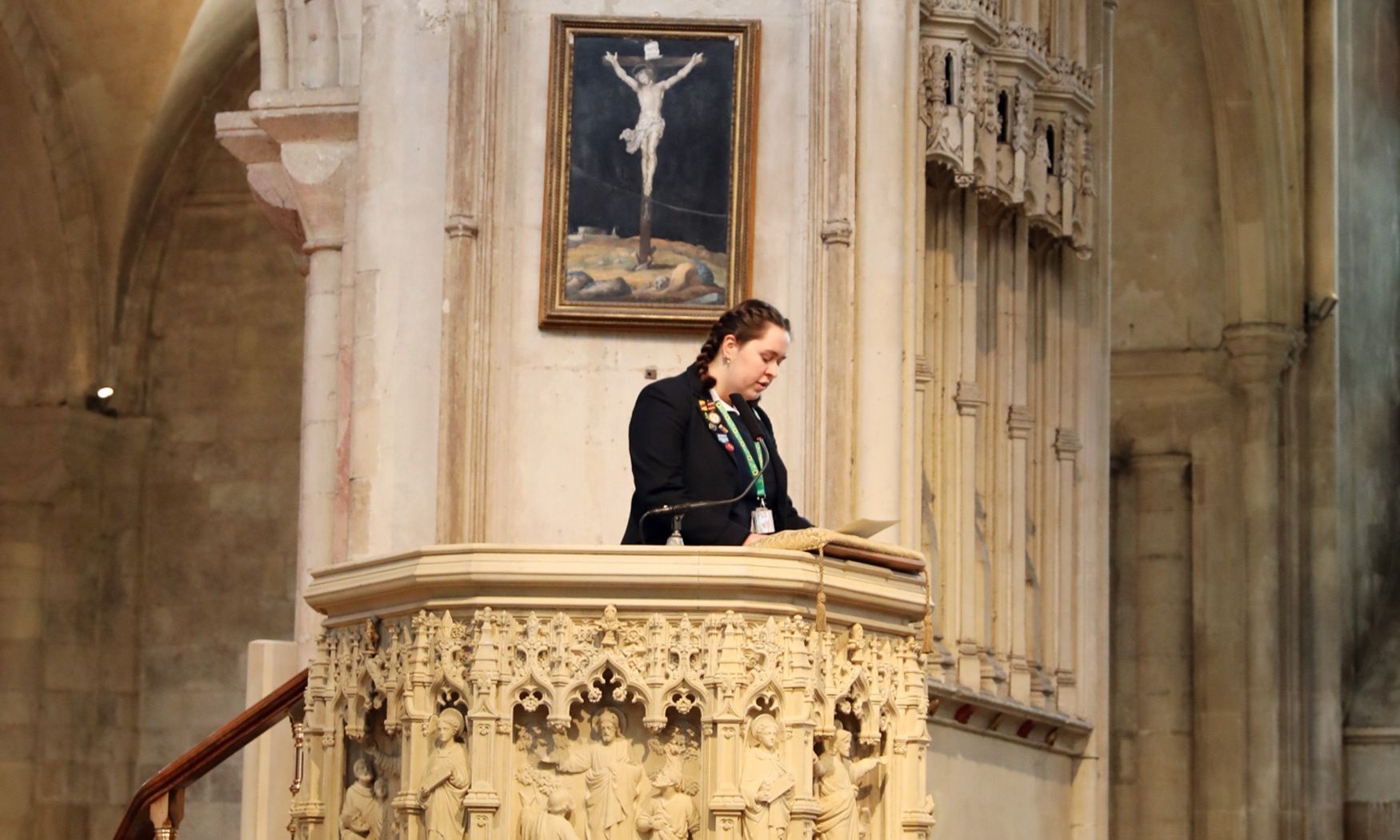
Betsy, along with Anna Clayton, spoke at a special assembly this week to mark Neurodiversity Celebration Week. Presented below is a transcript of Betsy's wonderful address to the assembly.


The dictionary definition for neurodiversity is as follows: ‘the range of differences in individual brain function and behavioural traits, regarded as part of normal variation in the human population’ and while this is all well and good, it doesn’t make the subject itself very approachable. Calling neurodiverse conditions “out of the ordinary” doesn’t sound good either, as it suggests that there is something wrong with the brain if it functions just a tad bit differently to someone else’s. I prefer to think of neurodiversity as the diverse ways in which the brain can work and interpret information.’ This definition was coined by Judy Singer, an autistic sociologist in 1997.


The term neurodiversity is not easily pinned down as it encompasses a wide range of different diagnosis: ADHD, Autism, Dyspraxia, Dyslexia, Dyscalculia, Dysgraphia, and Tourette's syndrome. While these conditions may feel a million miles away to most of you, it’s important to celebrate neurodiversity because it increases inclusion; no one likes the feeling of being left out, especially when it’s because of something that cannot be changed, and Neurodiversity Celebration Week aims to spread the worldwide acceptance of neurodiversity. If you are not neurodiverse yourself, the experiences of those that are may feel entirely separate from your own; you might, for example, still be able to focus on a maths lesson even if you become aware of your sock being twisted in your shoe, but I promise you it is extremely easy to accommodate for those who are.


Talking and listening to neurodiverse people is key; listening to needs and wants is a really easy way to make those around you feel seen, and asking what simple accommodations or shifts could be made to make the day easier, whether that be lowering your speaking volume, finding a quiet and empty place to sit or getting someone a blanket so they feel safe, are massively impactful. These small acts may seem inconsequential and entirely meaningless to you, but for someone who needs that 5-minute breather, or the feeling of a blanket wrapped around their shoulders, it can make a world of difference.


I was diagnosed with autism in June of 2022 and growing up as autistic but without knowing it lent itself to some pretty interesting situations. Apparently, it isn’t the most usual response to cover your ears when you’re afraid of something, even if what you’re scared of isn’t making a noise. It also isn’t “normal” to have a panic attack at the age of 15 when you wake up in the middle of the night and discover your teddies have fallen out of your bed while you were sleeping. That, however, is MY normal. Being diagnosed late meant that my close friends came to understand my autism at the same time as I did, and we have learned together how to work around my different needs. I cannot express how much the support and love from my friends has meant to me over the past year; helping me calm down during anxiety attacks – perhaps randomly prompted because I suddenly feel my nails are a bit too long - or entertaining my manic ramblings about my new obsession, whatever that might be.


I’ve never felt ostracised or excluded because of my autism and I know that that is an extremely privileged position to be in. Having a close support group that cushions and loves me when everyday life becomes a bit overwhelming is something that quite a lot of neurodiverse people don’t have and can’t even imagine having. Just being more understanding and asking what your neurodiverse friends need from you is an easy way to be a great friend. Neurodiversity doesn’t make people weird; it doesn’t make them annoying, and it shouldn’t alienate them from their peer group. It is simply a set of quirks and different needs that must be met; just like one person might know every Arsenal match score since 1996 and someone else might know the lore behind the entire Five Night’s at Freddy’s Franchise. Accepting and celebrating everyone’s differences and quirks is a much nicer alternative to labelling them abnormal.


In terms of everyday life, my everyday routines are essential to my wellbeing. Any slight shifts in my plans, whether that be the knowledge that I have to take public transport without mentally preparing myself for it first, or having a meeting that I didn’t know was happening and which gets in the way of the hour of reading I had scheduled in my brain, can really throw me off.


I’m slowly learning to accept that occasionally small changes to my plans will happen, but it can be extremely hard to cope with and always completely exhausts me. Small things like that, along with other external stimuli, like noises, touch, smells, and the knowledge that I can’t plan for every possible outcome of the day, can make it seem like I don’t like being autistic. Don’t get me wrong, it is hard and sometimes frightening, but I love being autistic; the way my brain works is so unique, and I wouldn’t change it for the world. It is integral to what makes me, me. If I was neurotypical (which is what you are if you don’t fall into a category of neurodiversity), I wouldn’t be the same person. I wouldn’t forget the simplest of things, I wouldn’t ramble on and on about something that you don’t really care about, but I also wouldn’t have my obsessive passion for books, the heightened empathy I feel for others, a total ease with being on stage delivering a well-rehearsed line, and I wouldn’t know how to create a safe space for me and those around me. In short, being autistic is part of who I am; it isn’t the only defining feature, but it’s a pretty important one and I wouldn’t have it any other way.


Even if you’ve been bored out of your mind and haven’t been listening, have been thinking ‘this doesn’t apply to me’ or will joke about this assembly later with your friends, I hope this assembly has made you think. I hope you come away understanding that neurodiversity is an approachable topic; it isn’t something to fear and conversations with those that are neurodiverse are essential to making the world a safer and more comfortable place. Let’s celebrate everyone for who they are.

Thank you for listening.


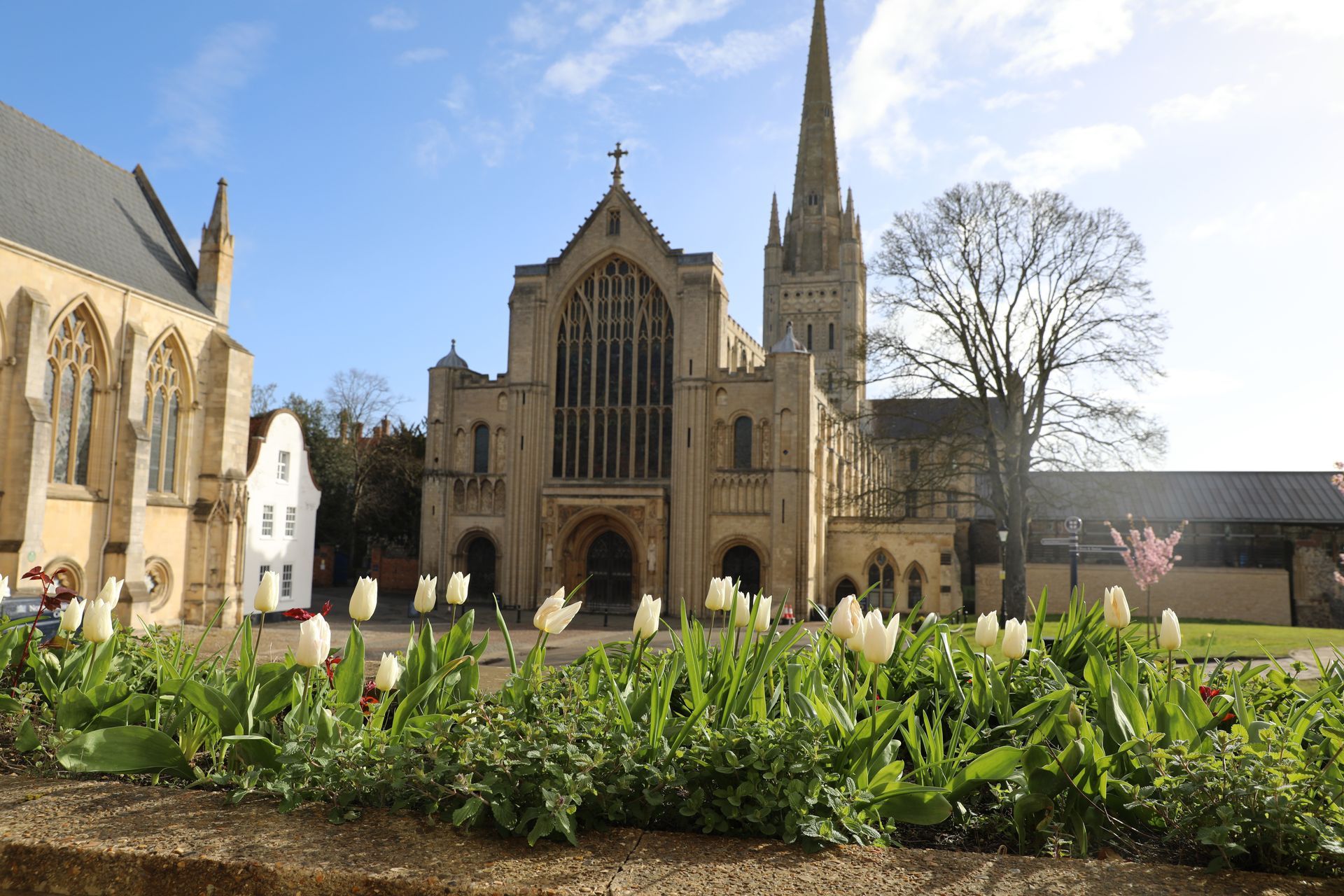
Photo credits: Finn Pond - Close Up

By Eleanor Lewis March 6, 2026
A group of PGCE students from UEA joined Mrs Dean on Thursday 5 March to learn all about WoLLoW and to visit the Lower School. They observed a brilliant Upper 3 WoLLoW lesson on creating a language and a Lower 2 lesson on numerals around the world. The highlight was a Lower 2 pupil seeing her home language on the board: Sinhala, spoken in Sri Lanka. Pupils spotted similarities and differences between numerals around the world and used their creativity by adding their own ideas to the question, "What could the numerals for 11 look like in these languages?" The Upper 3 and Lower 2 classes and the PGCE visitors alike really enjoyed the sessions.
By Eleanor Lewis March 4, 2026
Pupils in Lower 1 combined literacy and creativity this week by writing their own step-by-step instructions before putting them to the test in the kitchen. As part of their learning, the children carefully planned and wrote clear instructions on how to make gingerbread men, focusing on using bossy verbs, time connectives, and simple sequencing. Once their instructions were complete, it was time for the fun to begin. The classroom was filled with excitement as the children measured ingredients, mixed the dough, and carefully cut out their gingerbread men shapes. They proudly followed the very steps they had written, bringing their work to life in a delicious way. The activity helped reinforce their understanding of instructional writing while also developing teamwork and practical skills. Best of all, everyone enjoyed tasting their freshly baked gingerbread men at the end of the day — a sweet reward for their hard work!
By Eleanor Lewis March 3, 2026
2026 is National Year of Reading and we are going all in here at Norwich School! We know reading expands worlds, sharpens minds, and fuels creativity, so let's get inspired! Every month we are focusing on a different genre and hearing from a member of staff about what they like to read, why, when and where! Next up we have Fantasy for February and a huge fan of this genre, Stacey Boothby, Lower School - Deputy Head (Academic), is going to tell us a bit about why she loves Fantasy so much! Tell us a little bit about the genre; what common themes or elements do you particularly enjoy? Fantasy allows writers to explore big ideas – power, courage, loyalty, good and evil – all within beautifully imagined worlds. I love books that create their own unique universes, from the hobbits living peacefully in the Shire in The Hobbit to the magical world of Hogwarts in Harry Potter. I particularly enjoy looking at the maps of these worlds and learning about the history and legends behind them. I am especially drawn to ordinary characters who are faced with difficult choices, and to stories where seemingly unimportant people are forced to rise to extraordinary challenges. Magic, myth and invented cultures can make familiar human experiences feel new and exciting. Most importantly, fantasy allows me to step away from everyday life and immerse myself among dragons, elves and all the other creatures in between. What was the book that introduced you to fantasy? Was there a particular book or author that made you fall in love with this genre? Like many readers, I was introduced to fantasy through books I read as a child. Stories such as The Hobbit, The Chronicles of Narnia, and later Harry Potter showed me how completely immersive fantasy could be. These books made reading feel like stepping through a door into another world. Has your taste in this genre changed over time? Yes. As I’ve grown older, I’ve become more interested in fantasy that mixes magic with deeper characters and more complicated choices, rather than simple good-versus-evil stories. I still enjoy classic fantasy, but I now appreciate books that make me think as well as entertain me. Would you recommend this genre to someone who doesn’t usually read it? Why? Absolutely. Fantasy is not just about escaping reality; it is about understanding it in a different way. By setting a story in another world, authors can explore fear, hope, friendship and responsibility clearly and powerfully. It is also a brilliant genre for reluctant readers because the adventure keeps you turning the pages. What do you enjoy most about reading, whether fantasy or anything else? I enjoy looking for the finer details. Fantasy in particular rewards careful reading, because the details of a world – its rules, history and cultures – all matter. I love the moment when something clicks and you realise why a character did something three chapters earlier, and how it affects the outcome of the story. There is real satisfaction in finishing a book and feeling as though you truly know that fictional world. It is even better when you can discuss characters and ideas with others, or compare the book with its television or film adaptation. When and where is your favourite time and place to read? / Do you have a favourite reading spot or routine for diving into books? Much of my reading now takes the form of listening to audiobooks while gardening, washing the car or doing jobs around the house. It means I can enjoy a story even on busy days. When I am on holiday, I will often pick up a book to read, as I have more time to slow down. Which fictional character would you most like to have a cup of tea with? Gandalf – although I suspect the conversation would involve more wisdom (and perhaps fireworks) than tea. Click here to see the monthly Reading List!
By Sonja Mitchell March 2, 2026
The Friends of Norwich School have funded much-needed equipment to expand horizons and creativity
By Eleanor Lewis March 2, 2026
Upper 4 pupils enjoyed an insightful and interesting trip to Neasden Hindu Temple in London on Thursday 26 February. Pupils enjoyed the temple exhibition and were able to observe the Arti ceremony, learning more about Hindu ism to support their studies in class. They enjoyed a talk given by a member of the Temple about how the extraordinary building was built and perhaps the highlight of the trip was the vegetarian curry served at the restaurant afterwards. Mrs Cawkwell would like to thank pupils for behaving respectfully and for staff for their enthusiastic support. 
By Eleanor Lewis February 28, 2026
The Cross-Country team enjoyed a drizzly afternoon of racing in Ipswich on Saturday 28 February. The course was extremely muddy making for challenging, slippery conditions. But the Junior Boys managed to stay upright and perform well with Jonas Tam finishing 3rd, Jonty Croskell in 4th and Oscar Parker-Wright in 11th. All season the Senior Girls have dominated the front end of the field and again we had 3 of the top six finishers. On this occasion, it was Amelie Ivie who timed her finish best to take 3rd place ahead of Bea Green in 4th and Olivia Allen in 6th. The team was completed by Simran Chawla coming in 12th. With 8 Senior Boys running, the team prize seems sewn up this year and we had 3 of the top 5 finishers. Over the 7.6km route, Ethan Buskell was fastest on the day, coming 2nd, just ahead of Arthur Dannatt in 3rd and Leon Liu 5th. Leo Pitt was 8th, Jeremy Lo 9 th and Tom Copley, George Yiasimi and Edward Lott completed the dominating team performance all in the top 14. The final race in the series is next Saturday at RHS. Congratulations to all involved!
By Eleanor Lewis February 27, 2026
The Chess Team travelled to Woodbridge on Friday 27 February for the second round of the English Schools' Chess Championships. We have had some very close matches against Woodbridge in recent years, and this was no exception. Junaid Ahmed unfortunately lost out in a very sharp match on Board 6, while on Board 5 George Potter's game swung from winning to losing and back again several times before he eventually lost out in the endgame. A dominant win from Merlin Perrow, who won a pawn in the opening and held onto his advantage throughout the game, brought the team back into contention. Then Edward Lott on Board 2 beat a highly rated opponent to draw the team level at 2 games each. Thomas Hsia had a commanding position but was down to his last few seconds as his opponent still had plenty of time on the clock. After a few missteps from both sides, the time pressure proved too much and Thomas allowed a skewer and lost the game. Arthur Dannatt on Board 1 played a good game with the black pieces but also lost out in the end as his opponent's attack in the centre proved decisive. Although all games were competitive, the team unfortunately lost 4-2. Well done to those who played and a reminder that chess club takes place every Monday and Friday lunchtime in P9.
By Eleanor Lewis February 27, 2026
On Friday 27 February students studying 3D Design, and some of the L6 Art and Design Scholars visited London on a research trip. First stop was Somerset House to see Collect, the Craft Council’s annual art fair on the UK and international circuit dedicated to museum-quality contemporary craft and design. The exhibition featured specialist galleries from across the globe, showing exquisite works include ceramics, furniture, glass, jewellery, wearable art, metalwork, sculpture and textiles. Two hours later we were back on the circle line on our way to the V&A — the rabbit warren of creativity, and the students self-navigated their way to different themed collections in response to their own personal work themes and disciplines. This saw them explore collections as varied as Architecture, Ceramics, Glass, Jewellery, Metal work, Painting, Photography and the Islamic Middle East collection. After a little time spent watching the tech set up for the Friday late event that was planned for that evening (DJ’s and everything — well worth a visit I think!), we made our way to Gloucester Rd and headed back to Liverpool Street. On the way back, we asked the pupils to send highlights reviews of their trip, some of which are shown below. All in all, an inspiring trip, the pupils were impeccably behaved and seemed to get a lot out of it. Thanks to all who helped organise our trains and our tickets, and thanks to the students for their involvement and engagement. Pupil Highlights: My highlight of our visit to Somerset House was the variety in medium and design, particularly the design- nations 25 th anniversary presentation ‘topophillia’ featuring a trio of glass sculptures representing different landscapes. During our time at the V&A I was very intrigued with the ‘Weston Cast Court’ and the plaster replicas of works by Michelangelo, such as David as well as the ‘Islamic Middle East’ collection, especially the works from Iran. My favourite thing about the collect museum was the Japanese sculpture as we spoke to the guy and he showed us how you can burn incense out of it. At the Victoria Albert museum my favourite thing was the Japanese kimonos as the detail intrigued me. I really enjoyed the second museum, with the wide variety of architecture structures, and overall my favourite was a 1/2 structure with a mirror to make it look like it was a full structure. My favourite part of the trip was drawing ceramics in the V&A museum. I really enjoyed talking to Hugo the Irish knife maker who gave me invaluable information about how to go about looking further at my project. My favourite part of the trip was seeing the theme of forms that individual artists have and how similar object can take a different 'accent' from each designer I really enjoyed the V&A's portrait paintings and the intricacies in them, similarly, with the stained glass section, Japanese ceramics, and Collect's displays, the level of detail within both respective areas were bewildering and motivates me to work harder to perfect my own craft/art. My favourite sessions in the V&A museum were the painting and photograph gallery. I found the paintings very realistic, with delicate brushstrokes showing the details of the figure and sceneries. On the other hand, the photographs reflected multiple social situations which were very meaningful. I really enjoyed visiting the V&A museum and Somerset House. While I didn't find anything I could include in my project I found some really interesting pieces and installations in a wide range of mediums and techniques.
By Eleanor Lewis February 26, 2026
On Wednesday 26 February Able2B and Minnie Andrews (Lower 6) led an assembly in the lead up to Discover Your Ability Day 2026! This year, Norwich School are continuing our work with Able2B by hosting the annual Discover Your Ability Day on the penultimate Sunday of the Trinity Term. The event is rather like a duathlon, with a running and cycling event around the Lower Close (including along the rivers edge), with some participants taking part in wheelchairs and adpated bicycles to make it as inclusive as possible. We have plans to make it bigger and better this year by doubling up with another of our signature events; the Intergenerational Sports Day with Friend in Deed (involving young and old participants alike). This way we can have even more of the Norwich School and wider community involved on the Lower School field than ever before! To prepare for Discover Your Ability Day, pupils who sign up will take part in just 2 or 3 training sessions at the Able2B gym in ahead of June. As this is a family event, family members and friends can also volunteer as marshals and route guides, or just come along to watch the event. We also have Able2B ambassadors linked to each house again like last year - where we will run a competition to get the most members from each house to sign up and take part. (the ambassadors will line up at this point if all able to be there!) Discover your Ability Day is a fantastic opportunity to help out in the local community, as well as gaining valuable skills. This is a highly inspirational charity event, so pupils are encouraged to take part in any way they can. Additionally, taking part in the training sessions and final event can count towards volunteering hours for anyone doing the Duke of Edinburgh award. See below for the talk from Able2B
By Eleanor Lewis February 25, 2026
On Wednesday 25 February 2026 a group of 32 A Level Physics pupils visited Sizewell B Nuclear Power Station.  After a safety briefing by site staff and a presentation on the physics and engineering involved in the generation of electricity from nuclear fission, pupils were given a comprehensive tour of the site. This included an outside overview of the reactor dome, step-up transformers, sea water intake and National Grid electricity distribution system, and an inside tour of the turbine hall and engineering workshops. It was a fantastic day which provided pupils and staff with a great insight into the practical application of physics and engineering theory to the nuclear industry. Pupil behaviour was impeccable, and they were a credit to the school.
More Posts