
Top Tips : Effective Revision
March 17, 2025
Mr Pearce, Deputy Head of UCAS, Politics Teacher and our Apply Plus programme lead, offers some top tips for the art of revising well.
As we approach Trinity Term and public examinations loom on the horizon, remember that lots of the keys to success are surprisingly simple and manageable. The top tips below come from a wide range of previous pupils who are now off doing brilliant things at university, the workplace, and beyond, but who were once nervously staring at fast-approaching exams just like you are now. Here are their pearls of wisdom on revision …
- Don’t wait until you feel like it: if you wait until you ‘feel like’ revising, it will likely never happen. Set yourself a start time, and then get cracking. As someone once said, “Just do it”. You’ll feel much more like it when you’ve made a start, and the sense of satisfaction and progress kick-starts an upwards progression. More often than not, positive emotions follow positive actions rather than the other way around.
- Make a plan: having all your topics planned out and assigned to particular revision slots on particular days is really useful. This is the only way you can be sure that you have enough time to get through everything, so make a plan and do your best to stick to it. Be kind to yourself too – “no plan ever survives first contact with the enemy”, and precious few pupils stick perfectly to their revision aims: but the very act of making a plan helps you take control and measure your progress as you go along.
- Revise actively! My old biology teacher at school always use to say his number one, most magical, most sophisticated and most earth-shattering revision tip was… “use a pen”. Underwhelmed? So was I. But it’s fundamental: simply ‘reading over’ information is not an effective way to get it to stick in your brain. So use a pen – or whatever other format you’ll use in the real exam – and revise actively! One of the most effective ways to do this is to make a great set of notes on each topic, then make notes on your notes, then condense them down until the whole topic is summarised on a single side of A4. Other great active revision tools include the highly recommended “write, learn, cover, test, check, repeat as required" method, as well as good old flash cards, mind maps, posters and mnemonics. Find what works for you, but always revise actively.
- Sit at a proper desk: I once tried ‘revising’ in the sunshine because it was a nice day. It didn’t work. The temptation to revise on your bed or on the sofa can be strong too, but the only place for really focused work is a proper table or desk. After all, it also replicates the real exam situation better, so it’s a win-win.
- Use a countdown clock: at the start of a work session, set a countdown timer for the amount you intend to do. Start the timer and start working, but STOP the timer whenever you do anything that is not actually revision… making drinks, organising your folder, going to the toilet, and so on. This will focus your work time on productive work more effectively, which, in turn, will also ensure you get better time off; work should be work, rest should be rest, play should be play. The more effectively and efficiently you work, the better your time off will feel too.
- Avoid distractions: we all know the dangers of procrastination, where we put off work until we’ve tidied our room or decorated our revision timetable. Outright distraction is even more dangerous, so you need to be ruthless: turn the music off (unless it truly helps you learn), leave your phone in another room entirely, and bring a supply of snacks and drinks to your desk so you don’t have to make that lengthy trip to the kitchen. And remember, if you find yourself getting distracted, stop the clock, because you’ve stopped working!
- Take short breaks: your brain can’t focus on difficult revision for any more than an hour in one go, possibly even less. Find out what works for you, but 30 minutes solid revision followed by a 5-minute break is often a good pattern.
- Practice papers / questions: this is crucial! You’re spending all this time gaining knowledge, but we all know the painful truth that your beautiful hard-earned knowledge isn’t worth very much if you can’t apply it to the exam questions. Like any great sportsperson, you don’t just need power: you need technique to enable you to get the most out of that power. In exams, knowledge is power, but we need to know exactly what the examiners want us to do with it in the exam. So: practise lots of timed exam questions, and use mark schemes to help you assess how well you did. Ask your teachers to mark them too – it’s the sort of thing we really like because it shows you’re doing all the right things!
- Stay healthy – sleep well, eat well and exercise: it can be tempting to go ‘revision crazy’ around exam time… “I’ll sleep when exams are over!” But revision is a very brain-hungry activity, and your brain is an energy-hungry machine: it needs servicing and maintenance to keep it in tip-top shape. The reality is that the right balance of sleep, healthy eating, exercise, connecting with friends and having some fun become more rather than less important during exams. Did you know that doing exercise makes the knowledge you’ve revised stick in your brain better, even if the exercise comes after the revision session rather than before it? Make these good things happen. You’ll be infinitely more effective at revising if you’re keeping yourself well.
- Balance is key: here’s the equation: rest without work is less fulfilling, less rewarding and less fun. Work without rest is less productive, less effective, and more stressful. All performers, from Olympic athletes on the track to world-class musicians on the stage, know that no success comes without serious hard work, but also that appropriate rest is essential for growth and strength. If it’s good enough for them…
- Not all of these suggestions will suit everyone, but the most important thing for everyone to remember is that you need to be organised, balanced and disciplined when it comes to revision. After all, revision lasts just a little while – but the qualifications you stand to achieve last a lifetime. Make the most of revision time, and we look forward to seeing your smile on results day. And if you need us before then, reach out – to your tutor, your teachers, your Head of House, or the Wellbeing Team: we’re all here to help!
2026 is National Year of Reading and we are going all in here at Norwich School! We know reading expands worlds, sharpens minds, and fuels creativity, so let's get inspired! Every month we are focusing on a different genre and hearing from a member of staff about what they like to read, why, when and where! For October, we are looking at Poetry. Let's find out more about why Mr Douglas-Field loves poetry... Tell us a little bit about the genre; what common themes or elements do you particularly enjoy? Being a reader of poetry doesn’t tie me to a theme or element, and I enjoy this variety. For example, over the summer I read Christopher Logue’s War Music, a retelling of Homer’s Iliad and Jean Sprackland’s Goyle, Chert and Mire – a vivid experience of nature and the countryside of Devon and Somerset. What was the book that introduced you to Poetry? Was there a particular book or author that made you fall in love with this genre? When I was a child, my great aunt bought me an anthology of poetry called I Like this Poem and I enjoyed reading many of these poems aloud, poems like Lewis Carroll’s ‘The Jabberwocky’ and ‘The Highwayman’ by Alfred Noyes. I read novels and non-fiction, but an interest in poetry lasted through my childhood and beyond. Has your taste in this genre changed over time? Yes! I love attending readings and open mic nights and listening to living poets performing their work. I also enjoy reading chapbooks and pamphlets published by tiny poetry presses. It’s fun to buy something handmade. Would you recommend this genre to someone who doesn’t usually read it? Why? The novel isn’t old. Robinson Crusoe is often considered to be the first major English novel – and it wasn’t published until 1719! People have been writing poetry for thousands of years. Why turn our backs on the bulk of humanity’s literary output? What do you enjoy most about reading, whether Poetry or anything else? I enjoy the possibilities promised by the next book I will read. I don’t know what it will be – or what I will be thinking and feeling about it. When and where is your favourite time and place to read?/ Do you have a favourite reading spot or routine for diving into books? I’m not precious about times and places. Which fictional character would you most like to have a cup of tea with? I don’t know what character I’d enjoy a cuppa with, but I wouldn’t mind spending the afternoon at Bread Source nattering with the poet John Donne. Do you tend to reread favourites from this genre or always look for something new? Both. I constantly revisit some poets, but I read new collections too. When was the last time a book from this genre really surprised you? Adventures in Form (2012) knocked my elbow off the table with its words sprayed on sheep to create random haik-ewes (get it?) Do you prefer classic or modern books within this genre, and why? Which is better? The foundations, or the roof? Knowing a few classics gives the reader some landmarks. With a few of these, the landscape makes sense. Has you taste in books changed over the years? I like to think I am more adventurous and open-minded now. Why do you think reading is important? Because it’s active. Reading a book is an invitation to think and to feel. Netflix and videogames are fun, but they hit different spots. Cambridge University’s Barbara Sahakian published a paper about the benefits of reading in 2023. She writes that ‘we found significant evidence that reading is linked to important developmental factors in children, improving their cognition, mental health, and brain structure, which are cornerstones for future learning and well-being.’ I find it odd when, towards the end of their GCSE courses, partisan non-readers ask how to get 8s and 9s. You need to lay your foundations early by reading regularly and broadly. Which book surprised you by how much you enjoyed it? A friend gifted me The Morville Hours (2008), Katherine Swift’s book about gardening. I resented the gift and started reading it only out of a sense of duty but, by the end of the first page, I knew that I was going to love it. It’s an exquisite reflection on the passing of time – and on death and renewal. Has a book ever changed the way you think about something? Most books do this to me. What role does reading play in your life right now? It’s a part of who I am. Click here for the reading list!
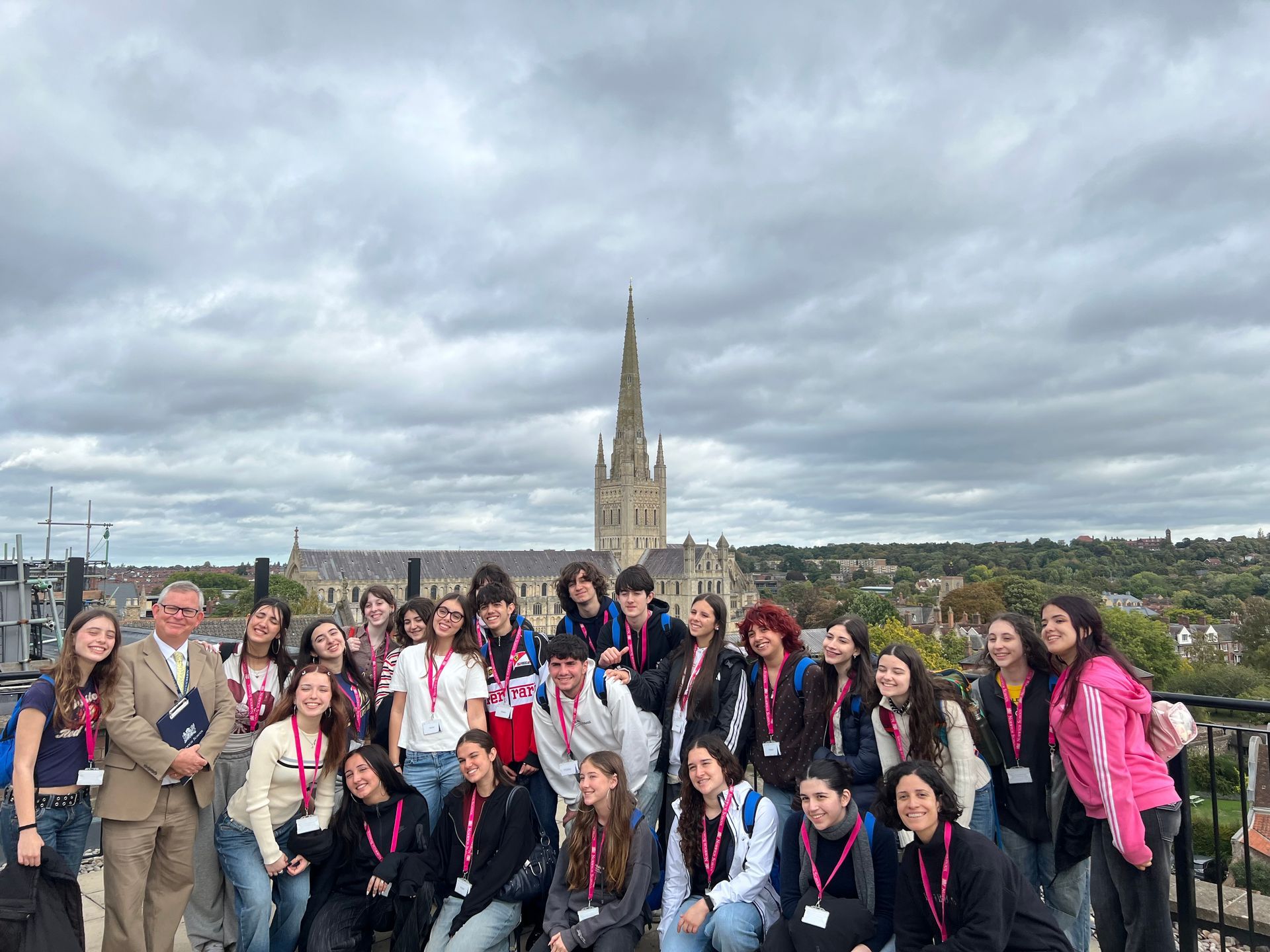
For the third time, we were delighted to welcome our wonderful group Sofia E. B. De Spangenberg from Argentina for another day of friendship, cultural exchange and fun! Our Spanish U5, L6 and U6 pupils enjoyed getting to know one another, making new friends, showing our visitors around the school, sharing lunch, exchanging sweets and finishing with some exciting softball games! More than just a visit, it was a fantastic opportunity to bring cultures together, practise languages and create memories that go beyond the classroom. A huge thank you to everyone who helped make this exchange so special: Mr Pearson, Mrs Mardle and a special shout-out to our Spanish Department for making international connections come to life! ¡Hasta la próxima!
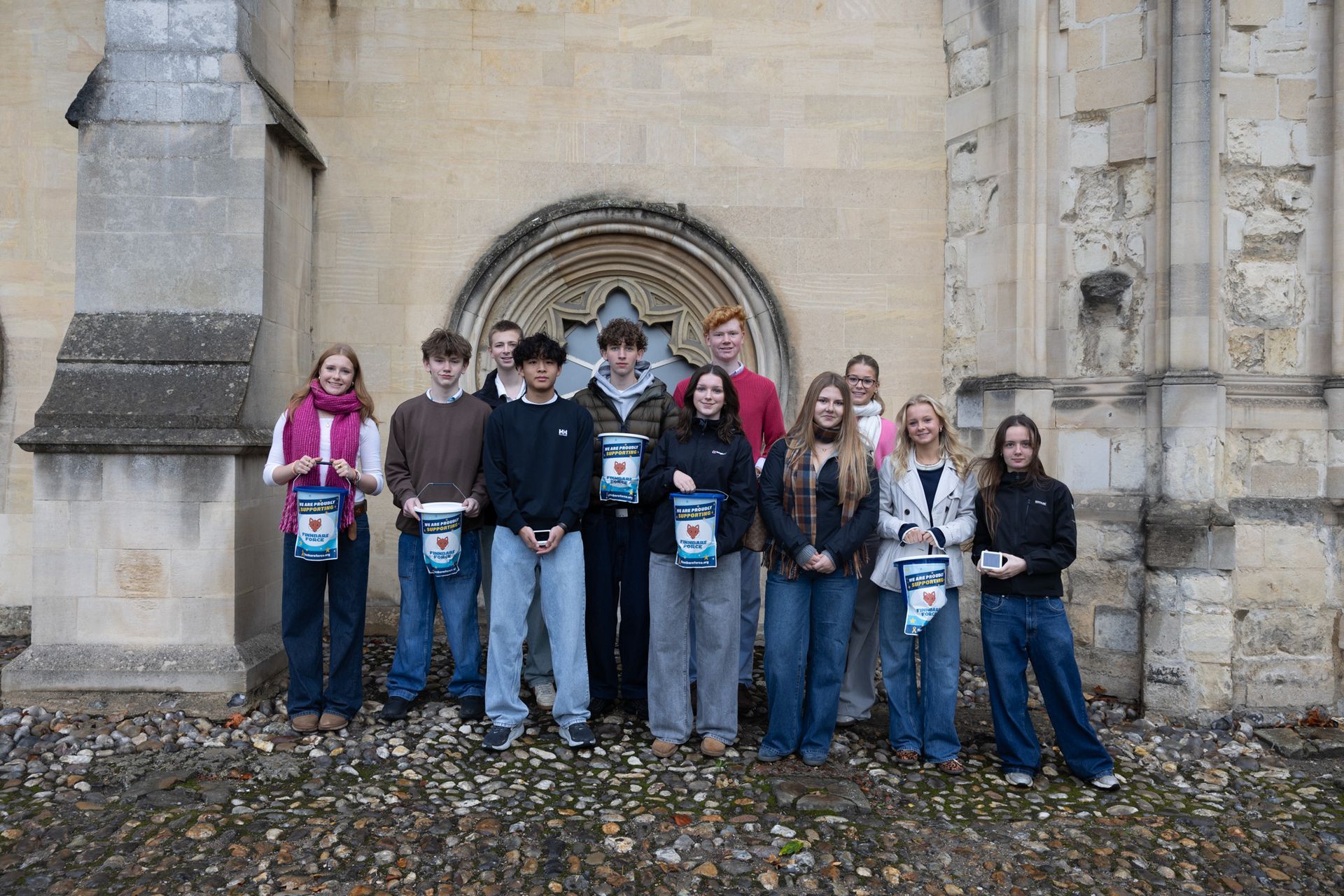
Norwich School is proud to be supporting Finnbar’s Force as our local charity for this term. Finnbar’s Force is a dedicated children’s cancer charity, providing information, therapies, emotional care and practical assistance to families. They are currently fundraising to employ a Family Support Worker to provide one-to-one practical, emotional and advocacy support to families affected by childhood cancer and brain tumours across Norfolk and Suffolk. We kicked off our fundraising campaign in style this morning, with a Home Clothes Day for the Senior School. Members of our Charities Committee were at the school gates, collecting donations. If you would like to find out more, please visit our JustGiving page: Norwich School is fundraising for Finnbar's Force
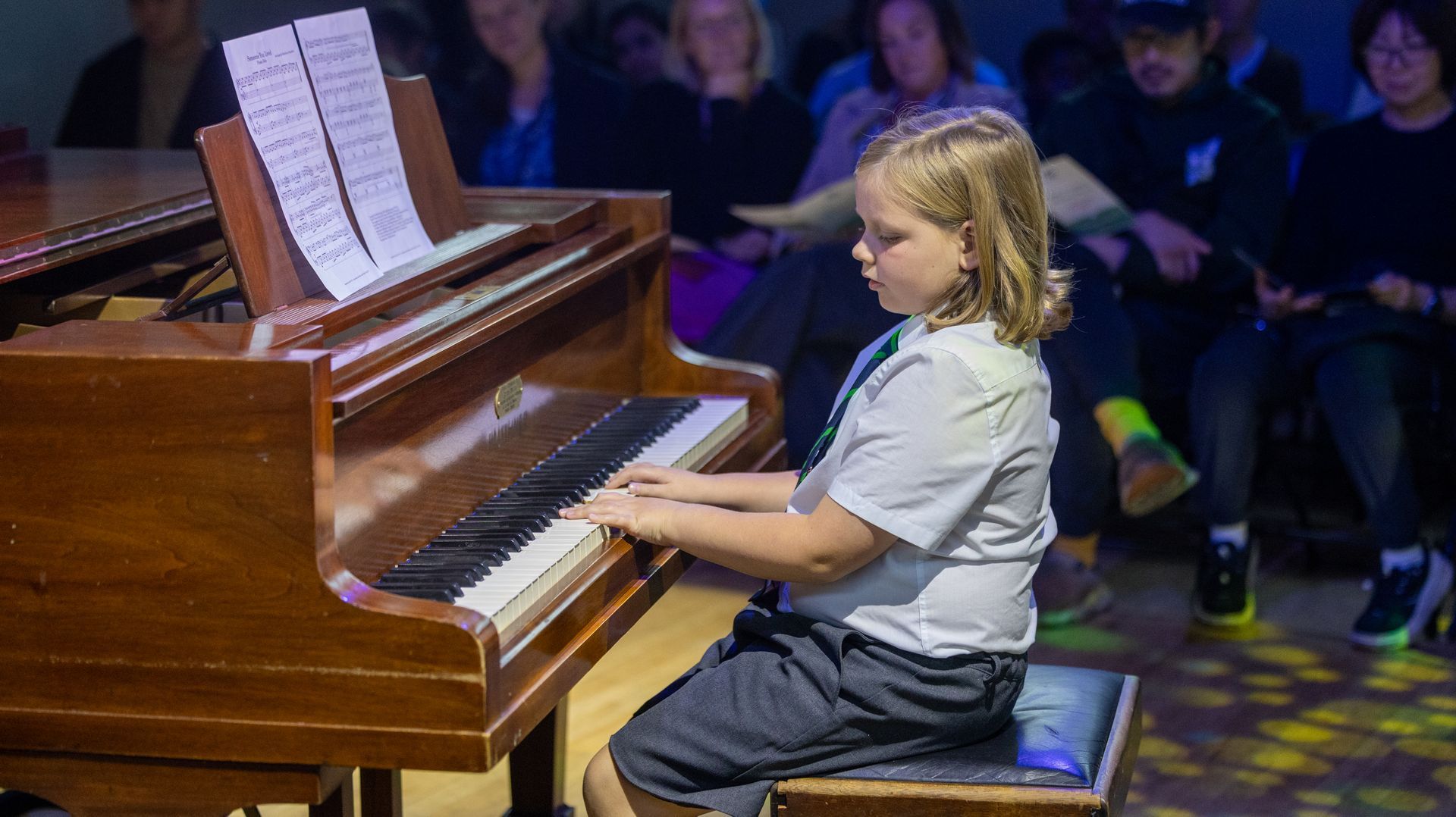
What a fantastic evening of music-making! Our Lower 2 and Upper 2 Informal Concert was brilliantly well attended, with a wonderful audience response that made the occasion feel extra special. There was a real buzz in the room as pupils took to the stage to share their musical talents, showcasing a terrific variety of instruments, styles and songs. The piano was certainly kept busy, with performances ranging from the gentle, expressive sounds of Evening Melody by R Esmail to the playful character of The Cantankerous Camel by P Wedgewood and Mummies by P Blackwell. There were some wonderfully imaginative moments, too, with Minnie Mouse Hits the Town , Rufus and The Shakers bringing plenty of personality to the programme. From the elegance of Handel’s Fireworks Minuet to the jazzy rhythms of Ain’t Misbehavin’ and a rendition of Someone You Loved , our pianists demonstrated growing confidence, musical understanding and a real sense of enjoyment. The violin added another dimension to the concert with The Legend of Ashitaka by J Hisaishi, while our vocalists treated us to an exciting mix of songs. Powerful performances of This Is Me and Part of Your World sat alongside the much-loved Where Is Love from Oliver. There was plenty of contemporary sparkle, too, with Sunroof , Lush Life and This Is What It Sounds Like from K-Pop Demon Hunters. A special mention must also go to the duet performances, which showcased the fun of making music together and the importance of listening and working as a team. There were plenty of smiles along the way, from a piano rendition of Happy Birthday to the relaxed, sunny feel of Park Daze . Each performance brought something different, and it was lovely to see pupils developing the confidence to stand up in front of an audience and share something they had worked hard to prepare. Informal concerts are such an important part of musical life at Lower School. They give pupils the chance to celebrate their progress, learn from performing in front of others and, most importantly, enjoy making music. The enthusiastic applause and warm response from our audience showed just how much these performances were appreciated. A huge well done to everyone who took part. With such a happy atmosphere, an exciting range of music and so much musical confidence on display, it was a concert to remember!
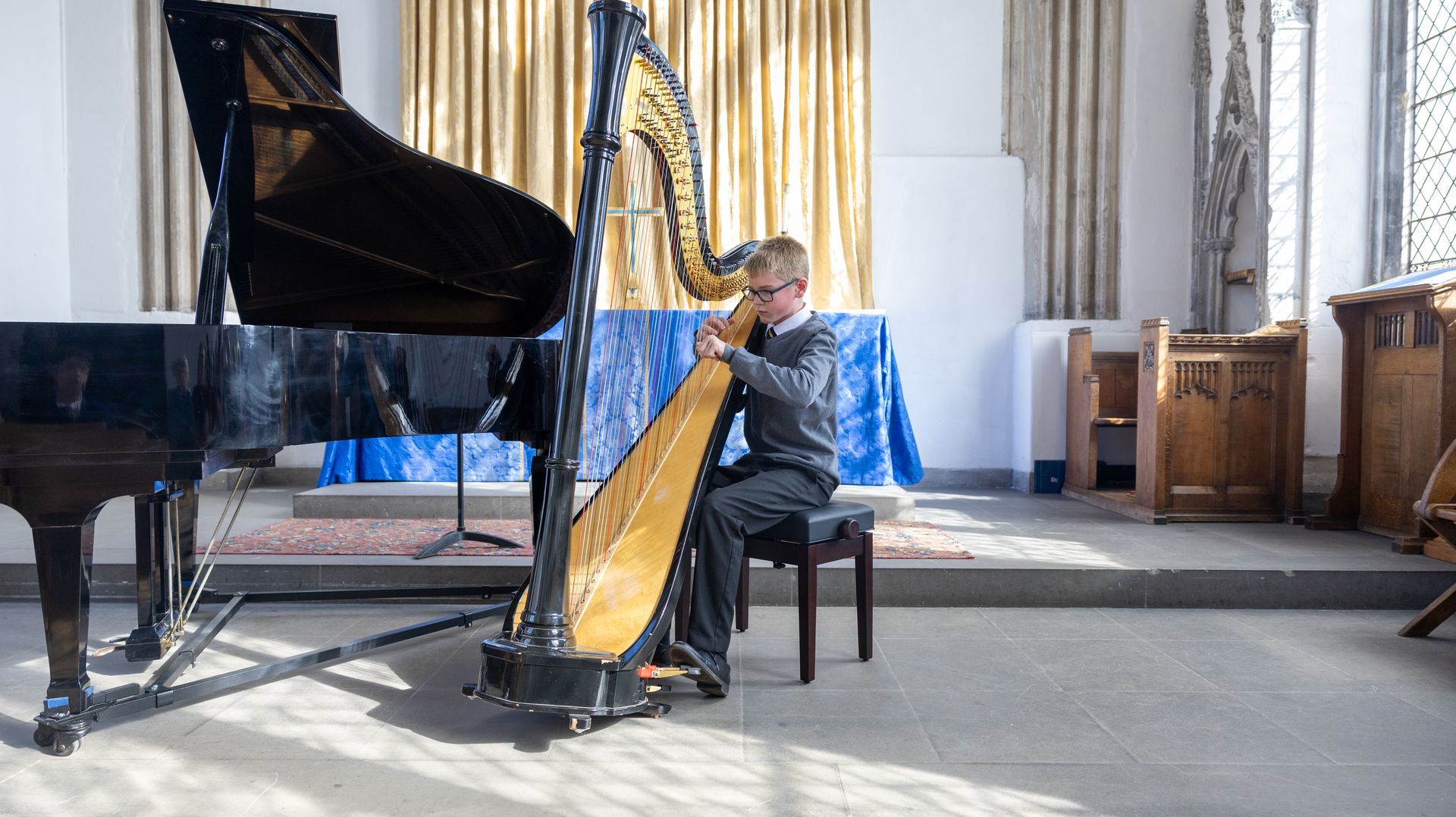
A beautifully presented and thoroughly enjoyable performance from Timothy M, harp and Jessica L, piano. The performers showed great talent, confidence, and dedication, and it was clear how much hard work had gone into preparing for the recital. The programme was varied and engaging, with each performer bringing something special. A huge congratulations to all involved for putting together such a memorable recital. It was a joy to watch, and everyone should be incredibly proud of what they achieved. Timothy says - This week I was given the opportunity to play my harp as part of a Making Musicians recital. It was great to be able to play in the school chapel and have a lovely audience to share music with. There was even a butterfly that came to join us, fluttering around during my performance, which made it very atmospheric! Jessica says - It was a wonderful experience to perform in the chapel. I am very grateful for this opportunity and all the support from everyone who came to listen!
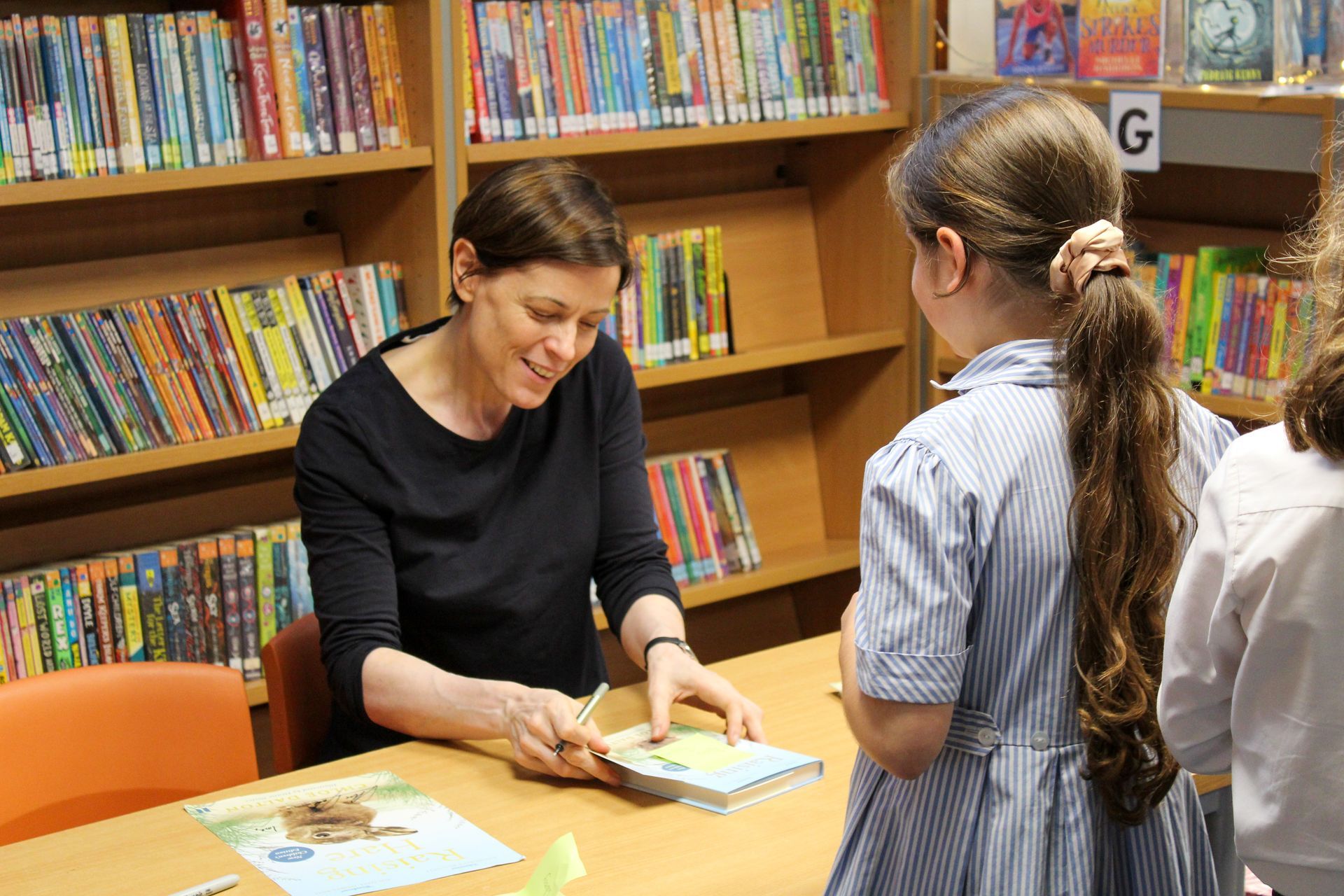
We were delighted to welcome Chloe Dalton to the Lower School for a truly inspiring author visit. Chloe spoke to pupils about her acclaimed memoir Raising Hare , the remarkable true story of an unexpected encounter with a young wild hare and the extraordinary bond that developed between human and nature. Throughout her fascinating presentation, Chloe shared how caring for a vulnerable leveret transformed her understanding of the natural world. Pupils were captivated by her stories and gained a unique insight into the patience, responsibility and empathy required to care for a wild animal. Chloe's passion for storytelling, wildlife and conservation shone through, inspiring children to ask thoughtful questions and sparking curiosity about the world around them. Tamsin in Lower 3 said that she loved learning new facts about hares and Ezra loved the descriptions and illustrations in the book. Chloe’s memorable talk provided an enriching experience that will stay with pupils for a very long time.

Head to the Union Theatre in Southwark from 19 - 30 October.
This year’s World Mental Health Day theme is ‘ Lived experiences heard; real voices, real change ’. This means creating opportunities for people to influence decisions, co-design services, strengthen peer-led approaches, and challenge stigma. The World Health Organization is highlighting the move towards community-based, person-centered mental health care. In light of this, we decided to play a game and see what you all think when it comes to statistics surrounding mental health. Swimming and cycling are scientifically proven to be the best sports for your mental health, but which do you think is more beneficial overall? Swimming Why is talking out loud about your emotions so good for your mental health? Lowers activity in the brain’s fear and stress center (amygdala) Maintaining a balanced diet is key to positive mental health, but which fruit is considered best for mental wellbeing? Blueberries What bedtime does the NHS recommend for adults to achieve the best possible wellbeing? 10pm-11pm Why is getting a good amount of sleep so important for your emotional wellbeing? Allows the brain to process emotional experiences Singing is a great stress relief as it allows the brain to release endorphins and serotonin; this is why we do it so often. How many times does the average person sing a day without even realising? 6-10 What instrument has been shown through experiments to be the most soothing to people? Human voices Your brain is in constant communication with your body, but what body part does your brain talk the most to? Your Gut Thank you for playing! As you can see, there are many factors that affect your mental health, and many are easy to implement in your day-to-day life. For example, staying active is vital in maintaining personal wellbeing. We’ve already established swimming is great for you, but other sports such as cycling, running, dancing, martial arts and walking are all wonderful (less wet) ways of releasing endorphins, lowering stress hormones and regulating sleep patterns. Furthermore, team sports create a powerful sense of community that teaches us how to lower personal pressure and share responsibility. Pairing this with a balanced diet allows us to stabilize our moods, fuel our brain, and strengthen our ability to retain memories. Sleep is integral to so many aspects of mental health. It processes feelings, acting like a natural therapy session for your mind. It also controls reactions, as rest calms the brain's emotional centre, so small problems do not feel huge. Sleep even saves your memories by moving important facts and events from short-term to long-term storage. With House Shout coming up, let's highlight some of the ways singing is beneficial to mental wellbeing: Singing releases happy chemicals that improve your mood and lower stress The deep breathing required for singing helps reduce cortisol, a hormone linked to stress and anxiety Focusing on the lyrics, pitch, and breathing pulls your mind away from worries and keeps you in the present moment As well as the fantastic pastoral network within school, there is also a wellbeing infrastructure throughout Norfolk and Suffolk that is accessible to all. Local wellbeing hubs are there as a safe space to both receive and offer support to your community. The Reading Well Scheme at Norfolk Libraries offers mood-boosting books and quiet spaces, that give you time to read on how to better support yourself and others. Menscraft is another local charity that focuses on men's mental health through hands-on projects that aim to bring the community together. This term, the charity we are supporting is Finnbar’s Force. They are a dedicated children’s cancer charity focused on empowering children and their families across Norfolk, Suffolk, and Cambridgeshire. Support extends throughout these regions and beyond, providing crucial information, free therapies, emotional care, and practical assistance. Reflecting on this years theme of ‘ Lived experiences heard; real voices, real change ’, let’s think about the lived experiences for these children and their families and support this cause by donating to home clothes day, which is being held this Friday. Come in home clothes and please donate to this worthy charity. American writer D. Elton Trueblood once said, ‘A man has made a good start... when he plants shade trees under which he knows full well he may never sit.’ The message of our assembly today echoes this sentiment. Like trees, the positive habits we plant in our day-to-day lives creates real change to a better environment not only for ourselves, but all those around us. So remember that the small things we do, for ourselves and for others, can grow into something much bigger. By taking care of our wellbeing and supporting those around us, we can create the positive lived experiences that the World Health Organization is promoting.
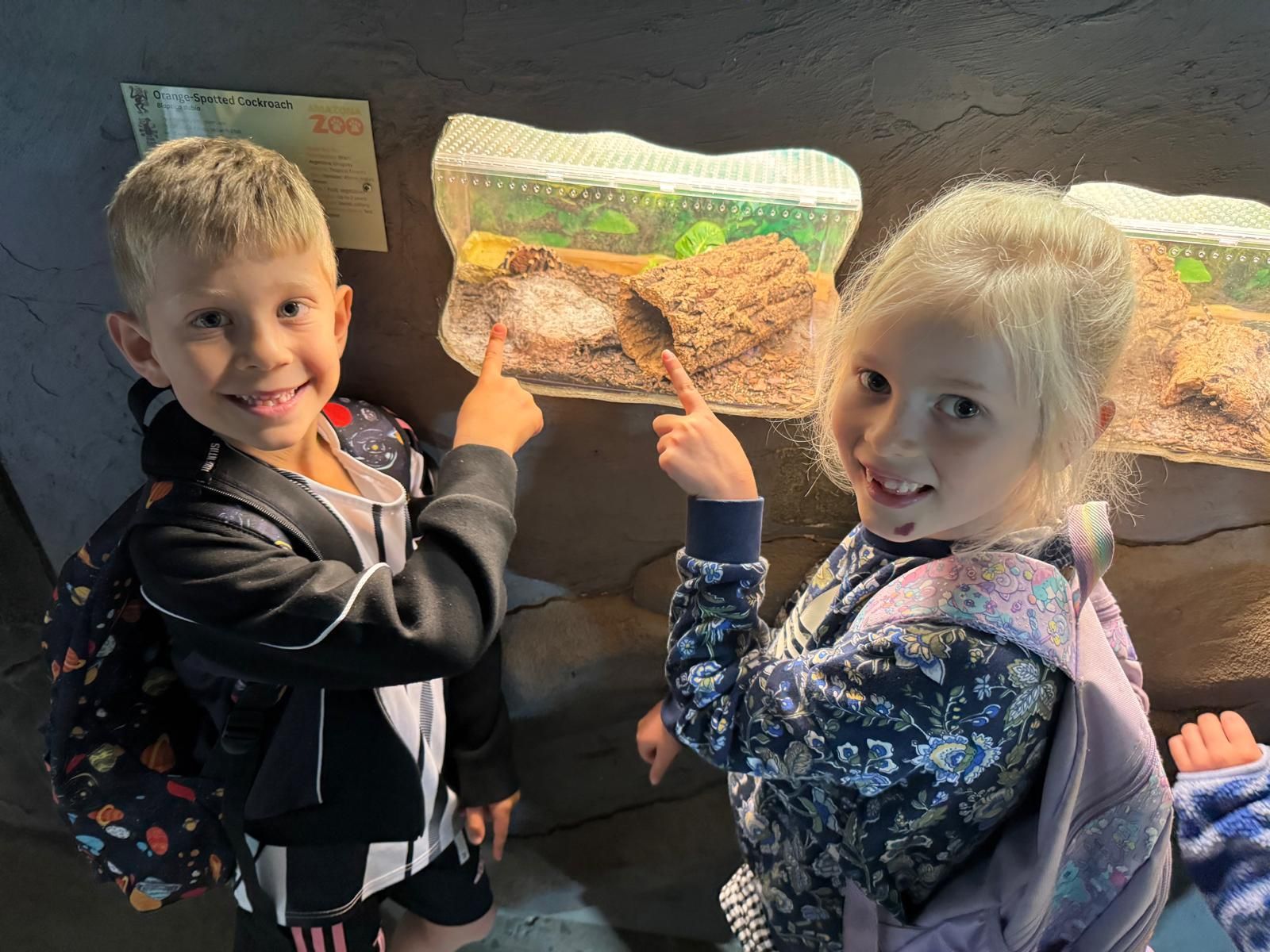
Upper 1 had a fantastic trip to Amazona Zoo on a lovely bright day! We were so excited to see some of the amazing animals we’ve been learning about as part of our Rainforests topic. We spotted jaguars, pumas, boa constrictors, bird-eating spiders and spider monkeys, and even watched the capybaras enjoying their lunch! We had fun dodging the free-roaming maras, exploring through the rainforest and having a staring match with the crocodiles! After a lovely lunch, we enjoyed the playground, made a detour to catch sight of the flamingos and, of course, a visit to the gift shop. What a wonderful day of learning, exploring and making memories! "I loved the cheeky spider monkeys and the way the swung through their enclosure!' - Massimo "My favourite were the snakes and bird eating my spiders!" - Lucas " the jaguar was pacing up and down looking at us!" - Dot
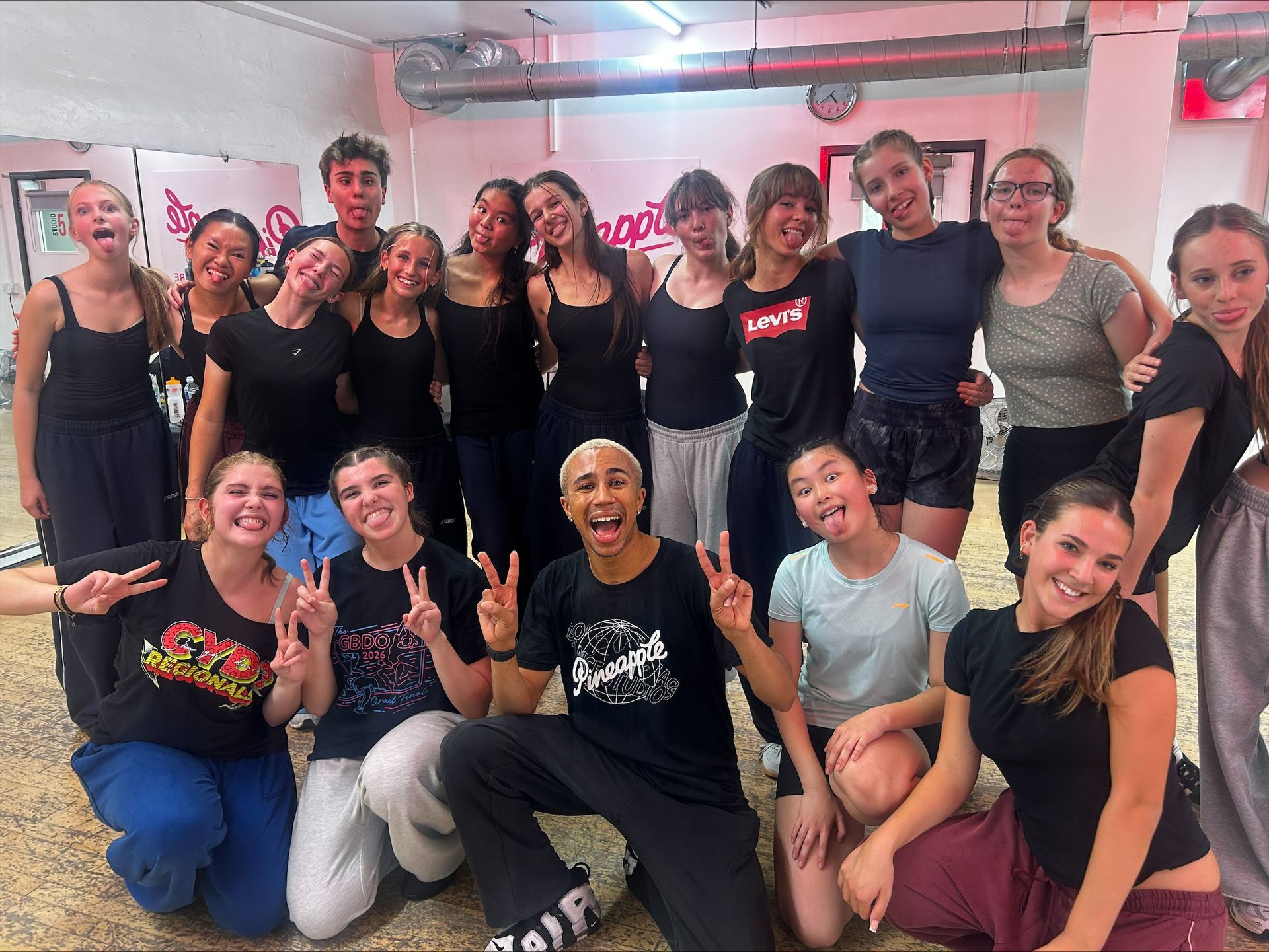
Our GCSE Dance pupils had an amazing day in London, taking part in exciting Commercial and Musical Theatre workshops, followed by tours of leading dance conservatoires, giving them a valuable insight into future opportunities in dance and the performing arts. To finish an action-packed day, pupils enjoyed an incredible evening watching SIX the Musical in the West End! A fantastic experience filled with inspiration, learning and plenty of dancing!
