Oscar Lawrence (M5) and his Journey in Wildlife Journalism

November 19, 2025

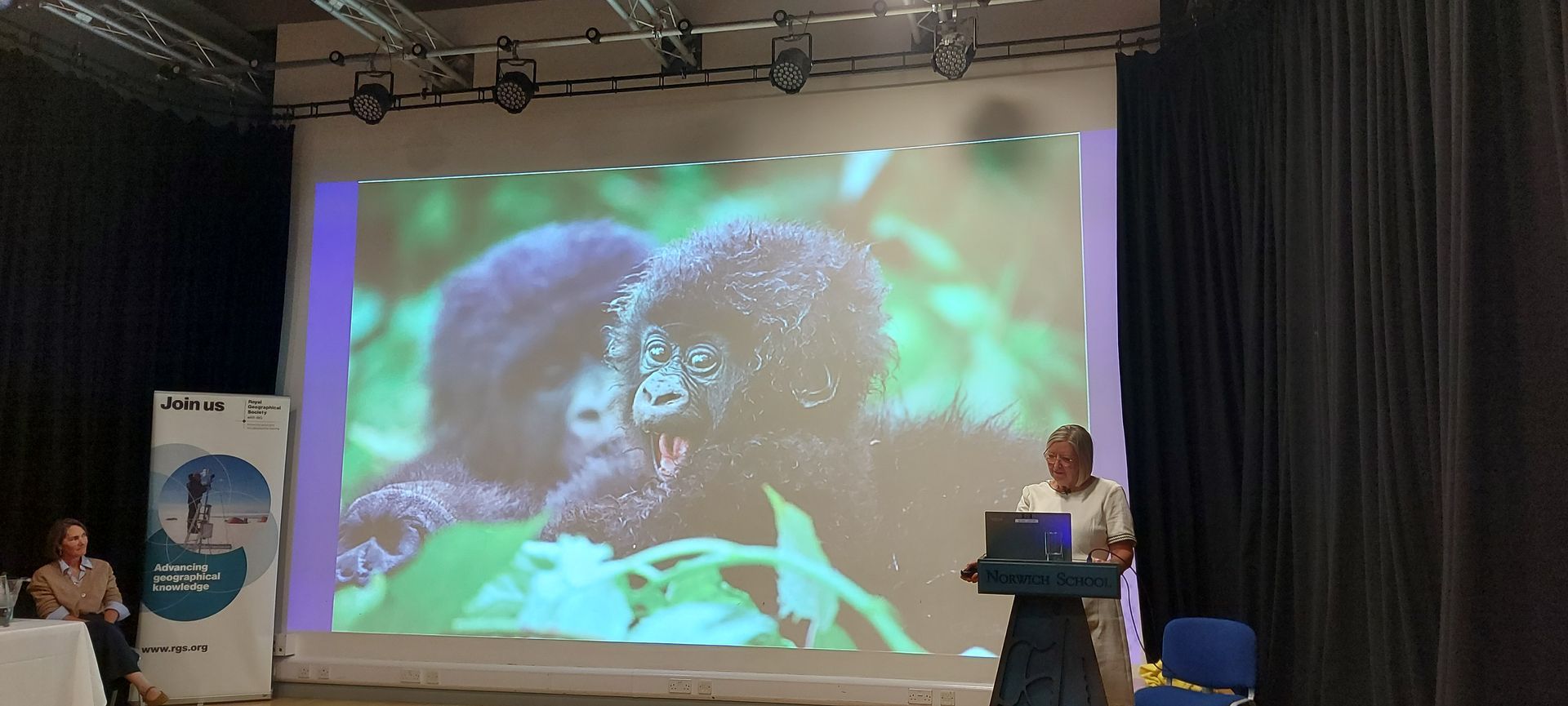
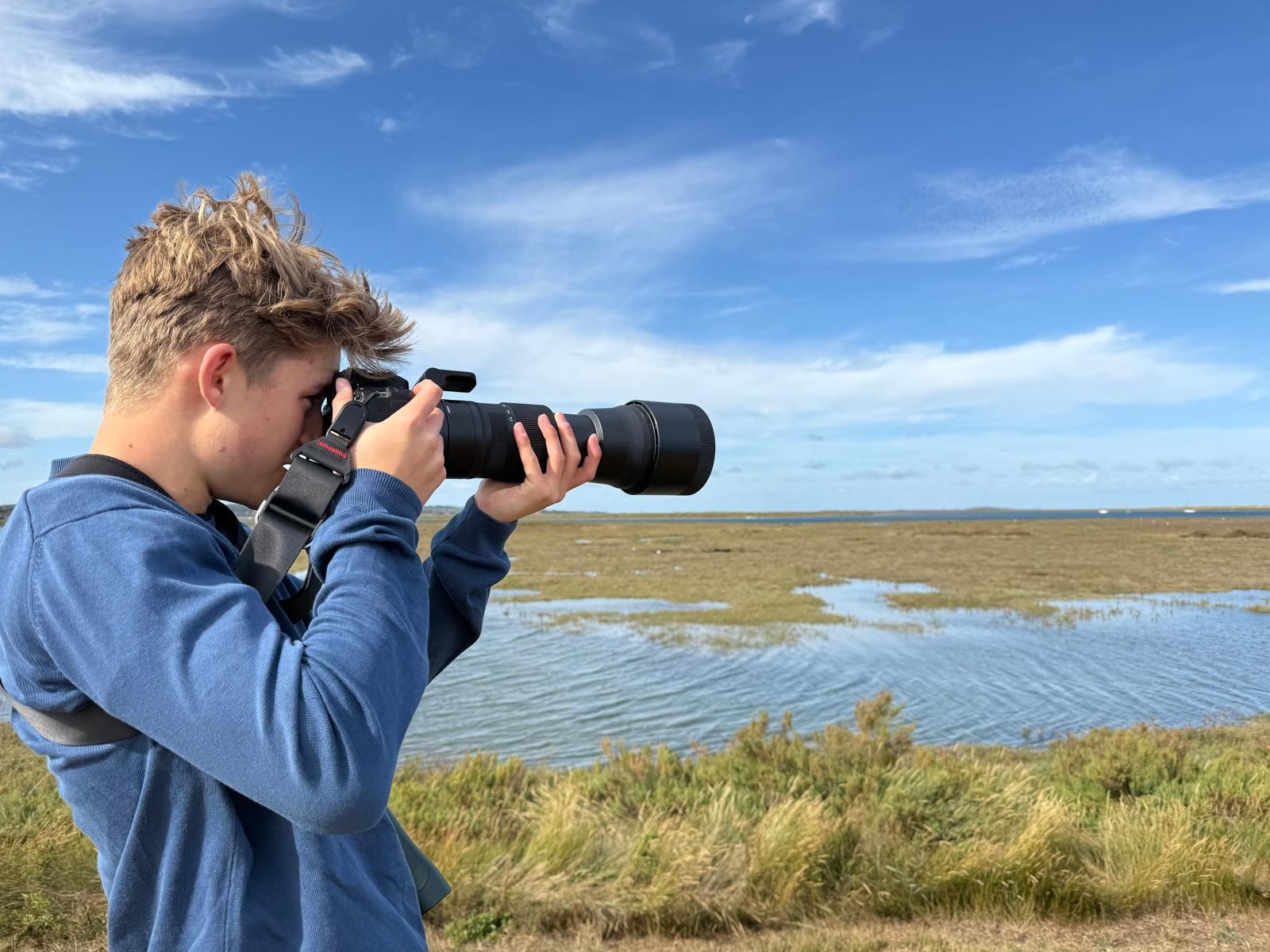
We recently spoke with Middle 5 pupil, Oscar Lawrence, about his journey in wildlife journalism and photography and the announcement of his own column in the Norfolk Magazine in 2026!


What is the best part about writing for Norfolk Wildlife Trust?

Tricky - there's so much to love about it. When I write my introductions, I use a couple of purely descriptive paragraphs designed to whisk the reader away into the midst of nature. When I proofread them, the experiences I've had with that species or place come flooding back, and I can remember every last detail of an encounter. And that's a great feeling.


Which is your favourite piece? Why?

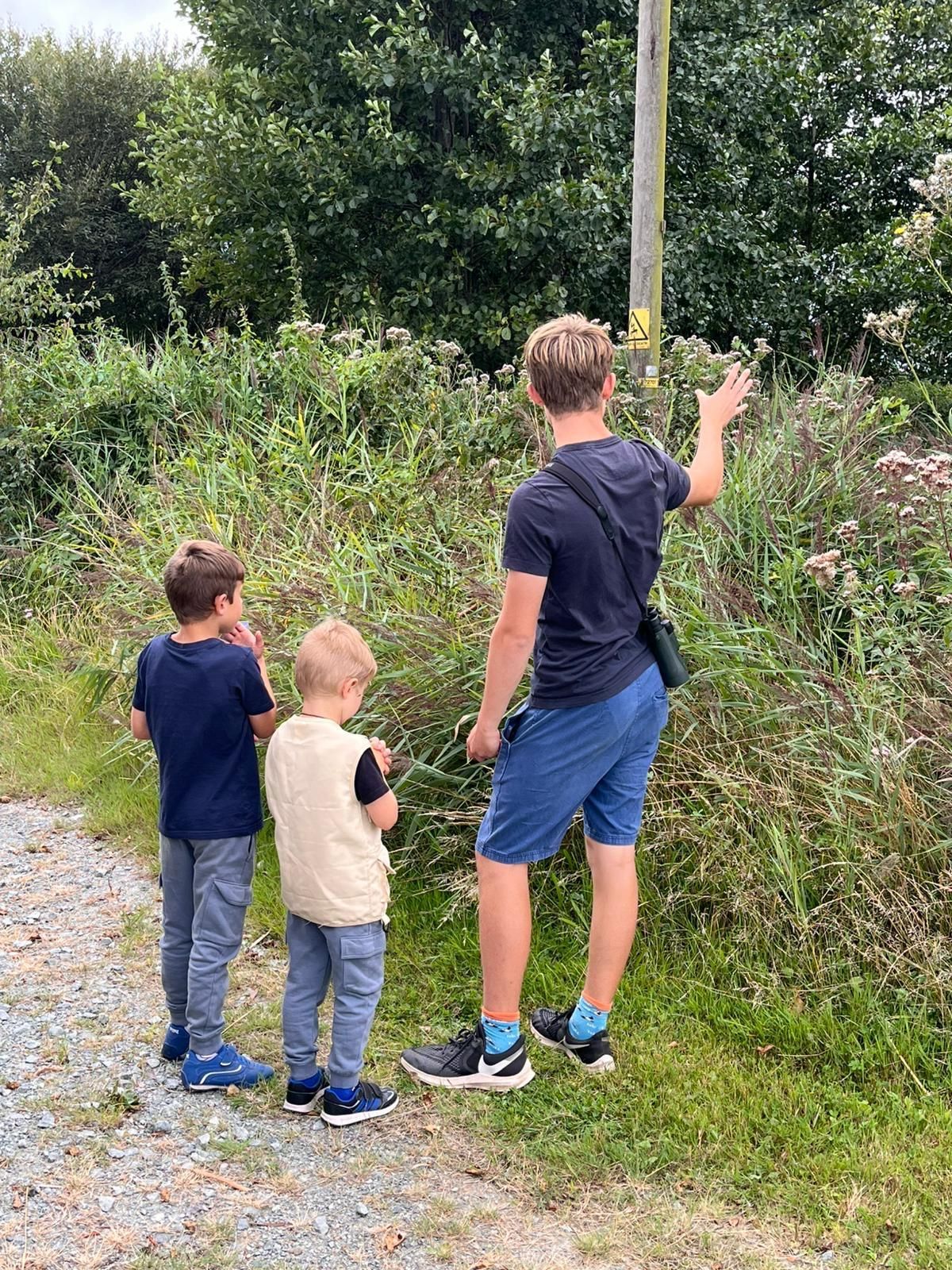
My first ever commission from the Norfolk Wildlife Trust was fantastic. I was challenged with writing about a visit to Hickling Broad on World Swallowtail Day, and when I arrived I was so worried that I would get good photos, or my writing wouldn't be good enough. And by the end of that 3-hour walk, I felt so many thoughts buzzing round my head from the day that I couldn't wait to note down. I was already gripped, and it proved to me that journalism could be an incredibly rewarding passion as well as work.


How do you explore your passions for wildlife photography and journalism at Norwich School?

Writers' Bloc! Both a fantastic club and a fantastic play on words, I get the majority of my articles done in this relaxed, go-with-the-flow type space. I feel that in this environment I can switch off from everything else that's going on and invest wholly in my writing.


How has Norwich School helped you/Supported you on your journey?

I've told a good few teachers about my work as a writer, and their motivational and complimentary feedback has driven me to keep going. It has made me feel like what I'm doing can change people's attitudes, and help them see nature in a new and beautiful light.


How has your journalism and photography progressed over the years?

My writing has changed a whole lot! When I started this as a columnist, I felt I could just go with the flow and however much waffle is left in, it doesn't really matter as people will just skim through it. These days, I try to make every sentence, indeed every word, an immersive experience for my audience to keep them hooked the whole way through. When you write for more prominent news outlets, there's far more to consider about how you pitch your writing: do you go analytical and scientific, or creative and awe-inspiring? It's a difficult balance to strike.


There is only so much you can read up about photography. My philosophy with that art has always been "learn by doing", and it seems to have worked alright so far. It was a big leap to switch from Automatic to Manual mode, but I've learnt so much by making the change. From a general skill-building perspective, my reflexes have certainly improved, as I leap for the shutter when a rare bird shoots past.


What would you say to any budding journalists? Any tips?

There's a lot to be said about this, and everyone will have different views on what the best policy is. But I don't have a set structure and I don't feel the need to bolster every sentence with rhetorical devices. The bottom line is, if you can read a line back to yourself and feel wonder, then it's a line well written. With creative pieces, your prose should motivate an emotive response throughout, leaving the reader flushed with excitement, sympathy and everything in between.


You won't get to the level you want to be at without reading the experts' material. If you're lost, just skimming an RSPB article can give you tons of new ideas and vocabulary, even if it isn't about whatever topic you are covering.


Finally, be self-conscious. As I write this, I am worried that I'm using "I'm" and "you're" far too many times, and that my answers aren't set out in an engaging way. As you write more and more, you will teach yourself to overanalyse what is on the page, which whilst mentally exhausting at times, means you can self-check without any bias. Essentially, if a sentence gives you (and I hate this phrase) the "ick" even slightly, then don't use it. Because the audience will feel that way too.


Tell us about your column in Norfolk Magazine? (Which begins in January 2026)

An amazing opportunity to say the least. I honestly couldn't believe I'd been accepted to write for the mag, and I was even more pleased to see the gusto with which they did accept me. I will have a column writing about the best Norfolk days out in nature for the first 6 months of 2026, after which point I will probably still drop in the occasional article. Currently, I have sent off my first article about the stunning Burnham Overy Dunes, and am working on another for the February edition.


What's next for you?

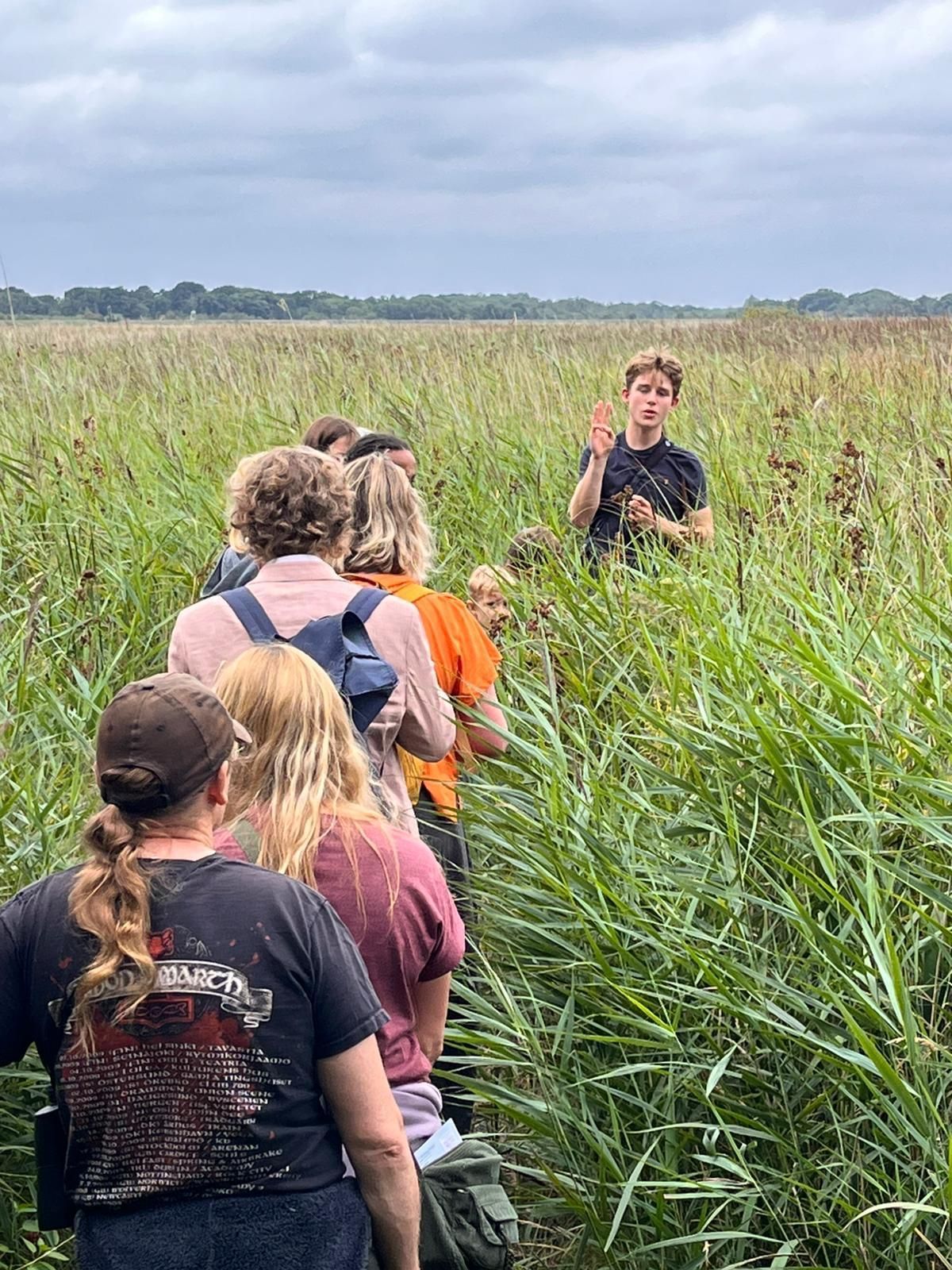
It would be awesome to lead some more tours, which I will do at Cley Marshes for Norfolk Wildlife Trust. After a successful walk this summer featuring such avian delights as green sandpipers, spoonbills and snipe, I am reassured that any other tours will be just as jam-packed with wildlife. My next will be in February, when I shall probably lead a trek down Cley Bank in search of snow buntings and velvet scoters. In terms of writing, I aspire to work-experience with some of the "big league" newspapers in London, and hopefully work shadowing some tours by e.g. Naturetrek or Oriole Birding to start with.


What's the dream?

With all these new technologies, surveillance and whatever unemployment problems AI will cause, the future is as worrying a prospect for me as it is for many others. AI can do so much in the way of data organisation, so I sorely hope that 20 years from now, readers will still value the investment and human experiences I convey in my writing. I want to spend as much time in nature as I possibly can throughout my life, and if I can make wildlife into part of my job, my dreams will truly be fulfilled. Let us hope that my heartfelt and awe-inspired stories will still interest the audience of the future.
 

By Eleanor Lewis February 11, 2026
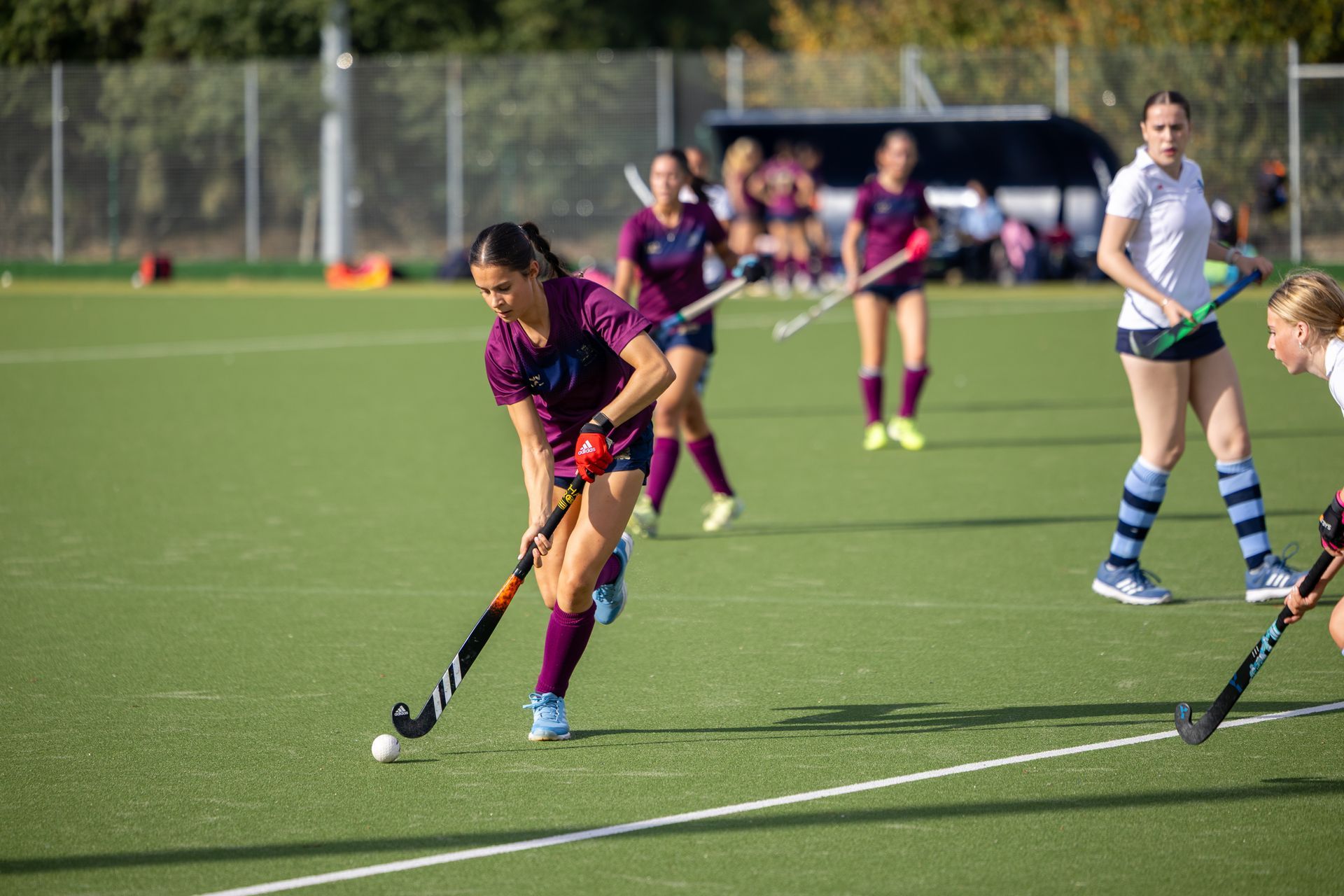
It has been an exciting and busy start to the Lent term for Boys’ Hockey. In the Junior section, we have enjoyed a number of competitive and entertaining fixtures against strong local opposition, as well as schools from further afield, including The Perse and Felsted. The U13A side, in particular, have impressed with their attacking intent and commitment to playing an expansive, entertaining style of hockey. Our Inters have also performed well across a demanding programme of block fixtures against Felsted, Culford, The Perse and Langley School. Across these rounds, the boys demonstrated resilience and teamwork, securing a series of positive results and continuing to build momentum as the term has progressed. For the Seniors, competition has been equally fierce. Fixtures against Felsted, Culford and The Perse have been played with real intensity, with the boys showing excellent commitment and energy throughout. The new-look, youthful 1st XI have made a particularly strong start, winning six of their eight matches, with one draw and one narrow defeat. Scoring an impressive 47 goals, they recorded standout victories over Felsted (12–2), Culford (7–0) and Framlingham College (7–0). They have now qualified for the Tier 1 Plate competition and reached Round 3 of the Independent School Cup.  We now look ahead to the second half of term, with further block fixtures against Ipswich, Gresham’s, Framlingham and RHS. Well done to all players and staff for an excellent start to the season.
By Eleanor Lewis February 11, 2026
It has been a busy term building in momentum to the England Netball Regional Finals, which took place on Saturday 7 th February in Welwyn Garden City. The U14 and U16 teams won five of the six games in their respective groups, with just one loss, the U14s to St Edmunds and the U16s to St Albans. This ensured semi-final places for both teams, however opposition game in the form of the eventual overall winners, and so sadly both ended up as losses.  The U19 team were in fine form throughout their group stage, securing six wins out of six. The highlight of the group games was a masterclass of patience and skill versus Haileybury, to win 15-9. The team went on to win their semi-final very comfortably 17-5, and secure National Finals qualification, for only the fourth time in the School's history!
By Eleanor Lewis February 11, 2026
To celebrate Oren and Oscar's badminton achievements outside of school life we asked them a few questions... How long have you both been playing badminton? Did you start together? Oscar: I’ve been playing badminton since I first watched it on the TV during the Commonwealth Games in 2014 and was transfixed. I asked my parents if I could try it so they found a local junior club and that was that - I’ve played ever since. It started out as playing once a week at the club, then I played more and more often before trialling for the Norfolk County squads and was very pleased to be selected. We both quickly graduated to the advanced sessions and were fortunate to get to play with older players which really helped us to develop our skills. I first represented Norfolk u18s when I was 12 which was very exciting, and I have been able to play all over the country. Oren: I watched a couple of Oscar’s sessions and also wanted to have a go, which probably annoyed him intensely. We were in different groups because I was only 4 years old and had to have a smaller racket, practicing with giant training shuttlecocks or balloons. We both used to play tennis and so our hand-eye coordination was already good which probably helped and I was able to improve quickly and joined him in the older group. Since then I’ve played more and more, and now I play as much as I can. We do spend a lot of time together training and playing, and he coaches as well so comes to venues to encourage and coach us during matches and tournaments. It’s nice that we have badminton in common and he can string my rackets for me and I don't have to pay him. Do you play with the school or outside the school? Or both? Oscar: I have played with the school and helped run the sessions but there hasn’t been a structured programme which is a shame. Outside of school, I am too old for Junior County teams but I now play for the Senior County team and regularly coach the junior squads. I also represent Mid Norfolk in League 1 and Anglia Vikings in the Ultimate Badminton League which is a national team event. I’ve attended international training camps in Europe which have been really hard work but also great fun. The official badminton season runs from September to May so in the summer months we organise sessions to train and compete so that when the season starts again we aren’t rusty. Oren: I did get the chance to play a bit in the Lower School but unfortunately there is no Badminton provision any more for Inters. I would love to play at school though, I think it would encourage other people too. Outside of school I train with and play for 3 clubs, and I represent Tasburgh Men’s team in the adult League. I also play in the u17s and U19s County teams though I’m only 15 which is cool. I train a lot, usually around 15 hours a week plus matches and tournaments. This weekend I’ve had a league match after school on Friday, then a tournament in Oxford on Saturday and an U19s County match against Cambridgeshire on Sunday so it’s a lot of travel, training and playing but I love it. I often do a lot of my homework courtside or in the car because we’re always travelling for matches and training. What do you enjoy about it? Oscar: I really like that you can go to a club night and there is a wide range of playing standards from beginners to County and National players and it’s really inclusive. They also try to nurture those coming up through the junior clubs so that they have a great introduction to the adult game and a lot of support. The idea that I can go anywhere in the country, say for university or work, and can walk into a ready-made community is really valuable to me - it’s like a universal language. I like that it can be both a team sport and an individual one so you get the best of both worlds - teamwork, building relationships with your playing partners and also the challenge of playing singles and being responsible for your own performance; there’s nowhere to hide when it’s just you on court. You have to be really resilient and if you miss a point you can’t dwell on it because you have to focus on the next one. Oren: I like how fast and exciting the game can be; it’s the fastest sport in the world with the shuttlecock potentially being hit at 100s of km/h so you really need to think on your feet. At the same time it’s really tactical and you have a split second to assess where the shuttle is going, where your opponent/partner is and what shot you’re going to hit and this changes with each of the events i.e. tactics and gameplay is really different for mixed doubles compared to singles or open doubles. I think that the more you get into it, the more you realise how technical it is and you’re always learning new techniques and subtle differences in gameplay. Sometimes you think you’re really good and then you watch the next level up or international tournaments and you realise that there’s so much more to do and learn. I’ve been to tournaments to watch and enjoy going to the All England in Birmingham every year which is the world’s oldest tournament and is the one that all professional players want to win, a bit like Wimbledon. While I enjoy watching, I’d much rather be on court playing. Do you take part in any other sporting activities? Oscar: I used to play rugby but after being injured a few times and being unable to play badminton, I realised that badminton was the most important option for me. When the County training sessions were moved and clashed with rugby, the choice was an easy one. I used to play tennis and was invited to represent Norfolk. The problem was that I enjoyed playing but never felt the need to be competitive. Badminton is different for me and I do want to push myself, do better and win trophies and medals so it’s a very different mindset. As well as badminton training, I do Crossfit and go to the gym to maintain my fitness but there’s not a lot of time to fit in other sports, especially with A levels. Oren: I really enjoyed playing tennis and played it alongside badminton for 5 or 6 years but as I progressed, both my tennis coaches and badminton coaches complained that each sport was interfering with the other. Although badminton and tennis seem similar at a superficial level , they are actually very different. When the time came, I chose to continue with badminton and I don’t regret it. Like Oscar, I had to give up rugby outside school to train with the County. I think my mum was quite pleased that she didn’t have to stand in the cold at a rugby or tennis match any more. I’ve got a personalised strength and conditioning programme from my coaches with movements and drills specifically for improving my footwork, agility and stamina. With this programme, training, playing and schoolwork there’s not much time left. Can you tell us about your recent successes? Oscar: I’ve won 13 County championships at all age groups, and am reigning U19 County Champion in Mixed Doubles and Men’s Doubles adding to my previous title in the Men’s Singles. I have competed for Norfolk and coached at ICT (Intercounties Tournament - the premier national junior team competition) several times and helped achieve Norfolk’s highest ever result, as well as captaining the team to the Shires League finals, placing us in the top 8 counties in the country. I recently secured promotion to the top division of the Club League with my team. I also compete nationally and have had successes across the country, most recently at Christmas in my last u19s tournament. Oren: I’ve recently won the Senior (Adults) Norfolk Moderates titles in both Men’s doubles and Mixed Doubles, and this weekend won the gold medal in the Men’s doubles at a National tournament near Oxford. I was 2nd in the u19s County Championship recently, only beaten by Oscar. I am no.1 in the U17 and U19s Junior County Men’s doubles and also have helped my team gain promotion in the Senior Club League. Last year I participated in a 24hr charity ‘Badmintonathon’ run by an ON and was one of the few players who lasted the full 24 hours. Where do you see your future in badminton? Oscar: I’m hoping to compete in BUCS at University and am looking forward to experiencing the competitive programmes and structure that they can offer me. As part of my university options, I’m planning to travel to South East Asia where the badminton culture is very different and I think I can learn a lot there which really excites me. I’ve previously volunteered with Badminton England, working at Nationals and the Commonwealth Games, and was awarded the National Volunteer of the Year award so I would hope to continue being involved not only playing but in the running of the sport. I’m currently volunteering as a line judge with the National Badminton League which is great fun and I’d like to complete my Line Judging and Umpiring training with a view to travelling to international tournaments and matches in an official capacity. Working at the Commonwealth Games really opened my eyes to the power of collaboration and community in sport and was partly what attracted me to my chosen degree courses. I am also on the committee of Norfolk Badminton and coach the Junior County Squads regularly, as well as being on the Badminton England National Youth Forum so I would like to continue in those roles - I love playing but also enjoy the organisation and grass roots work to keep the sport accessible to as many people as possible. Badminton is also bringing some income to me as I’ve started my own stringing business and I’ve already managed to build a customer base which is great and will be helpful at University. I’m involved in badminton in many different ways and I can’t see that changing anytime soon. Oren: I have 2 more years left of competing at ICT and so want to continue to be selected for that and to follow Oscar into the Senior County squad when I’m old enough. In the meantime, I want to compete in the national tournaments as much as possible and to continue representing Norfolk. I’m looking forward to doing my Badminton England Young Leaders qualification and also to do my Level 1 coaching qualification. I’ve had so much support from coaches and club members that it would be nice to be able to give back and encourage younger players. This summer I’m going to an international training camp in Denmark. I’m a bit nervous because it’s pretty intense but I am looking forward to pushing myself. What would say to anyone interested in the sport? Oscar : Honestly, just give it a go. As well as being a great sport, there is so much scope to get involved at club and county levels. I know players at the clubs I go to who have been playing for 60+ years and are still loving it and love to play with the younger ones. There are lots of casual community groups that play locally - it doesn't have to be super competitive, but if you want to take it a step further there are many opportunities. It’s also never too late, I know people who started at my club a year or two ago and they now compete on the tournament circuit and are representing clubs. We went on holiday last year to Vietnam and it was amazing to see the culture of badminton in that part of the world. They have courts marked out on the streets, there are people playing at all times of the day and night and it’s open to everyone; I would love to see it so accessible in this country. Oren: Badminton is really fun at all levels, you can just book a court and turn up with your friends. Also the clubs are very supportive and social, you get to play with people of all levels. It’s really nice that there are ex-England players who are very happy to play with people who have only just picked up a racket. I think that schools should offer more opportunities to play as well, it’s one of those sports where you don’t have to be one of the traditionally sporty people to pick up a racket and hit a shuttle. I saw an article very recently about how the speed and unpredictability of Badminton can sharpen your brain, improve focus and boost cognitive ability so alongside fitness and social interaction there’s no reason to not give it a try.
By Eleanor Lewis February 10, 2026
On Tuesday 10 February, Lower Twos visited Norwich Cathedral for a morning of rich, cross-curricular learning. The children explored the significance of stained-glass windows and how they were used to tell Bible stories to people in the past. They learned about the history of St Julian and their connection to Norwich and studied how key moments in Jesus’ life are portrayed through the cathedral windows. Pupils showed curiosity, asked thoughtful questions, and represented the school brilliantly.
By Eleanor Lewis February 9, 2026
This half term has seen the Boat Club battling a range of weather- from misty winter mornings to driving rain, wind and snow. With a couple of sessions off the water due to the river freezing, we have been on the water since, covering the miles in both the Senior and Inters Squads, while elsewhere flooded rivers have led to a number of race cancellations for us. We are hopeful that we will be racing over half term, with many of the new J14s and J15s racing in their first event. On the representative level, Ellie Thwaites (L6), James Howard (L6) and Nicholas Conway (U6) have all progressed to the next stage of the GB U19 Rowing Trials. With a training day last week, there has been some time to practice in their Trials pairs ahead of the February Trials this weekend coming. These trials have also been adjusted due to flooding and will be held at the GB Rowing Centre in Caversham. We wish all 3 the best of luck.
By Eleanor Lewis February 6, 2026
My son, do not forget my teaching, but keep my commands in your heart, for they will prolong your life many years and bring you peace and prosperity. Let love and faithfulness never leave you; bind them around your neck, write them on the tablet of your heart. Then you will win favour and a good name in the sight of God and man. Trust in the Lord with all your heart and lean not on your own understanding; in all your ways submit to him, and he will make your paths straight. (Proverbs 3:1-6) Having done some thinking last week about why we sing hymns in assemblies, this week I want to think about why it is we usually have a Bible reading on Fridays. Let’s start with a quick game: I’m going to read out some sentences which may or may not be from the Bible – you have to choose the ones that are. Neither a borrower nor a lender be. (Not from the Bible – it’s from Shakespeare.) Go the extra mile . (Yes – from Jesus’ Sermon on the Mount.) Ashes to ashes, dust to dust. (Yes – from Genesis 3, when Adam and Eve are told they will become mortal.) All will be well, and all will be well, and all manner of things will be well. (Not from the Bible, but a saying of Julian of Norwich, whose statue is at the West Doors.) Let love and faithfulness never leave you; bind them round your neck, write them on the tablet of your heart. (Yes, that was from the reading we had a moment ago. It’s from the book of Proverbs, one of the passage printed in the back of our hymn boo Well done if you managed to guess the sentences that were from the Bible. A few things we can learn from that game: The Bible contains a lot of wisdom that has passed into the English language, though we may not realise it. Turning the other cheek; the writing’s on the wall; the salt of the earth; you reap what you sow; there’s a time and a place for everything. These and many more expressions all started in some thought-provoking part of the Bible. The Bible is not the only place that we can go to get wisdom. Saints, celebrities, Shakespeare and other scriptures have lines for us to ponder too. What the Bible gives us, though – and this is really how we use it in our Friday assemblies – is a regular nudge in the right direction . We live in a world where there are all kinds of things trying to nudge us in all sorts of directions. For instance, “Drink Coca Cola.” “Click on the link to find out more.” “I dare you. Go on, I dare you!” Some of the nudges around you are good and well-intentioned, and hopefully that’s true at school, where you hear from speakers, PPD lessons, and calendar events like LGBTQ+ History Month (which you heard about in here on Wednesday). But I only need to mention a few other things, like hard-sell advertising or unrelenting phone notifications, for you to realise that you need to filter what’s coming at you. We listen to Bible passages week by week because these are nudges in the right direction. “Let love and faithfulness never leave you; bind them round your neck, write them on the tablet of your heart.” That’s decent advice – hear it and go with it. Whatever’s going on for you on this particular Friday, be a loving, caring, faithful person – and you won’t go far wrong. I’ve played a little bit of golf – not much, and I’m not especially good at it. When I have played, it has usually been in a group. I think I’ve played alongside basically two different types of people. One type of person wants to give me a constant stream of advice about how I should be standing differently, what’s wrong with my swing, how I’ve got the wrong sort of clubs, and so on. To be honest, I find it difficult playing with people like that because it’s a bit overwhelming. But there’s another type of fellow golfer who, now and again, will just mention something. I know one person in particular who is like a golf-whisperer . He will stand to one side while I take a practice swing, and then say something like – ‘Just try lifting your chin up a bit’. And I will take his advice, and it works – because he’s a good enough golfer (and a good enough teacher) to see the thing I need to focus on. Listening to regular Bible passages can be like listening to that second type of golfer. Many of the people who read the world’s bestselling book read it in short chunks, but regularly. And they find (as I find) that it can have just the right thing to say. On the occasion when anger or ambition or irritation is getting the better of me, the Bible reminds me to be loving and faithful; and to trust God, even if I can’t quite see where my life is leading. When we’re getting a bit wild or loose, the Bible can help us keep our shape; the Bible is a kind of life-whisperer . Something to keep in mind whenever you hear it read in assembly.
By Eleanor Lewis February 5, 2026
Each year the illustrious Norfolk Cambridge Society (NCS), with whom Norwich School has close and long-standing ties, runs a prestigious essay competition open to any Year 13 pupils across the county considering Cambridge University for their tertiary education. As ever, the entries were of the highest standard and competition was extremely tough. Entrants were short listed and invited to a panel interview. In late 2025, two Norwich School Upper 6 pupils were told that they had performed exceptionally well, to scoop joint 1st prize award. Arthur Dannatt was awarded for an astonishingly complex maths-based essay entitled: What is the Archimedes cattle problem and how can it be solved? and Becky Brown was awarded her exquisite album of nine songs composed and performed by herself – the first time a musical entry has been awarded top prize in the competition’s history. In addition to a generous cash prize, award winners and their families were invited as special guest to the Lent Term NCS public lecture, and this duly took place on 5 February 2026. Following pre-drinks in the school’s refectory, a record audience some 500-strong filled the nave and side aisles of the cathedral to hear a scintillating talk given by Professor Neil Lawrence, DeepMind Professor of Machine Learning at the University of Cambridge, Senior AI Fellow at The Alan Turing Institute and Visiting Professor of Machine Learning at the University of Sheffield. The title of his thought-provoking talk was How AI Works and How it will Transform our Lives. As the event kicked off, President of NCS, Rob Edwards, and the event organiser, Geoffrey Smart, presented both pupils with their awards in front of the substantial Cathedral audience. It was a fitting reward to reflect both pupils’ endeavour and talent, and we commend them on their impressive achievement. The school could not be more proud.
By Eleanor Lewis February 4, 2026
On Wednesday 4 February Lana Kiddell from our school Pride Group and Mrs Scott, EDI Officer, gave an assembly to commemorate LGBTQ+ History Month. A story is a powerful thing. Stories can unite, divide, inspire and soothe us and I truly do not believe that there is a single human alive who has not been moved by a story in some way. Stories, and books in particular, are amazing vehicles for empathy and connection. They allow us to step into someone else’s shoes, to experience a world that is not our own, and to gain insight into what it feels like to be someone else. Through stories, we come to understand people we may never meet, lives we may never live, and perspectives far beyond our own. In many ways, all of human existence is preserved through stories. And because of that, I often find myself wondering whose stories we choose to tell, and whose stories are lost to time because of their identity, their background, or their social standing. February marks LGBTQ+ History Month, and a key part of any history month is storytelling. LGBTQ+ stories have often been marginalised, suppressed, or erased altogether. For much of history, Queer people were forced to hide their identities and communities for fear of persecution, punishment, or exclusion. As a result, many stories were never shared openly, and many were deliberately silenced. Today, we are going to shine a light on just a few LGBTQ+ stories that deserve to be heard, because they help us understand the world, and one another, more fully. One of the most well-known figures in British literary history is Oscar Wilde. Wilde was celebrated in his lifetime for his wit, his intelligence, and his writing. His plays and books were extremely popular and still are today. Despite his fame, Wilde was imprisoned for being gay in 1895. After his conviction, his reputation was destroyed. His work was removed from theatres, his name became a source of shame, and for many years his writing was dismissed or ignored. Wilde’s story reminds us that even the most brilliant voices can be silenced when society decides that someone’s identity makes them unacceptable. Despite this, Oscar Wilde’s work is now widely celebrated and shared along with his LGBTQ+ identity. Where Wilde shows us how stories can be suppressed, Audre Lorde shows us how storytelling can be an act of resistance. Lorde described herself as a Black, lesbian mother, warrior poet. She wrote unapologetically about identity, power, love, and injustice, refusing to separate who she was from what she wrote, contributing a powerful voice to the civil rights movement. One of her famous quotes “Your silence does not protect you” reminds us that speaking up about injustice is powerful and important, and that remaining quiet does nothing to protect ourselves or others. She understood that telling your story, especially when the world would prefer you not to, is an act of courage. Her work challenges readers to listen to voices they may not be used to hearing, and to recognise that our differences are not weaknesses, but sources of strength. More recently, we are seeing LGBTQ+ stories shared more openly, particularly in literature for young people. One example is Alice Oseman, creator of the now iconic Heartstopper series, whose work centres queer characters living ordinary, everyday lives, forming friendships, falling in love, struggling, and growing. These are not stories defined by tragedy or secrecy, but they are universally relatable experiences. For many young people, reading stories like these can be the first time they truly see themselves reflected in a book. And for others, it may be their first opportunity to understand experiences different from their own. That matters. Seeing yourself in a story can be affirming, but learning about someone else through a story is how empathy grows. So LGBTQ+ History Month is not just about looking backwards. It is about asking ourselves what we do with stories now. Whose voices do we listen to, and how can we learn from the past to more positively shape the future. Stories help us understand one another. They remind us that people are complex, layered, and deserving of respect. When we choose to listen to stories that are not about us, we practise empathy. And when we make space for all stories to be told, we create a world where fewer people feel invisible, unheard, or alone. If you would like to get involved in celebrating LGBTQ+ history month please join us this lunchtime in the Undercroft where we will be creating a display for LGBTQ+ history month and making a badges with a visitor from the LGBTQ+ project. Thank you.
By Eleanor Lewis February 4, 2026
What a joyful, toe-tapping concert it was! The hall buzzing with excitement as very young musicians from Lower 1 and Upper 1 (some performing for the very first time) took to the stage, beaming with pride and confidence. From the very first notes, it was clear this was a celebration not just of music, but of courage, enthusiasm, and the sheer fun of performing. Smiling families filled the room, cameras at the ready, soaking up every moment as each of our Lower School pupils shared their hard work and musical imagination. The piano pieces sparkled with variety and character. Familiar melodies like Ode to Joy floated out warmly and confidently, while playful pieces such as Whirleybird , ABC Playtime , and Up and Down Song bounced along with energy and charm. More atmospheric moments appeared too, from the gentle magic of Walking in the Air to the bouncy rhythms of Minnie Mouse Hits The Town! There were also lovely storytelling moments at the piano, with music inspired by wildlife, farmers, and even a cheerful boat ride or two. Every performance, no matter how short was delivered with huge smiles, careful concentration and an infectious sense of joy. Overall, the L1 and U1 Informal Concert was a heart-warming showcase of young talent and growing confidence. The enthusiasm of the performers, the supportive energy of the audience, and the wide range of music made it a truly uplifting event, one that left everyone applauding loudly and walking away with happy hearts.  Head of Music Mr Vine said 'another fantastic concert full of music making at its finest! So proud of our L1 and U1 pupils who worked so hard to get their pieces ready. A big thank you as always, to our fabulous visiting music tutors for all their guidance and preparation! Bravo to all!'
By Eleanor Lewis February 3, 2026
On Tuesday 3 January, Upper 2 visited Norwich Synagogue as part of their learning about the local community. The children were immersed in an enriching experience that helped them develop an understanding of different cultures and traditions. They particularly enjoyed dressing up with a kippah and a tallit, and were fascinated by the opportunity to view the Torah scrolls. The visit provided a valuable and memorable insight into the Jewish faith and community around us.
More Posts