"If You Need A Friend, I'm Sailing Right Behind" - Jonathan Pearson, Development Director and ON, discusses friendship and becoming an ON

May 10, 2024

Jonathan Pearson, the school’s Development Director and ON offers us his perspective on friendship and becoming an ON.


"If you have never heard of the music duo ‘Simon and Garfunkel’, you have now!

Two college buddies, singer-songwriter Paul Simon was the diminutive, rotund one playing guitar, and Art (short for Arthur) Garfunkel was lanky and angular, but had a pure, angelic voice. Huge in the 1960s, they have been inducted into the Rock and Roll Hall of Fame, have nine Grammys to their name and their singles have sold over 100m worldwide. Their most iconic song is Bridge Over Troubled Water, a song that quite literally moves grown men to tears – or at least it does this grown man.


However, it is another of their songs I intend to focus on, a record that sold 22m copies, called Sound of Silence. It has the thought-provoking opening line: “Hello darkness, my old friend”. Throughout all my adult life, I believed this song to reflect dark thoughts about human mortality, but the real meaning, discovered only recently, is infinitely more profound and relates to the astonishing power of friendship, which is the theme of my address today.


Our story began when Art Garfunkel enrolled in Columbia University, where he met a student named Sandy Greenberg, and they immediately became best friends. Soon afterwards, Sandy was struck by tragedy. His vision became blurry, and he received the devastating news that severe glaucoma was destroying his optic nerves. The young man with such a bright future would soon be completely blind. Sandy was devastated and fell into a deep depression. He gave up college and cut all contact with peers.


One day, his friend Art showed up at his front door and convinced Sandy to give college another go, promising that he would be right by Sandy’s side to make sure he didn’t fall - literally or figuratively.


Art kept his promise, faithfully escorting Sandy around campus and effectively serving as his eyes. It was important to Art that Sandy should never feel alone. Art actually started calling himself “Darkness” to demonstrate his empathy with his friend. He’d say things like, “Darkness is going to read to you now.” That opening line of the Simon and Garfunkel hit Sound of Silence echoes the way Sandy always greeted Art: “Hello Darkness, my old friend”.


One day, Art was guiding Sandy through crowded Grand Central Station when he suddenly said he had to go, leaving his friend alone and petrified. Sandy stumbled and after a couple of hellish hours, finally got on the right subway train. On exiting the station, Sandy bumped into his trusty friend Art who had surreptitiously followed him the whole way home, secretly ensuring his safety. Art was giving him the priceless gift of independence. Sandy later said, “That moment was the spark that caused me to live a completely different life, without fear, without doubt. For that I am tremendously grateful to my friend.”


Sandy graduated from Columbia, secured degrees at Harvard and Oxford, becoming a successful entrepreneur and philanthropist. He and Art remain friends to this day.


All this got me reflecting on the nature of deep, life-long friendship. Creating such friendships is at the heart of all we do in the school’s Development Office, which I lead. When you leave school, you will become an ON for life, from 18 to over 100. I look forward to welcoming each of you one day into the ON community.


In my experience, whilst every ON has their particular affiliation with the school, there are two common threads that all ONs share. The first relates to an abiding affection for the school site and this Cathedral. Many places hold a special significance to a memorable event. The second relates to strong relationships maintained throughout adulthood with fellow ONs, particularly to members of their own year group.


Just take a moment to look at those you are sitting or standing next to right now…. Although this may be far from your minds with Period One of the day looming, it could be that your next door neighbour today is someone you will go on holiday with; or perhaps someone you will live with for a time; or maybe they are those trusted friends you can phone in times of need at two o’clock in the morning; or maybe one will be your best man or maid of honour at your wedding. As far-fetched as these may seem to you now, all of those scenarios have genuinely occurred during my lifetime with those I sat next to in Cathedral, or in class or in tutorial or played sport with in the 1980s. I will add one more: you might end up marrying the person you’re right next to now; there are a growing number of ONs who have tied the knot in recent years. To save you squirming nervously in your seats, don’t worry, I‘ll move on!


So, my recommendation is to treasure your friendships at school. They will last you a lifetime. My oldest friend, Scott, whom I knew at Norwich School and Town Close beforehand is still a great friend 50 years on. I particularly stress this to those leaving school this summer. Every day from now on is precious, as you cultivate special friendships and form memories to cherish during your final weeks here. Never again will you spend so much time with your school friends as you do now. Those friendships will only blossom and deepen in years to come. The work done by my colleagues and I in the school’s Development Office helps ONs stay in touch, to meet up and to remain close to the school and to each other. Who knows, we might even get a wedding invitation from you one day!


At the start of this assembly, I mentioned Simon and Garfunkel’s iconic song, Bridge over Troubled Water. It has sold over 25 million copies, spending seventeen weeks in the UK top 40 in 1970. It has a haunting melody, breathtaking delivery and poignant lyrics, as Art Garfunkel articulates how loving friendship is like a metaphorical bridge that carries you both over life’s troubled waters to find comfort in calmer pastures together.


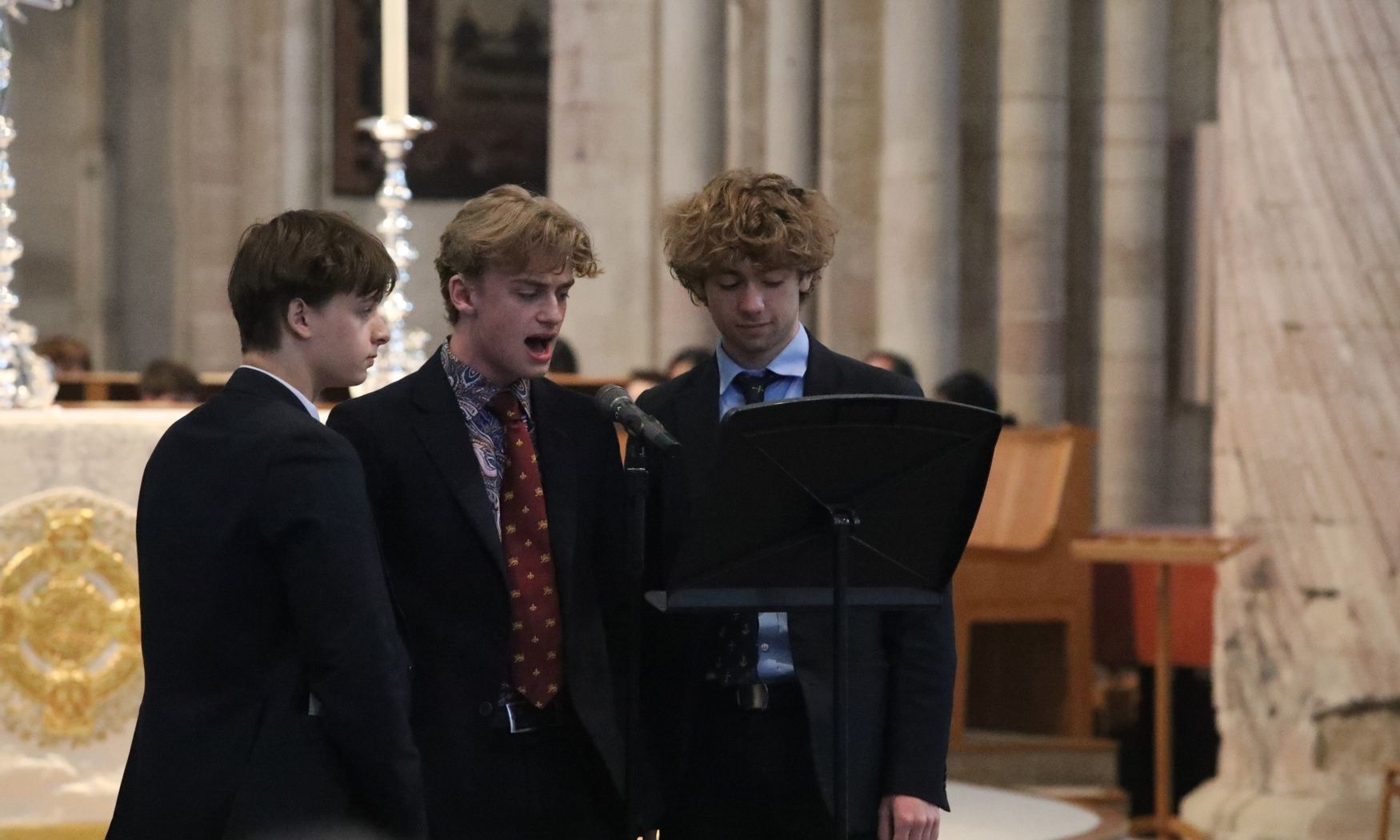
I invite you to seek out the original version, but in the meantime, I now ask Hal Major, Chester Dimoglou and Dylan Parsons with Mr Stamp on piano, to give you their rendition. Hankies at the ready, Upper Sixth. 

So, courtesy of Simon and Garfunkel, I give you Bridge Over Troubled Water."


Following this was a wonderful rendition of Bridge Over Troubled Water from Upper 6 pupils, Hal Major, Chester Dimoglou and Dylan Parsons.
By Eleanor Lewis June 12, 2026
On Thursday 11 June, Lower 3 immersed themselves in their India Case Study with a vibrant, fun-filled hands‑on celebration of culture. Throughout the afternoon, they explored Bollywood dance, experimented with colourful Indian art, and learned about traditional clothing and adornments. The finale to their afternoon was a joyful performance wearing saris, bindis, ghungroo bells and other cultural accessories, bringing their Geography learning to life with energy and creativity.
By Eleanor Lewis June 12, 2026
Over 600 artworks by Norfolk primary schoolchildren go on display at the Crypt Gallery, Norwich School from 15th – 20th June 2026.
By Eleanor Lewis June 12, 2026
Good morning everyone. Do please sit down. And a very warm welcome to all of the new L4 pupils joining us this morning for their first cathedral assembly. So, the world cup started last night. Could I have a quick show of hands. Who watched the first match - Mexico v South Africa? A better test of world cup fever is - Who watched the second match? South Korea v Czech Republic at 3AM? There are always some hardy souls who commit to watching every match. With more matches, and 3AM as one of the regular kick-off times, that will be a bigger challenge then ever before. I wouldn’t say I’m a big football fan. But I do always look forward to the big sporting events of the summer. Be it a world cup, Olympics, Wimbledon, Tour de France, or just the simple pleasure of lying in the garden listening to Test Match Special. One tradition associated with the world cup and the Olympics is the last minute scramble to get the stadiums built. I never heard much about it this year. I think they are using existing stadia. But whether it was the Olympics in London or the world cup in Brazil, there are often stories in the news speculating that they won’t be ready in time. You could be forgiven for wondering why they don’t just start the whole process earlier. It turns out that FIFA did try that back in the 70s. In 1973, the 1986 world cup was awarded to Columbia, giving them 13 years to get ready for it. But, by 1983, it was apparent that even 13 years wasn’t long enough to get everything built, so the tournament was moved to Mexico, who had hosted in 1970 and so already had stadiums in place. I say 13 years wasn’t long enough, but there is another school of thought that says it was too long. Can you imagine working to a deadline 13 years in the future? Many of you weren’t even born 13 years ago. A deadline in the far distance is like not having a deadline at all. ‘Take as long as you need to build your stadiums, Columbia. Make them perfect. There is no rush’ That is the message they were given. I put it to you this morning that deadlines are important and necessary. And while it may often seem that we could have done a better job if only we had a bit more time, that is often simply not the case. I was sent down this line of thinking by listening to a book review on the radio last week. The book is called ‘Inside the Box’, and the author proposes that, far from hindering creativity and innovation, deadlines and other constraints have been a necessary part of inventions and creative thinking since the start of time. These might be natural constraints of weather and seasons, or man-made restrictions like coursework deadlines. One story in the book is that of Dmitri Mendeleev, creator of the periodic table of the elements. Most of you will be familiar with the slightly odd structure of the periodic table, with different numbers of elements in various columns. Legend has it that this structure came to Mendeleev in a dream, and he sprung from his bed to scribble it down on a scrap of paper before he forgot it. The truth is that this dream happened the night before the deadline his publisher had given him. Is this a coincidence, or an example of cause and effect. One way that deadlines could be considered bad is that you might genuinely be left with insufficient time to make something perfect. But ask yourself this, is it better to do something well in the time available, or aim for perfection and never get it done at all. Most people don’t have the luxury of being able to devote their whole life to one single project. Most of us are always spinning several plates, and only have a finite amount of time to devote to each. Each of you will have faced this recently when preparing for your exams. Much as you wanted to practice more Maths, you had to devote some time to English or History, and you might have had cricket matches or music lessons to fit in as well. You might say that the ultimate building project was the creation of the world. Now, I am aware that modern science suggests that the world was not created on quite the timescale that is recounted in the Bible, but I’ve asked Kort to read us the final stages of the biblical creation story as I think there is a useful lesson in it for us all. We pick up the story at the start of the 6th day, by which time God has already created night and day, sea and sky, land, plants and animals. So God created mankind in his own image, in the image of God he created them; male and female he created them. 28 God blessed them and said to them, “Be fruitful and increase in number; fill the earth and subdue it. Rule over the fish in the sea and the birds in the sky and over every living creature that moves on the ground.” 29 Then God said, “I give you every seed-bearing plant on the face of the whole earth and every tree that has fruit with seed in it. They will be yours for food. 30 And to all the beasts of the earth and all the birds in the sky and all the creatures that move along the ground—everything that has the breath of life in it—I give every green plant for food.” And it was so. 31 God saw all that he had made, and it was very good. And there was evening, and there was morning—the sixth day. Thus the heavens and the earth were completed in all their vast array. 2 By the seventh day God had finished the work he had been doing; so on the seventh day he rested from all his work. 3 Then God blessed the seventh day and made it holy, because on it he rested from all the work of creating that he had done. Thank you Kort. What I really want you to notice in that story are 2 things. Firstly, God seems to have been working to quite a tight timetable, seemingly self-imposed. After all, who was going to hold him to account if he finished the job late? Secondly, when he saw all that he had made, it was very good. Now, we all know from our report cards at Norwich School that very good is very good, but it is not perfect, or even Outstanding. You might have thought that God would not rest until he had made his world perfect. But of course we know we don’t live in a perfect world. We do live in beautiful world containing dolphins, penguins and elephants, mountains, oceans and cathedrals. But it does also contain wasps, rain, and exams, and sadly much worse things than those. Even though God had a rest day at his disposal, he still stuck to the timetable and left the world as it was at the end of day 6. It was, after all, very good. I think there is a lesson here for all of us. When given something to do, whether it is a piece of homework, an art project, or performing in a concert, we should acknowledge at the outset that our goal is to make it as good as we can in the time available, rather than always aiming for absolute perfection. And we should also acknowledge that it is simply human nature that we will work more diligently towards that goal if the deadline is close. I’m sure your teachers may have encouraged you to start revising ages before the exams, to spread it out and take the pressure off. This is good advice, but I also know that those same teachers will struggle to follow their own advice when it comes to writing your reports. Deadlines can be scary, and sometimes they can feel restrictive. But they do help us to get stuff done that otherwise may well never get done. I finish with a quote from the legendary jazz musician Duke Ellington. When asked by his producer how much longer he needed to finish his next song, Ellington replied: “I don’t need time, I need a deadline”.
By Eleanor Lewis June 10, 2026
The Upper 3's deepened their understanding of world religions during a special session with a guest speaker who introduced them to the origins and teachings of Buddhism. They were especially engaged by the emphasis on mindfulness and enjoyed practising simple meditation techniques to help focus and calm the mind. 
By Eleanor Lewis June 8, 2026
The Lower School Chamber Choir recently enjoyed a wonderful musical collaboration, welcoming their friends from Boucher School from London for a special afternoon choir workshop. The session was filled with energy, enthusiasm and creativity, as the children worked together to learn a selection of new songs, including Only You , Scarborough Fair , and Count on Me by Bruno Mars. Guided by three talented choir leaders, the pupils embraced the opportunity to develop their vocal skills, build confidence and experience the joy of singing as part of a larger ensemble. One of the highlights of the day was the chance to work with different choir leaders, each bringing their own unique style and expertise. The children responded brilliantly, showing focus, teamwork and a genuine love of music throughout the workshop. The day culminated in a special concert held in the Senior School Chapel, where the combined choirs performed to an enthusiastic and supportive audience. The performance was a true celebration of the hard work and dedication shown by all involved, and the Chapel was filled with uplifting harmonies and smiles. Head of Music, Mr Vine, praised the event, saying: “A wonderful afternoon and evening with some fantastic music making. Well done to Boucher School and the Lower School Chamber Choir for all their hard work, and a big thank you to our fantastic choir leaders.” It was a memorable experience for everyone involved, and a shining example of the power of music to bring people together.
By Eleanor Lewis June 8, 2026
The Lower 5 Battlefields Trip continues be a highlight of the History Department's calendar. This year we took 72 pupils on a First World War journey of discovery that was both exciting and moving. Our itinerary included two days around Ypres in Belgium and a third day walking the Somme battlefield in France. Along the way, we heard the extraordinary stories of some of those who lost their lives in the war, we came to appreciate the scale, terrain and challenges faced by the soldiers, and we saw for ourselves their trenches and equipment. We performed acts of remembrance for Old Norvicensians whose graves we visited, and after three busy days were buzzing with discussion and a desire to explore further, encouraged by four extremely skilled and knowledgeable guides who brought it all to life for us.  Amongst all the history, we also made sure we had time for chocolate shopping in the beautiful town of Ypres.
By Eleanor Lewis June 8, 2026
On Monday 8 June, the UCAS team accompanied by Sixth Form tutors took the Lower 6 to the Norwich UCAS Convention to continue their journey of exploring their future after Norwich School. With over 100 universities present, our pupils could speak directly with university representatives and find out more about courses, entry requirements, halls of residences and student life. The convention also allows our pupils to see how many others want to go to university as well as learning more about different universities from Dundee to Exeter as well as about degree apprenticeships. Our pupils are now starting to get all the information they need to apply successfully in the autumn. We encourage them to go out on Open Days to see the universities at first hand and later in the month, there will be more guidance on filling out the UCAS form and how to write the important personal statement. Norwich School’s successful record with university applications over many years Is a key part of our Sixth Form offer.
By Eleanor Lewis June 5, 2026
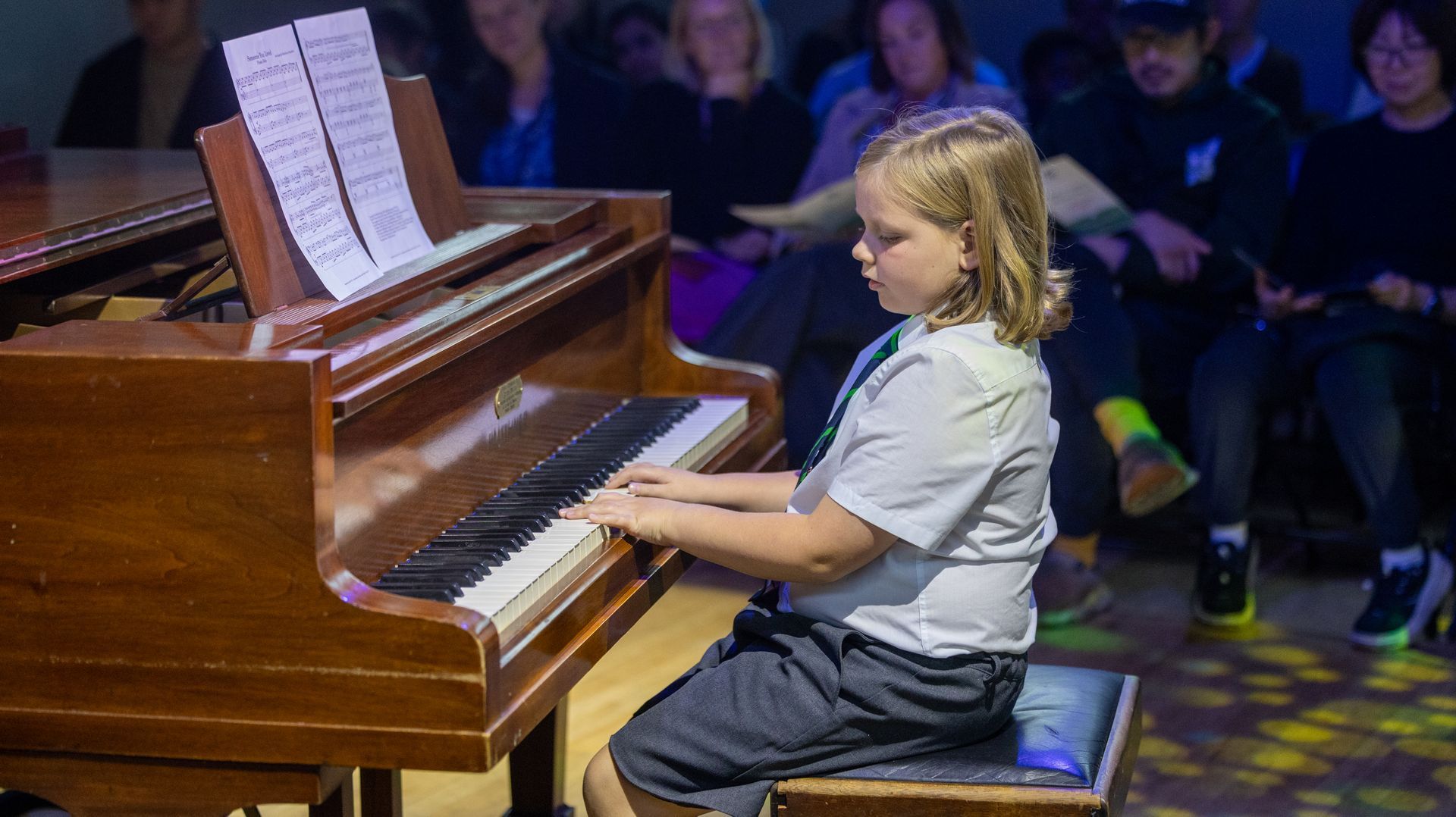
The ‘Making Musicians’ Music Scholars’ Programme at Norwich School is well established and a jewel in the school’s crown. Occasionally, external professionals are enticed to join us to give a breathtaking masterclass to provide real inspiration to young scholars. On 05 June 2026, we had just such a concert given by Hannah Watson Emmrich, local musician and amazingly talented pianist. She guided a very supportive audience through her new album Notes from the Undergrowth at a concert held in the glorious school Chapel. This album of piano music was being launched at the event. A very intelligently choreographed programme commenced with piano works evoking daybreak and idyllic woodland scenes, followed by an exploration of some of the flora and fauna lurking in the under-canopy, before moving into melancholic pieces reminiscent of sunset (such as nightingales) and finally the peace of nightfall (nocturnes, night moths etc). Alternating astonishing technical excellence and powerful storytelling, Hannah evoked the myriad sounds and sensations of woodland in her performance. Included in her repertoire were three newly commissioned pieces and the audience included Joshua Borin who had composed one of the works called Crex (conjuring up the creepy world of slime mould in music - yes, really!) Our Music Scholars were in attendance and learned much from Hannah’s keyboard mastery and from her achingly beautiful programme of music. We all wish the album a positive reception. See: Notes from the undergrowth | Hannah Watson Emmrich . Heartfelt thanks go to Hannah for such an accomplished performance and to our very appreciative audience who left the Chapel enthralled.
By Eleanor Lewis June 2, 2026
Recently Pre-Reception and Upper One pupils had an enriching experience observing the peregrine falcons which live on the spire of Norwich Cathedral. They visited the Watchpoint, a viewing station run by the Hawk and Owl trust and learned that the falcon pair currently have two chicks. Pupils were able to view both parent birds bringing food to the chick, and they had the opportunity to watch them being fed close-up, through telescopes. Using binoculars, they also observed the various other birds that live in and around the Cathedral Close. Pupils also examined models of different birds of prey, such as a kestrel and a hobby, noticing how they are adapted to catch their prey. To complete their visit, the children had fun trying on model wings of various UK birds of prey and even tested them out by going on a short 'flight' around the Lower Close. Thanks to the Hawk and Owl Trust for providing pupils with this excellent encounter with the fascinating wildlife that we share the Cathedral Close with.
By Eleanor Lewis June 2, 2026
In the last DofE year (April to April), 21 pupils have achieved their Gold DofE , 18 having started at Bronze. A DofE Gold award is highly regarded by universities and employers. To achieve the award, participants must undertake the usual 3 sections of volunteering, physical and skill, two for 12 months and the third for 6 months. If they have not achieved Silver, they must undertake one 12-month section for a further 6 months - 18 months for that section. They must complete a practice expedition and then the qualifying expedition, both of 4 days and 3 nights. They must also complete the extra residential Gold section, Going away for 5 days, staying in shared accommodation to undertake an activity with people they haven't met before. Having achieved their award, they are invited to attend a Gold Award Celebration at Buckingham Palace. At the time of writing, 7 Award holders have attended, 2 in the rain and 5 in the May heatwave! Congratulations to them and all Gold award holders.
More Posts