Head's Address from End of Trinity 2025

July 4, 2025

It is great for the school to get to this point, the final assembly of the 24/25 year and a joy to share it with the parents of our Upper Sixth cohort who leave today. It is a personal privilege to have the chance to offer some reflections at a time which is laced with resonance for so many. 


Such occasions bring experiences and memories into enhanced focus. This has been much on my mind since the announcement a few weeks ago that the world’s most powerful digital camera has started producing its first images as part of a 10 year project to survey space and time. Situated at the Vera C Rubin observatory in the Chilean Andes to minimise light pollution, the camera is 1.65m by 3m, weighs 2,800kg and has three mirrors which are between 3.4m and 8.4m in diameter. It is hard to relate to these dimensions, so try this: it has 3,200 megapixels, making it 67 times more powerful than the camera of an iPhone 16 Pro; its resolution allows it to capture a golf ball on the moon and its detail is such that one would need 400 Ultra HD TV screens to display a single image. More relevantly for the project, its first image shows gas and dust clouds swirling 9,000 light years from earth. 


We may not have this precision in our own phones, but our senses and memories have an uncanny ability of capturing moments of particular significance; people even report time seeming to slow down at important moments. There is much for the senses to feast on in this last Cathedral service of the year so take moments during the service to take in and savour your surroundings: the sun streaming in from the South-West to light up swirling dust motes and the colours of the stained-glass windows; the gorgeous sounds from the Choir and congregation; the distinctive smell of this ancient building; and the cool touch of its aged stones. Just don’t lick anything please – 4th Form, that is the one sense we are not going to be trying out. 


We could not have this sensitivity to the world around us all the time; we would never get anything done. However, it pays to zoom in from time to time and the Cathedral provides just such a chance. As I reflect on recent weeks, my internal camera can pick out many images which have stuck with me: 

  • Bandfest, with 14 electric guitars all playing at once; 
  • The extraordinary detail in the jewellery films from the Fashion Show or the exquisite sketchbooks of our U6 in the Art and Design Exhibition; 
  • Redmayne packed with junior and intermediate cricketers or Lower Close packed with athletes in a vivid kaleidoscope of house colours; 
  • My favourite moment, not for the first time, came at the end of June from Discover Your Ability Day which the school hosts for the charity, Able2B. Frankly, if you were there and had spent time building your athlete partnership, you will know why this often wins my round-up and may well have your own special memory. For me, it was not the moment when the athlete pairs cross the line, heart-melting though that is, it was the hug that a girl with impaired physical mobility shared with her Norwich School pupil partner away from the finish line when the spectators’ gaze had moved on. A simple treasure. 


Yet a service like this allows us to do something else in common with the Vera C Rubin camera. That telescope deals with such vast distances that the light is from a different era. Our time-travel is rather different but no less potent. 


Today represents for all of us a significant punctuation mark, the end of the academic year. It is particularly so for our Upper Sixth because it is the end of their time at Norwich School. It will not be long before they process out of the West Doors to our applause as they leave to take up their places in the wider world. There should be some looking back, hopefully with enjoyment, certainly some pride, perhaps a dose of embarrassment at a dodgy 5th Form haircut or questionable dance moves at someone’s 18th. 


Yet I should also like you to try to consider what still lies ahead. In her talk to the Norfolk Cambridge Society this term Professor Gillian Tett, the Provost of King’s College Cambridge, referred to Steve Jobs’ famous 2005 Stanford Commencement Speech where he said that you cannot join dots forwards, only backwards. His advice to the students was to keep making dots and I advocate the same now. 


By way of example, I should like to return to someone I mentioned to the school at this morning’s assembly, our retiring Vice-Chair of governors, Stephen Bamber. He shared something of his life-journey when he gave out the prizes to the Lower School this term. A classicist by training, he secured a place as a Civil Servant at the Foreign Office but was told to gain some life experience before taking up his place. He decided to join the army and became a Platoon Commander, taking in tours of duty in Northern Ireland during the Troubles. By the time he finished his military commission, he returned not to the Foreign Office but was drawn to medicine, so back to learning he went before becoming a GP for some 30 years. His route to Norwich School governorship came through his own children’s time here as pupils. 


Looking backwards, one can see exactly how the range of experience has made Stephen such a wise and valuable governor, but if our Head of Careers, Mrs James, were to predict such a career for any of our current U6th I suspect there would be bewilderment; Stephen’s life can hardly be described as following a plan. You can only join the dots up looking backwards, so as you make your way through life, particularly while you are of school age or an 18 year-old about to leave, just keep making dots. 


And what dots should one make? Again, as a classicist who retrained in medicine, I think Stephen’s life story is instructive: he has always been curious to learn more and has not been afraid of putting his mind to different areas of study. This brings to mind the delightful story of the cellist, Pablo Casals. He practised every day, even after retirement. When asked why, he replied “because I think I’m making progress”. His age at the time? He was 90. 


Upper Sixth, take a moment to look backwards and join the dots of your school career, the moments which have moulded you into the fine young men and women I see in front of me: your A Level subject choices, your role in that play, your part in that school team, the time you first met your best friend. But remember how many dots there still are to make. Keep doing so, even if you are not sure how they will join up. That will be for another moment of focus. 


As you get ready to leave, please know that we have loved your presence in our community. You have been a strong sporting year-group and you have given us countless creative triumphs. You have also helped the wider community and been a close-knit support group for each other. If we have got it right, we have not been a hothouse for you but we have been a greenhouse, nurturing you as sensitive plants to develop healthily through setting the right overall conditions for your overall growth. Go out in the world with a lifelong love of learning to be forces for good in the wider community. And do stay in touch from time to time to let us know what you find. You leave with best wishes from us all. 
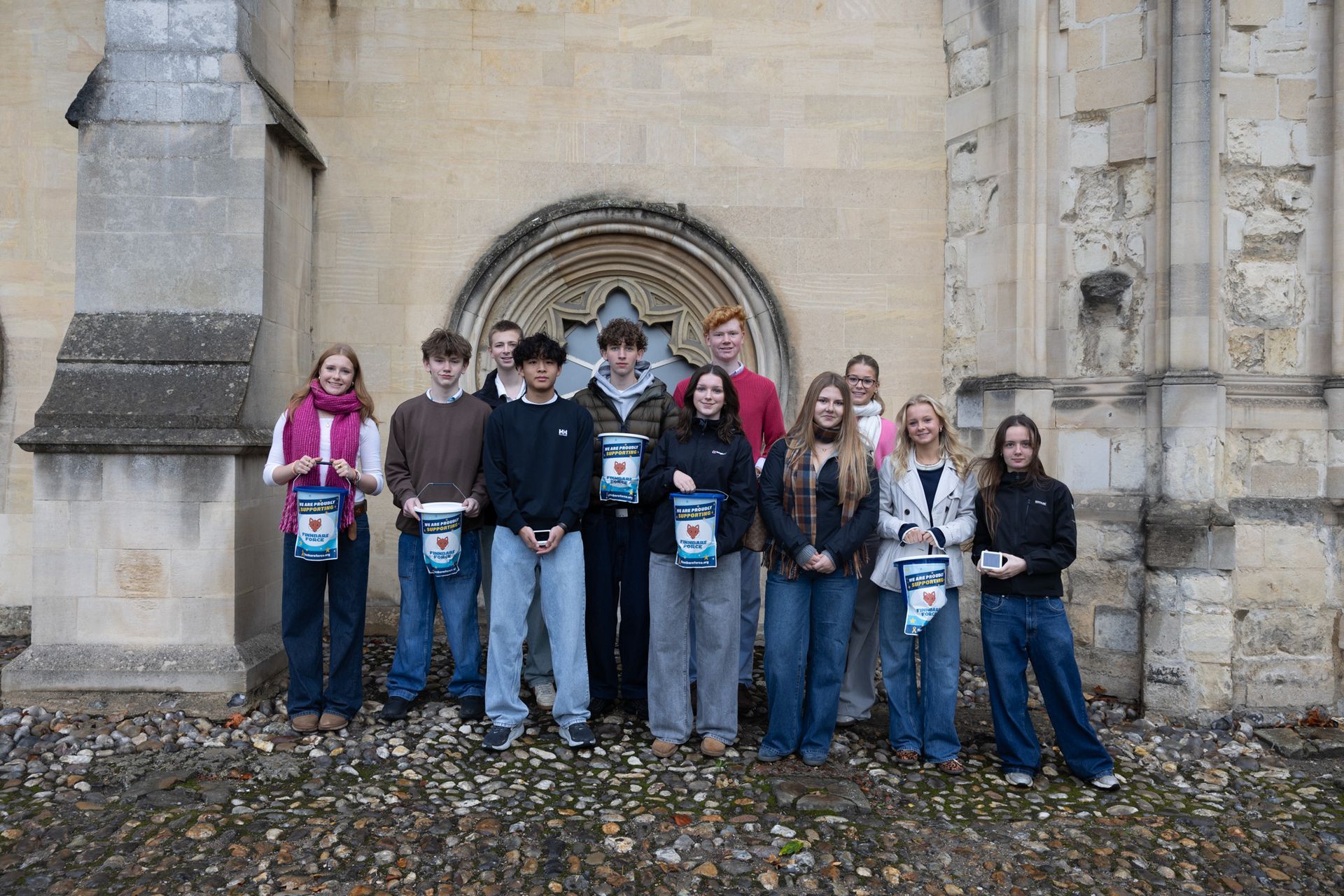


By Eleanor Lewis December 3, 2025
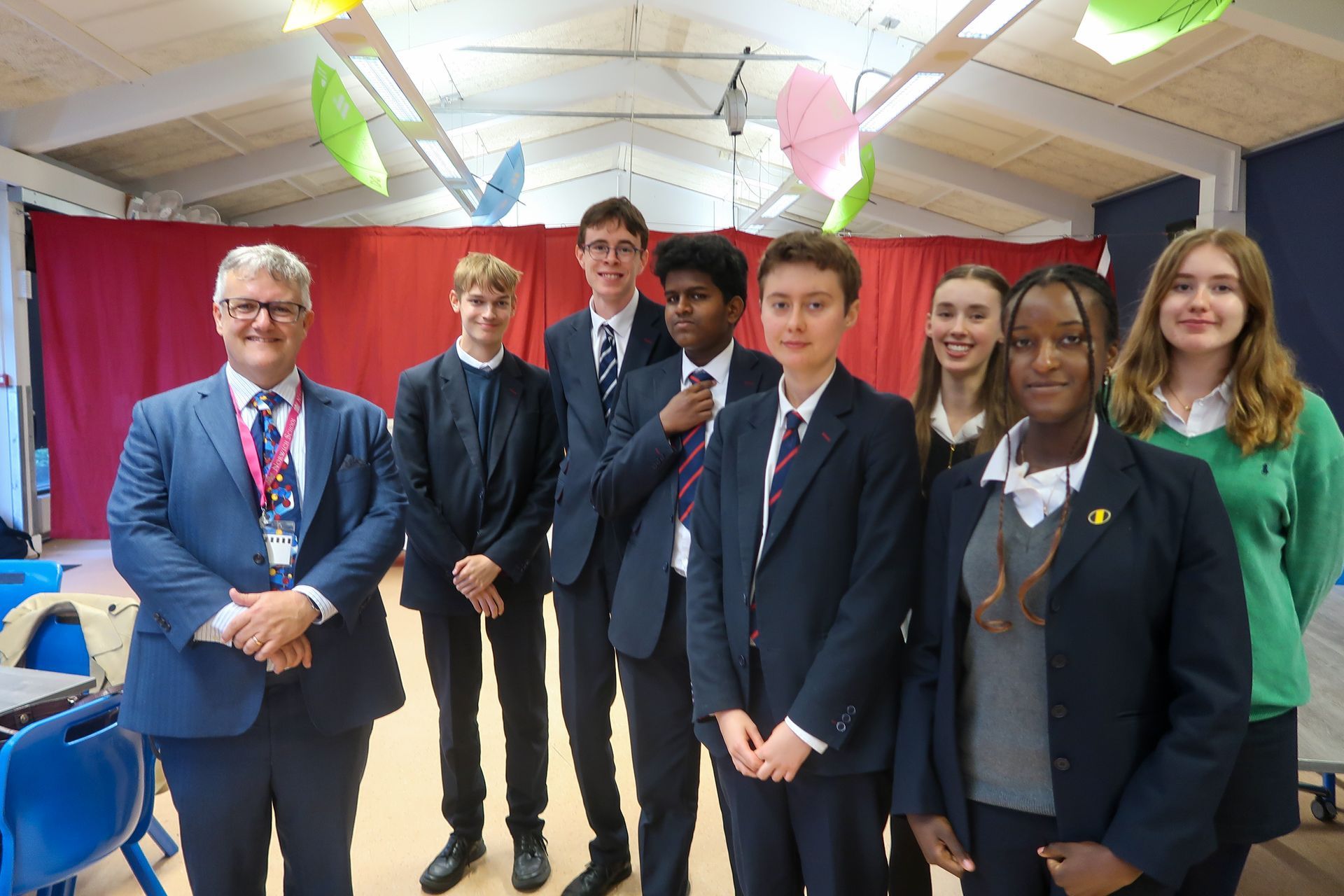
In fine winter sunshine, Norwich School formally opened our new facility, 15 Upper King Street, on 3 December 2025. At around 19,000 ft² and spread over six storeys, this new facility offers a transformational addition to the school estate and has already added meaningful value to the educational experience we offer at Norwich School. It is a facility we can all be proud of. Lessons started taking place in 15 Upper King Street from September 2024, following the challenging conversion of the building from a former accountants’ office to an educational facility during the spring and summer of 2024. From May 2025 the lower ground floor has also been open, offering a hot food service in this secondary refectory to complement the original, helping ease congestion and generating much needed additional capacity. Those eating there are offered the same food options and the air conditioning means it offer a pleasant experience. As recently as September 2025, the Geography Dept in its entirety has relocated there, as the building’s potential is maximised. Joining us for the grand opening was our principal guest Old Norvicensian Roger Robinson (ON 52-61) and his wife Geraldine. Together with his sister Pauline Dallmeyer, Roger had the vision to provide substantial funding to enable this building to be converted so beautifully. He was present to see the large top room dedicated in his family’s honour: The Robinson Suite. He was joined by specially invited guests including the Chair of Governors, the Dean of Norwich and fellow Governors, senior staff, support staff who have been so instrumental in the impressive conversion, members of the Geography Dept, and red gown senior prefects. Mr Griffiths, Head, expressed the school’s gratitude to the Robinson family for their generosity and lifelong support of the school, he articulated his great pride in the building’s progress during the last two years, and thanked all those whose dedication had got us to this point. We hope pupils, staff, alumni, charitable partners and visitors will continue to enjoy this facility for many years to come.
By Eleanor Lewis November 28, 2025
Two weeks. Yes, that’s right. In just two weeks we will be on the cusp of the Christmas holidays. I wonder what you will do in those days, particularly the ones immediately after Christmas. That glorious time when nobody really knows what day of the week it is, whether the shops are open, or if the bins are being collected. If your Christmas holidays are anything like mine, they involve a fair amount of travelling. For some, that travelling begins as soon as term ends, racing out of school to disappear somewhere exciting. For others – like me – the travelling happens after Christmas, a yearly road trip, to grandparents, to greatgrandparents, to aunts, uncles, in laws: a type of Christmas pilgrimage. Christmas is full of travelling. Today’s reading sees Mary and Joseph make their journey to Bethlehem; soon after, the shepherds hurry to see the good news, the magi follow a star to distant lands, and then Mary and Joseph flee to Egypt in a far more anxious journey. Even our hymn today concerns people travelling. “Lo from the North they come; from east and west and south.” All this talk of journeys has made me think about travelling and its place in our lives and our faith. This week I have watched Strictly Come Dancing and Race Across the World. One has no phones, no flights, and a temporary pause to the race because of civil unrest in Guatemala; the other is full of glitter and spray tan and a weekend in Blackpool; both programmes explore how their contestants are “on a journey”. And this is nothing new. From the Wizard of Oz, to Forest Gump, from Moana to the Mandalorian, our culture is full of quests and pilgrimages. Some claim the greatest of these is the hobbits’ trek from the safety of the Shire, across Middle Earth towards the dangers of Mordor. However, over 1,000 pages of reading, or more than 10 hours of film isn’t for everyone: Lord of the Rings? More like Bored of the Rings? These films drag on and on – why can’t those hobbits just get where they’re going? That review says something true about many of us: we are impatient travellers. We want to arrive. We want to get there. Parents of young children know this well: five minutes into any car journey will come the inevitable: “How much longer?” “Are we nearly there yet?” As parents of such children, and with them in the car with us, it is likely that we will have exactly the same attitude: let’s get this over with as soon as possible. Cancelled flights, lost luggage, or overcrowded trains: most journeys and forms of transport involve frustration, impatience, discomfort and maybe even a little bit of rage. I like travel to be planned and predictable. I never did the student inter railing thing yet I do appreciate the freedom of unhurried journeys. When you are not rushing to arrive, or feeling cross about your arrangements, you can notice the scenery, enjoy the journey, even think. My favourite journeys are long car journeys, but with my husband, and without the small children. On such journeys, we talk, we reflect, we plan. On those occasions, I really don’t mind the traffic. Not all journeys involve transport. At this point of the year, as we cling on until the next end of term, we are on our slow, yearly trek through the academic calendar. We live by assignments, deadlines, submission dates, exams. But when people leave school, they often say the same thing — “It went so fast. I wish I’d appreciated it more at the time. ” Yes, being so destination-focused can mean missing what’s happening on the road itself. Yet there is a far greater risk: that the hassles and stresses of travel make us avoid journeys altogether. Why bother when it’s so hard? However, the world is a book and those who do not travel read only one page. These words, attributed to St Augustine, have been borrowed by travel companies to sell holidays: to encourage people to visit unknown places and embrace the world beyond their doorstep. Yet I cannot believe that Augustine is really talking about all-inclusive package holidays or gap years. This great thinker and church Father is encouraging intellectual and spiritual exploration, rather than inter-railing and back-packing. Perhaps, in line with Augustine’s encouragement, we should be delighting in all travel and exploration, especially in our thinking, and never seek instant, quick, or easy answers. We don’t have to and we certainly shouldn’t stay fixed in one place or perspective. After all, that is what Advent, beginning this weekend, invites us to do: it is not simply about counting down the days until Christmas, but about taking the journey slowly, learning to wait, to notice and to prepare for what lies ahead. Wherever you are going in the next few weeks, godspeed to you and please do travel safely. When you’re sat in a departure lounge and the flight is delayed, or you’re on your way to Granny’s house and the traffic is bad, or, because it’s one of those days after Christmas and nothing works properly, you find that you are on some god-forsaken rail replacement bus, by all means look forward to arriving at your destination but have it mind to enjoy the journey time and the travelling as much as the arrival. Journeys have to be taken, and should be taken, but they should be enjoyed, not just endured. The Christian story, especially at Advent and Christmas, reminds us that all journeys, including and especially the unexpected and the transformational, should be celebrated. In the words of today’s hymn: Shout as you journey home; Songs be in every mouth.  You don’t always need to know where you’re going, or indeed how you are going to get there. Treating all journeys, the actual, the intellectual and the spiritual, with this mindset, might leave us less frustrated by delays, changes, or bumps in the road and more open simply to seeing where the road takes us. Like Mary and Joseph, we might travel with uncertainty, and face difficulties, but we should travel with faith. Mary and Joseph survived without googlemaps: their journey certainly didn’t turn out as anticipated. In fact, their arrival in Bethlehem was only the start of a much greater journey, for them and for us.
By Eleanor Lewis November 27, 2025
Following on from enrichment sessions in the Michaelmas Term all about libraries, Fourth Form scholars visited the Norfolk and Norwich Millennium Library for a lunchtime session. We admired a wide range of items from the library’s heritage archive collection before a discussion focussing on the Kelmscott Press and William Morris’s rejection of the mechanisation of the industrial revolution towards the Arts and Crafts movement and then compared this in particular to another book from the 1400s. It was fascinating to discuss the role of physical media and how creators are pushing back today in an increasingly digital environment. We went on to discuss pupils’ impressions of what role libraries play in today’s society and the experts at the Millennium Library added their own thoughts. Pupils were keen to explore the shelves and the digital archive but lo, it was time to return to school for our afternoon lessons. We all left feeling full of anticipation to visit the Millennium Library again as soon as possible to explore everything it has to offer with a newfound understanding of its heritage and value in today’s world.
By Eleanor Lewis November 25, 2025
Lower School pupils enjoyed an inspiring visit from local author and award-winning illustrator Ben Rothery ON, who spent the day helping children bring the Little Roots allotment area to life with colourful minibeast artwork. Ben began by sharing a fascinating range of minibeasts with the pupils, demonstrating how to observe details closely and shade them accurately. Using his expertly drawn outlines and acrylic pens, pupils then set to work decorating the raised beds and garden shed with vibrant insect illustrations.  Elephant hawk moths, dragonflies, rose chafer beetles, seven-spot ladybirds, and orange-tip butterflies are among the beautifully coloured creatures now adorning the allotment area. The finished artwork not only provides some pops of colour in the area but also gives pupils a glimpse of the minibeasts they might spot in our school garden next summer. Ben gave pupils a wonderful hands-on experience that combined art, nature, and creativity and the project has left the allotment buzzing with colour and excitement for the seasons ahead.
By Eleanor Lewis November 21, 2025
This morning, I’d like to tell you about six words that changed my life. Before I start, I realized after I’d written this, that it’s a moment that’s lived in my head, for 20 years, which I’ve never shared with anyone – but I share it with you, now. Once upon a time, I lived and worked in London. I commuted each day on the Central Line: that flat-lining red on the underground map that pierces the city’s smokey heart before bouncing a guilty getaway towards Essex. I’d survive my cramped and sweaty tube journeys with all the usual tricks: reading a book with my face in someone’s armpit; guessing what kind of a day the person next to me had, based on the state of their work clothes; and challenging myself, on the way home, to a game of nap-gamble: could I sleep for exactly long enough that I’d wake up in time not to miss my stop? It was high-stakes: my stop, Ealing Broadway, was the end of the line: missing it meant waking in a cold sweat to find that the train was already taking me back to work. One such ordinary journey home took place in the hot heights of Summer. I’d spent a very sweaty 45 minutes trying to read my book whilst squished unthinkably close to a man whose shirt – creased, untucked, and flecked with specks of broccoli and chocolate pot pudding – told of a particularly unfortunate day at the office canteen. At Ealing Broadway, the train expunged us all – apart from that day’s nap-gamble losers – and I emerged into the night with hundreds of others. Then my day changed. Flooding through the ticket barriers, I saw a man at the entrance to the station. He stood out immediately because he was boldly facing commuter deluge head on, like a fish swimming up-river. He was evidently hungry, homeless and begging for small change. I’d always been taught that the best way to help the homeless was not to give money directly, but to give to relevant charities – so I just looked at the man, slightly sheepishly, and said “sorry mate”. In a sudden, quiet, gently smiling blaze, his eyes fixed on mine as he said those six words : “At least you spoke to me.” At those words, something shifted in my head; I glimpsed in a flash how it might feel to be rejected by society; to be in the country’s busiest, most iconic city, yet washed over by a wave of a thousand commuters who look right past you. “At least you spoke to me”. Now I need to be clear here: I was a young adult, in my twenties, and I’m not suggesting you start speaking to strangers on the street: as young people, you should actively avoid doing this. But there’s a powerful principle here: to reach out to the vulnerable; to validate those on the edge; to show compassion to those others overlook – this you can do in all sorts of ways. Jesus was the master of it. Did you spot the odd details in our reading, as he meets the woman at the well? Collecting water in the Middle East 2000 years ago was done by women – but usually early in the morning (before it got too hot) and usually in groups, because it was a social high point of the day. But this woman is there at noon – blazing heat o’clock – and she’s alone. Why? If we read on, we’d find out: she’s an outcast, shunned by her community: “cancelled”, we might say today. Worse, she’s from a community that itself was excluded: Jesus’ community and this woman’s community were arch enemies. This conversation should never have happened. And yet here’s Jesus, reaching out to this outcast woman with six words of his own – “ Will you give me a drink?” The conversation changed her life. It’s not a one-off. We don’t have time for the full stories of Jesus reaching out to Zaccheus – the hated tax collector who Jesus went to tea with; or the countless times Jesus healed those whose medical conditions tragically made them outcasts; or the time a shunned woman crashed a party to pour perfume on Jesus’ feet, to be rebuked by the hosts, but welcomed by Jesus. Jesus never waited for any of them to be socially acceptable enough, or cool enough, or clever enough, or talented enough... Reaching out to the lost, the unseen, the excluded, exactly as they were, was Jesus’ whole mission, right up to what happened on the Cross. Romans 6:8: “For God showed his love for us in this: whilst we were still sinners, Christ died for us”; or 1 John 4:10: “This is love: not that we loved God, but that he loved us.” Jesus’ loving kindness is grace : not kindness that needs to be earned or qualified for; not “kindness because” – but “kindness anyway”. So what about you, today? You can choose your point of reflection – from Jesus’ loving grace in this Bible reading, to the moments in our friendship groups where we really annoy each other and it might be time for a bit of “kindness anyway”. Some of you might head for a lifetime of leadership and service where your career sees you reach across boundaries to care for the excluded who society chooses not to see and finds it hard to love. I hope so. But there’s something you can do today , too; and at the very least it will show you that I’ve been listening in recent assemblies. What would happen to our school if we took the “quiet leadership” that Rosie spoke of on Trafalgar Day, or the “bold compassion” that Ben spoke to us of on Wednesday, and multiplied them by the accumulation of marginal gains that Dr Clark endorsed week before? What would our doorways and corridors, our classrooms and study spaces, our changing rooms and practice rooms and our pitches and our palace, be like, if adorned with a thousand tiny daily expressions of “kindness anyway”? A thousand “at least you spoke to me” moments? That’s just one or two each, by the way. I see so much of this here already – but what if we all did it? What would happen then?  Well: let’s see, shall we? Because let me remind you where I started: I didn’t tell you, grandly and nobly, as I emerged from that stuffy train dabbing the sweat from my forehead, that I changed a man’s life at Ealing Broadway that day. No: I told you that he changed mine.
By Eleanor Lewis November 20, 2025
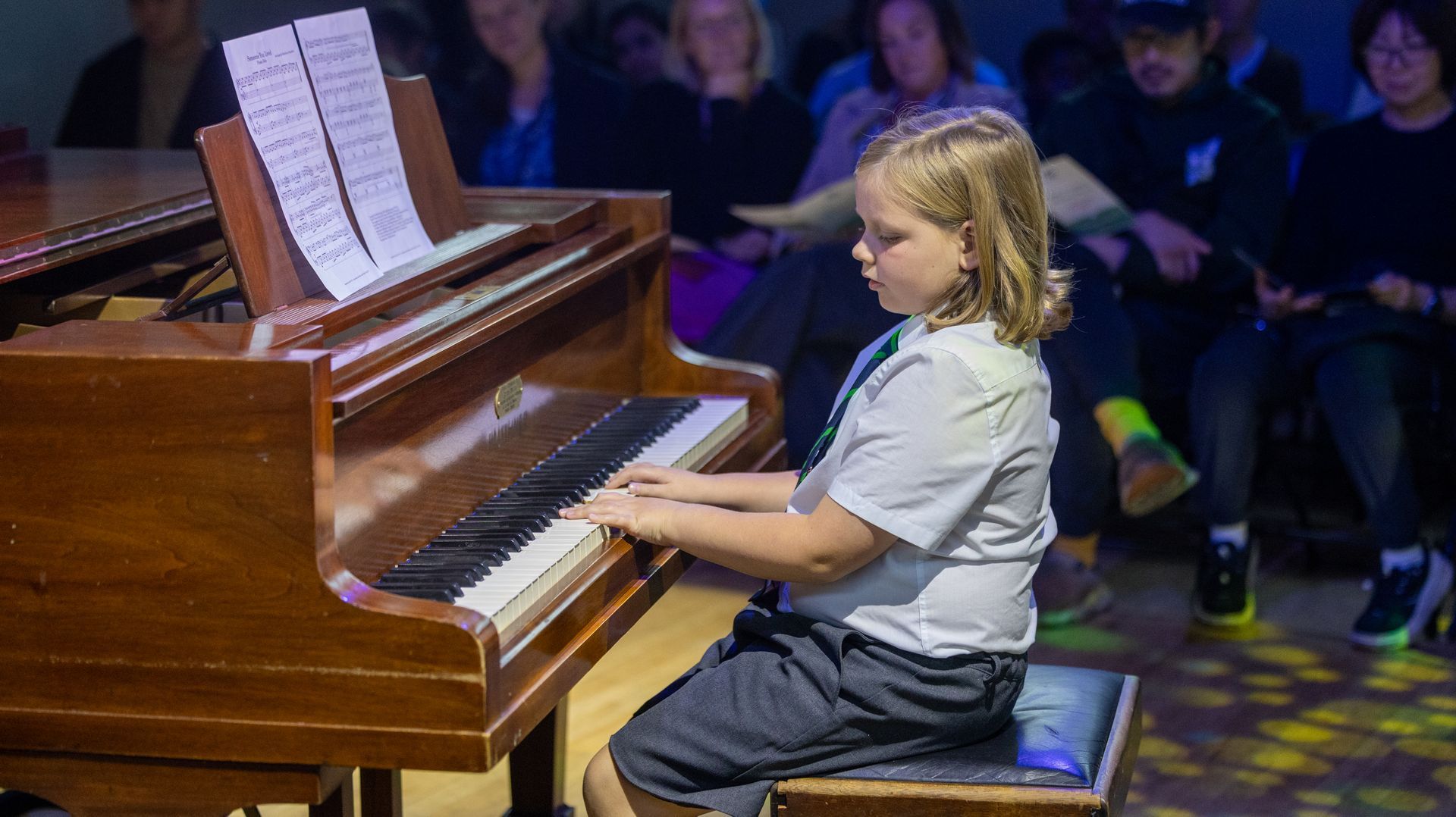
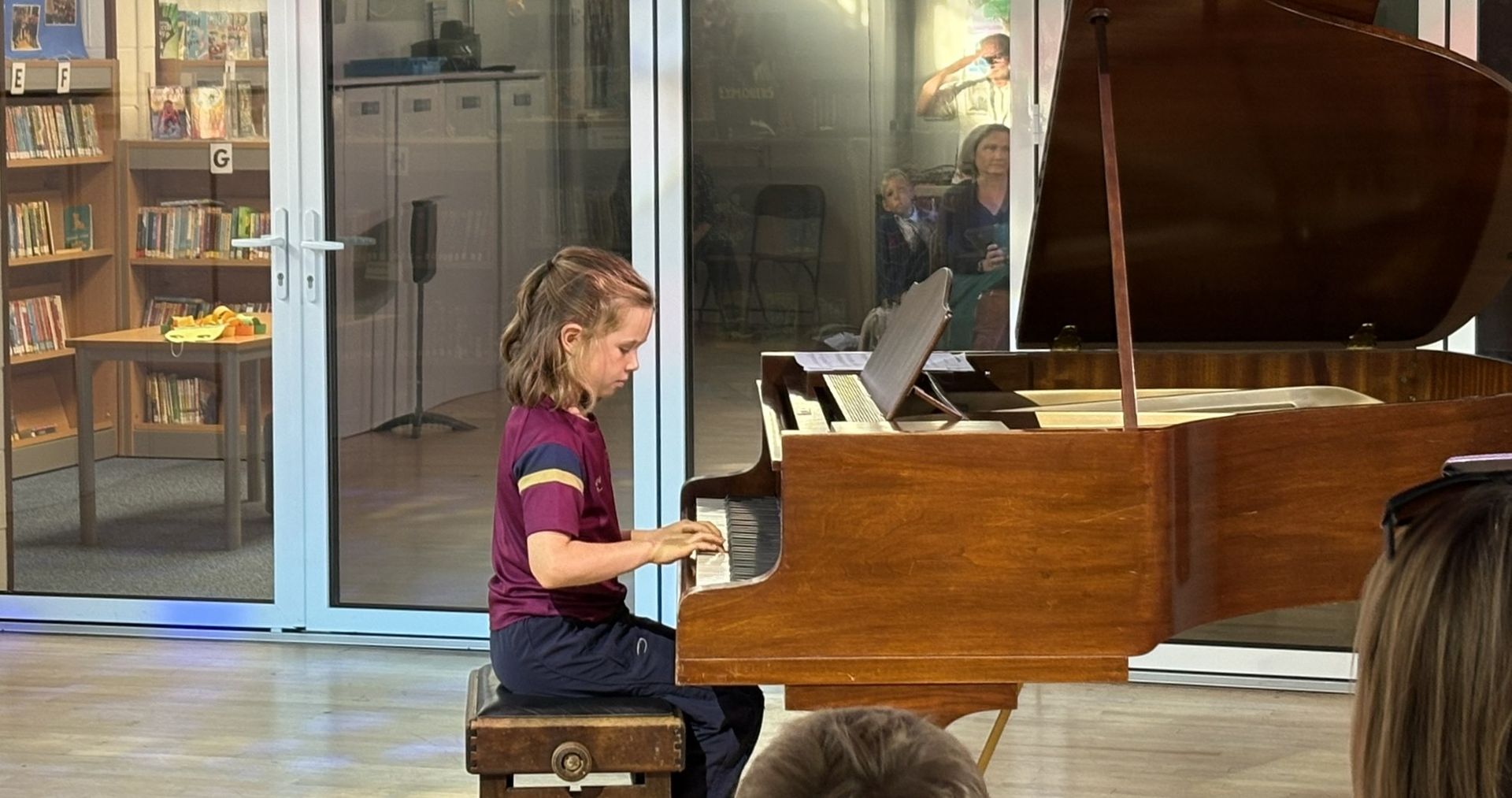
The Lower School’s Michaelmas Concert at the King’s Centre was a whirlwind of colour, confidence, and heart-melting musical performances. From plucky guitars to dreamy harp tones, the night showcased our wonderful young performers. The Guitar Ensemble set the tone with Corena Cracknell’s Bajito Samba, plucking their way through Latin rhythms with impressive focus. The toe-taps in the audience spread like a ripple—always a good sign—and the students handled the syncopations with style. Then the Infant Choir delivered a double bill full of charm - Orange and Yellow and Brown painted the autumn season with warm singing, followed by a wonderfully spirited Monster Stomp—suitably growly, adorably fierce, and 100% crowd-pleasing. Celebrating recent successes in the Concordia Recitals, 3 pupils were chosen to showcase their solo instruments starting with Moli Li on the keyboard, who dazzled with two Classical gems: Spiritoso by Clementi and Sonata in C Major by Kuhlau. Crisp phrasing, calm poise, and beautiful musicality. Next was the Reception Choir who took us to France with some traditional tunes: Un, Deux, Trois, Sur le pont d’Avignon and Frère Jacques. Delivered with bright eyes and sung entirely in French, each piece was sweeter than the last. The String Ensemble then took to the stage and brought a wider emotional palette, with Golden from K-Pop Demon Hunters—a sleek, modern contrast to the rest of the programme. Their expressive playing continued through every bar, showcasing impressive maturity for such young string players and also highlighting some impressive solo playing from Phoenix on the Violin and Max on the Cello. Another of our Concordia recitalists, Harpist Georgia Cornell Du Houx offered a serene contrast with Jeremiah Clarke’s Chaconne before filling the hall with glistening textures in The Flower Duet by Delibes. A truly magical moment—audiences leaned in as if the Harp itself was casting a spell. The Lower 2 Little Voices group lived up to their name and lit up the stage with Happy Song —a bright, bouncy number complete with air guitars! A real crowd pleaser! Our final Concordia pupil Betsy, played with crisp articulation and elegant control on the keyboard, bringing Germaine Tailleferre’s Sonata “All Scarlatti” to life with stylish flair, followed by a tender and lyrical rendition of Alexis Ffrench’s Last Song. A beautifully balanced pairing. Moving into pop territory, the School Choir delivered a heartfelt version of the classic Time After Time with some beautifully blended harmonies and a spirited version of the Foo Fighters’ Learn to Fly. Voices were warm and full, and their enthusiasm was nothing short of infectious. Closing the evening with poise, the Chamber Choir offered a beautifully controlled performance of The Water is Wide, followed by the up-tempo Scottish Riddle - full of tongue twisting brilliance! A perfect finale to a wonderful evening of music making. From thundering tiny monsters to shimmering harp lines, the Lower School Michaelmas Concert was a glorious showcase of talent and pure joy. Whether it was a first stage appearance or a seasoned young musician polishing their craft, every performer contributed to a heart-warming evening that left families beaming and teachers glowing with pride.
By Eleanor Lewis November 19, 2025
On Tuesday 19 November, an author called Dave Rudden came to the Blake Studio to tell us about being an author and how we could become one too! He talked about his latest book called ‘Conn of the Dead’ as well as well his trilogy of books called ‘Knights of the Borrowed Dark’. The trilogy is about a 13-year-old boy who is slowly turning into iron and ends up saving the world. He also talked about his family and friends. He told us one of his friends head-butted a Darth Vader actor, saying to his parents “run, save yourselves!” It was really funny! After lunch, I learned some pointers about how to write a story. Dave taught us about ‘person, place, problem’. This means first deciding on your character and their features. After that, decide on the setting or place, where and what it looks like. Finally, you should decide on a problem for the characters to face, for example, defeating some monsters. He said to add in the others details slowly as you go. We practiced writing a story using this method. I most enjoyed the afternoon when Dave was teaching us about being an author and when he gave us a copy of his most recent book! I hadn’t considered being an author, but Dave has inspired me to try! By Henry Bulman U3I
November 19, 2025
Under the theme of ‘People, Planet, Partnerships’, we were delighted to welcome back on site on 18 November 2025 the fourth Youth Micro-Lectures event. This prestigious annual event is hosted and organised by Norwich School and put on in the Blake Studio in conjunction with the East of England branch of the Royal Geographical Society (RGS). Pupils in Years 10-13 studying geography from around the country were invited to propose topics for short lectures, and the winning five entries were chosen to present in person on the night. Six pupils – Keegan Ansley-Daniels, Bethany Dampier, Gabie Dementjeva and Farah Alwi from Notre Dame High School, Manhaa Islam from Framlingham Earl High School and Lea Zegan (L6R) from Norwich School gave talks on topics they felt passionately about. In ten-minute lectures followed by five minutes of Q&A, we heard about topics as varied as extremes of European weather, the monarch butterfly migration, thoughts on an Antarctic economy, stories behind the Gaza headlines and the human price of clothes. An audience of their peers, Fellows of the Royal Geographical Society, Old Norvicensians, teachers, parents and friends of Norwich School heard talks of great insight, commitment and hope, and our presenters fielded all questions fired at them with maturity and aplomb. The evening was hosted with characteristic panache by our very own Dr Anthony Speca, himself a Fellow of the RGS. The event’s honorary Chair, back for his fourth successive year, was Professor Tim O’Riordan OBE DL FBA, Emeritus Professor of Environmental Sciences at the UEA. He pulled together all the varied strands with perceptive and generous reflections addressed to our speakers in his closing remarks. Huge thanks to our six intrepid presenters for giving us such a fascinating and enjoyable evening. They can be very proud of their performances on the night, inspiring us all that the planet will be in good hands when this generation becomes environmental leaders. Our next RGS talk on site is taking place on Wednesday 10 December 2025 and comprises a public lecture and social event. The talk is entitled: On thin ice: a life in the Antarctic to be given by Professor Dame Jane Francis. We are indeed fortunate to have a speaker of the highest calibre on site for this talk: Professor Dame Jane Francis, Director of British Antarctic Survey. In 2017 Prof Francis was appointed a Dame in recognition of services to UK polar science and diplomacy. She became Chancellor of the University of Leeds in 2018, and was elected national President of the Royal Geographical Society in 2024. This event will comprise the talk itself from Jane Francis who will reflect on about her own life in polar research and provide valuable insights into cutting edge research underway in the Antarctic, as well as discussing the region’s many and varied threats. After Q&A, the event becomes more social, with festive with drinks and canapés, offering the chance to meet our speaker and audience members with a shared interest in our planet and its peoples. Doors open 7pm and the lecture will start at 7.30pm and is held in the school refectory at Norwich School. Booking link: On thin ice: a life in the Antarctic . This will be a popular event, so please book ahead. All are welcome.
By Eleanor Lewis November 19, 2025
On Wednesday 19 November, Ben Griffiths gives an assembly on what International Men's Day means and why it is important. International Men’s day celebrates the positive value men bring to the world, to their families, their friendships, and their communities. Its goal is to highlight positive male role models and to raise awareness of men’s wellbeing. In today’s society, you don’t have to look far to find someone somewhere speaking about men and masculinity. Countless articles tv shows and films speak of toxic masculinity, the so-called “war on men”, the manosphere, and problematic influencers. Amid all these loud debates, it’s easy to forget that those struggling are real people, real boys and men, trying to make sense of who they’re supposed to be. It’s hardly surprising that so many boys and young men feel disillusioned, disempowered, and disconnected from society. Many boys and men find it difficult to seek help for mental health concerns, and much of this comes from the pressure within society on men to bottle things up, and deal with hardship with a stiff upper lip. There’s so much pressure on what it means to ‘be a man,’ and vulnerability rarely fits that mould. International Men’s Day hopes to break this cycle by championing positive male role models. But where do we look for these? On social media we can find numerous examples of healthy masculinity — from musician Harry Styles, who speaks openly about the pressures men face and challenges gender stereotypes, to South African Rugby-Player Siya Kolisi, who, as well as being a monstrous flanker, campaigns against gender-based violence. It is heartening to see that there are increasing amounts of men who are willing to honestly share their struggles with what it means to be a man. But ultimately, I think we can look much closer to home. Male role models are all around us — teachers, fathers, brothers, uncles, friends. People who show up, listen and take responsibility. The men who make a difference through their kindness, their patience, and their integrity. For me, a positive role model does not half to be a leader, but simply a person who can admit when they’re wrong, treat others with respect, and who lifts people up, not put them down. These are the kinds of men we need more of, not superheroes, but guys who make the world around them a little better. And I think that’s what International Men’s Day should remind us, that masculinity isn’t one thing. There isn’t a single “right” way to be a man. A man who is strong and quiet is no less masculine than one who is caring and confident. Masculinity can mean courage, creativity, empathy, humour, determination, vulnerability and all these traits deserve to be celebrated. But celebrating masculinity in all its forms also means taking responsibility for the kind of world we hope to create. Men have an important role to play in shaping a fairer and safer society for everyone. If we don’t want to be part of the problem, we must be part of the solution. That means standing up against misogyny, violence, and discrimination. It means challenging harmful attitudes, not with anger or aggression, but with compassion and honesty. And it’s worth remembering that a fairer society benefits men too. When we move beyond gender stereotypes and reject harmful expectations, we all gain the freedom to live as our authentic selves. At this point, I’d like to invite Lily Minns to share some details about the upcoming Reclaim the Night Vigil: Lily Minns - "Reclaim the Night is an annual event that raises awareness of gender-based violence and pays tribute to its victims. It also advocates for the safety of women and girls walking at night. The evening begins with a walk from Horsefair House to the main school site — a journey that many girls make in the dark at this time of year. Afterwards, there will be hot chocolate and a sharing of poetry, speeches, and spoken-word performances in the Fourth Form playground. The event is open to everyone and beings at 4:15 on Tuesday the 25 of November. There will also be a sign-making workshop this Thursday at lunchtime in R1 for anyone who’d like to get involved, and if you would like to share any poetry, speeches or spoken word performances, then please get in touch with myself or Ben Griffiths." Thank you, Lily. I really encourage you all to consider attending Reclaim the Night. Particularly as boys and young men, we have a responsibility to help create a more equal society and to be part of a change for good. And this change starts with all of us—at school, at home, and in our everyday lives. By making it normal to call out harmful jokes instead of making them, by encouraging each other to seek support without fear of ridicule, and by standing in solidarity with girls and young women at events like Reclaim the Night and beyond, we can work together to create a safer, fairer, better world for all. Happy International Men’s Day.
By Eleanor Lewis November 19, 2025
We recently spoke with Middle 5 pupil, Oscar Lawrence, about his journey in wildlife journalism and photography and the announcement of his own column in the Norfolk Magazine in 2026! What is the best part about writing for Norfolk Wildlife Trust? Tricky - there's so much to love about it. When I write my introductions, I use a couple of purely descriptive paragraphs designed to whisk the reader away into the midst of nature. When I proofread them, the experiences I've had with that species or place come flooding back, and I can remember every last detail of an encounter. And that's a great feeling. Which is your favourite piece? Why? My first ever commission from the Norfolk Wildlife Trust was fantastic. I was challenged with writing about a visit to Hickling Broad on World Swallowtail Day, and when I arrived I was so worried that I would get good photos, or my writing wouldn't be good enough. And by the end of that 3-hour walk, I felt so many thoughts buzzing round my head from the day that I couldn't wait to note down. I was already gripped, and it proved to me that journalism could be an incredibly rewarding passion as well as work. How do you explore your passions for wildlife photography and journalism at Norwich School? Writers' Bloc! Both a fantastic club and a fantastic play on words, I get the majority of my articles done in this relaxed, go-with-the-flow type space. I feel that in this environment I can switch off from everything else that's going on and invest wholly in my writing. How has Norwich School helped you/Supported you on your journey? I've told a good few teachers about my work as a writer, and their motivational and complimentary feedback has driven me to keep going. It has made me feel like what I'm doing can change people's attitudes, and help them see nature in a new and beautiful light. How has your journalism and photography progressed over the years? My writing has changed a whole lot! When I started this as a columnist, I felt I could just go with the flow and however much waffle is left in, it doesn't really matter as people will just skim through it. These days, I try to make every sentence, indeed every word, an immersive experience for my audience to keep them hooked the whole way through. When you write for more prominent news outlets, there's far more to consider about how you pitch your writing: do you go analytical and scientific, or creative and awe-inspiring? It's a difficult balance to strike. There is only so much you can read up about photography. My philosophy with that art has always been "learn by doing", and it seems to have worked alright so far. It was a big leap to switch from Automatic to Manual mode, but I've learnt so much by making the change. From a general skill-building perspective, my reflexes have certainly improved, as I leap for the shutter when a rare bird shoots past. What would you say to any budding journalists? Any tips? There's a lot to be said about this, and everyone will have different views on what the best policy is. But I don't have a set structure and I don't feel the need to bolster every sentence with rhetorical devices. The bottom line is, if you can read a line back to yourself and feel wonder, then it's a line well written. With creative pieces, your prose should motivate an emotive response throughout, leaving the reader flushed with excitement, sympathy and everything in between. You won't get to the level you want to be at without reading the experts' material. If you're lost, just skimming an RSPB article can give you tons of new ideas and vocabulary, even if it isn't about whatever topic you are covering. Finally, be self-conscious. As I write this, I am worried that I'm using "I'm" and "you're" far too many times, and that my answers aren't set out in an engaging way. As you write more and more, you will teach yourself to overanalyse what is on the page, which whilst mentally exhausting at times, means you can self-check without any bias. Essentially, if a sentence gives you (and I hate this phrase) the "ick" even slightly, then don't use it. Because the audience will feel that way too. Tell us about your column in Norfolk Magazine? (Which begins in January 2026) An amazing opportunity to say the least. I honestly couldn't believe I'd been accepted to write for the mag, and I was even more pleased to see the gusto with which they did accept me. I will have a column writing about the best Norfolk days out in nature for the first 6 months of 2026, after which point I will probably still drop in the occasional article. Currently, I have sent off my first article about the stunning Burnham Overy Dunes, and am working on another for the February edition. What's next for you? It would be awesome to lead some more tours, which I will do at Cley Marshes for Norfolk Wildlife Trust. After a successful walk this summer featuring such avian delights as green sandpipers, spoonbills and snipe, I am reassured that any other tours will be just as jam-packed with wildlife. My next will be in February, when I shall probably lead a trek down Cley Bank in search of snow buntings and velvet scoters. In terms of writing, I aspire to work-experience with some of the "big league" newspapers in London, and hopefully work shadowing some tours by e.g. Naturetrek or Oriole Birding to start with. What's the dream? With all these new technologies, surveillance and whatever unemployment problems AI will cause, the future is as worrying a prospect for me as it is for many others. AI can do so much in the way of data organisation, so I sorely hope that 20 years from now, readers will still value the investment and human experiences I convey in my writing. I want to spend as much time in nature as I possibly can throughout my life, and if I can make wildlife into part of my job, my dreams will truly be fulfilled. Let us hope that my heartfelt and awe-inspired stories will still interest the audience of the future.
More Posts