The Head's End of Lent Term Address 2023

March 27, 2023

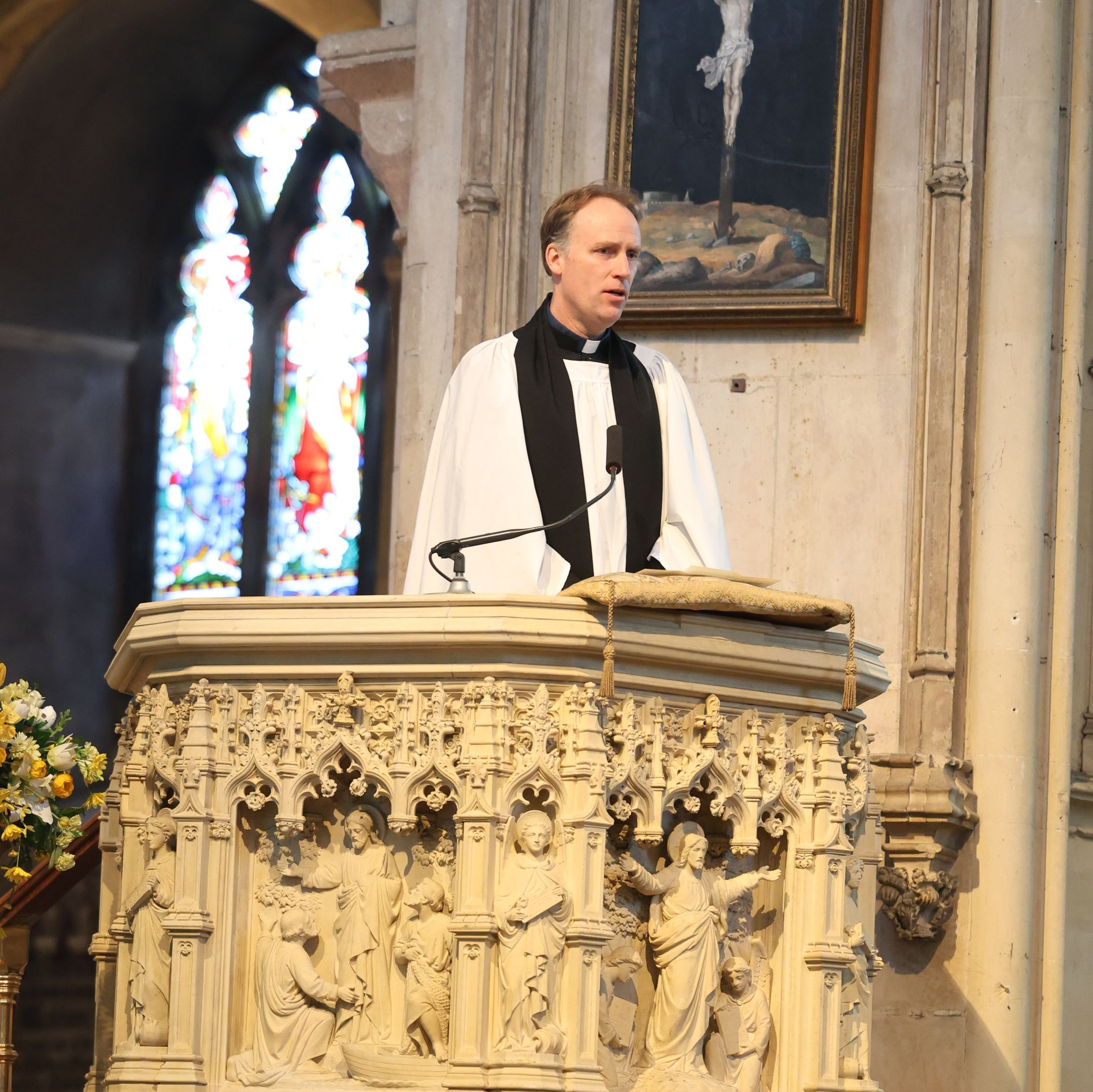
The Head addressed pupils in the Cathedral on the last day of Lent Term. You can read his Address below:

"It is not easy being a young person in the 21st century.

On the one hand, there is the constant and ubiquitous challenge of being available, on-call and on-song. Grown-ups may talk about just putting the phone down, but that is easier said than done when all your social life is there, contacts, platforms, streaming and so on. The pressure seems to have increased to be on one’s game, to be the best version of oneself, with the distinction between being on-show and on one’s own ever harder to make.

On the other hand, there is the sense that we are not good enough, can never be good enough. There is always someone with better results, a better voice, more goals, more followers. Some of this is deeply embedded in society from cultural and religious norms. Indeed, we have had more than one reference to that in our Cathedral addresses this term. The Chaplain in his excellent series talked about 3Ps, prayer, purpose and penitence. The last involves regret for our imperfections. This was picked up by Dr Richardson who talked about his impression as a child that he needed to be good to be loved by God.


In many ways, it is easier to be a young person at Norwich School than in other settings that one could imagine. There are many and obvious benefits in our location, resources and community and we have many reasons to be grateful for our situation. Yet there are also particular challenges of going to school in a setting such as this. I will pick out two:

  • Because there is a good deal of talent here, there can be an element of competition. Where there is competition, there is a tendency to hide weaknesses and/or not treat our competitors as well as we might.
  • Because there is a lot of opportunity here, there is a desire to get stuck in, which might lead to a sense of obligation to be involved in too much, in effect to feel a need to over-achieve.


Separately or in combination, they can lead to a situation I have heard referred to as “swanning”: individuals giving the impression on the surface that everything is going just fine, but paddling frantically under the surface to give that impression of serene elegance and not feeling internally the outer sense of calm being projected. All are aware that there are some harrowing stories of young people getting into difficulty because of such pressures and not feeling able to discuss them. If anything, these challenges have increased for your generation as a result of Covid when many of the most vulnerable were forced to deal with exceptional circumstances without the support networks which had sustained them.

These are undoubtedly challenging ideas, but it is important that we try to articulate things that worry us; a helpful phrase which was given to the staff by Angie Browne earlier in the year is to get used to “sitting with others’ discomfort”.


I wish that I had a simple phrase or piece of advice to solve the conundrum of, on the one hand, always pushing and striving but, on the other hand, never being good enough, never reaching that destination. Unfortunately, I don’t think there is a single, comprehensive solution. This is partly because we are all different, as we heard in today’s Bible reading; we have different priorities, tolerances and capacities. There are obvious things in which we will want to do our best, such as public examinations, and others which are less important: an in-class vocabulary quiz, singing along to music on the way to school, having a tennis ball kick-around in the playground. Yet for some, the dance rehearsal is the highlight of the day, while for others it is the chemistry practical, or the sports practice, or the community service placement. Some are individual activities and others are group sessions which require the collaboration and input of others. And these priorities change as we mature and alter our perspective.


So, the goals we set ourselves and the judgments we make on our performance are particular to each of us. Yet being self-aware and reflecting in a particular situation as to whether you are going to push for that further improvement or be satisfied with what has been achieved will help you to make informed judgments about your overall best interests in the future. It is not realistic to stop and conduct such analysis for every single decision throughout the day; it would just be too slow. However, going through a process of self-regulation from time to time will help you to learn about yourself and to make even better judgments over a period of time.


As you navigate the challenges of being young in the 21st century, one thing I am sure about is the following: it is better to talk and to share, especially when you are uncertain or feeling vulnerable. The problems of “swanning”, whether at Norwich School or elsewhere, start as an issue of communication, of not being able to share discomfort. Please know that you are not alone in making difficult judgments: as you are growing up you can seek advice about what to prioritise from supportive and trusted adults, both at school and at home, as well as valued friends of your own age.


I think there is a balance whereby you can both to aim high and be gentle on yourself, to push and relax. What I mean is to reflect on the times and activities when one of these is the more important priority, to help establish what makes you tick.

I think engaging with this process helps to deconflict the apparent paradox between striving to be the best version of oneself and the imperfection of human beings. Indeed, the latter releases us to enjoy the former. People will always make mistakes and get things wrong; there will always be someone out there better at something you enjoy. You can shape your own journey and be in control of your own responses to the world as you meet it, so concentrate on and enjoy that.

Dr Richardson told us in his address that he learned as he got older that the love of God which he had felt to be conditional on his behavior is actually unconditional and this provided a stable platform for him to aspire to behave well.


There is something in this for all of us, regardless of faith: as human beings we are at the same time both never good enough in that we are flawed and imperfect but always good enough in that we each of us is an individual with a unique offering to make to the world. Reconciling ourselves to this conundrum is something for us all to consider.

I offer all good wishes to you and your family during the upcoming holiday."


By Eleanor Lewis March 25, 2026
The Girls 1st XI have worked hard this term, in both training and matches, and this has shown through the immense improvement from everyone throughout. Targeting the basics in training enabled the girls to play an attractive style of football during fixtures, with some great chances created from the team working well together. The season started with a game away to a physical Gresham's side, that was tightly contested. Unfortunately, with a few key chances missed, the score ended 2-0 to them. Next up was Wymondham at home. A goal from Poppy Francis sent us into the last 10 at 1-1. The girls managed to score a second, but this was ruled offside. With Wymondham somehow sneaking in a winner in the closing minutes, the game concluded at 2-1 to them. On the return leg at their place the following week, the girls fought well on a difficult pitch, but were unlucky and lost 2-0, despite playing the better football. A special mention must go to India Coupland who stepped up as goalkeeper, playing against girls 4 years her senior, and held her own. The final game of the season was played at home against a mixed side from St Felix, with arguably the best performance of the season from the team. It was an exciting game from start to finish, and despite good pressure on the St Felix defence towards the end, the girls were unable to find an equaliser, with the game ending 3-2. Goals from Chloe Holmes and Lizzie Henson. Despite not getting the results the team deserved, they should be very proud of themselves and their performances. Hopefully this season has provided useful foundations for the Lower 6 and Upper 5 to build on for next year. Lizzie Henson (U6V) 1st XI Captain
By Sonja Mitchell March 23, 2026
FONS grant helps The Close Creatives Collective rebrand following huge success.
By Eleanor Lewis March 23, 2026
This year’s netball season has been one of the most successful in recent history, both in terms of participation and performance. It has been a term defined by enthusiasm, commitment and outstanding achievement across all age groups. Over the course of the term, more than 60 fixtures were played, with every girl from U8 to U11 representing the school in at least one match; most in many more. This level of involvement is a testament to the strength and depth of the programme, as well as the pupils’ eagerness to contribute, perform and compete. Our U8 players have demonstrated excellent coachability and a genuine enthusiasm for learning. Their performances in the house netball competition were highly encouraging, and it was particularly rewarding to see them take to the court in their first fixture against NHSFG. They embraced the experience with confidence, successfully applying skills developed in training to a competitive setting. The U9 squad continued to build on the strong foundations laid last year, participating in an increasing number of BEE Netball fixtures and festivals. While the emphasis at this stage remains on participation and enjoyment, the girls have shown clear progress in their teamwork and tactical understanding. They are developing into a very promising group and we look forward to their continued growth next year. At U11 level, our Lower 3 and Upper 3 pupils formed a highly competitive cohort, fielding up to six teams throughout the term. The standard across the group has been exceptionally high, with impressive depth in talent reflected in both performances and results. It has been particularly pleasing to see so many girls regularly involved in weekly fixtures, contributing to a vibrant and competitive environment. However, this term has undoubtedly belonged to the U11A team, who have enjoyed a truly remarkable season. Remaining unbeaten throughout, they achieved an outstanding treble of titles. Their campaign began with a dominant victory at the OBH Festival, competing against strong schools and clubs from across the eastern region. This success was followed by an exceptional performance at the U11 IAPS Netball Tournament, where they once again went unbeaten to be crowned Eastern Region IAPS Champions. They completed their treble in style, securing the U11 County Cup without losing a match. This squad has demonstrated not only exceptional skill, but also outstanding teamwork, resilience, and coachability. At times, their quality of play has been nothing short of superb. The future is incredibly bright for these girls and we look forward to following their progress closely as they move into the Senior School.
By Eleanor Lewis March 20, 2026
With British Science week happening last week, it is a great time to celebrate some of the many STEM (Science, Technology, Engineering and Medicine) offers our Upper 6 pupils have received from the most selective UK universities. STEM is very strong at Norwich School with consistently large numbers of both girls and boys choosing Sciences, Maths and Further Maths for A level: 80 of last year’s Upper 6 cohort took Maths A level (the most popular A level subject) with over 40 taking each of the three Sciences and 17 taking Further Maths. There is so much going on in STEM areas within school; the pupil led Med Soc (Medical Society) have recently enjoyed learning surgical suturing and practising this on pigs’ trotters, Upper 6 pupil Adit Raje has just gained a ‘Top Gold’ in the British Physics Olympiad coming in the top 69 of the 9000 entrants and Upper 6 pupil Emmanuel Milne’s gold in the British Biology Olympiad placed him in the top 5% of the 18,800 pupils who took part nationally. Both of these performances qualified the pupils for Round 2 of these Olympiads whilst the lower 4 and lower 5 VEX Robotics team’s recent regional and then national success qualified them for the international finals that will take place in St. Louis, Missouri, USA in April. The school’s Apply+ Programme is run by Mr Pearce. It supports pupils applying to academic courses that require admissions tests and/or interviews. STEM Oxbridge offers: Of the 10 Norwich School pupils with offers to study at Oxford and Cambridge Universities this cycle, 5 are for STEM subjects: Thomas Irvine – Medicine at the University of Cambridge Georgia Lloyd – Psychological and Behavioural Sciences at the University of Cambridge Adit Raje – Physics at the University of Oxford Freya Simmonds – Veterinary Medicine at the University of Cambridge Emile Verschoor – Natural Sciences at the University of Cambridge Other Apply+ STEM offers received so far this cycle: Thomas Cahir – Physics with Astrophysics at the University of Manchester Isaac Chan – Physics with Theoretical Physics at Imperial Arthur Dannatt – Mathematics at the University of Warwick Katerina Di Maria – Biochemistry at Imperial Thomas Hsia – Computer Science at University of Warwick Leon Liu – Physics at the University of Manchester Maya Peart – Microbiology at Imperial Adit Raje – Physics at Imperial Emile Verschoor – Physics at Imperial Halvard Yip – Data Science at the University of Warwick Medicine and Veterinary medicine: We are delighted that all of our pupils who have applied for medicine and veterinary medicine this cycle have gained offers to study these highly competitive courses: Omar Alfiky Isio Emore India-Rose Fox Lizzie Henson Thomas Irvine Isabelle Last Emmanuel Milne Ana Paduaru Sruthi Santhosh Freya Simmonds Particular congratulations to Isabelle Last, Sruthi Santhosh, Thomas Irvine and Isio Emore who have each already received offers from all four med/vet schools they applied to, something achieved by fewer than 5% of applicants nationally each admissions cycle. The following pupils have successfully navigated interviews for these allied health professions: Ciara Bethapudy – Pharmacy Emilia Meade – Midwifery Krishni Theiventhira - Pharmacy  As is the norm at this point in the year, a significant proportion of the most competitive courses are still making decisions on which applicants to offer places to. We look forward to sharing more successes with the Norwich School community at the start of next term.
By Eleanor Lewis March 17, 2026
Lower Two enjoyed a successful two‑day residential in London.  The trip began with a train journey into the city, followed by an introduction to travelling independently on the Underground. Thirdly, then pupils then visited the London Eye, where many showed great courage in overcoming fears of heights while enjoying panoramic views and identifying key landmarks, including their hostel near St Paul’s Cathedral. Secondly, the children had a wonderful time at the Paddington Experience, where they eagerly joined Paddington in his quest to make the perfect marmalade. Working together, they helped gather ingredients, stirred the mixture with great enthusiasm, and proudly supported Paddington in creating his famous treat. Thirdly, riverboat cruise along the Thames provided further learning, offering insights into London’s architecture and the history of the Great Fire of London. The day concluded with a well‑deserved dinner at Pizza Express. On the second day, the group explored the Tower of London, observing the ravens, viewing the Crown Jewels, and learning about royal life throughout history. A picnic on the grounds offered a relaxed end to the visit. All pupils represented the school admirably and should be proud of their achievements on their first residential.
By Eleanor Lewis March 17, 2026
The Choristers visited London on Wednesday 4 March to sing Evensong with the Temple Church Choir. We left from Norwich train station at 9.30am after a quick rehearsal, and arrived in London in time for lunch at Zizzi. We were then shown around St Paul’s Cathedral and enjoyed testing out the acoustics in the Whispering Gallery. After braving the narrow spiral staircases all the way up to the Golden Gallery, we admired the spectacular views over London. At the end of the tour we had a group photo on an amazing cantilever staircase (used in the Harry Potter films as the way to the Divination classroom), and then walked to the Temple Church. Following a rehearsal with their choir, they all sang Evensong together at 6pm. The standard of singing was breathtaking, a testament to the hard work and dedication these young musicians display on a daily basis. We caught the 8pm train and arrived back in Norwich just before 10pm, tired but happy after a rewarding and fulfilling day. Pupil Highlights: “The whole day was 10/10. I especially enjoyed seeing the spiral staircase in St Paul’s used in the Harry Potter films!” “My favourite part was singing at the Temple Church with the other choir. I also liked the view from the top of St Paul’s Cathedral, even if it was very high up - I’m not great with heights!”
By Sonja Mitchell March 16, 2026
With thanks to an award from the Friends of Norwich School, the Community Knit Club has been busy knitting winter essentials.
By Eleanor Lewis March 16, 2026
Norwich School has had the honour of being the host site for the Royal Geographical Society (RGS) in the East of England since 2019. Ours is an ideal venue for their engaging public talks from renowned experts about the physical, human and environmental world around us. On 16 March 2026 we heard a terrific presentation given by Stephen Akester entitled Rethinking the future of our seas, and what you can do to help. Stephen is a veritable font of all knowledge concerning global fisheries and fish stocks. He is a highly respected expert who advises the World Bank, the UN Food and Agriculture Organisation, and national governments on fisheries policy. Through comprehensible interpretation of data and up-to-the-minute fishing vessel GPS tracking information, he gave us a compelling and intelligent assessment of world fish stocks and practices. Whilst there are clearly some areas of deep concern, unsustainable practices involving indiscriminate bottom trawling and unregulated industries in offending countries, Stephen also gave an upbeat assessment of areas where sustainable fishing has seen some dramatic recoveries in levels of nutritional, tasty fish that we can land on our dinner plates with a clear conscience. A large audience of pupils, staff, alumni, Fellows of RGS, academics and parents left the talk better informed and hugely impressed by our speaker. His professionalism, steely determination to drive best practice and genuine environmental concern was evident to all, especially when fielding a stimulating Q&A afterwards and over refreshments. Attracted by such ‘fishy’ goings-on, even Budge, the Cathedral Cat, put in a guest appearance, and sat salivating over big tuna on the screen! These RGS talks offer intellectual rigour and great entertainment for professionals/academics and the lay person alike, and are always well worth attending, whatever the topic under discussion. The next talk will be given by accomplished and award-winning wildlife cameraman and director Toby Hough, who is also a proud Old Norvicensian. His credits include work seen on Countryfile, The One Show, Springwatch and numerous BBC wildlife documentaries and travel programmes. His talk promises to be a memorable visual feast! Tickets are on sale here: RGS: Toby Hough - Lemurs to leopards: filming adventures from around the world . All are welcome. It takes place on Thursday 7 May 2026 at 19:30 in the Blake Studio.
By Eleanor Lewis March 16, 2026
From March 16 - March 20, Norwich School celebrated Neurodiversity Celebration week through a series of engaging whole School events.  Pupils from across the school worked alongside staff from the SEND department and the School’s EDI officer to learn about and celebrate neurodiversity throughout the week. On Monday pupils got creative creating a piece of community artwork to celebrate Neurodiversity. The artwork included fingerprints from staff and pupils to represent how no two brains are alike, and that we all deserve a place to feel seen and celebrated. On Wednesday over 50 pupils joined in with activities in the Undercroft Library. The activities explored pupil’s knowledge and attitudes towards neurodiversity and promoted discussion surrounding the representation of neurodiversity in the media as well as neurodiverse celebrities. Pupils reflected positively on these topics, sharing thoughts such as; “Representation is important so that people aren’t treated badly in real life” “Writers can interview and get to know neurodivergent people to get an accurate understanding of what is actually like to have that specific condition” “Representation is important because it shows that not all people who are neurodiverse are the same.” “Representation is important to help people feel seen and to educate people.” The event ended with delicious cupcakes and treats for all who took part. Finally, on Friday tutor groups took part in a Neurodiversity Survey, which looked to understand pupil’s perceptions of neurodiversity across the school. This survey will help us understand pupil opinions and experiences, so that we can continue to champion neurodiversity all year round.
By Eleanor Lewis March 16, 2026
On 12 March, Upper 1 embarked on a fascinating journey back in time with a visit to Castle Rising, bringing their learning about medieval castles to life. During the trip, the children discovered that Castle Rising Castle is one of the finest surviving examples of a Norman motte and bailey castle in the UK. They learned about the huge earthwork defences that were carefully constructed around the castle, along with the imposing gatehouse and towering stone walls designed to protect it from attack. The children also discovered how a wide moat once completely surrounded the castle, forming a powerful and intimidating barrier that made it extremely difficult for enemies to approach. The drawbridge and portcullis were also vital features in controlling who could enter! Upper 1 learnt about the Murder Hole, a clever defensive feature used by castle guards to drop boiling water, stones, or other objects onto attackers below. The children also explored the remains of the castle kitchen and stepped into the magnificent Great Hall, imagining the feasts, meetings, and celebrations that would once have filled the room. They listened to stories about a bedchamber believed to be one of the most haunted rooms in the UK, explored the original church built 200 years before the castle, and looked at the ruins of the bailey buildings. The trip was a wonderful opportunity for the children to consolidate their learning of life in a medieval castle.
More Posts