The Head's Address at the Start of the Michaelmas Term 2023

September 6, 2023

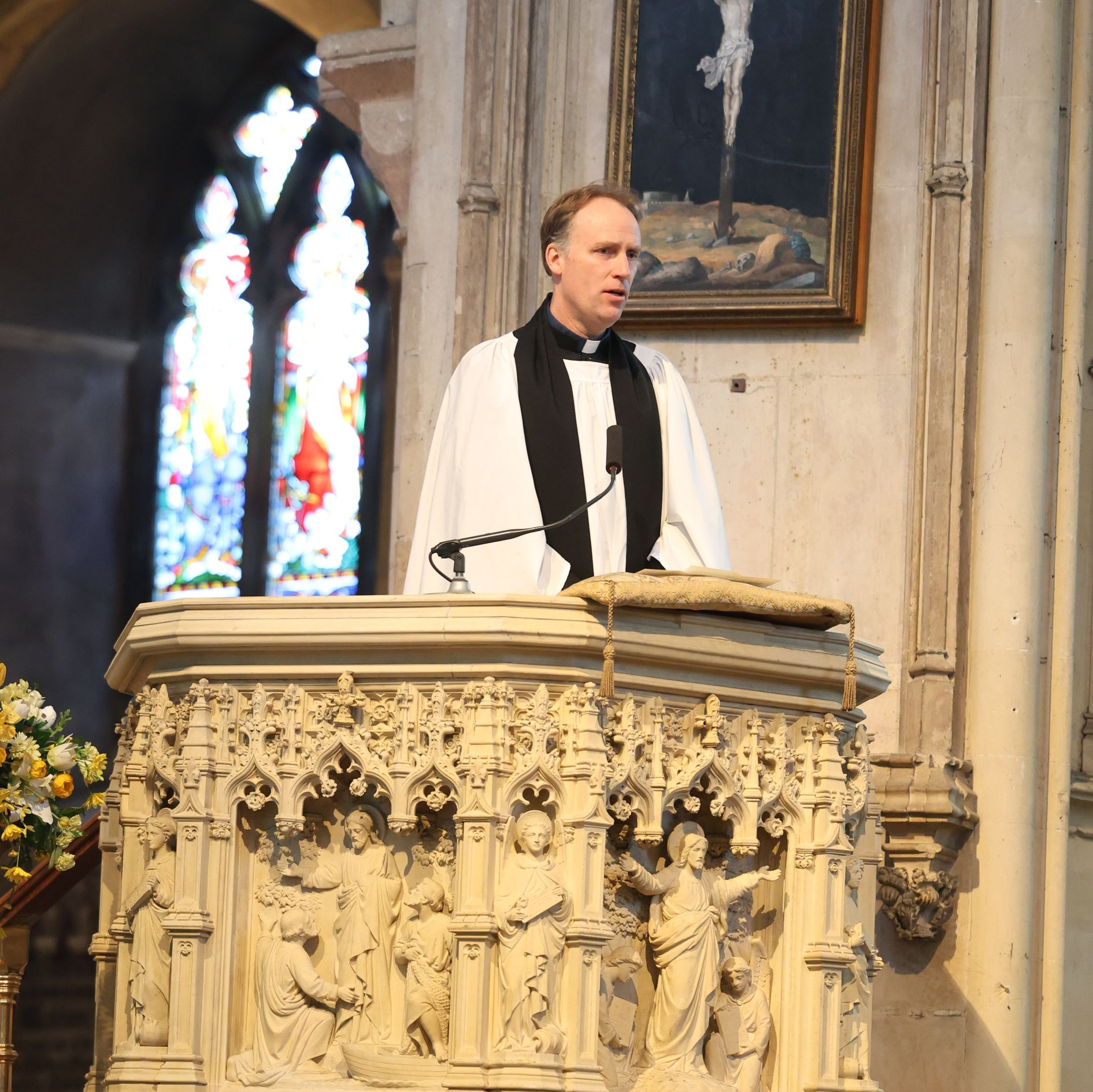
At the start of another academic year, the Head addressed pupils in the Cathedral on the first day of Michaelmas Term. You can read his Address below:

"Welcome or welcome back; it is great to have the 2023/24 Norwich School community together in the Cathedral for the first time. We are so lucky to be able to gather in this space.


Now, how are you feeling? I am assuming that the answer is some combination of “excited but nervous”, even you world weary M5. If you were to say to others and to yourself that you are calm or not really bothered, it is unlikely to be the case entirely; I suspect there are some physical giveaway signs. Part of this is internal and part is external.

First, the internal: whether you are new to L4, returning for U6 or anything between, you will be excited about your plans for the year but nervous because you are not entirely sure about how they will pan out. That is to be expected: one of the joys of this time of the year is that we have another academic year to create the path under our feet; to apply for our preferred university course at the top of the school, to get into a sports team or choir, to join a new club or try a new subject. But you have not done it yet so there is inevitably some uncertainty in the journey. I hope you will be able to harness the nervous energy you are feeling to help you to reach this target in the days and weeks ahead; that is where the excitement comes in.


Second, the external: it is not possible to be entirely in control as an individual; after all, we have nearly 1000 young people in the building now and another 100 or so staff. That must have an effect on every single one of us. It is one of the reasons why being in a crowd for a big show or sports match has such a thrill of excitement. We are a social species and our relational nature is brought to the front of our minds at Norwich School as we meet together for the first time.

To illustrate my point, please take time now to think of an event when you had a strong emotional reaction: you may have been happy, uncomfortable, sad or angry; it may have happened during the last holiday or be something from further back. This will have been a strong reaction because it will have had a physical element to it: for example, increased heart-rate, or a crystal clear memory of the circumstances and the cause. For some of you, the instance may be relatively trivial, while for others it may be a significant moment in your life. If anything recalled is too upsetting, please do be in touch with a member of staff for support.


While you are thinking, I can share a couple with you from my own experience: first, a happy one which those in Lower Sixth Form might recognize: the wave of utter relief and joy when I opened my own GCSE results to find the grades that I had been hoping for all summer. It was a long time ago but I still remember it clearly. More challengingly, I recall the surge of anger I felt as a car passenger during the summer holiday when my daughter, driving for the first time on a motorway, was harassed by another motorist for a perceived breach of driving etiquette.


I don’t propose to attempt a poor science lesson at this point, but it is likely that your amygdala was involved in your reaction; this is a primitive region of the brain which is associated with our fight/flight response, as well as being our connected with emotions and memories. It is also likely that hormones were released in your body’s reaction; depending on the nature of the memory it might have been adrenaline (associated with our fight/flight response), or one of the hormones associated with feelings of happiness: dopamine, serotonin, oxytocin or endorphins.

All such reactions point to our evolutionary journey: our origins as a hunter-gatherer species operating in nomadic groups. When I think about this topic, I always think how disappointing it would be to get homo sapiens in a game of species Top Trumps. In comparison with other animals, our scores for speed, height, weight, fur, length of canine tooth, ferocity, pretty much anything, would inevitably see us losing to most opponents. The one area where we would win is intelligence; and much of this is based on our ability to collaborate. Humans did not hunt, build shelters or defend themselves alone; they did it in groups. There was a strong us/them way of interacting with the world and the physical reactions you have been reflecting on come from mechanisms developed some 300,000 years ago as homo sapiens evolved. When human beings became less nomadic and more sedentary through the advent of agriculture, the ability to make links with other groups for diplomacy or trade became even more important.

We are wired to weigh things up and react fast. Some of our non-verbal reactions to other people are timed at 150 milliseconds. The memories you conjured, whether happy or sad, may have involved what someone said to you, but they may just as well have been non-verbal. Indeed, someone’s reaction to you may have been crystallised long before a word was said.


So, what is the point of bringing all this before you on the first day of term? Well, it is because it is a fresh year for everyone and the inevitable weighing up of those around us has already started and will be taking place constantly from now on; she is a bit taller, he has a new haircut, they are interested in new music, year 12 look good in their different uniforms, and so on. New pupils and returning pupils alike will want to feel settled and comfortable in the environment so that they are ready to learn. Until that happens, there is less chance that you will take in much from your teachers. Some of you will have heard of Maslow’s hierarchy of needs and the following truth is well-acknowledged within it: we cannot access higher order brain functions until our basic needs are met. Put simply, we need to feel safe, to feel that we belong before we can learn.


At the start of this year, we don’t just have the time as individuals to create the path under our feet; we get the chance to do it as a community. With each interaction, we get to affect someone else’s day. We will get hundreds of chances each day to make a positive or negative effect on the wider Norwich School community. Do you keep the door open or let it shut in face of the next person? Smile, scowl or (the worst) ignore someone as you go past? Stop to help a new pupil who is lost or walk on? Nod at someone’s first classroom comment of the year or sneer?


Every one of us can remember a time when someone made us feel special, made us feel valued. I suspect we can also all remember a time of a negative physical reaction because someone was unkind, off-hand, dismissive, rude. 

At the start of this year, please make a conscious effort to co-operate and collaborate with others.

And there is a footnote to this, for which we need to go back to my daughter’s driving incident. The driver who behaved badly did not know that it was my daughter’s first time on the motorway. The dangerous driving and unreasonable gesticulation of the other driver would never have been acceptable, but they were worse because they took no account of my daughter’s relative inexperience and nervousness. For the world weary returning Norwich School pupil, it may just be a door not being opened; for the new or minoritized pupil on the other side, it may feel much more significant.


Trust and happiness are in large part relational because we are a social species. There is a special atmosphere at Norwich School and it is built on such qualities. However, it is only special because we make it so and we all have a responsibility at the start of this year to live out those aspirations through our actions. I want Norwich School to be a place of kindness, joy and optimism; I want every one of you to help me to make this so. The bible reading today is a good practical guide:

“Clothe yourselves with compassion, kindness, humility, gentleness and patience… And over all these virtues put on love, which binds them all together in perfect unity”.

Welcome to 2023/24 and have a great term!"

By Eleanor Lewis February 9, 2026
This half term has seen the Boat Club battling a range of weather- from misty winter mornings to driving rain, wind and snow. With a couple of sessions off the water due to the river freezing, we have been on the water since, covering the miles in both the Senior and Inters Squads, while elsewhere flooded rivers have led to a number of race cancellations for us. We are hopeful that we will be racing over half term, with many of the new J14s and J15s racing in their first event. On the representative level, Ellie Thwaites (L6), James Howard (L6) and Nicholas Conway (U6) have all progressed to the next stage of the GB U19 Rowing Trials. With a training day last week, there has been some time to practice in their Trials pairs ahead of the February Trials this weekend coming. These trials have also been adjusted due to flooding and will be held at the GB Rowing Centre in Caversham. We wish all 3 the best of luck.
By Eleanor Lewis February 6, 2026
My son, do not forget my teaching, but keep my commands in your heart, for they will prolong your life many years and bring you peace and prosperity. Let love and faithfulness never leave you; bind them around your neck, write them on the tablet of your heart. Then you will win favour and a good name in the sight of God and man. Trust in the Lord with all your heart and lean not on your own understanding; in all your ways submit to him, and he will make your paths straight. (Proverbs 3:1-6) Having done some thinking last week about why we sing hymns in assemblies, this week I want to think about why it is we usually have a Bible reading on Fridays. Let’s start with a quick game: I’m going to read out some sentences which may or may not be from the Bible – you have to choose the ones that are. Neither a borrower nor a lender be. (Not from the Bible – it’s from Shakespeare.) Go the extra mile . (Yes – from Jesus’ Sermon on the Mount.) Ashes to ashes, dust to dust. (Yes – from Genesis 3, when Adam and Eve are told they will become mortal.) All will be well, and all will be well, and all manner of things will be well. (Not from the Bible, but a saying of Julian of Norwich, whose statue is at the West Doors.) Let love and faithfulness never leave you; bind them round your neck, write them on the tablet of your heart. (Yes, that was from the reading we had a moment ago. It’s from the book of Proverbs, one of the passage printed in the back of our hymn boo Well done if you managed to guess the sentences that were from the Bible. A few things we can learn from that game: The Bible contains a lot of wisdom that has passed into the English language, though we may not realise it. Turning the other cheek; the writing’s on the wall; the salt of the earth; you reap what you sow; there’s a time and a place for everything. These and many more expressions all started in some thought-provoking part of the Bible. The Bible is not the only place that we can go to get wisdom. Saints, celebrities, Shakespeare and other scriptures have lines for us to ponder too. What the Bible gives us, though – and this is really how we use it in our Friday assemblies – is a regular nudge in the right direction . We live in a world where there are all kinds of things trying to nudge us in all sorts of directions. For instance, “Drink Coca Cola.” “Click on the link to find out more.” “I dare you. Go on, I dare you!” Some of the nudges around you are good and well-intentioned, and hopefully that’s true at school, where you hear from speakers, PPD lessons, and calendar events like LGBTQ+ History Month (which you heard about in here on Wednesday). But I only need to mention a few other things, like hard-sell advertising or unrelenting phone notifications, for you to realise that you need to filter what’s coming at you. We listen to Bible passages week by week because these are nudges in the right direction. “Let love and faithfulness never leave you; bind them round your neck, write them on the tablet of your heart.” That’s decent advice – hear it and go with it. Whatever’s going on for you on this particular Friday, be a loving, caring, faithful person – and you won’t go far wrong. I’ve played a little bit of golf – not much, and I’m not especially good at it. When I have played, it has usually been in a group. I think I’ve played alongside basically two different types of people. One type of person wants to give me a constant stream of advice about how I should be standing differently, what’s wrong with my swing, how I’ve got the wrong sort of clubs, and so on. To be honest, I find it difficult playing with people like that because it’s a bit overwhelming. But there’s another type of fellow golfer who, now and again, will just mention something. I know one person in particular who is like a golf-whisperer . He will stand to one side while I take a practice swing, and then say something like – ‘Just try lifting your chin up a bit’. And I will take his advice, and it works – because he’s a good enough golfer (and a good enough teacher) to see the thing I need to focus on. Listening to regular Bible passages can be like listening to that second type of golfer. Many of the people who read the world’s bestselling book read it in short chunks, but regularly. And they find (as I find) that it can have just the right thing to say. On the occasion when anger or ambition or irritation is getting the better of me, the Bible reminds me to be loving and faithful; and to trust God, even if I can’t quite see where my life is leading. When we’re getting a bit wild or loose, the Bible can help us keep our shape; the Bible is a kind of life-whisperer . Something to keep in mind whenever you hear it read in assembly.
By Eleanor Lewis February 5, 2026
Each year the illustrious Norfolk Cambridge Society (NCS), with whom Norwich School has close and long-standing ties, runs a prestigious essay competition open to any Year 13 pupils across the county considering Cambridge University for their tertiary education. As ever, the entries were of the highest standard and competition was extremely tough. Entrants were short listed and invited to a panel interview. In late 2025, two Norwich School Upper 6 pupils were told that they had performed exceptionally well, to scoop joint 1st prize award. Arthur Dannatt was awarded for an astonishingly complex maths-based essay entitled: What is the Archimedes cattle problem and how can it be solved? and Becky Brown was awarded her exquisite album of nine songs composed and performed by herself – the first time a musical entry has been awarded top prize in the competition’s history. In addition to a generous cash prize, award winners and their families were invited as special guest to the Lent Term NCS public lecture, and this duly took place on 5 February 2026. Following pre-drinks in the school’s refectory, a record audience some 500-strong filled the nave and side aisles of the cathedral to hear a scintillating talk given by Professor Neil Lawrence, DeepMind Professor of Machine Learning at the University of Cambridge, Senior AI Fellow at The Alan Turing Institute and Visiting Professor of Machine Learning at the University of Sheffield. The title of his thought-provoking talk was How AI Works and How it will Transform our Lives. As the event kicked off, President of NCS, Rob Edwards, and the event organiser, Geoffrey Smart, presented both pupils with their awards in front of the substantial Cathedral audience. It was a fitting reward to reflect both pupils’ endeavour and talent, and we commend them on their impressive achievement. The school could not be more proud.
By Eleanor Lewis February 4, 2026
On Wednesday 4 February Lana Kiddell from our school Pride Group and Mrs Scott, EDI Officer, gave an assembly to commemorate LGBTQ+ History Month. A story is a powerful thing. Stories can unite, divide, inspire and soothe us and I truly do not believe that there is a single human alive who has not been moved by a story in some way. Stories, and books in particular, are amazing vehicles for empathy and connection. They allow us to step into someone else’s shoes, to experience a world that is not our own, and to gain insight into what it feels like to be someone else. Through stories, we come to understand people we may never meet, lives we may never live, and perspectives far beyond our own. In many ways, all of human existence is preserved through stories. And because of that, I often find myself wondering whose stories we choose to tell, and whose stories are lost to time because of their identity, their background, or their social standing. February marks LGBTQ+ History Month, and a key part of any history month is storytelling. LGBTQ+ stories have often been marginalised, suppressed, or erased altogether. For much of history, Queer people were forced to hide their identities and communities for fear of persecution, punishment, or exclusion. As a result, many stories were never shared openly, and many were deliberately silenced. Today, we are going to shine a light on just a few LGBTQ+ stories that deserve to be heard, because they help us understand the world, and one another, more fully. One of the most well-known figures in British literary history is Oscar Wilde. Wilde was celebrated in his lifetime for his wit, his intelligence, and his writing. His plays and books were extremely popular and still are today. Despite his fame, Wilde was imprisoned for being gay in 1895. After his conviction, his reputation was destroyed. His work was removed from theatres, his name became a source of shame, and for many years his writing was dismissed or ignored. Wilde’s story reminds us that even the most brilliant voices can be silenced when society decides that someone’s identity makes them unacceptable. Despite this, Oscar Wilde’s work is now widely celebrated and shared along with his LGBTQ+ identity. Where Wilde shows us how stories can be suppressed, Audre Lorde shows us how storytelling can be an act of resistance. Lorde described herself as a Black, lesbian mother, warrior poet. She wrote unapologetically about identity, power, love, and injustice, refusing to separate who she was from what she wrote, contributing a powerful voice to the civil rights movement. One of her famous quotes “Your silence does not protect you” reminds us that speaking up about injustice is powerful and important, and that remaining quiet does nothing to protect ourselves or others. She understood that telling your story, especially when the world would prefer you not to, is an act of courage. Her work challenges readers to listen to voices they may not be used to hearing, and to recognise that our differences are not weaknesses, but sources of strength. More recently, we are seeing LGBTQ+ stories shared more openly, particularly in literature for young people. One example is Alice Oseman, creator of the now iconic Heartstopper series, whose work centres queer characters living ordinary, everyday lives, forming friendships, falling in love, struggling, and growing. These are not stories defined by tragedy or secrecy, but they are universally relatable experiences. For many young people, reading stories like these can be the first time they truly see themselves reflected in a book. And for others, it may be their first opportunity to understand experiences different from their own. That matters. Seeing yourself in a story can be affirming, but learning about someone else through a story is how empathy grows. So LGBTQ+ History Month is not just about looking backwards. It is about asking ourselves what we do with stories now. Whose voices do we listen to, and how can we learn from the past to more positively shape the future. Stories help us understand one another. They remind us that people are complex, layered, and deserving of respect. When we choose to listen to stories that are not about us, we practise empathy. And when we make space for all stories to be told, we create a world where fewer people feel invisible, unheard, or alone. If you would like to get involved in celebrating LGBTQ+ history month please join us this lunchtime in the Undercroft where we will be creating a display for LGBTQ+ history month and making a badges with a visitor from the LGBTQ+ project. Thank you.
By Eleanor Lewis February 4, 2026
What a joyful, toe-tapping concert it was! The hall buzzing with excitement as very young musicians from Lower 1 and Upper 1 (some performing for the very first time) took to the stage, beaming with pride and confidence. From the very first notes, it was clear this was a celebration not just of music, but of courage, enthusiasm, and the sheer fun of performing. Smiling families filled the room, cameras at the ready, soaking up every moment as each of our Lower School pupils shared their hard work and musical imagination. The piano pieces sparkled with variety and character. Familiar melodies like Ode to Joy floated out warmly and confidently, while playful pieces such as Whirleybird , ABC Playtime , and Up and Down Song bounced along with energy and charm. More atmospheric moments appeared too, from the gentle magic of Walking in the Air to the bouncy rhythms of Minnie Mouse Hits The Town! There were also lovely storytelling moments at the piano, with music inspired by wildlife, farmers, and even a cheerful boat ride or two. Every performance, no matter how short was delivered with huge smiles, careful concentration and an infectious sense of joy. Overall, the L1 and U1 Informal Concert was a heart-warming showcase of young talent and growing confidence. The enthusiasm of the performers, the supportive energy of the audience, and the wide range of music made it a truly uplifting event, one that left everyone applauding loudly and walking away with happy hearts.  Head of Music Mr Vine said 'another fantastic concert full of music making at its finest! So proud of our L1 and U1 pupils who worked so hard to get their pieces ready. A big thank you as always, to our fabulous visiting music tutors for all their guidance and preparation! Bravo to all!'
By Eleanor Lewis February 3, 2026
On Tuesday 3 January, Upper 2 visited Norwich Synagogue as part of their learning about the local community. The children were immersed in an enriching experience that helped them develop an understanding of different cultures and traditions. They particularly enjoyed dressing up with a kippah and a tallit, and were fascinated by the opportunity to view the Torah scrolls. The visit provided a valuable and memorable insight into the Jewish faith and community around us.
By Sonja Mitchell February 3, 2026
Juliette Kelly (17-19), lead singer, is back on stage across the country with breakout indie band, Fright Years.
By Eleanor Lewis January 31, 2026
2026 is National Year of Reading and we are going all in here at Norwich School! We know reading expands worlds, sharpens minds, and fuels creativity, so let's get inspired! Every month we are focusing on a different genre and hearing from a member of staff about what they like to read, why, when and where! We are kicking off in January with Historical Fiction and one of the school's biggest fans of this genre has to be Mrs Morgan. Let's find out more about why Mrs Morgan loves historical fiction... Tell us a little bit about the genre; what common themes or elements do you particularly enjoy? I love the characters who reflect the beliefs, limitations and social pressures of their era. Stories that weave real historical events with imaginative elements showing how ordinary people experience extraordinary moments such as in ‘The Help’ by Kathryn Stockett. What was the book that introduced you to historical fiction? Was there a particular book or author that made you fall in love with this genre? I have always loved reading historical fiction even as a child and this is possibly why I went on to study History at university. When I was growing up I loved reading books based on historical events such as Little House on the Prairie , Goodnight Mr Tom , the Hornblower series, classics like The Secret Garden and books by Phillipa Gregory. Has your taste in this genre changed over time? I think in recent years I have focused more on the stories of people who lived through tumultuous times, but who had a story that hasn’t been told like Heather Morris’ The Tattooist of Auschwitz . Would you recommend this genre to someone who doesn’t usually read it? Why? I think historical fiction gives readers something unique: the opportunity to experience the past not as a list of dates but as a living world full of people who feel real. It helps us understand how individuals living at that time navigated the forces that shaped their lives – war, inequality, migration, discovering, and in doing so it deepens our understanding of how those same forces echo today. Do you tend to reread favourites from this genre or always look for something new? I never re-read books as I feel like there are so many books available, I don’t want to waste my time re-reading one, even if I loved it! When was the last time a book from this genre really surprised you? I really enjoyed There are Rivers in the Sky by Elif Shafak, as it follows the life of a drop of water as it travels through different time periods and locations, intertwining the stories of the three main characters across various time periods and countries. Do you prefer classic or modern books within this genre, and why? Both – I’m happy to read anything! Obviously one of the joys of my job is that I get to read many new children’s books so that I can recommend them to Lower School pupils such as Tom Palmer’s ‘Resist’ and ‘After the War’. What do you enjoy most about reading, whether historical fiction or anything else? The spotlight it shines on parts of history or everyday life that might otherwise go unnoticed. I have just finished reading a few books by Francis Quinn which focus on the lives of people who did not become famous, but who had a vital role to play within the societies in which they lived. The Smallest Man , That Bonesetter Woma n and The Lost Passenger all use real historical events as a backdrop for highlighting the ordinary people that have been caught in extraordinary circumstances. I have also recently enjoyed The Eights by Joanna Miller which documents the experience of the first women to study at Oxford University. When and where is your favourite time and place to read?/ Do you have a favourite reading spot or routine for diving into books? I usually only have time to read a few pages a night during term time, but I love to spend more time reading in the school holidays. In winter I love to sit on the sofa, in front of the wood burner with my dog snoring next to me and a cup of tea nearby! In the summer I enjoy reading outdoors, either in the garden or on the beach. Which fictional character would you most like to have a cup of tea with? I think I would like to share a cup of tea with Paddington bear as he would almost certainly bring marmalade sandwiches too! If you could step into the world of any book, which would it be and why? I would love to visit the Faraway Tree in The Enchanted Wood! I would be so excited to explore the magical lands and meet Moonface and Silky, although I would do my best to avoid Dame Wash-a-lot’s water! There is a film coming out later this year and I can’t wait to watch it. Click here to see Mrs Morgan's reading list!
By Eleanor Lewis January 30, 2026
Following Emi's success at the Norfolk Country Cross Country Championships we decided to ask her a few questions about her love of running and her upcoming London Mini Marathon. How long have you been running?/How long have you been running with the school? I have now been running for 3 years, and I have been competing for the school since Upper 3. How often do you run outside of school? I run with a training group 2-3 times a week depending on the dates of various competitions. How do you train?/How do you prepare for a race? I think that mental preparation is the most important; I use visualisation which can help me enter an open mindset. And I think it is mainly accepting that it will have painful aspects, but the aftermath feels phenomenal. And physically preparing, is a matter of being consistent at training in my case. How did you find the Cross Country championships? The Cross Country Championships was certainly nerve-racking beforehand, but I think the race went very smoothly and I left it all out on the course. And attempted to compete to the best of my abilities! Can you tell us a bit about the London Mini Marathon in April? Fortunately because of my performance at the County Championships I have been accepted to run at the London Mini Marathon! How are you feeling about it? As much as I am excited, there is no doubt I will be feeling nervous. But I think that it is a great opportunity, also to be surrounded by excellent runners! Where do you hope your running will take you? As for my running, I would like to compete at a high level but most of all I would love to continue to enjoy it! Because I truly believe if it is bringing you no satisfaction or joy, there is not a point in pursuing it. What piece of advice would you give to aspiring cross country runners? For people who are aspiring to do cross country as a sport, I would advise them to just have a go and give it a chance. Because if you are willing to give it a chance, you might just find that you will like it!
By Eleanor Lewis January 30, 2026
What a joyful and uplifting concert it was, packed with confidence, colour and lots of happy moments! From the very first notes, it was clear how much enthusiasm and hard work had gone into preparing this programme. The concert opened with the warm, rich sound of the cello in The Two Grenadiers by Robert Schumann, setting a confident and expressive tone. Some lively vocals and guitars performed Lush Life by Zara Larsson which was full of energy and great teamwork. The piano brought a touch of movie magic with Let It Go by K. Anderson, before switching gears completely with the dramatic rhythms of War Drums by F. Waterman. A beautifully calm moment came with River Flows in You by Yiruma on the piano, played with lovely control and feeling. The smiles continued with vocals performing 7 Years by Lukas Graham, showing great expression and connection with the audience. The bright sound of the trumpet shone through for Africa followed by a cheerful flute rendition of the traditional Pease Pudding . The piano took us on a fun musical journey with Yankee Doodle , then treated us to a confident and familiar Ode to Joy by Beethoven. Another gentle piano highlight came with Little by Little by F. Davies, played with care and musicality. A lively vocal performance of Golden from K-Pop Demon Hunters brought lots of sparkle and stage presence, while Tomorrow from Annie was delivered with real enthusiasm and a big smile. The pace picked up with an exciting drum performance of Skullcrasher , which certainly lived up to its name! The piano then returned with the flowing melody of Bluebird by P. Waterman, followed by a spirited violin performance of Wild West by D. Blackwell. The concert closed beautifully with The Singing Swan by P. Waterman on the piano, a lovely and confident finish to a fantastic event. Overall, this was a wonderful concert full of bravery, enjoyment and musical growth. Every performer should be incredibly proud—there were lots of smiles in the Lower School Hall and plenty to celebrate. Well done to everyone involved!
More Posts