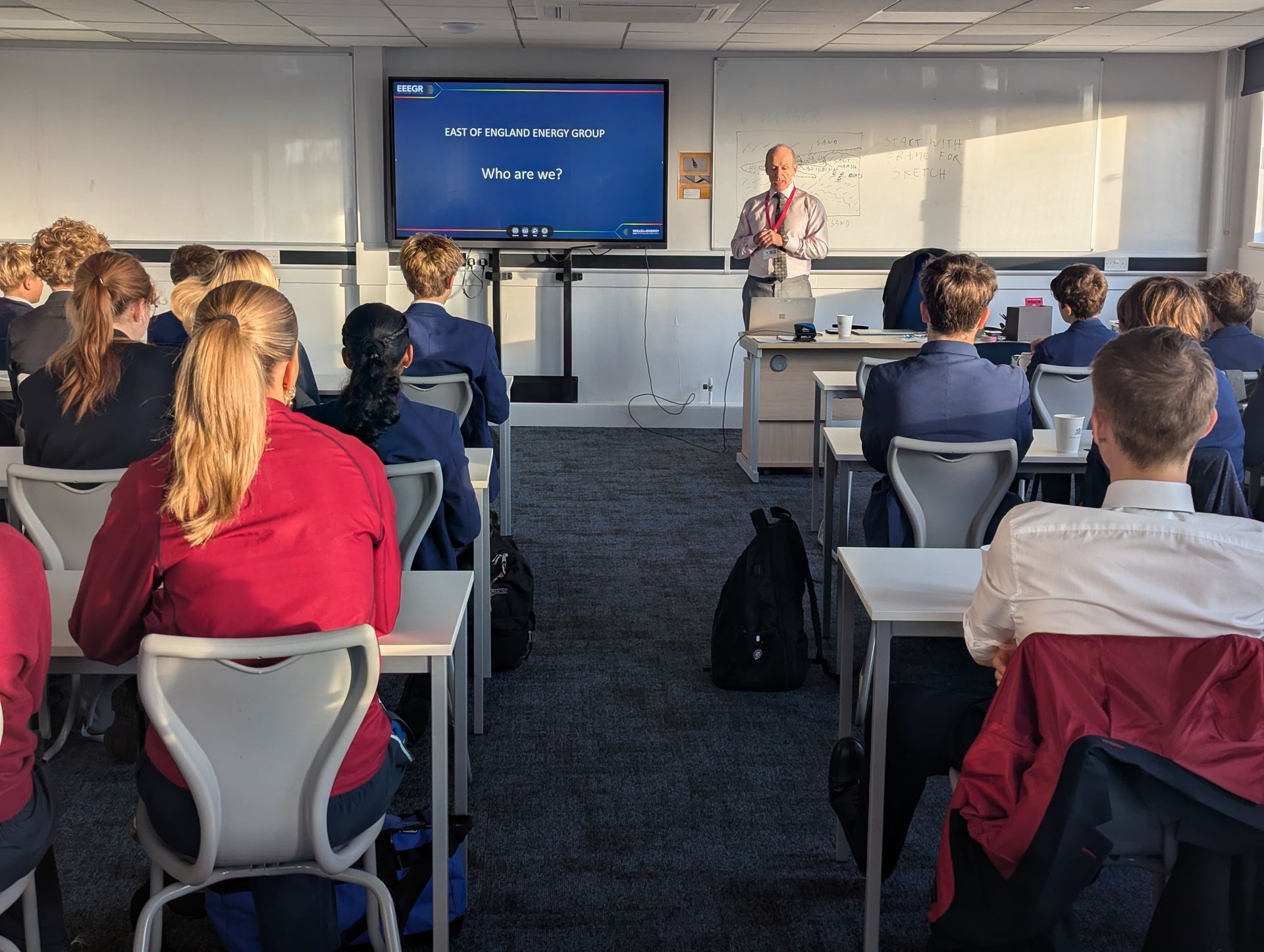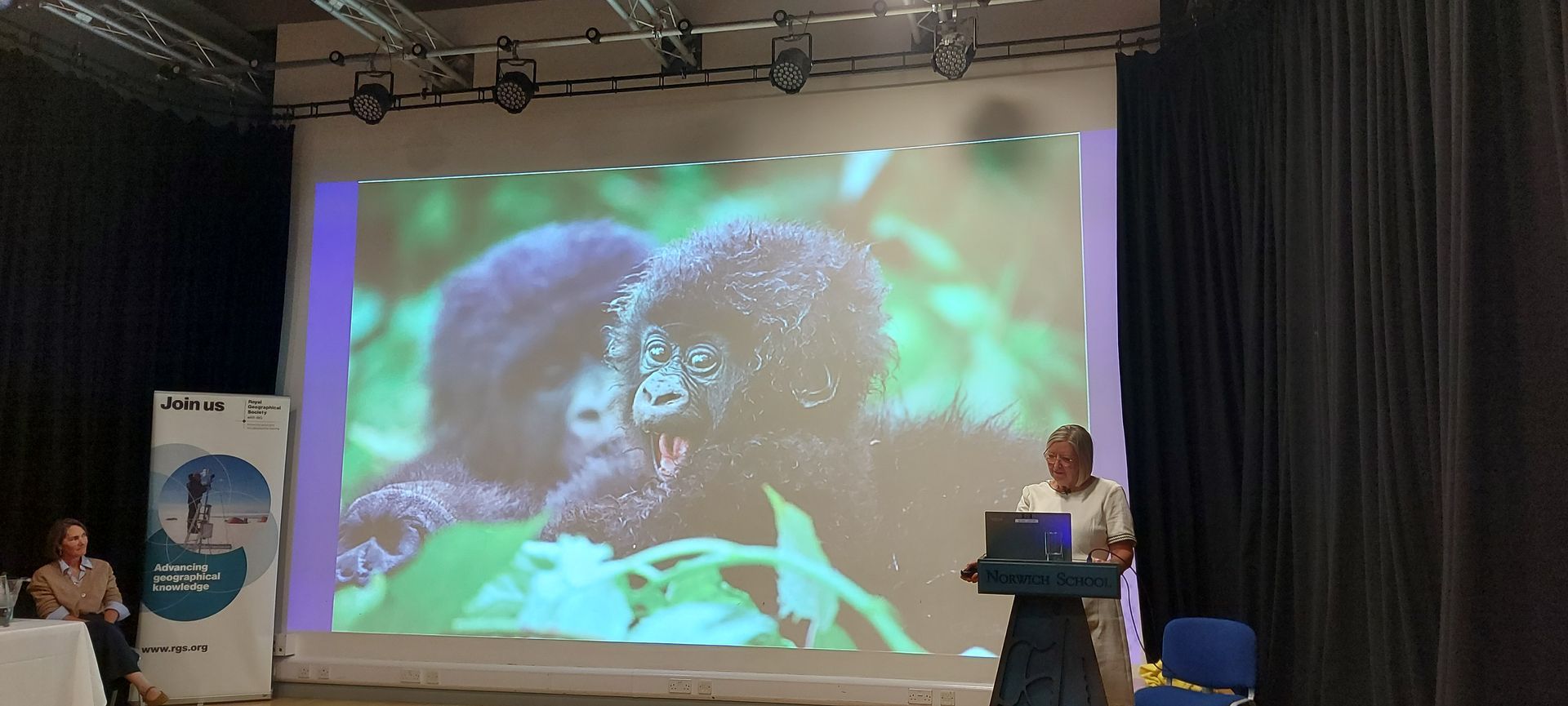
Stephanie Grant Addresses Pupils on the Concept of Time

January 15, 2025

A couple of years ago, a pupil with a habit of asking left-field questions asked what my favourite quantity in Physics was. I finally have an answer – it has got to be time. I am interested in it as a physicist, yes, but of course it isn’t a topic exclusive to that subject. 


Let’s start with Physics though. At first, time was defined based on the motion of the sun and stars in the sky and sundials would’ve been the best way of measuring it. Of course this is still true to an extent, our experience of a day or a year depends on Earth’s spin and motion around the Sun. The way it is measured, though, has changed enormously. Atomic clocks are used now, which can give a much higher degree of precision than a sundial, but even they aren’t perfect. The Christmas issue of the BBC Science Focus magazine described the next generation ‘nuclear clocks’ which would be much less susceptible to disturbances caused by external electric and magnetic fields, as the nucleus is so much smaller than the atom. This extra precision may not seem too important to our everyday lives, but it is thought to be important in doing better measurements into the fundamental forces and building blocks of the universe. 


The other thing that has changed is our understanding of what time depends on. Time does not, in fact, tick in the same way everywhere in the universe compared to everywhere else. It is relative. Fans of the film Interstellar will be familiar with the idea that time ticks differently in strong gravitational fields compared to weak ones – this is general relativity. GPS wouldn’t work if we didn’t account for the fact satellite clocks orbiting high above the Earth’s surface are ticking at a different rate to those on the ground. Time also ticks differently for anything going very fast, although you need to be travelling close to the speed of light to notice this, and that describes the effect of special relativity. 


This is all pretty amazing, but how much poorer would my appreciation of time be if I stuck to the Physics? Alongside the evolving history of the measurement of time in Physics, is the history of how humans have interacted with it. My thanks to Dr Cornell for lots of interesting information here we covered with academic scholars a few years ago on this topic. 

Plautus, in the year 195 BC in Rome, was unimpressed by the advent of sundials. His dismay sounds strangely modern if applied to some other newer invention, here is what he said: 

The gods confound the man who first found out how to distinguish hours! Confound him too who in this place set up a sundial to cut and hack my days so wretchedly into small portions! When I was a boy, my belly was my sundial: one more sure, truer, and more exact than any of them. This dial told me when it was time to go to dinner, when I had anything to eat; but nowadays I can’t fall-to unless the sun gives leave. The town’s so full of these confounded dials, the greatest part of its inhabitants, shrunk up with hunger, creep along the streets. 


Aside from the unwelcome effect on a standard lunchtime, trading on markets has become more reliant on precise measurements of time. A picture of the Amsterdam stock exchange in 1612 has a clock as a centrepiece so that a time could be recorded alongside a trade. The transactions themselves change the value and price of goods, so the time of transactions is very important. Computers can now make decisions about buying and selling in extremely rapid time and atomic clocks are able to time-stamp these transactions with huge precision. 


Standardising time and making it universal, as well as using it as a symbol of knowledge and power, has led to backlash too. For example, there was an attempted bombing of Greenwich Observatory in the late 19th century. David Rooney in his book About Time comments “Authority breeds resistance. Standardisation gives rise to dissent. People fight clocks, and they have always done so. Because what we are really doing is fighting with each other, as we have poured our very identities into clocks.’ 


Science, History, Social Science all have lots to say about time then, but let me end with a contribution from literature on the topic. Sophie Ratcliffe, a Professor of English Literature at  Oxford, is a huge admirer of the Russian novelist, Tolstoy, and comments that he “cared about the details you couldn’t touch… Details like time. Nabokov said that Tolstoy was the only writer whose watch keeps time with the numberless watches of his readers. His prose keeps pace with our pulses. He knew about slow time. The time it takes two men to choose their dinner in a Russian-French restaurant. The time it takes to adjust a hat in a hallway mirror. The timing of a pause in conversation, when one person attempts to bring up a difficult subject, and the hesitation as the other looks away. The way time hangs heavy for those in love.” 


I could carry on from here into the nature of perceived time in human psychology, to the linguistics of the words related to time, to the use of time and pause in music, and no doubt beyond. 


In school, it is helpful to have different subjects to focus our minds on the nature of individual disciplines but never let yourself think that everything can really be categorised that neatly. The true depth and meaning of things are rarely limited to one subject – or indeed to one time. How does a favourite concept of yours link to lots of different disciplines? I would love to hear about them... if only we can find the time. 

By Eleanor Lewis January 22, 2026
Our A Level Spanish pupils enjoyed an inspiring study day in London focused on the iconic Spanish filmmaker Pedro Almodóvar , a key part of their Paper 2 syllabus. The day offered pupils the opportunity to deepen their understanding of his work through expert-led sessions and engaging discussions with university professors and fellow Spanish students from other schools. Beyond the classroom, they also embraced the cultural side of Spain by sharing a well-deserved tapas dinner , bringing their learning to life through food, conversation and authentic cultural experiences.
By Eleanor Lewis January 21, 2026
The Lower 3 Informal Concert in the Lower School Hall was a thoroughly enjoyable afternoon, celebrating the confidence, musicality and growing skills of our young musicians. The relaxed atmosphere created the perfect setting for pupils to share their hard work and enjoy performing for friends, family and staff. A nice variety of instruments and vocals provided some excellent contrast to the programme including Trumpets' Flutes' Drums, Piano, Guitar, French Horn and Vocals. The music on show was also well chosen including Elegy for the Arctic by Ludovico Einaudi , Naughty by Tim Minchin , Bolero by Ravel, Always With Me from Spirited Away and Breakfast in America by Supertramp on the drums. The concert was a wonderful reminder of the enthusiasm and dedication of our Lower 3 musicians. Every performance was warmly received, and the afternoon was filled with encouragement, applause and pride.  Well done to all involved for a fantastic concert.
By Eleanor Lewis January 21, 2026
We were delighted to welcome on site the Norfolk Contemporary Art Society (n-cas) on 21 January 2026 for a stunning public lecture, their first talk of the calendar year in our Blake Studio. This visually arresting lecture was given by celebrated German artist Lothar Götz entitled: Colour – Space – Light – Spirit Götz has an international reputation and has exhibited all over the world, showcasing his incredibly distinctive and eye-catching style. He is also Associate Professor of Fine Art at the University of Sunderland. He uses colour in a unique way to create visually arresting public art often on a simply monumental scale, principally using his trademark precise geometric forms. He almost overwhelms his viewers with a riot of colour and shape. His unusual “canvases” for both inside and outside art installations have included underground stations (most recently the Elizabeth Line), huge walls, church chairs, ballrooms, staircases, warehouses, atria to public buildings, flags and have even included the outside of whole buildings, most notably the Towner Art Gallery Eastbourne (which has become a tourist attraction in its own right). An audience of n-cas members, local creative artists and students, parents, staff and alumni were entertained by an astonishing slide show of his mesmerising works, and all enjoyed meeting him over refreshments afterwards. Our nest lecture in the Blake Studio promises to be a real cracker. ON Barney Broom will speak about the wonders of the silver screen in the inaugural Friends of Norwich School sponsored talk on the world of film. Barney is a Member of BAFTA as well as an accomplished film director, screenwriter and published novelist, but first and foremost he is a compelling storyteller, one who lives and breathes his material. This promises to be an entertaining evening for all ages and interests. All are welcome. Tickets on sale: HERE . Finally, we have recently launched our full programme of exciting and cultural events organised by Norwich School taking place in and around Cathedral Close this term. There really is something for everyone to brighten up these dark winter months. Do have a flick through At Close Quarters Lent Term 2026 . Booking for many of the school events can be found on our homepage under “Upcoming Events”: www.norwich-school.org.uk
By Eleanor Lewis January 20, 2026
On Tuesday morning, ten of our runners took part in the Norfolk Schools’ Cross Country Championships at Wymondham College against the strongest runners in the county who had all qualified to compete. The course consisted of flat and fast laps around the playing fields and through the woods with plenty of mud making for challenging conditions. The target for each runner was to finish in the top 12 to qualify to represent Norfolk and six of our athletes achieved this. In the Minor Boys race, Joshua Bevan finished in 17th place, while in the Junior Girls Nona Griffiths came 24th. Our solo Intermediate Boy, Noah Buchan, was up against some very strong competition and did well to finish in the middle of the field in 45th position. Our best placed finisher on the day was Emi Muntingh who came 4th in her Junior Girls race. Ruby Ivie also qualified for a county vest by coming 5th in the Inter Girls.  In the Senior Girls race we had 4 athletes all vying for a top 12 place. The girls paced it perfectly and all qualified, with Minnie Andrews coming 6th, Bea Green 8th, Izzy Last 10th and Olivia Allen 12th. Congratulations to all who took part and good luck to those who will be racing for Norfolk in the Anglian Schools Championships in Northampton this weekend.
By Eleanor Lewis January 19, 2026
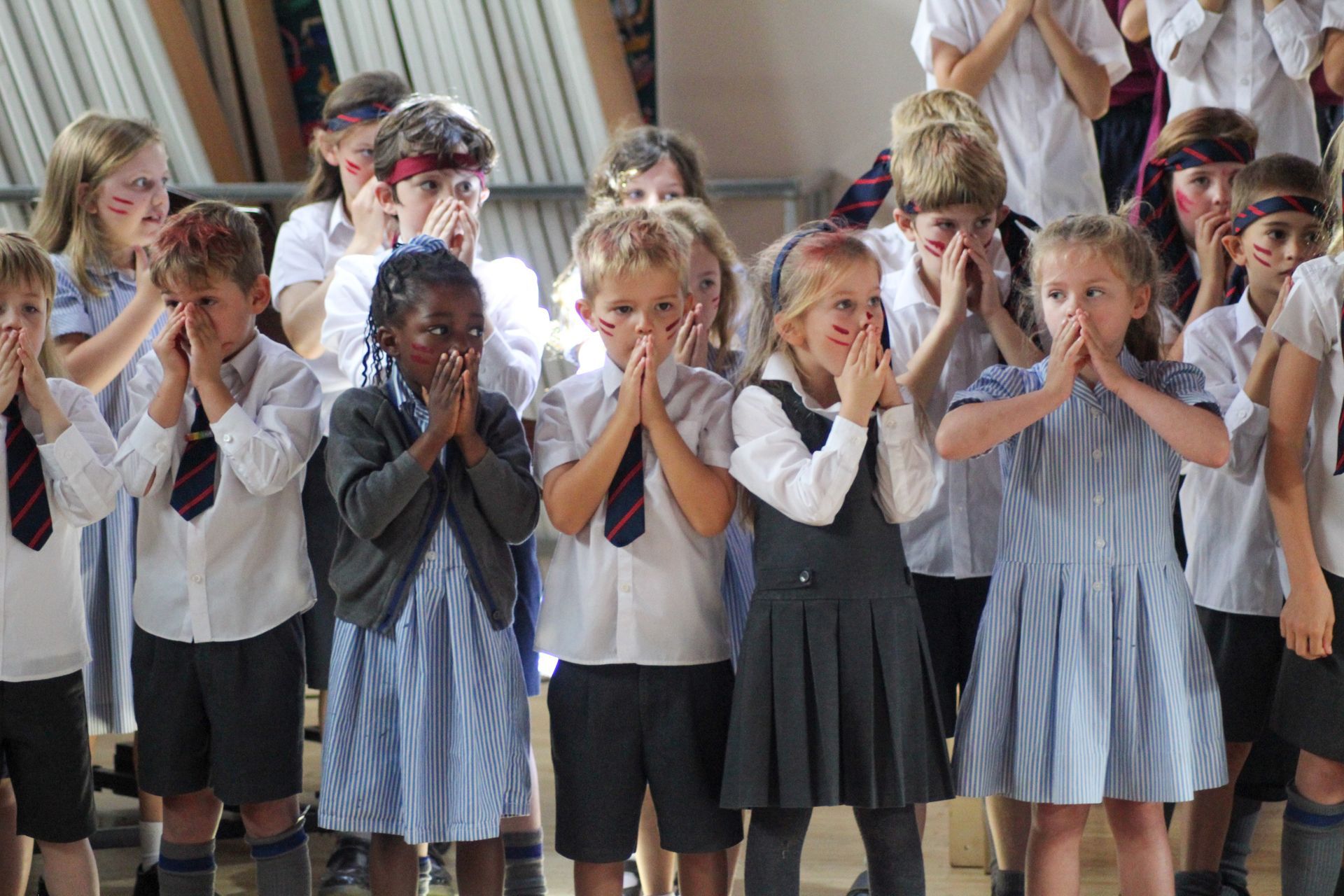
Lower Two had a fantastic Egyptian Day on Monday 19th January. The children learned about the importance of black kohl eye make-up in ancient Egypt, explored why mummification was so significant, and discovered how hieroglyphs were used to communicate stories and messages. One of the highlights of the day was reenacting an Egyptian burial, which really brought their learning to life. Everyone looked amazing in their Egyptian costumes, and the children had the best day immersing themselves in ancient Egyptian history.
By Eleanor Lewis January 19, 2026
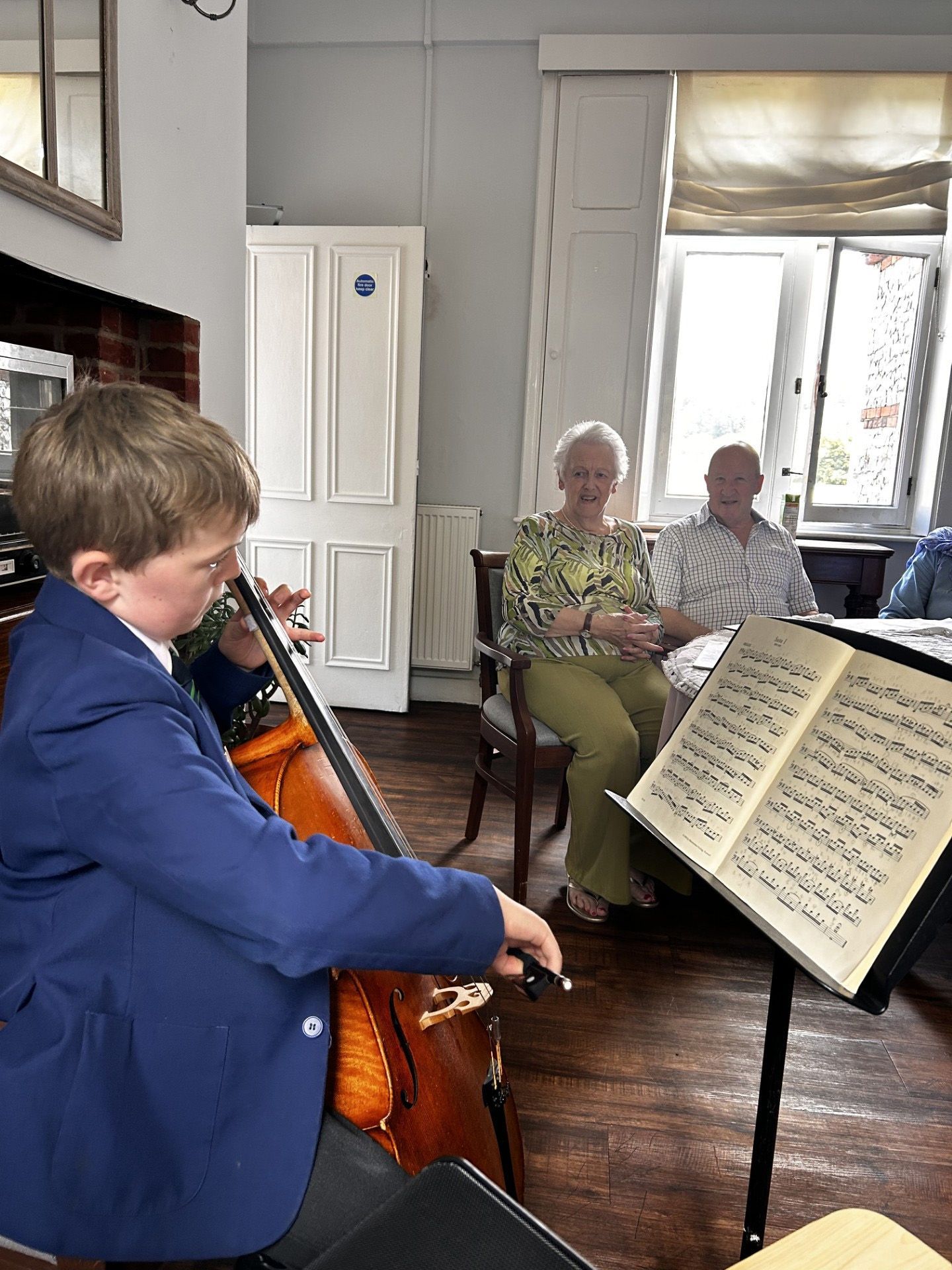
Lent Term Informal concerts kicked off in style showcasing talent with a wide mix of instruments, styles, and moods that kept the audience engaged from start to finish. Each performer brought something different to the programme, making the afternoon feel varied, exciting, and full of personality. Music included Cinarosa's Sonata in G for Piano, Gossec's fun Gavotte on the Cello and a hoe down on the Violin followed by a beautiful rendition of The Skye Boat song on the Harp. A touch of Rock n Roll on the electric guitar with Been There by A Lambert and rounded off with a gentle interpretation of Chopin's Waltz in A Minor .  Overall, the concert was a great success and highlighted the hard work and musical ability of all the performers. It was an enjoyable and memorable event that showed the impressive range of talent within the school.
By Sonja Mitchell January 19, 2026
Selected for Penguin's Random House programme for emerging talent, 'Blank Canvas' is already out in book shops.
By Eleanor Lewis January 18, 2026
On 18 January, the 32nd Norfolk Young Musician Competition took place showcasing an array of young talent across a variety of musical disciplines. Founded in 1993 by Music at St George’s (later the Norfolk Youth Music Trust), the competition offers a variety of prestigious prizes, including the Michael Badminton String Prize, Mrs E. Sturgeon Piano Prize and Jane Roberson Prize. Promoted by the Michael Badminton Young Musicians Trust, this year’s adjudicator was Martin Outram, Lionel Tertis Professor of Viola at the Royal Academy of Music, who was supported by Jonathan Wortley, Chairman of the Michael Badminton Young Musicians Trust. This year, of the 18 competitors, ten were current or former pupils of Norwich, with another participant who will be joining the Sixth Form as a Music Scholar in September 2026 - something we are immensely proud of. Each competitor, who is required to have gained Grade 8 with Merit (or higher), is invited to play a 15-minute programme in front of an audience. Of the 18 competitors this year, 3 of our performers received honourable awards for their performances. Min Ying Deng (M5) was awarded 2nd overall prize for her renditions of Prelude in C# minor Op.3 No. 2, Trois Etudes de Concert ‘Un Sospiro’ in Db major and Fantasie-Impromptu in C# minor. Isaac Schaad (M5) received the Michael Badminton String Prize for Most Promising Young String Player for the third consecutive year, for his performances of Adagio in E major KV 261 and Zigeunerweisen by Sarasate and Ben Griffiths (U6) was awarded the Jane Roberson Prize for voice, performing Aufenhalt by Schubert, Caro mio ben by Giordani, Clair de Lune by Faure, Silent Noon by Vaughan Williams and Oliver Cromwell by Britten. Other notable performances came from pupils as young as Jessic Li on the piano and Jacey Ng on the euphonium, who are both in Middle 5; Upper 6 pupil Caio Boyero on the cello; and ONs Finnian Smith on the French horn and Colette Maxwell-Preston on the cello. Congratulations to all that participated! The competition proved to be a memorable celebration of commitment, musicianship and talent, and the high standard of performances across all disciplines reflected the centre of excellence that is the Norwich School Music Department.
By Sonja Mitchell January 16, 2026
An upgrade to sound quality is music to our ears!
By Eleanor Lewis January 16, 2026
Good morning everyone. Last year my Dad turned 80. When we asked him if there was anything he’d like to do to celebrate, he said he wanted to tour the WW1 battlefields in France and Belgium. So during the May half-term I went over there with my brother and our parents and we spent a week exploring Flanders and the Somme region, as I know many of you have done on school trips. At the end of the week I dropped the others at Charles de Gaulle airport for their early morning flight home, and treated myself to a day of birdwatching near Calais before catching the ferry to Dover. I spent a delightful day at the coast, enjoying turtle doves and nightingales and my first ever Marsh Warbler, which I was very excited about. Species number 626 on my life list, in case you are wondering. I also stumbled across an information board that caught my eye. It was in French so I couldn’t entirely understand it, but it had pictures, and seemed to be about a pilot from the WW1 era. What caught my eye was the fact that the pilot appeared to be black and female. A week of touring the battlefields and learning about the war had taught me that all pilots in those very early days of flight were white and male. I jotted down the name Bessie Colman in my notebook, and told myself that I would do some research when I got home. And I’m glad I did. Bessie Colman’s story is quite remarkable, and I’m grateful to Rev Child for the chance to share it with you now. Her story is one of achieving a dream in the face of racist and sexist discrimination. I hope that in our more enlightened times none of you will suffer similar discrimination, but there will almost certainly be situations where you are denied the chance to do what you want, possibly just because someone else gets chosen ahead of you. You might not have got picked for the A team for tomorrow’s match, or get the role you want in the musical, or be selected to be a prefect, or get into the university of your choice. If that does happen to you, hopefully this story will encourage you not to give up. To set the scene, the Wright brothers flew their famous first flight in the year 1903. Young Bessie Colman was 11 years old at that time, growing up in Texas, and like many young people of the day, she was captivated by the idea of flight, and dreamt of getting the chance to fly herself. One of her brothers served with the army in WW1 and got to witness some of the first ever aerial combat action, taking place over his head as he dug and repaired trenches. When he returned home, he told his sister about these airborne daredevils, and she decided that was definitely what she wanted to do. The trouble was that Colman was not only female and black, she was also of native American descent. In those days, any one of these things made it impossible to get a pilot’s licence in America. She was also poor, which was another significant barrier. Colman was determined to fly planes, and while her race and gender made this impossible in America, she knew from what her brother told her that things were different in France. However, getting the money to travel across the Atlantic, and pay for flying lessons when she got there, proved an almost insurmountable hurdle. Education and employment opportunities for black women were limited in those days. Colman left her home in Texas and joined her brother in Chicago, got qualified as a beautician and started to earn money as a manicurist. She also knew there would be a language barrier in France. Unlike these days, she couldn’t rely on everyone speaking English, so she took French lessons in the evenings. After 2 years, she had earned enough money, and learned enough French, to start her adventure. She sailed for France on 20th November 1920 and enrolled at a flight school near Calais. During her 10 months of training, she learnt the basics, and soon moved on to advanced aerobatics. This was still in the early days of flight, when mechanical failure and crashes were all too common. One of Colman’s fellow students was killed before the completing the course, but Colman was undeterred and passed with flying colours. When she got her licence from the Federation Aeronautique Internationale, she became the first American of any race or gender to be awarded these credentials. Once qualified, she embarked on a career as a stunt pilot, performing barrel rolls and loop the loops at airshows across Europe and America. She became something of a celebrity, flying under the name “Queen Bess, Daredevil Aviatrix”. She survived a crash in which she sustained a broken leg and ribs, but bounced back, and added parachute jumps to her shows, walking along the wing of a plane at 3000 feet before jumping off and landing safely in the arena. While all her dreams were coming true, Colman was aware that she was something of a trailblazer for black women, and was determined not to forget her roots, or be taken advantage of. In 1922 she signed a contract to be the star of a Hollywood movie, but shortly after filming started, she walked off the set, as her role reinforced all the negative stereotypes of black people at the time. Colman also took a stand against various forms of racial discrimination. At many of the airshows she performed at, there had been separate entrances for black and white people, and in some cases black people were not permitted to attend at all. Colman refused to perform at any such venue, and forced organisers to change their policies. One of her ambitions was to open a flight school specifically for African Americans, but sadly she didn’t live to see this happen as she died in a crash in 1926, while practising for an airshow in Florida. She died young, aged 34, but she died doing what she loved. And while she may not have opened her flight school during her lifetime, she had succeeded in breaking barriers and inspired other women and black americans to follow in her footsteps. When in 1992, Mae Jamieson became the first African American women in space, she took with her a photo of Bessie Colman. If Bessie Colman told her friends in Texas that she wanted to be a pilot, they would probably have laughed at her. That simply isn’t possible, they would have said. Don’t waste your time. You are a woman. You are black. You are poor. The chances of you getting to be a pilot are 1000000 to 1. This morning’s reading is a Psalm written by King David when it seemed that the whole world was against him. His own son was trying to depose him and he called out to God for help. “You Lord are a shield around me, and the one who lifts my head high…I will not fear though tens of thousands assail me on every side”. It is words like these that give me strength when things aren’t going well and I feel like the world is against me. I don’t just imagine that I can just sit on my backside and wait for God sort everything out for me. But it gives me hope that if we can follow the example of someone like Bessie Colman, explore every possible avenue, work hard and never give up, there is no reason why we can’t achieve our dreams.
More Posts