Norwich School French Horn player becomes full member of The National Youth Orchestra of Great Britain

October 24, 2025

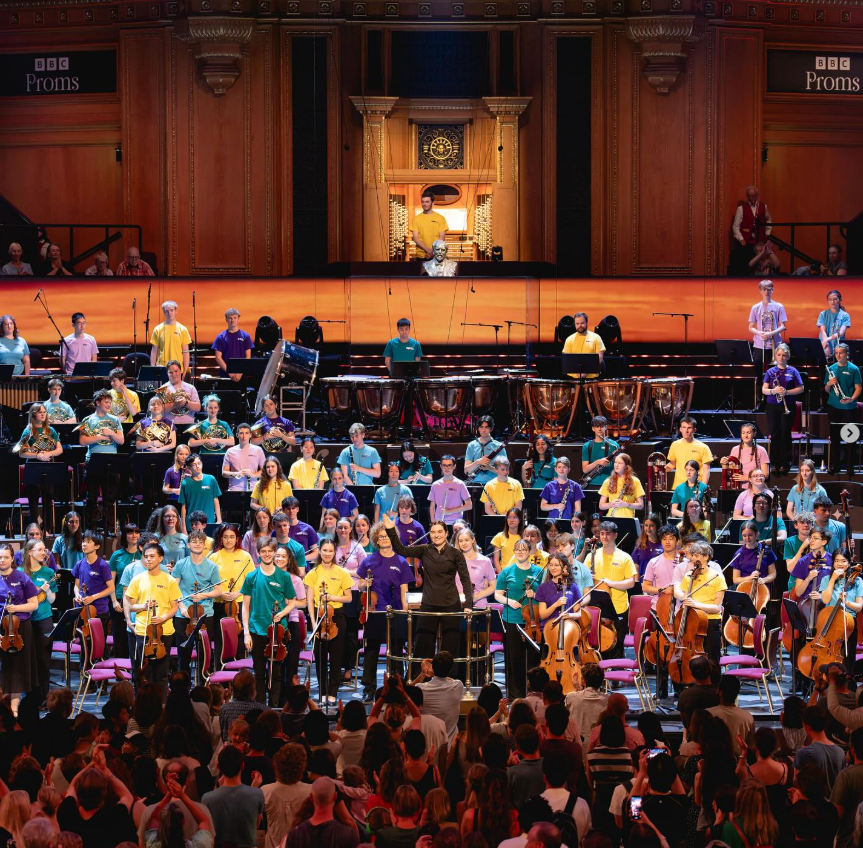
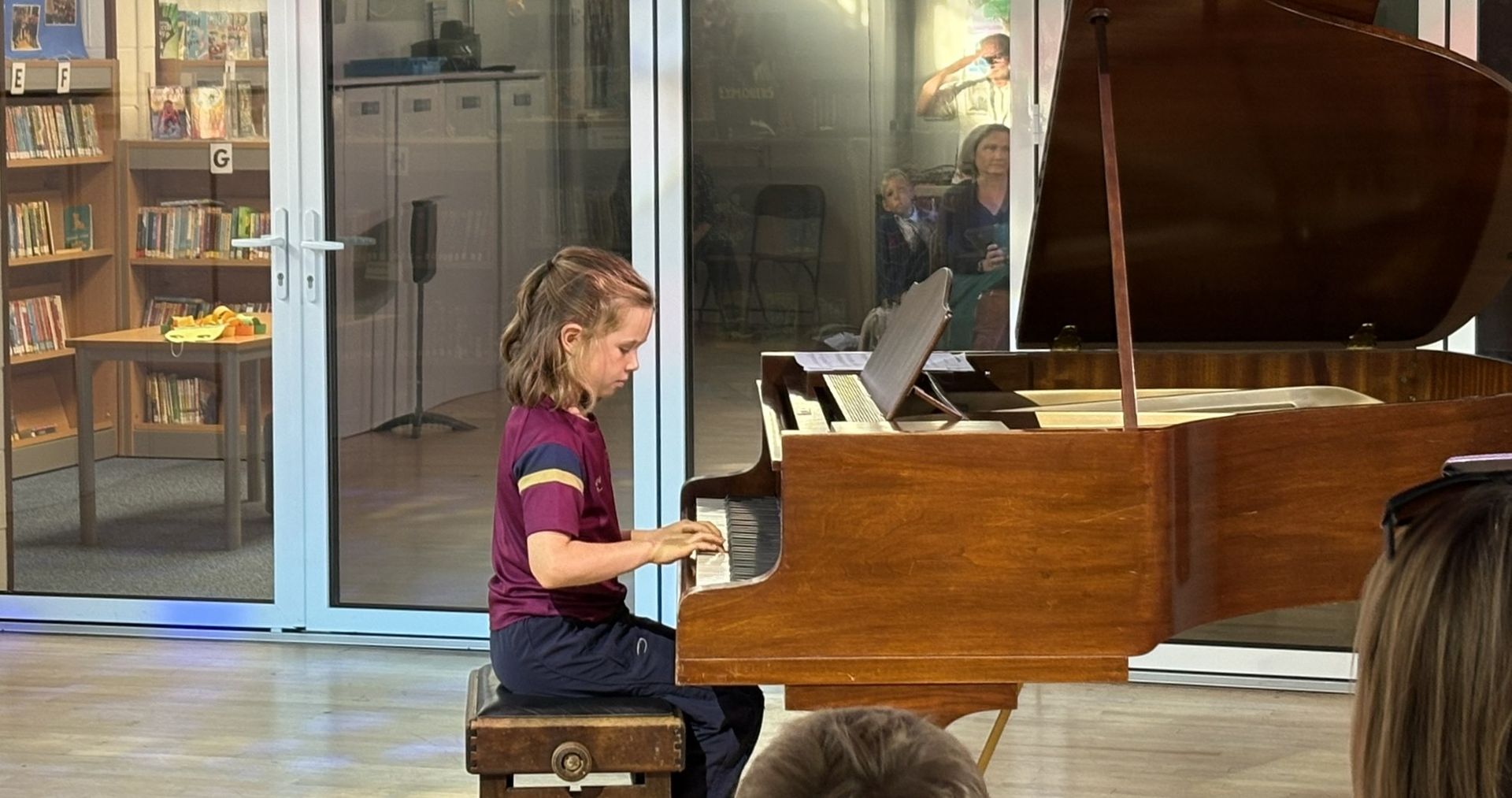
Melissa Hawkings (U6) has become a full member of The National Youth Orchestra of Great Britain. To celebrate her success, Mrs Fry sat down with her and asked her some questions.


Mrs Fry: Melissa, huge congratulations on becoming a full member of the National Youth Orchestra of Great Britain. You’re not completely new to this, are you? Can you tell me what your involvement has been in NYO so far?


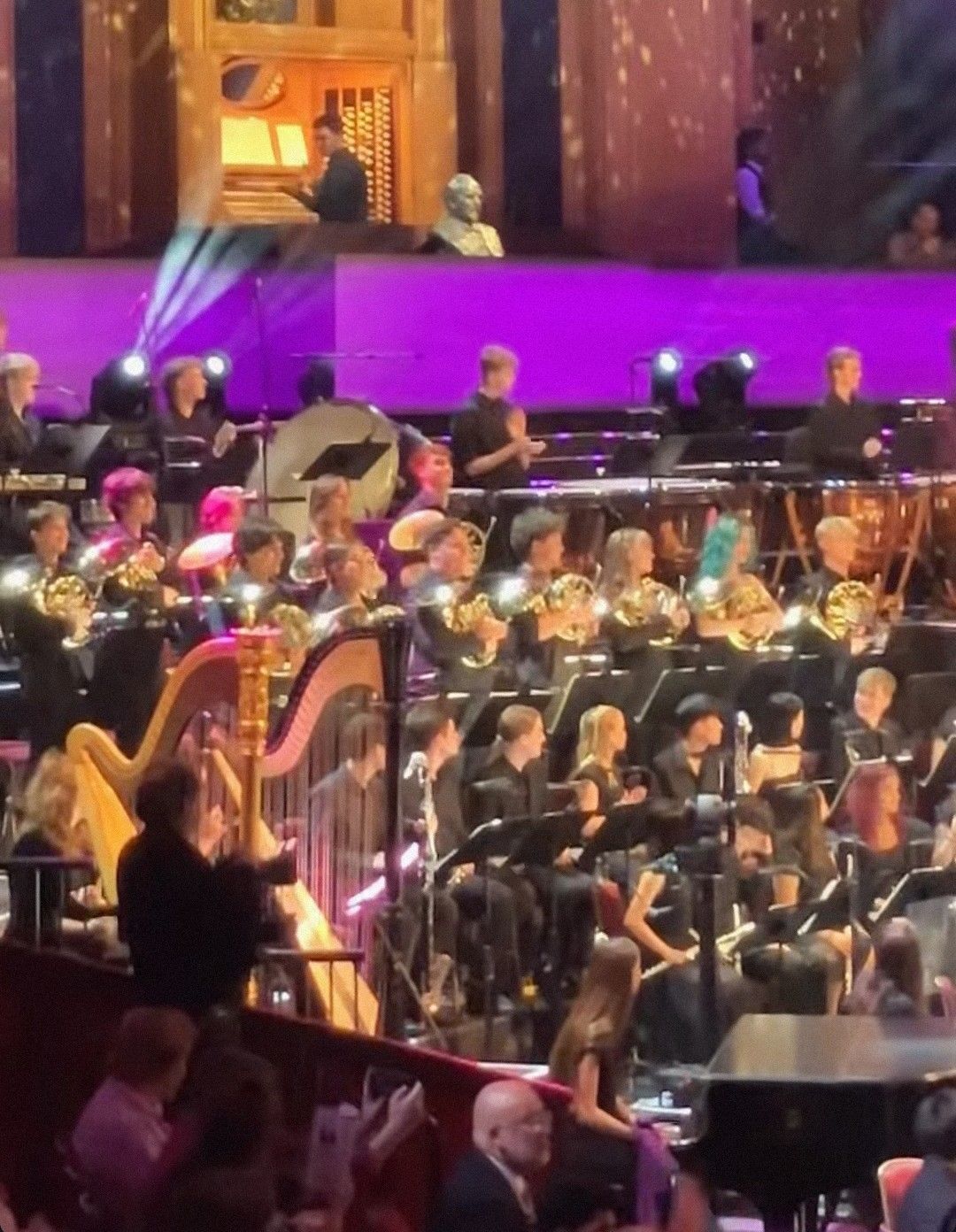
Melissa Last year I was a residency guest so I took part in the spring in the summer concerts in the full horn section, including playing The Planets and Star Wars music at The Proms in the Royal Albert Hall, and the year before I was an associate member, which a nice introduction to NYO. One of the best concerts I played in was as an off stage horn in the Alpine Symphony conducted by Sir Mark Elder.


Mrs Fry: Wow! That’s not an opportunity that comes around too often! A whole new learning curve for playing in time. What will it mean to you now that you’re a full member? What will your annual commitment be?


Melissa: I’ll do three of the courses a year including the 14 day summer residency, four days of which is the concert tour. We might do some community work too, introducing instruments and music to young people.


Mrs Fry: How does a residency day look? 


Melissa: We rehearse from 9am until 5pm with breaks and then again in the evening until 9pm. It’s a bit of a marathon! There is a rest day though. Sometimes we have full orchestra rehearsals, sometimes, full brass and sometimes horn sectionals.


Mrs Fry: Do you get to see the music in advance of the course? 


Melissa: Yes, we get sent the music a month in advance so everyone turns up able to play everything. Because of this we can spend time on interpretation and really playing together which is what makes NYO so good.


Mrs Fry: Melissa, you don’t get to be an elite level musician playing at National level by accident. Tell me about your journey to NYO.


Melissa: When I was about 10 I went to an NYM (Norfolk Youth Music, now Guildhall Young Artists) Open Day days at CNS where you could try different instruments. I don’t know why I chose the horn. It just felt fun and was the most unusual. I wanted to be different so I chose it! I remember when I got home trying for ages to play a scale. I kept playing over and over again until I could play it. Then I took part in groups at school and when I felt more confident with my playing I joined the County Youth Wind Band. A little later I joined the Norfolk County Youth Orchestra where I was a member for 3 years. I think NCYO was actually really important for me because it’s how I got I to orchestral playing. I remember the first thing we did was Beethoven 5. It was really exciting. I was so nervous I was barely playing because everyone was older than me! I just kept doing it because I really liked the music. And then after that, I started going to Junior Guildhall in London on Saturdays which pushed me to the next level, playing with people from all over the country. The highlight of that for me was lots of chamber music playing. I’m now at Junior Royal College with a new teacher on Saturdays, leaving Norwich station at 0630 and returning home by 7pm or so.


Mrs Fry: Long day! We’ve spoken a lot about the orchestral side of things and the coaching that you get outside of your daily routine but what does it what’s required of you to get to your level as an individual? What do you do on a daily basis? Your fitness routine?


Melissa: Early in the morning, I have a half an hour warmup routine where I do different technical exercises just to make sure every aspect of my playing stays in shape: if you don’t use it, you lose it! Not every day is the same due to school commitments, but ideally I’ll do three hours practice. That’s what I did when I was preparing for the auditions: I like to do like an hour of technique, an hour on the excerpts and then an hour on my pieces. When I’m consistently doing three hours practice I notice such a difference in my playing - it’s like an athlete, you need constantly to be playing and being mindful of how you play - efficient and good practice is so important.


Mrs Fry: There must be pieces of music that is special to you or musicians that have inspired you?


Melissa: Right now, my favourite composer is Stravinsky. I loved playing Firebird at 14. I thought this is the most crazy, insane thing I’ve ever heard! The horn parts are amazing! That lead me into listening to The Rite of Spring and then I played Petrushka in NYO last spring at the Roundhouse in Camden. I also like Debussy and Ravel. The horn player who has inspired me is Sarah Willis, the 4th horn player in the Berlin Philharmonic. She’s not just a classical horn player - she’s recorded the Mozart horn concertos reimagined with Latin influences. 


Mrs Fry: Sounds slightly different to the Norwich Baroque version coming up in March when you will perform one of the Mozart concertos in the Norwich School Choral Society concert!


Melissa: Yes! I also watched a masterclass with her where she made instant differences to peoples’ playing. I also really like Ben Goldscheider, a young horn player. We share the same teacher.


Mrs Fry: So, what next for Melissa Hawkings the horn player?


Melissa: I’m hoping to go to conservatoire next year. My dream career is to be an orchestral player but now I just want to see where it takes me - what kind of ensembles I might play in as I go through conservatoire and beyond. 


Mrs Fry: Who knows, you could follow Sarah Willis’s trailblazing footsteps to the Berlin Phil. Good luck with it all.

If you have been inspired by Melissa’s musical journey and want to follow in her footsteps, here are some links to the local music groups she joined: 

https://www.gsmd.ac.uk/study-with-guildhall/children-and-young-people/guildhall-young-artists/guildhall-young-artists-norwich

https://www.gsmd.ac.uk/study-with-guildhall/children-and-young-people/guildhall-young-artists/guildhall-young-artists-norwich/norfolk-county-youth-orchestra

And tickets to NYO concerts are free for teens! Next up ‘Shimmer’ in January.

Details here: https://www.nyo.org.uk/performances/shimmer


Concert tour highlights - https://youtu.be/oVDFRtvPxsE?si=QqYITRq7GpjaBMp9 


Jupiter in rehearsal -  https://youtu.be/Hl2iTL4tnxk?si=UeWadansnIeV_x7e


By Sonja Mitchell April 7, 2026
Thank you to Friends of Norwich School for funding £1,000 towards new costumes.
By Eleanor Lewis April 2, 2026
I’ve volunteered for over 10 years now, from the PTA at Ava’s Primary and Prep schools, to Disability Swim Coaching, to Chair of Governors at a local school; with the Care & Inclusion Team at work and now with The Norwich School as a parent volunteer supporting sixth formers doing their own community service with Norfolk Special Olympics, a charity focused on bringing sport to adults with intellectual disabilities. I also volunteered as a Sixth Former, way back when, and maybe that’s where the bug came from, remerging in later life. There’s something life affirming about volunteering that’s hard to describe, but the adage that volunteering gives you more than you ever put in is true. It ticks all the boxes on the Wellness Form: It’s proven to be good for mental health, it’s a powerful way to hone new skills and support career development, it provides social connection and it absolutely adjusts your perception of life and gratitude. It just makes you feel better! So, when Norwich School put out a call for parents to support their Community Service program by volunteering alongside students, it was a natural and easy step for me to offer to help. Getting to choose a service that fits your timetable, lifestyle and interests was a bonus. So many different opportunities from creative and media (definitely not me!), to English Support for refugees (that would have meant working alongside my own Mother – so no!) to event committees and a multitude of sporting options. Something for everyone, a time for everyone, and for me an easy choice to make, continuing work I’d done years before with Teenagers with disabilities. And so, every Friday lunchtime, during a “meeting” booked out in my work diary (with the full support of my manager of course!), I spend an hour at UEA Sportspark helping the inclusion team from UEA and Special Olympics, alongside three sixth formers, bring sport to around 35 Adults with varying levels of disability. Some are wheelchair bound, some non-verbal, some with mild intellectual disabilities, many with Down Syndrome. What they all have in common is a shared joy in physical activity at whatever level suits them. They are fiercely competitive, many compete, always keen to do that little bit more, full of joy, full of conversation and sometimes as cheeky and difficult as teenagers. I leave lighter in the shoulders and happier in the heart every single week. Aswell as the joy of volunteering myself, I also have the privilege of watching sixth formers learn, embrace the same joy, realise how fortunate they are and develop skills they mostly won’t have had before. It’s not always easy, there are challenges, especially working with adults to navigate, but what great lessons to learn in a safe place, and what great skills to take forward in life. Three girls who started slightly quietly and not quite sure of themselves, are now helping to run sessions themselves, know every attendee by name, are inspiring other young women in the group and look like they’ve been doing this for years. One of those girls is my daughter. How lucky I am to spend an hour a week with her, not talking about UCAS, or homework, or sports coaching or how much sleep she got or didn’t. Just an hour a week enjoying bringing joy to others, together without having to talk about anything. Watching her learn new skills, and navigate new challenges, and above all, seeing her finally get it. Why I volunteer, why I give up time, because it gives me back more… tenfold. And of course, I hope that bug, the one that lay dormant in me for 20 years, is well and truly instilled in Norwich School’s young people, because they, like me, might not realise yet just how much they are already learning, and how much they might get in the future from doing something for others. Skills, friendship, joy, gratitude and opportunities they didn’t see coming. It’s often surprising the people you meet and the connections you make through this kind of ‘work’. Amazing, interesting people with all sorts of connections that might just open a new door or a new passion, both for the sixth formers and for us as adults.  So, if you have an hour a week free, if your company supports volunteering in the community, if you’re looking to develop new skills or make new connections, I cannot recommend supporting the Community Service program at Norwich School highly enough, there really is something for everyone to get involved in. Lighter shoulders, happier hearts and helping our own children grow and develop skills for life... it doesn’t get much better than that for an hour a week!
By Eleanor Lewis April 1, 2026
This week we are spotlighting STEMM at Norwich School and caught up with some inspiring ON’s who discussed where studying a STEMM subject at the school has taken them in their careers! Wian Stipp – (11-18) Wian attended Norwich School between 2011-2018 and studied both Maths and Further Maths during his A-Levels. Did you study Maths, Further Maths or both? I studied both! What did you go on to do when you left Norwich School? Where? I pursued a BSc in Mathematics and Economics at the London School of Economics. During my time there, I learned how to program and became involved with AI start-ups – initially with Lanterne, based in London, and subsequently with Evidium, based in San Francisco. Where in the world are you based? I’m currently based in San Francisco, USA. Where has your career taken you so far? I joined Evidium in 2020 as a Founding Engineer, just as the company was getting of the ground. The following year, we raised see funding in San Francisco. At Evidium, I focus on research and engineering, building machine learner systems for healthcare applications. Where do you want your career to go? I aim to continue developing machine learning systems that push forward innovation in health care and contribute significantly to improving patient outcomes. Why should pupils study Maths beyond GCSE? Maths builds the ability to think clearly and reason rigorously – skills that are valuable no matter what path you pursue. If you’re curious about fields like AI and machine learning, Maths simply is the foundation. How has Maths been beneficial to you outside of Norwich School? Maths continues to be central to my daily work, Maths has shaped how I think, solve problems, and engage with the world, and it remains the foundation of everything I build in my career. Jennifer Williamson – (09-16) Jennifer is an incredibly inspiring woman in the world of STEMM; having attended Norwich School between 2009 and 2016, she kicked started her engineering career studying both Maths and Further Maths. Did you study Maths, Further Maths or both? Both! What did you go on to do when you left Norwich School? Where? I did a 4-year Integrated masters in Aeronautical Engineering at Imperial College London! In my third year I did an internship at Sainsbury’s writing their 30 year “path to zero carbon” plan. Where in the world are you based? I’m currently working in London, I spent a couple of years working in Edinburgh, and before that I was in Australia! I carried out my final year university project on exchange in Melbourne, creating a model to estimate the emissions of different journeys, to compare public and private transport in the suburbs. Where has your career taken you so far? I’ve been working as a Building Sustainability Engineer for four years. I work with architects to improve the design of buildings by carrying out dynamic simulations which look at things such as if occupants will overheat, based on how many windows there are, any external shading, how much natural ventilation there is and more. I really enjoy it, and I love having a genuine impact on the design of buildings that are going up in my city. Where do you want your career to go? I had a catch up with my boss recently, and he’s keen for my future career to involve going into architectural firms to give workshops on how to really achieve sustainable buildings, which sounds amazing to me. There are a lot of methodologies at the moment for designing sustainable buildings, but a lot of them are just “tick box” exercises, whereas good design changes from building to building. Why should pupils study a STEMM beyond GCSE, such as Maths? I think if you might want to study something like Engineering at University, A-Level Maths is really important and would probably be a requirement, so if that’s on the cards then it’s good to keep that door open. It doesn’t necessarily mean you’ll be doing maths for the rest of your life - my job doesn’t involve much Maths now. A lot of my Engineering degree was basically just maths in different contexts, and I wouldn’t have been able to get my job without the degree. How has Maths been beneficial to you outside of Norwich School? The main thing is being able to do a job I enjoy now. Another bonus was that some of the content we did at university in first year I’d already learnt in Further Maths, which was really helpful when everything else was new and difficult. My job doesn’t involve a lot of Maths now, but I do still pull out trigonometry quite often for calculating shading angles. Steven Gopaul - (07-15) Steven attended Norwich School from 2007-2015, and studied four STEMM subjects at A Level. Now working at the Norfolk and Norwich Hospital, his career in medicine is nothing short of inspirational. What subjects did you study at A-Level? Maths, Chemistry, Biology (All A2) and Physics (AS). What did you go on to do when you left Norwich School? Where? I studied Medicine, rather unconventionally in Europe, in Prague, Czech Republic. Where in the world are you based? I am currently based in Norwich and work at the Norfolk and Norwich Hospital. Where has your career taken you so far? After finishing school in 2015, I went to medical school and graduated in 2021. I completed 2 years of general medical training in the East of England which is known as foundation training in 2023, with a good experience in both medical and surgical specialities. I took a year out of clinical medicine after foundation training to teach at UEA - Norwich Medical school. I taught all years of medical students in various clinical subjects, procedural skills as well as in laboratory-based sessions of Anatomy (which was my favourite subject). Alongside my teaching duties, I examined final year exams and contributed to creating questions for written exams and clinical stations for use in OSCE exams. Since 2024, I have been working as a trainee surgeon and am due to finish my 2 years Core Surgical Training in August 2026 before moving onto higher specialty training in General Surgery. Throughout my medical training thus far, I have attended and presented at conferences both nationally and internationally, and undertaken post-graduate courses and exams. I have passed my initial surgical exams (the final exams will be closer to becoming a consultant) and am a member of the Royal College of Surgeons of England and Fellow of the Higher Education Academy after completing my post-graduate certificate in clinical education. Where do you want your career to go? I am training to be a General Surgeon with the aim of becoming a Consultant Colorectal Surgeon in the NHS. Why should pupils study a science beyond GCSE? Studying a science beyond GCSE gives you much more than knowledge — it teaches you how to think. A-level sciences push you to analyse information, solve problems, and understand why things happen, rather than just memorising facts. You learn to deal with complex ideas and interpret evidence. Another benefit of studying science, is that it creates a structure for learning new information which many other subjects unfortunately don’t provide. Science also isn't always straightforward — it stretches you. However, working through complex problems develops many of life’s important traits such as resilience and a logical way of thinking that once again can be applied to anything in life. How has Science been beneficial to you outside of Norwich School? Studying science beyond school was more than a gateway into medicine for me; it fundamentally shaped how I approach learning and clinical practice. Advanced study in biology and chemistry meant that when I reached medical school, I wasn’t encountering concepts in isolation. Subjects like physiology, pathology and pharmacology felt like logical extensions of principles I already understood. Beyond this, it has provided me with many rich experiences of collaboration where I’ve got to work with many different medical and scientific professionals which has helped me develop new skills and allowed me to travel, which I thoroughly enjoy! Lastly, studying sciences at school developed intellectual discipline and professional curiosity. It trained me to analyse evidence critically and the habit of questioning is central to good medical practice. It drives lifelong learning, which is essential in my profession where knowledge evolves rapidly. Tom Lefever - (91-97) Tom studied both Maths and Physics during his time at Norwich School. He now works in Civil Engineering and continues to travel across the world, mastering his expertise. What subjects did you study at A-Level? Maths, Physics and French. What did you go on to do when you left Norwich School? Where? A degree in Civil Engineering at the University of Nottingham. Where in the world are you based? Norwich! Where has your career taken you so far? All over the UK, designing buildings for many countries including Montenegro and all over Northern Africa. Where do you want your career to go? Continue to build my expertise in historic buildings such as Cathedrals and Castles. Why should pupils study a science beyond GCSE? It helps you understand the world better and build a strong, broad base to pursue your chosen career. How has Science been beneficial to you outside of Norwich School? It is fundamental to my work in assessing how buildings behave and knowing what materials to choose when designing them. It has helped me personally with my health, nutrition, and even DIY of my house and fixing my car! Richard Wade-Martins - (83-91) Richard studied three STEMM subjects at A-Level whilst at Norwich School and now works at the University of Oxford, leading ground-breaking research into Parkinson's and Alzheimer's disease. What subjects did you study at A-Level? Biology, Chemistry and Maths. What did you go on to do when you left Norwich School? Where? I went to study Natural Sciences at the University of Cambridge in 1992, specialising in Genetics in the final year. From there I went to the University of Oxford to do a DPhil (the Oxford PhD) in human molecular genetics. Where in the world are you based? I am at the University of Oxford in the Kavli Institute of Nanoscience Discovery and the Department of Physiology, Anatomy and Genetics. Where has your career taken you so far? After my DPhil I went to work for three years at Massachusetts General Hospital and Harvard Medical School in Boston, Massachusetts. It was a fantastic opportunity to live abroad for a few years and get an international perspective on science and life. I then came back to the UK in 2003 starting my own research group at Oxford and have built up my own research program. Where do you want your career to go? I'm moving towards drug discovery. I work on understanding the cellular and molecular mechanisms of Parkinson’s and Alzheimer’s disease: why do some people get them and how can we prevent or treat the conditions? As the population ages with more people are retired than at school, this will become increasingly common and a major healthcare challenge. My academic lab at the University now works closely with industry and biotech partners to develop translation of new therapies from lab findings to novel treatments for patients. Why should pupils study a science beyond GCSE? Studying science allows you to understand how the world works, whatever you chose to work on. In my area it allows us to dissect the role of genetics and biology in age-related neurodegeneration. We need to use science to understand molecular mechanisms to develop new therapies. How has Science been beneficial to you outside of Norwich School? I read about the discovery of DNA, the molecule which carries our genetic information, when I was at Norwich School aged 14, and from that moment on I wanted to study genetics. I have been lucky enough to follow that through working in three of the best Universities in the world. It has been a fantastic choice of career and if I went back to being aged 14 now I would do exactly the same again.
By Sonja Mitchell April 1, 2026
With thanks to the Friends of Norwich School for funding this dedicated space, which is proving very popular with pupils.
By Sonja Mitchell March 31, 2026
Toby will be at Norwich School with the Royal Geographical Society to talk about his filming adventures from around the world.
By Eleanor Lewis March 31, 2026
On Thursday 26 March, the U18 Boys played in the 1 st round of the national Tennis competition, The Glanville Cup, vs Wymondham College. Two very evenly matched teams saw some very close fought games with two of the singles games going to additional tie-break sets, leaving the score after the singles rounds tied on 4 points to each school. Our number one pair Harry Philpott and Charlie George Snelling played some exception tennis and managed to win their games 6-4, 6-4. Our second pair won their first set comfortably but then Wymondham College fought back and took their game to a tie-break set; Charlie Hutchinson and Veron Hung persevered as the light and temperature dropped and won the game to see Norwich School win 8-4 overall and through to the next round. Well done boys!
By Eleanor Lewis March 27, 2026
On Thursday 27 March, we were delighted to welcome 58 pupils and their 5 teachers from Collège Sainte‑Marie in Meaux, France. After spending a week exploring Norfolk, the group arrived at Norwich School, where our pupils were eager to meet them and proudly show them around. Our penpal exchange with Collège Sainte‑Marie has been running for a couple of years now, with Lower 4 pupils regularly writing and receiving letters in French. This visit was particularly special: the French group were Year 8 pupils, and many had the chance to meet their penpals from last year face‑to‑face for the very first time — a real highlight for everyone involved. The afternoon began with the NS U6 French group leading guided tours around the school, giving our visitors a warm and friendly introduction to life at Norwich School. This was followed by a lively treasure hunt in mixed teams of French pupils and NS Upper 4 pupils, all competing for an Easter prize. With clues written in both French and English, teamwork was essential — and it was wonderful to see pupils switching languages, helping one another, and having fun along the way. It was a joyful afternoon filled with laughter, curiosity, and excellent company. We very much hope to welcome pupils from Meaux again in the years to come — and perhaps one day, we’ll have the chance to visit them on their home turf too.
By Eleanor Lewis March 27, 2026
From 8-10 April a new art exhibition will be shown at the Crypt Gallery from We Are Nature. Wednesday 8 April, 11:00 - 16:00 Thursday 9 April 11:00 - 16:00 Friday 10 April 14:00 - 16:00
By Eleanor Lewis March 27, 2026
After half term, the Cross-Country team enjoyed a drizzly afternoon of racing in Ipswich on Saturday 28 February. The course was extremely muddy making for challenging, slippery conditions. But the Junior Boys managed to stay upright and perform well with Jonas Tam finishing 3rd, Jonty Croskell in 4th and Oscar Parker-Wright in 11th. All season the Senior Girls have dominated the front end of the field and again we had 3 of the top six finishers. On this occasion, it was Amelie Ivie who timed her finish best to take 3rd place ahead of Bea Green in 4th and Olivia Allen in 6th. The team was completed by Simran Chawla coming in 12th. With 8 Senior Boys running, the team prize seems sewn up this year and we had 3 of the top 5 finishers. Over the 7.6km route, Ethan Buskell was fastest on the day, coming 2nd, just ahead of Arthur Dannatt in 3rd and Leon Liu 5th. Leo Pitt was 8th, Jeremy Lo 9th and Tom Copley, George Yiasimi and Edward Lott completed the dominating team performance all in the top 14. Next, on Saturday 7 March we saw the final race in the East Anglian League against runners from Gresham’s, Ipswich and RHS. The team travelled to RHS and the conditions were reasonably dry and still on a flat, fast course. Our only competing Junior, Jonas Tam, improved upon last week’s third place to come 2nd this week, while in the Intermediate Boys, Kit Rudling came 4th. In the Senior Boys we had excellent strength in depth, as we have had all season, with eight runners competing. First to finish was Ethan Buskell who came 2nd overall. Jeremy Lo came through the field strongly to take 5th place, capping off another consistent season. Leon Liu, Kort Tsui and Leo Pitt were next over the line, followed shortly by Tom Copley, Edward Lott and George Yiasimi. The Senior Boys, having showed such consistent quality and excellent camaraderie throughout the season, deservedly took home the East Anglian League Team Trophy.  Finally, 5 of our athletes represented the school at the English Schools National Finals in Liverpool — a fantastic experience with some excellent performances across the board. Well done to everyone who has represented the Cross Country team this season.
By Eleanor Lewis March 27, 2026
The body content of your post goes here. To edit this text, click on it and delete this default text and start typing your own or paste your own from a different source.
More Posts